





Equipe Publication
Sous-traitance : chute de 30 % des marchés déclarés en 2025, Kamoa quasi absente du fichier
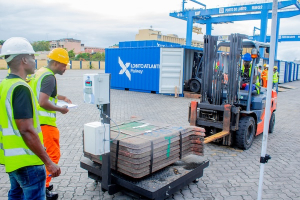
Selon le rapport statistique de l’Autorité de régulation de la sous-traitance dans le secteur privé (ARSP), couvrant la période 2023-2025, le volume des marchés déclarés par les entreprises principales a fortement reculé en 2025. Après avoir atteint 2,456 milliards de dollars en 2024, le montant total est tombé à 1,713 milliard de dollars en 2025, soit une baisse d’environ 30,2 %.
Cette contraction, équivalente à près de 743 millions de dollars en un an, marque un retournement après la progression observée entre 2023 et 2024, période durant laquelle les marchés déclarés étaient passés de 2,001 milliards à 2,456 milliards de dollars.
Les provinces minières du Lualaba et du Haut-Katanga sont les plus concernées par ce repli. En 2025, le Lualaba a vu ses marchés déclarés passer de 1,718 milliard à 943,4 millions de dollars, soit une baisse d’environ 45 %. Dans le Haut-Katanga, les montants sont revenus de 403 millions à 246,6 millions de dollars, soit une contraction proche de 39 %.
Cette baisse globale ne touche toutefois pas tous les grands donneurs d’ordre de la même manière. Kamoa Copper affiche une rupture statistique majeure. Après une forte progression en 2024, avec des marchés déclarés passés de 262,9 millions de dollars en 2023 à 646 millions de dollars en 2024, le rapport ne fait apparaître que 696 231 dollars de marchés déclarés pour 2025.
Kamoto Copper Company (KCC) enregistre également un net repli. Après avoir atteint 419 millions de dollars en 2024, ses marchés déclarés sont tombés à 196 millions de dollars en 2025, soit une baisse d’environ 53 %.
Un marché volatil
À ce stade, le rapport ne permet pas de déterminer si cette chute reflète une baisse effective des contrats, une absence de déclaration ou un problème de remontée des données.
À l’inverse, Tenke Fungurume Mining (TFM), l’un des principaux donneurs d’ordre du pays, affiche une hausse de ses marchés déclarés entre 2024 et 2025. Ceux-ci sont passés de 296,2 millions à 476,8 millions de dollars, soit une progression d’environ 61 %.
Sicomines enregistre également une progression. Ses marchés déclarés sont passés de 510,8 millions de dollars en 2024 à 627,1 millions de dollars en 2025, soit une hausse d’environ 23 %. Cette évolution bénéficie notamment à plusieurs sous-traitants. CRSN Construction minière voit son contrat passer de 224,4 millions à 245,4 millions de dollars, tandis que Nenda Mbele SAS progresse de 1,6 million à 7,7 millions de dollars.
Le rapport met ainsi en évidence une forte divergence entre grands donneurs d’ordre. En 2025, TFM et Sicomines augmentent leurs volumes déclarés, tandis que Kamoa et KCC enregistrent un repli marqué dans les données disponibles.
Cette évolution suggère moins un recul uniforme de la sous-traitance minière qu’un marché marqué par de fortes variations de déclaration, de cycle d’investissement et de structuration des contrats selon les opérateurs.
Boaz Kabeya
Lire aussi :
Transport : comment la RDC pousse les miniers à céder 50 % du marché aux nationaux
Cimenterie : plus de 400 marchés de sous-traitance en vue dans le Kongo Central
Sous-traitance : Matadi Gateway Terminal sommé d'annuler 50 contrats
Sous-traitance : l’ARSP relance la pression sur Kibali après les tensions de 2024
Sous-traitance en RDC : un contrôle annoncé pour assainir un marché de 8,5 milliards $
Air Congo : un nouvel avion attendu le 30 avril pour renforcer les vols intérieurs
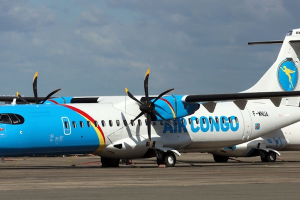
À l’issue d’un entretien tenu le lundi 27 avril 2026 entre le vice-Premier ministre, ministre des Transports, Jean-Pierre Bemba, le CEO d’Ethiopian Airlines, Mesfin Tasew Bekele, et le directeur général d’Air Congo, Mesfin Biru Weldegeorgis, le ministère des Transports a annoncé que la compagnie Air Congo, détenue à 51 % par l’État congolais, devrait recevoir un nouvel appareil de type ATR 72-600 ce jeudi 30 avril 2026.
Selon le ministère, cet appareil, d’une capacité de 70 sièges, est destiné à renforcer les vols intérieurs de la compagnie, dans un marché où la connectivité aérienne domestique reste limitée.
Quelques jours avant l’annonce du ministère des Transports, Air Congo avait communiqué sur l’ouverture de nouvelles destinations domestiques, notamment Beni, Bunia, Isiro, Gbadolite et Kalemie. La compagnie a notamment annoncé une liaison vers Bunia à partir du 1er mai 2026.
Ce premier appareil s’inscrit dans un lot de deux ATR 72-600 neufs loués par Ethiopian Airlines pour les opérations d’Air Congo, compagnie dont le groupe éthiopien détient 49 % du capital. En novembre 2025, ATR avait annoncé que l’entrée en service de ces deux appareils était prévue pour février 2026.
Le calendrier a toutefois été décalé. Début mars, le directeur général d’Air Congo indiquait au média spécialisé Ch-aviation que la première livraison était désormais attendue au cours de la première semaine ou à la mi-avril 2026. Il expliquait ce glissement par plusieurs facteurs, notamment les tests effectués par le constructeur et des difficultés de visas rencontrées par des techniciens d’Ethiopian Airlines ainsi que par le personnel de l’autorité éthiopienne de l’aviation civile appelés à se rendre en France.
Timothée Manoke
Lire aussi :
Air Congo ouvre ses 5 premières destinations régionales dès mars 2026
Air Congo renforce sa flotte et vise des liaisons régionales en 2026
Congo Airways : Jean-Pierre Bemba attribue le blocage de la relance à la CNSS
Jolie Mbala (ACB): “Compliance must be seen as a strategic investment”

During a workshop hosted by Visa on April 21–22, 2026 on the theme “Compliance, Reimagined,” the chair of the Compliance Committee of the Congolese Banking Association (ACB) spoke to Bankable. With the DRC still on the FATF grey list, Jolie Mbala outlines the sector’s priorities. The Chief Compliance Officer of Ecobank DRC argues for a risk-based approach, supported by digitalization, as a way to strengthen credibility, resilience and financial inclusion.
Bankable: Kinshasa hosted a two-day financial compliance workshop on April 21–22, bringing together regulators, banks and international stakeholders to reposition compliance as a strategic lever for the Congolese financial sector. What outcomes do you expect from these two days of discussions?
Jolie Mbala: This workshop is primarily about strategic alignment. First, it should improve the harmonization of expectations among regulators, banks and partners, particularly on compliance standards and how they are applied in the Congolese context.
Second, sharing experience and best practices should strengthen capacity across stakeholders, positioning compliance not as a regulatory burden or a constraint on business development, but as a driver of resilience, credibility and competitiveness for banks.
Finally, the forum should lead to a shared action plan covering knowledge-sharing, digital payments, risk management and inter-institutional cooperation. Visa’s involvement, alongside the Congolese Banking Association (ACB) and the Central Bank of the Congo (BCC), reflects this forward momentum.
Bankable: Since October 2022, the DRC has been on the FATF grey list, highlighting ongoing compliance challenges. What do you think is the most urgent priority for strengthening the compliance framework of the Congolese banking sector?
JM: The most urgent priority is strengthening the national framework for combating money laundering, terrorist financing and the financing of the proliferation of weapons of mass destruction (AML/CFT/CPF), through coordinated action involving public authorities, the Central Bank of the Congo, commercial banks and other key stakeholders.
Digitalization is fundamentally reshaping the risk landscape through higher transaction volumes and speed, reduced face-to-face interaction, new channels and players, and fragmented data
Significant progress has already been made. The overhaul of the AML/CFT/CPF legal and regulatory framework, the establishment and restructuring of enforcement institutions, and the DRC’s recent accession to ESAAMLG all indicate strong political commitment.
The focus now is on implementation. This includes stepping up AML/CFT/CPF prosecutions, improving data quality, building expertise, strengthening controls and enhancing public-private cooperation. Such coordination is essential for the DRC to secure an exit from the FATF grey list.
Bankable: What are the biggest challenges Congolese banks face today in meeting compliance requirements, particularly in anti-money laundering and counter-terrorism financing?
JM: Congolese commercial banks operate in a complex environment marked by the predominance of cash transactions and a large informal economy, limited availability and reliability of customer data, including the lack of a national ID system or equivalent documentation and a centralized population database, and a gap between international standards and local realities.
That said, the sector has shown strong resilience. Despite these constraints, banks are investing significantly in compliance systems, staff training and process modernization. The challenges are real but are being addressed.
Bankable: With the rise of digital payments, new risks are emerging, including digital fraud, money mules and crypto-assets. How are Congolese banks adapting to these evolving threats?
JM: Digitalization is fundamentally reshaping the risk landscape through higher transaction volumes and speed, reduced face-to-face interaction, new channels and players, and fragmented data. As a result, AML/CFT/CPF risks are becoming more complex and require more sophisticated responses.
At the same time, digitalization provides powerful tools to manage these risks, including automated transaction monitoring, traceable audit trails, AI-powered solutions and faster access to information.
A compliant bank is more stable, better protected from legal and reputational risks, and more credible for customers, investors and both domestic and international partners.
Led by the ACB, Congolese banks are strengthening transaction monitoring systems, investing in real-time AML/CFT/CPF detection tools and developing mechanisms to address emerging threats such as money mules and the misuse of crypto-assets.
Partnerships with technology players such as Visa, combined with the regulatory framework set by the BCC and the awareness efforts led by the ACB, are supporting a structured and secure transition aligned with international standards.
Bankable: With the entry of technology players such as Visa and the development of data-driven solutions, including analytics, credit scoring and fraud detection, how ready are Congolese banks to integrate these tools? And what obstacles remain before they can fully leverage data in compliance management?
JM: Yes. Congolese banks have already adopted these technologies. They have analytics and scoring solutions in place, along with automated monitoring systems, and many have introduced AI-powered tools.
The main challenges are no longer technological, but relate to the regulatory framework, data quality, systems interoperability and the development of the skills needed to use these tools effectively.
By taking part in this two-day forum, the Congolese Banking Association (ACB) is signaling the sector’s commitment to technology adoption, particularly in AML/CFT/CPF.
Bankable: How significant are compliance costs for banks, and how can these constraints be reconciled with financial inclusion goals and sector growth?
JM: Compliance represents a real cost for banks, given increasing regulatory demands, technology investments and the need for specialized talent. But it should not be seen as a burden. It is a strategic investment. A compliant bank is more stable, better protected from legal and reputational risks, and more credible for customers, investors and both domestic and international partners.
Through digitalization and risk-based approaches, banks can reduce compliance costs while improving the effectiveness of their controls. These innovations also support financial inclusion by expanding access to banking services in a secure and scalable way.
Ultimately, compliance, financial inclusion and banking sector growth are not in conflict. When properly integrated, they reinforce one another and support long-term development of the financial system.
Interview by Aboudi Ottou
DR Congo unveils $100 mln paramilitary unit to secure mining sector
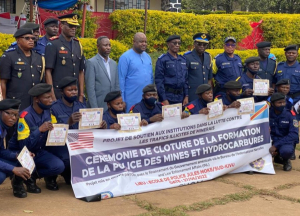
The Democratic Republic of Congo's General Inspectorate of Mines (IGM) announced on April 27 the creation of a paramilitary unit called the "Mining Guard," tasked with securing the country's entire mining value chain.
According to its statement, the unit's core missions will include securing mining sites, escorting minerals from extraction zones to processing facilities and export points, and strengthening traceability along the value chain.
The program is presented as being funded at $100 million and framed within strategic partnerships, notably with the United States and the United Arab Emirates. The announced timeline calls for recruitment to begin in May 2026, followed by six months of training in collaboration with the presidency’s military office, before a phased deployment. At full strength, the force could exceed 20,000 personnel deployed across the 22 mining provinces under IGM supervision by 2028.
The announcement drew criticism. Several Congolese observers noted that a Mining Police already exists within the national police force, responsible for security and oversight operations in the sector. They raised legal, budgetary and institutional questions, arguing the creation of a new force risks overlapping with existing mechanisms.
Reforms to the Anti-Fraud Framework
Congo established the Mining Police in December 2015 to take over security operations that had until then been handled by elements of the Armed Forces of the DRC (FARDC), and to formally prohibit their presence on mining sites. Multiple reports continue to document persistent involvement, as well as allegations of human rights abuses including arbitrary arrests, extortion and illegal occupation of sites.
According to Africa Intelligence, mining group Eurasian Resources Group (ERG) filed a complaint against senior FARDC officers over alleged illegal mining on an almost industrial scale on some of its concessions in the former Katanga region. Those activities reportedly caused losses estimated at nearly $2 billion per year for the company and the public treasury, according to that source.
Against that backdrop, the IGM said the Mining Guard is intended to progressively replace defense force elements currently deployed in mining zones. The statement, however, is silent on how the new unit will interface with the existing Mining Police. The legal text establishing the Mining Guard's creation, organization and operation is expected to clarify its chain of command and the scope of its powers regarding intervention, arrest and oversight.
The initiative comes amid broader reforms to mechanisms to combat mining fraud and smuggling. In 2025, authorities reorganized the National Commission to Combat Mining Fraud amid criticism over its effectiveness and operational coverage.
On the ground, difficulties securing the logistics chain remain visible. In Haut-Katanga, authorities recently introduced security escorts for trucks transporting copper cathodes along certain road routes to reduce the risk of looting.
Finally, the creation of the Mining Guard may also reflect an effort to build technical capacity in conjunction with external partners. Reports carried by the international press indicate the use of security advisory services, including through specialized private-sector actors, with the aim of improving oversight of mineral flows and securing revenue.
Timothée Manoke
Afreximbank Looks to Unlock DRC Mining Potential Through Bankable Projects
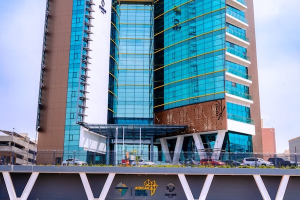
The African Export-Import Bank (Afreximbank) plans to expand across the mining value chain in the Democratic Republic of Congo, focusing on developing investment-ready projects.
The strategy was outlined in a statement released on April 23, 2026, following a mining value chain forum held on April 21 in Lualaba province. The event brought together mining operators, subcontractors, financial institutions and public-sector stakeholders to discuss financing constraints in the sector.
Afreximbank says the DRC’s mining potential remains underfunded due to a shortage of bankable projects. To address this, the bank plans to deploy several instruments, including asset-backed financing to mobilize long-term capital and a project preparation facility to support projects early in their development. The aim is to turn mining opportunities into projects that meet structured finance requirements.
The bank is also expanding its scope beyond extraction to cover the broader mining ecosystem. The plan targets mining companies, subcontractors, logistics operators, energy providers and small and medium-sized enterprises. The shift reflects a broader view that value creation depends not only on natural resources, but also on infrastructure, services and local players around mining sites.
Strengthening the role of local banks
Afreximbank is also relying on Congolese banks to mobilize financing. It plans to expand co-financing and guarantee mechanisms to increase lending capacity while managing risk. The strategy aims to unlock more domestic capital and improve credit flows to strategic sectors.
The bank also intends to roll out trade finance tools, including export pre-financing and factoring, to improve liquidity for businesses—particularly SMEs involved in mining subcontracting. These instruments could help firms with limited access to credit expand operations and integrate more deeply into the value chain.
The initiative builds on Afreximbank’s existing operations in the DRC. The bank is involved in developing special economic zones focused on battery and electric vehicle production under a regional project with Zambia. It is also financing a 200-megawatt hydroelectric project on the Lufira River to support the mining sector’s energy needs, including technical, financial and legal structuring.
Ronsard Luabeya
Afreximbank veut transformer le potentiel minier congolais en projets bancables
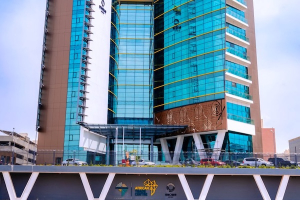
La Banque africaine d’import-export (Afreximbank) entend renforcer son positionnement dans le secteur minier congolais en ciblant désormais l’ensemble de la chaîne de valeur, avec un objectif central : identifier et structurer des projets bancables.
Cette orientation a été présentée dans un communiqué publié le 23 avril 2026, à l’issue d’un forum consacré à la chaîne de valeur minière, organisé le 21 avril dans la province du Lualaba. La rencontre a réuni des opérateurs miniers, des sous-traitants, des institutions financières ainsi que des acteurs publics autour des enjeux de financement du secteur.
Au cœur de l’approche d’Afreximbank se trouve une idée simple : le potentiel minier de la RDC reste largement sous-financé, faute de projets suffisamment structurés pour attirer des capitaux. La banque propose ainsi une série d’instruments destinés à combler ce déficit. Parmi eux figurent des mécanismes de financement adossés aux actifs des projets, permettant de mobiliser des ressources à long terme, mais aussi une facilité dédiée à la préparation des projets, conçue pour accompagner les initiatives dès leur phase initiale. L’objectif est de transformer des opportunités minières en projets viables, capables de répondre aux exigences du financement structuré.
Contrairement à une approche centrée uniquement sur l’extraction, Afreximbank élargit son intervention à l’ensemble de l’écosystème minier. Sont concernés les sociétés minières, les sous-traitants, les opérateurs logistiques, les fournisseurs d’énergie, ainsi que les petites et moyennes entreprises. Cette approche reflète une évolution stratégique : la création de valeur dans le secteur ne dépend pas seulement des ressources naturelles, mais aussi de la solidité des infrastructures, des services et des acteurs locaux qui gravitent autour des mines.
Renforcer le rôle des banques locales
Afreximbank mise également sur les banques congolaises comme relais du financement. L’institution prévoit de renforcer les mécanismes de cofinancement et de garantie afin d’accroître leur capacité de prêt tout en limitant leur exposition aux risques. Cette stratégie vise à mobiliser davantage de capitaux domestiques et à améliorer la circulation du crédit dans les segments jugés stratégiques.
La banque entend par ailleurs déployer des solutions de financement commercial, notamment le préfinancement des exportations et l’affacturage. Ces instruments visent à améliorer la liquidité des entreprises, en particulier des PME actives dans la sous-traitance minière. Pour ces acteurs, souvent confrontés à des contraintes d’accès au crédit, ces dispositifs pourraient faciliter l’expansion des activités et renforcer leur intégration dans la chaîne de valeur.
Ce positionnement s’inscrit dans la continuité des interventions d’Afreximbank en RDC. L’institution est notamment engagée dans le développement de zones économiques spéciales dédiées à la production de batteries et de véhicules électriques, dans le cadre d’un projet régional impliquant la RDC et la Zambie. Elle participe également au financement d’un projet hydroélectrique de 200 MW sur la rivière Lufira, destiné à soutenir les besoins énergétiques du secteur minier. Ce projet inclut un appui à la structuration technique, financière et juridique.
Ronsard Luabeya
Lire aussi :
Financement des PME : Rawbank mobilise 265 millions $ auprès d’un pool conduit par IFC
PME : le Fogec lance Bokeli pour dématérialiser les demandes de financement
Sous-traitance : Rawbank, l’ARSP et le FOGEC lancent des prêts jusqu’à 1 million $
Jolie Mbala (ACB) : « La conformité doit être perçue comme un investissement stratégique »

À l’occasion de l’atelier animé du 21 au 22 avril 2026 par Visa sur le thème « La conformité autrement », la présidente de la Commission conformité de l’Association congolaise des banques (ACB) s’est confiée à Bankable. Dans un contexte marqué par le maintien de la RDC sur la liste grise du GAFI, Jolie Mbala revient sur les priorités du secteur bancaire. La directrice de la conformité d’Ecobank RDC plaide pour une approche fondée sur les risques, soutenue par la digitalisation, afin de renforcer la crédibilité, la résilience et l’inclusion financière.
Bankable : Kinshasa a accueilli du 21 au 22 avril 2026 un atelier consacré à la conformité financière, réunissant régulateurs, banques et acteurs internationaux autour d’un objectif commun : repositionner la conformité comme un levier stratégique pour le secteur financier congolais. Quels résultats tangibles peut-on attendre à l’issue de ces deux jours de travaux ?
Jolie Mbala : Cet atelier est avant tout un moment de convergence stratégique. Les résultats attendus sont très concrets.
D’abord, une meilleure harmonisation des attentes entre les régulateurs, les banques et les partenaires. Ces attentes portent notamment sur les standards de conformité et leur application pratique dans le contexte congolais.
Ensuite, le partage d’expériences et de bonnes pratiques permet de renforcer les capacités des parties prenantes, en repositionnant la conformité non plus comme une contrainte réglementaire et un frein au développement commercial, mais comme un levier de résilience, de crédibilité et de compétitivité pour nos banques.
Enfin, ce forum devrait aboutir à des axes d’actions communs, notamment en matière de partage de connaissances, de digitalisation des paiements, de gestion des risques et de coopération entre institutions. La présence de Visa, en collaboration avec l’Association congolaise des banques (ABC) et la Banque centrale du Congo (BCC), illustre clairement cette dynamique tournée vers l’avenir.
Bankable : Depuis octobre 2022, la RDC figure sur la liste grise du GAFI, ce qui montre que la conformité demeure un défi majeur pour le pays. Quelle est, selon vous, la priorité la plus urgente pour renforcer durablement le dispositif de conformité du secteur bancaire congolais ?
JM : La priorité absolue me semble être le renforcement durable du dispositif national de lutte contre le blanchiment de capitaux, le financement du terrorisme et le financement de la prolifération des armes de destruction massive (LBC/FT/FP), dans une approche coordonnée entre les autorités publiques, la Banque Centrale du Congo, les banques commerciales et les autres parties prenantes.
La digitalisation transforme les risques à travers notamment, l’augmentation des volumes et de la vitesse des transactions, la diminution du contact physique avec le client, les nouveaux canaux et acteurs ainsi que la fragmentation des données. En ce sens, la digitalisation complexifie le risque BC/FT/FT et exige des approches plus sophistiquées.
Des avancées importantes ont déjà été réalisées : la révision du cadre légal et réglementaire en matière de LBC/FT/FP, la mise en place et la restructuration des institutions chargées de la LBC/FT/FP, ou encore l’adhésion récente de la RDC à l’ESAAMLG témoignent d’une volonté politique forte.
À présent, l’enjeu est d’accélérer la mise en œuvre effective des normes avec le renforcement des poursuites en matière de BC/FT/FP, l’amélioration de la qualité des données, la montée des compétences, l’optimisation des contrôles et une meilleure coopération entre le secteur public et le secteur privé. C’est cette cohérence globale qui permettra à la RDC de sortir durablement de la liste grise du GAFI.
Bankable : Quelles sont aujourd’hui les principales difficultés rencontrées par les banques en RDC dans la mise en œuvre des exigences de conformité, notamment en matière de lutte contre le blanchiment et le financement du terrorisme ?
JM : Les banques commerciales congolaises évoluent dans un environnement complexe, marqué par : la prédominance des opérations en numéraires (cash) et du secteur informel ; des défis liés à la disponibilité et à la fiabilité des données clients avec, entre autres, l’absence d’une carte d’identité nationale ou document assimilé ainsi que d’une base de données centralisée de la population ; et parfois un décalage entre normes internationales et réalités locales.
Cela dit, il est important de souligner la résilience du secteur bancaire congolais. Malgré ces contraintes, les banques commerciales investissent fortement dans les systèmes de conformité, la formation des équipes et la modernisation des processus. Les défis existent, mais ils sont clairement identifiés et activement adressés.
Bankable : Avec la montée des paiements digitaux, de nouveaux risques émergent, notamment les fraudes numériques, les money mules ou encore les crypto-actifs. Comment les banques congolaises s’adaptent-elles concrètement à ces nouvelles menaces ?
JM : La digitalisation transforme les risques à travers notamment, l’augmentation des volumes et de la vitesse des transactions, la diminution du contact physique avec le client, les nouveaux canaux et acteurs ainsi que la fragmentation des données. En ce sens, la digitalisation complexifie le risque BC/FT/FT et exige des approches plus sophistiquées.
Il convient toutefois de souligner que la digitalisation offre aussi des outils robustes pour maîtriser les risques susmentionnés : l’automatisation du monitoring, la traçabilité des données avec des pistes d’audit, le recours à des outils intégrant les capacités de l’intelligence artificielle et l’accès rapide à l’information.
Une banque conforme est plus stable, mieux protégée contre les risques juridiques et réputationnels, et plus crédible auprès des clients, des investisseurs ainsi que des partenaires nationaux et internationaux.
Avec l’impulsion de l’ACB, les banques congolaises renforcent leurs dispositifs de surveillance des transactions, investissent dans des solutions de détection de BC/FT/FP en temps réel, et développent des mécanismes spécifiques contre les risques émergents tels que les money mules ou l’utilisation abusive des crypto-actifs.
Le partenariat avec des acteurs technologiques tels que Visa, conjugué au cadre réglementaire défini par la BCC et aux actions de sensibilisation menées par l’ACB, permet une évolution structurée, sécurisée et alignée sur les standards internationaux.
Bankable : Avec l’arrivée d’acteurs technologiques comme Visa et le développement de solutions basées sur la data (analytics, scoring, détection de fraude), dans quelle mesure les banques congolaises sont-elles prêtes à intégrer ces outils, et quels défis restent à lever pour exploiter pleinement le potentiel des données dans la gestion de la conformité ?
JM : Oui, absolument. Les banques congolaises ont pris le virage technologique. Elles disposent déjà de solutions d’analytics, de scoring et de dispositifs de monitoring automatisé, et nombre d’entre elles ont recours à des outils intégrant l’intelligence artificielle.
Les principaux défis aujourd’hui ne résident donc plus dans la technologie elle-même, mais dans le cadre réglementaire, la qualité des données, l’interopérabilité des systèmes et le développement des compétences nécessaires pour exploiter pleinement ces outils.
L’Association Congolaise des Banques (ACB), à travers sa participation active à ces deux jours de forum, démontre l’engagement des banques commerciales en faveur de l’adoption des technologies notamment dans le domaine de la LBC/FT/FP.
Bankable : Dans quelle mesure les exigences de conformité pèsent-elles sur les coûts des banques, et comment concilier ces contraintes avec les objectifs d’inclusion financière et de croissance du secteur ?
JM : La conformité représente un coût réel pour les banques, en raison des exigences réglementaires croissantes, des investissements technologiques et des ressources spécialisées nécessaires. Toutefois, elle ne doit pas être perçue comme une charge, mais comme un investissement stratégique. Une banque conforme est plus stable, mieux protégée contre les risques juridiques et réputationnels, et plus crédible auprès des clients, des investisseurs ainsi que des partenaires nationaux et internationaux.
Grâce à la digitalisation et aux approches fondées sur le risque, les banques peuvent réduire les coûts unitaires de conformité tout en améliorant l’efficacité des contrôles. Ces innovations permettent aussi de faciliter l’inclusion financière en élargissant l’accès aux services bancaires de manière sécurisée.
En définitive, conformité, inclusion financière et croissance du secteur bancaire ne s’opposent pas : bien intégrées, elles se renforcent mutuellement et contribuent au développement durable du système financier.
Propos recueillis par Aboudi Ottou
Lire aussi :
Blanchiment d’argent : la RDC promet aux États-Unis une sortie de la « liste grise » en 2025
Banques : la BCC veut durcir les plans de prévention et gestion des crises d’ici juin 2026
Mines : la RDC annonce la création d’une unité paramilitaire à 100 millions $
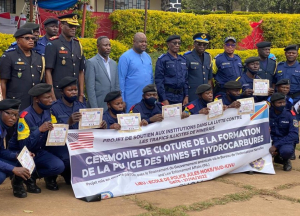
L’Inspection générale des mines (IGM) a annoncé, le 27 avril 2026, la création d’une unité paramilitaire dénommée « Garde minière », dédiée à la sécurisation de l’ensemble de la chaîne d’exploitation des minerais en République démocratique du Congo (RDC). Selon son communiqué, cette unité aura pour principales missions la sécurisation des sites miniers, l’escorte des minerais depuis les zones d’extraction jusqu’aux unités de traitement et aux points de sortie, ainsi que le renforcement de la traçabilité le long de la chaîne de valeur.
Le programme est présenté comme étant financé à hauteur de 100 millions de dollars et inscrit dans le cadre de partenariats stratégiques, notamment avec les États-Unis et les Émirats arabes unis. Le calendrier évoqué prévoit le lancement du recrutement dès mai 2026, suivi d’une formation de six mois en collaboration avec la Maison militaire, avant un déploiement progressif. À terme, les effectifs pourraient atteindre plus de 20 000 agents, répartis dans les 22 provinces minières sous supervision de l’IGM d’ici à 2028.
Cette annonce a suscité des réactions critiques. Plusieurs Congolais rappellent notamment qu’il existe déjà une Police des mines intégrée à la Police nationale, chargée de missions de sécurisation et de contrôle dans le secteur. Ils soulèvent des interrogations d’ordre juridique, budgétaire et institutionnel, estimant que la création d’une nouvelle force pourrait entraîner un chevauchement avec les dispositifs existants.
En décembre 2015, la RDC a créé la Police des mines pour répondre aux besoins de sécurisation des opérations jusqu’ici assurées par des éléments des Forces armées de la RDC (FARDC), et interdire officiellement leur présence sur les sites. Mais plusieurs rapports ont continué à documenter des cas d’interférences persistantes, ainsi que des allégations de violations des droits humains, incluant des arrestations arbitraires, des extorsions ou des occupations illégales de sites.
Réformes du dispositif de lutte contre la fraude
Selon Africa Intelligence, le groupe minier Eurasian Resources Group (ERG) aurait même déposé une plainte contre des hauts gradés des FARDC pour des faits présumés d’exploitation illégale à échelle quasi industrielle sur certaines de ses concessions dans l’ex-Katanga. Ces activités auraient engendré des pertes estimées à près de 2 milliards de dollars par an pour l’entreprise et pour le Trésor public, selon cette source.
Dans ce contexte, l’IGM indique que la Garde minière vise à remplacer progressivement les éléments des forces de défense actuellement déployés dans les zones minières. Mais le communiqué reste muet sur son articulation avec la Police des mines. Le texte portant création, organisation et fonctionnement de la Garde minière devrait permettre d’y voir plus clair et d’en savoir davantage sur la chaîne de commandement, ainsi que sur les pouvoirs de cette unité en matière d’intervention, d’arrestation ou de contrôle.
Par ailleurs, cette initiative s’inscrit dans un contexte plus large de réformes du dispositif de lutte contre la fraude et la contrebande minières. En 2025, les autorités ont procédé à une réorganisation de la Commission nationale de lutte contre la fraude minière, dans un contexte de critiques liées à son efficacité et à sa couverture opérationnelle.
Sur le terrain, les difficultés de sécurisation de la chaîne logistique restent visibles. Dans le Haut-Katanga, des mesures telles que l’instauration d’escortes sécuritaires pour les camions transportant des cathodes de cuivre sur certains axes routiers ont récemment été mises en place afin de limiter les risques de pillage.
Enfin, la création de la Garde minière pourrait s’inscrire dans une logique de renforcement des capacités techniques, en lien avec des appuis extérieurs. Des informations relayées par la presse internationale font état du recours à des services de conseil en sécurité, notamment via des acteurs privés spécialisés, dans le but d’améliorer le contrôle des flux miniers et la sécurisation des recettes.
Timothée Manoke
Lire aussi :
Mines illicites : la RDC veut réaffecter les équipements saisis à des opérateurs congolais
Lutte contre la fraude minière : Kinshasa muscle son dispositif de contrôle
Sécurisation des recettes minières : l’Américain Erik Prince recruté par Kinshasa
Envahissement des sites miniers : Kinshasa prépare la libération d’une concession d’ERG
DR Congo to reallocate seized equipment from illegal mines to local operators
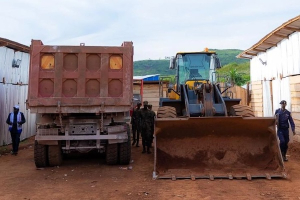
Democratic Republic of Congo President Félix Tshisekedi has instructed the government to set up an enforcement mechanism to combat illegal mining in Maniema, Ituri and Bas-Uélé provinces, following a Cabinet meeting on April 24.
The plan includes the systematic seizure of equipment used at illegal mining sites, which would then be redistributed under a transparent legal process. The equipment would be reassigned to licensed Congolese operators that meet environmental and social standards.
Authorities will also introduce measures to improve production tracking and site security, and pursue those involved in illegal mining, including their support networks.
The initiative will rely on a joint commission comprising provincial authorities, the mining administration, and defense and security forces. The body, launched by the Minister of Mines after his visit to the affected areas, is tasked with establishing accountability and recommending corrective measures.
Tshisekedi also instructed the ministers of Interior, Defense, Justice and Environment to support the mining ministry to ensure a response proportionate to the scale of the problem.
The Minister of Mines has been asked to submit proposals promptly to strengthen the human, technical and financial capacity of the General Inspectorate of Mines, with the aim of improving oversight of the sector over the long term.
Tshisekedi described illegal mining as an “organized plunder” of the country’s natural resources. According to the Cabinet readout, the activities involve the use of heavy machinery to extract gold and other strategic minerals worth billions of dollars each year, with no revenue reaching the state or local communities.
Ronsard Luabeya
Mines illicites : la RDC veut réaffecter les équipements saisis à des opérateurs congolais
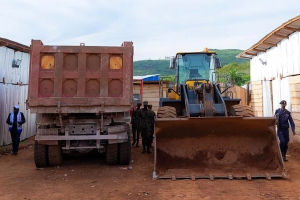
Le président Félix Tshisekedi a instruit le gouvernement de mettre en place un dispositif opérationnel et coercitif pour lutter contre l’exploitation minière illicite dans les provinces du Maniema, de l’Ituri et du Bas-Uélé. Cette orientation a été annoncée à l’issue du Conseil des ministres du 24 avril 2026.
Au cœur de cette stratégie figure un mécanisme de saisie et de réaffectation des actifs issus des activités illégales. Celui-ci prévoit la saisie systématique des engins utilisés sur les sites clandestins, suivie de leur redistribution dans un cadre légal et transparent. Les équipements récupérés seraient ainsi réaffectés à des structures congolaises qualifiées, engagées dans une exploitation conforme aux normes environnementales et sociales.
Le dispositif intègre également des mesures de traçabilité et de sécurisation des sites, ainsi que l’identification, la poursuite judiciaire et la sanction, sans complaisance, de l’ensemble des acteurs impliqués, y compris leurs réseaux de soutien.
Cette dynamique devrait s’appuyer notamment sur une commission mixte associant les autorités provinciales, l’administration minière ainsi que les forces de défense et de sécurité. Déjà initiée par le ministre des Mines à l’issue de sa mission dans les zones concernées, cette structure est appelée à identifier les responsabilités et à proposer des mesures correctives.
Dans ce cadre, le chef de l’État a demandé aux ministres en charge de l’Intérieur, de la Défense, de la Justice et de l’Environnement d’appuyer les efforts du ministre des Mines afin de garantir une réponse à la hauteur des enjeux.
Par ailleurs, le ministre des Mines a été chargé de formuler, dans les meilleurs délais, des propositions visant à renforcer les capacités humaines, techniques et financières de l’Inspection générale des Mines, en vue d’améliorer durablement le contrôle et la régulation du secteur.
Pour Félix Tshisekedi, l’exploitation minière illicite constitue une « spoliation organisée » des ressources naturelles du pays. Selon le compte rendu du Conseil des ministres, ces activités mobilisent des engins lourds pour l’extraction de l’or et d’autres minerais stratégiques, pour des valeurs se chiffrant en milliards de dollars par an, sans bénéfice pour le Trésor public ni pour les communautés locales.
Ronsard Luabeya
Lire aussi :
Envahissement des sites miniers : Kinshasa prépare la libération d’une concession d’ERG
Guillaume Ngefa s’attaque à l’exploitation minière illégale dans le Lualaba
Haut-Uélé : Kibali Gold touché par l’orpaillage illégal, les pertes encore inconnues
Exploitation illégale de l’or : 250 km de rivière endommagés en RDC en moins de 5 ans (rapport)
Sud-Kivu : 1600 entreprises minières illégales recensées (gouverneur)
Exploitation minière illégale : 7 ans de prison pour trois Chinois