





Equipe Publication
Industrial fund FPI rolls out ERP system to improve investment oversight
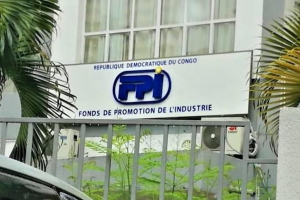
Fonds de promotion de l'industrie (FPI), a state-owned fund that finances industrial projects in the Democratic Republic of Congo, launched its integrated management system (ERP) on April 8 in Kinshasa as part of efforts to modernize and streamline its operations.
The digital platform is designed to automate processes and centralize operations, with the institution saying it will help improve performance, enhance transparency and optimize costs.
Director General Hervé Claude Ntumba Batukonke said the system replaces previously fragmented processes, marking a shift toward more structured and efficient operations. He added that it would help the FPI better organize its data flows and strengthen monitoring of its activities.
Developed with support from Tunisian firm Système Informatique de Gestion Automatisée (SIGA), the platform covers several core functions, including managing financing applications, tracking disbursements and projects, handling debt collection, overseeing the industrial development tax, as well as accounting, treasury, financial reporting, internal controls and risk management.
According to Stéphane Tshitende, director of information systems and project manager, the system also improves connectivity with partners, giving project developers and eligible companies real-time access to their financial information.
The launch follows several months of development. In October 2025, the FPI said the project was progressing with SIGA, which had been selected through an international tender, and identified digital transformation as a key priority.
The initiative aligns with the institution’s 2026–2028 action plan, which sets out a roadmap focused on improving institutional performance and modernizing management tools.
With the new system, the FPI aims to strengthen operational monitoring and improve visibility over the delivery of its mandate.
Ronsard Luabeya
Suivi des investissements : le FPI lance un système numérique de gestion
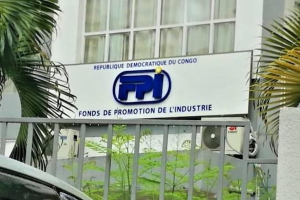
Le Fonds de promotion de l’industrie (FPI) a officiellement lancé, le 8 avril à Kinshasa, son système de gestion intégré (ERP), une plateforme numérique destinée à automatiser et à centraliser ses opérations. L’institution présente cet outil comme une étape majeure de sa modernisation, avec l’ambition de renforcer la performance, la transparence et la rationalisation de ses coûts de gestion.
Selon le directeur général, Hervé Claude Ntumba Batukonke, ce basculement numérique marque une rupture avec des méthodes de travail jusque-là fragmentées. Le nouvel outil doit permettre au FPI de mieux structurer ses flux d’information et d’améliorer le pilotage de ses activités.
Développée avec l’appui de la société tunisienne Système Informatique de Gestion Automatisée (SIGA), la solution couvre plusieurs fonctions clés de l’établissement. Elle intègre notamment la gestion des dossiers de financement, le suivi des décaissements et des projets, le recouvrement des créances, la gestion de la taxe de promotion de l’industrie, ainsi que la comptabilité, la trésorerie, le reporting financier, le contrôle interne et la gestion des risques.
Pour Stéphane Tshitende, directeur des systèmes d’information et chef de projet, cette plateforme renforce également l’interconnexion avec les partenaires de l’institution. Elle offre désormais aux promoteurs et aux entreprises assujetties un accès en temps réel à leur situation financière.
Ce lancement s’inscrit dans un chantier engagé depuis plusieurs mois. En octobre 2025, le FPI indiquait déjà que son projet de digitalisation avançait avec SIGA, retenue à l’issue d’un appel d’offres international, et que la transformation numérique figurait parmi les priorités de la nouvelle direction.
L’initiative s’aligne par ailleurs sur le plan d’action triennal 2026-2028 de l’institution, élaboré comme nouvelle feuille de route de la direction générale. Ce document place la performance institutionnelle et la modernisation des outils de gestion au cœur des réformes engagées par le FPI.
Établissement public chargé de soutenir l’industrialisation en République démocratique du Congo, le FPI finance et accompagne des projets productifs dans plusieurs secteurs. Avec ce système intégré, l’institution veut améliorer le suivi de ses opérations et disposer d’une meilleure visibilité sur l’exécution de ses missions.
Ronsard Luabeya
Lire aussi :
FPI : KPMG chargé d’assainir le portefeuille de prêts face aux difficultés de recouvrement
FPI : un système de gestion numérique attendu d’ici la fin de l’année
DR Congo, partners roll out $5 mln project to support services in Ituri
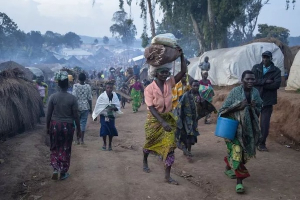
The governments of the Democratic Republic of Congo and South Korea, alongside UNICEF, launched a $5 million multi-sector project on April 8, 2026, in Kinshasa.
According to a joint statement, the funding will support access to essential services, including health, education and water, in a province where living conditions have steadily worsened.
Within the next seven days, the project will provide cash transfers to 4,500 households, or about 22,500 people. This mechanism, increasingly used in humanitarian responses, provides a short-term economic boost. By putting cash directly into communities, it supports basic consumption, stimulates local markets and sustains informal trade. The statement did not specify the amount allocated to this component.
Beyond immediate relief, the program focuses on key sectors to support economic recovery. In education, it will give 4,500 children and adolescents access to alternative learning and vocational training. This highlights a major concern in a province where more than 1.3 million children are out of school, undermining long-term human capital development.
In parallel, 5,760 children affected by violence are expected to receive comprehensive care, including psychosocial support. This component, often overlooked, is seen as essential to help communities re-engage in economic activity.
The project also includes the construction of 40 water points, providing safe drinking water to 38,000 people. Beyond the health impact, this will help restore basic conditions for economic activity by reducing time spent collecting water, improving household productivity and making communities safer.
Ituri province continues to face a complex crisis. As of August 2025, it was home to around one million internally displaced people and 700,000 returnees living in difficult conditions, according to the statement. The same source said violence has risen sharply, with a 46% increase in serious violations of children's rights in the first half of 2025, deepening instability and hindering economic recovery.
Boaz Kabeya
Ituri : un programme de 5 millions $ pour soutenir les populations affectées par les conflits
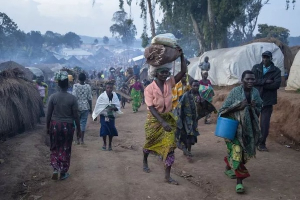
Le gouvernement de la République démocratique du Congo, la République de Corée et l’UNICEF ont lancé, le 8 avril 2026 à Kinshasa, un projet multisectoriel de 5 millions de dollars destiné aux populations affectées par les conflits dans la province de l’Ituri. Selon le communiqué conjoint, ce financement vise à soutenir l’accès aux services essentiels, notamment la santé, l’éducation et l’eau, dans une province marquée par une dégradation prolongée des conditions de vie.
Concrètement, dans les sept prochains jours, le projet prévoit notamment des transferts monétaires au profit de 4 500 ménages, soit environ 22 500 personnes. Ce mécanisme, de plus en plus utilisé dans les interventions humanitaires, agit comme un levier de relance économique à court terme. En injectant directement des liquidités dans les communautés, il soutient la consommation de base, alimente les marchés locaux et contribue à maintenir en activité le tissu commercial informel. Le communiqué ne précise toutefois pas l’enveloppe qui sera allouée à ce volet.
Au-delà de l’aide immédiate, le programme cible des secteurs clés pour la reconstruction économique. En matière d’éducation, il est prévu de donner à 4 500 enfants et adolescents un accès à des apprentissages alternatifs et à des formations professionnelles. Un enjeu majeur dans une province où plus de 1,3 million d’enfants sont privés d’école, compromettant à terme la qualité du capital humain.
Parallèlement, 5 760 enfants victimes de violences devraient bénéficier d’une prise en charge holistique, incluant un accompagnement psychosocial. Un volet souvent sous-estimé, mais présenté comme essentiel pour restaurer la capacité des populations à participer à l’activité économique.
Le projet prévoit également la construction de 40 points d’eau, permettant d’assurer l’accès à l’eau potable à 38 000 personnes. Au-delà de l’impact sanitaire, ce volet participe à la reconstitution des conditions minimales d’activité économique : réduction du temps consacré à la recherche d’eau, amélioration de la productivité des ménages et sécurisation des zones de vie.
La province de l’Ituri reste confrontée à une crise multidimensionnelle. En août 2025, elle comptait environ un million de déplacés internes et 700 000 retournés vivant dans des conditions précaires, selon le communiqué conjoint. La même source indique que les violences ont fortement augmenté, avec une hausse de 46 % des violations graves des droits de l’enfant au premier semestre 2025, aggravant l’instabilité sociale et freinant toute dynamique économique.
Boaz Kabeya
Lire aussi :
Or : MCC Ressources suspend ses activités après l’attaque de Muchacha en Ituri
DR Congo advances electrification plans with new solar deal
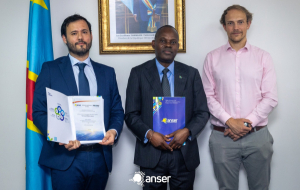
DR Congo’s national rural and peri-urban electrification agency, ANSER, said on Tuesday it had signed a commercial agreement with British firm Propav Infrastructure Limited to develop two solar power plants in Lualaba province.
The projects include a 55.4 MWp solar plant in Kyamasumba and a 65.2 MWp facility in Kapanga, referring to peak output under standard conditions.
The agreement marks the start of the project development phase, including financial structuring and technical studies ahead of construction. The planned financing relies on a British export credit mechanism, with expected support from UK financial institutions.
The project also includes local content provisions, knowledge transfer and training for ANSER staff and local stakeholders.
Propav Infrastructure Limited, registered in the United Kingdom in November 2021, operates in engineering, construction and infrastructure project development, according to public records.
The partnership is part of ANSER’s strategy to expand off-grid and peri-urban electrification as the Democratic Republic of Congo seeks to increase electricity access in underserved areas. Construction will depend on completing technical studies, securing financing and finalizing operational agreements.
Boaz Kabeya
DRC debut eurobond prices below peers, raises $1.25 billion
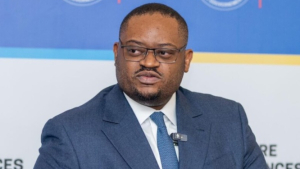
The Democratic Republic of Congo raised $1.25 billion in its debut eurobond, exceeding a revised target of $750 million set in late January, according to a statement published on April 9, 2026 by Rawbank, a co-coordinator and co-bookrunner of the deal.
The issuance was split into two tranches, a five-year note due in 2032 and a ten-year note due in 2037, with yields of 8.75% and 9.50%, respectively. The outcome came in below expectations from several analysts who had forecast double-digit borrowing costs.
The terms secured by the DRC, a first-time issuer with a speculative-grade rating, were lower than those paid by some regional peers with established market track records. Angola, rated B3 by Moody’s and B- by S&P Global Ratings, the same level as the DRC, paid 9.5% when it returned to markets in July 2025, its lowest yield in six years, according to Agence Ecofin data. The Republic of Congo issued a eurobond maturing in 2032 at 9.875% in November 2025, while Kenya paid 10.375% on a seven-year bond in February 2024.
Rawbank attributed the outcome to strong investor demand, with orders exceeding $5 billion across both maturities. The bank said the results reflected effective structuring that aligned investor expectations with the country’s fundamentals. As co-coordinator and co-bookrunner, Rawbank helped structure and place the bonds alongside international banks including Citigroup and Standard Chartered.
“For Rawbank, the objective is clear: to build and strengthen the DRC’s credit profile in international markets at levels consistent with investor expectations. We are proud to have supported this transaction, which could facilitate further international financing, including for non-sovereign issuers,” said Chief Executive Mustafa Rawji.
The DRC’s low debt burden likely supported investor appetite. Public debt stands at around 18% of GDP, well below the sub-Saharan African median of roughly 60% at end-2025, according to the IMF. Inflation remains low at about 2.3%, while growth is projected above 5%, driven by mining activity, which the World Bank says should also strengthen external balances.
The geopolitical environment also provided support. In December 2025, the DRC signed a bilateral agreement with the United States on strategic minerals, granting U.S. companies priority access to future mining concessions in exchange for diplomatic and security backing against AFC/M23 rebels backed by Rwanda. S&P Global this year revised the country’s outlook to positive, citing the rapprochement.
Market conditions also improved. A two-week ceasefire between the United States and Iran, announced on April 8, reopened a window for emerging-market issuance after tensions in the Middle East had temporarily curtailed activity.
The Finance Ministry described the operation as “historic,” with a spokesperson for Minister Doudou Fwamba calling it a “total success.” The deal was completed earlier than expected. Authorities had initially targeted completion before the end of the first half of 2026, but in a January report, the IMF had deemed issuance before mid-year “unlikely,” citing technical requirements, investor engagement and the need for parliamentary approval.
Pierre Mukoko
Solaire : l’ANSER s’allie à Propav pour développer deux centrales au Lualaba
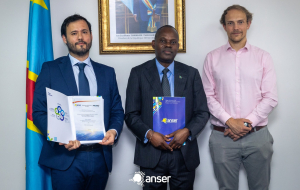
L’Agence nationale de l’électrification et des services énergétiques en milieux rural et périurbain (ANSER) a annoncé, le 8 avril 2026, la conclusion d’un accord commercial avec la société britannique Propav Infrastructure Limited pour le développement de deux centrales solaires dans la province du Lualaba.
Le projet porte sur une centrale solaire de 55,4 MWc à Kyamasumba et une autre de 65,2 MWc à Kapanga. Ces capacités correspondent à la production maximale théorique dans des conditions standard.
À ce stade, l’accord ouvre surtout une phase de structuration du projet. Selon les éléments communiqués, il doit permettre d’engager les discussions financières détaillées et de préparer les études techniques préalables à la réalisation des infrastructures. Le schéma envisagé repose sur un mécanisme de crédit-export britannique, avec l’appui attendu d’institutions financières du Royaume-Uni, en vue de mobiliser les ressources nécessaires à la concrétisation du projet.
Selon les informations rendues publiques, le projet intègre également des composantes liées au contenu local, au transfert de compétences et à la formation des équipes de l’ANSER ainsi que des acteurs locaux.
Basée au Royaume-Uni, Propav Infrastructure Limited est une société enregistrée en novembre 2021. Les données publiques britanniques indiquent qu’elle intervient dans les activités d’ingénierie, de construction et de développement de projets, y compris dans le domaine des infrastructures.
Ce partenariat s’inscrit dans la stratégie de l’ANSER visant à accélérer l’électrification hors réseau et périurbaine, alors que la RDC cherche à élargir l’accès à l’électricité dans les zones encore mal desservies. Mais la réalisation effective des deux centrales dépendra encore de la finalisation des études techniques, du bouclage du financement et de la formalisation des arrangements opérationnels.
Boaz Kabeya
Eurobond : la RDC surprend en levant 1,25 milliard $ à un taux à un chiffre
Pour son premier eurobond, la République démocratique du Congo (RDC) est parvenue à lever 1,25 milliard de dollars alors qu’elle avait revu ses ambitions à la baisse, à 750 millions de dollars, à la fin du mois de janvier. Selon un communiqué de Rawbank, co-coordinateur et co-chef de file de l’émission, publié le 9 avril 2026, l’emprunt est structuré en deux tranches de 5 ans (échéance 2032) et de 10 ans (échéance 2037), avec des rendements respectifs de 8,75 % et 9,50 %. Ces résultats contrastent avec les projections de plusieurs analystes, qui anticipaient des taux d’intérêt à deux chiffres.
Les conditions obtenues par la RDC, primo-émetteur noté spéculatif, sont d’ailleurs inférieures à celles de pays voisins disposant d’un historique de crédit. L’Angola, noté B3 par Moody’s Investors Service et B- par S&P Global Ratings — soit au même niveau que la RDC — a payé 9,5 % lors de son retour sur le marché en octobre 2025, son plus bas rendement en six ans, selon des données compilées par l’Agence Ecofin. La République du Congo, son voisin pétrolier au nord-ouest, a émis en novembre 2025 un eurobond à échéance 2032 au taux de 9,875 %. Le Kenya, première économie d’Afrique de l’Est, a payé 10,375 % pour un titre à sept ans en février 2024.
Pour Rawbank, ces rendements reflètent « une demande soutenue des investisseurs », qui ont souscrit pour plus de 5 milliards de dollars sur les maturités combinées à 5 et 10 ans, et illustrent « la capacité d’ingénierie financière mobilisée pour aligner les attentes des investisseurs avec les fondamentaux du pays ». Une partie de ce savoir-faire a été portée par Rawbank. En sa qualité de co-coordinateur et co-chef de file de l’émission, la première banque du pays a participé à la structuration de l’opération et au placement des titres aux côtés de banques internationales comme Citigroup et Standard Chartered.
« Pour Rawbank, l’objectif est très concret : positionner et valoriser le crédit de la RDC sur les marchés internationaux, aux niveaux adéquats et conformément aux attentes des investisseurs. Nous sommes fiers d’avoir accompagné cette opération, qui ouvre la voie à de nouveaux financements internationaux, y compris pour les émetteurs non souverains », a déclaré Mustafa Rawji, directeur général de la banque.
« Succès total »
Il est aussi possible que le faible niveau d’endettement de la RDC ait joué en faveur du pays dans les calculs des investisseurs. Le ratio dette publique/PIB de la RDC est proche de 18 %, bien en deçà de la médiane subsaharienne d’environ 60 % atteinte à fin 2025, selon des données du FMI. À cela s’ajoutent une inflation maîtrisée autour de 2,3 % et une croissance attendue à plus de 5 %, soutenue par l’activité minière qui, selon la Banque mondiale, devrait également améliorer la position extérieure du pays.
Le contexte géopolitique a ajouté un facteur de soutien. La RDC a signé avec les États-Unis, en décembre 2025, un accord bilatéral sur les minerais stratégiques, accordant aux entreprises américaines un accès prioritaire aux futures concessions minières en échange d’un engagement diplomatique et sécuritaire face aux rebelles de l’AFC/M23, soutenus par le Rwanda. S&P Global a relevé cette année la perspective souveraine de la RDC à positive en citant ce rapprochement.
L’opération peut aussi avoir bénéficié d’un contexte de marché plus favorable. Le cessez-le-feu de deux semaines entre les États-Unis et l’Iran, annoncé le 8 avril, a rouvert une fenêtre sur les marchés obligataires des pays émergents, temporairement fermée en raison des tensions géopolitiques au Moyen-Orient.
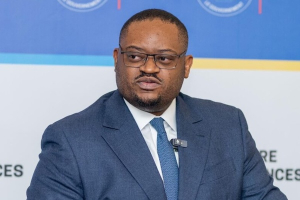
Pour le ministère des Finances, la RDC réalise ainsi une « entrée historique » sur les marchés financiers internationaux. Les services de communication du ministre Doudou Fwamba (photo) parlent d’un « succès total ». Il faut dire que l’opération a aussi été bouclée plus vite qu’attendu. L’objectif affiché par les autorités congolaises était de la finaliser avant la fin du premier semestre 2026. Mais dans un rapport publié en janvier dernier, le FMI estimait « peu probable » une émission avant la mi-2026, compte tenu des diligences techniques encore nécessaires, des échanges à conduire avec les investisseurs et de la nécessité d’obtenir une approbation parlementaire préalable.
Pierre Mukoko avec l’Agence Ecofin
Lire aussi :
Eurobond de la RDC : Rothschild & Cie décroche un contrat de 2 millions d’euros HT
Eurobond : la RDC réduit de moitié l’objectif de sa première émission à 750 millions $
Eurobond : le coup de pouce de Standard & Poor’s à la RDC
Eurobond de 1,5 milliard $ de la RDC : atouts, fragilités, inconnues…
Industrial fund FPI hires KPMG to tackle bad loan portfolio
Fonds de promotion de l'industrie (FPI), a public institution that finances industrial projects in the Democratic Republic of Congo, has awarded KPMG RDC a consulting contract to restructure its loan portfolio. The decision, signed on April 2, 2026, by Director General Hervé Claude Ntumba Batukonke, awards the contract for $138,729 before tax, or $160,925.64 including tax.
The award notice does not detail the exact scope of the mission assigned to KPMG. It states that the contract follows a procurement process launched in 2024, involving several no-objection clearances from Direction générale du contrôle des marchés publics covering the procurement plan, shortlist, request for proposals, and technical and financial evaluations. KPMG's offer, dated March 6, 2024, indicates that the process lasted at least two years.
Debt recovery a priority
The award comes as FPI has brought debt recovery back to the forefront. When he took office in August 2025, the director general identified loan repayment as a key priority of his tenure, arguing that the institution's ability to finance new industrial projects depends in part on recovering funds already lent.
In a statement issued at the time, FPI said all receivables would be identified and recovered, and pledged to establish a mechanism to ensure full repayment of both existing and future loans. It added that non-repayment was undermining its core mission of supporting industrialization.
This is not a new issue. In March 2020, then-Industry Minister Julien Paluku said about $150 million was already outstanding and gave borrowers 48 hours before forced recovery measures would be triggered.
The contract award to KPMG therefore reflects FPI’s ongoing effort to better structure the management of its loan portfolio, as debt recovery becomes a central lever to restore financial flexibility and support new industrial projects.
Timothée Manoke
FPI : KPMG chargé d’assainir le portefeuille de prêts face aux difficultés de recouvrement
Le Fonds de promotion de l’industrie (FPI) a attribué à KPMG RDC un marché de consultance portant sur l’assainissement de son portefeuille de prêts, selon une décision d’attribution définitive signée le 2 avril 2026 par son directeur général, Hervé Claude Ntumba Batukonke. Le marché a été attribué pour un montant de 138 729 dollars hors taxes, soit 160 925,64 dollars toutes taxes comprises.
La décision ne détaille pas le contenu exact de la mission confiée à KPMG. Elle indique en revanche que le marché est l’aboutissement d’une procédure engagée en 2024, avec plusieurs avis de non-objection de la Direction générale du contrôle des marchés publics sur le plan de passation, la liste restreinte, la demande de propositions, puis les évaluations technique et combinée. L’offre de KPMG mentionnée dans la décision est datée du 6 mars 2024, ce qui confirme que la procédure s’est étalée sur au moins deux ans.
Cette attribution intervient dans un contexte où le FPI remet au premier plan la question du recouvrement de ses créances. Lors de sa prise de fonction en août 2025, le directeur général avait présenté le remboursement des prêts comme une priorité de son mandat, estimant que la capacité de l’institution à financer de nouveaux projets industriels dépendait aussi du recouvrement effectif des fonds déjà engagés.
Dans un communiqué publié à cette occasion, la direction du FPI affirmait que « toutes les créances, sans exception, seront méticuleusement recensées et recouvrées », en promettant la mise en place d’un mécanisme destiné à assurer le remboursement intégral des prêts anciens et futurs. Le même texte soulignait que le non-remboursement des créances fragilisait la mission même du fonds, censé soutenir l’industrialisation du pays.
Le sujet n’est cependant pas nouveau. En mars 2020, le ministre de l’Industrie de l’époque, Julien Paluku, évoquait déjà environ 150 millions de dollars à récupérer auprès des débiteurs du FPI et annonçait un délai de 48 heures avant le déclenchement de mesures de recouvrement forcé pour les emprunteurs défaillants.
L’attribution de ce marché à KPMG peut ainsi être lue comme une nouvelle étape dans la tentative du FPI de mieux structurer la gestion et le nettoyage de son portefeuille de prêts, dans un contexte où la récupération des créances apparaît comme un levier central pour restaurer ses marges de manœuvre financières et relancer le financement de nouveaux projets industriels.
Timothée Manoke
Lire aussi :
Bags & Sacks sollicite un nouveau crédit du FPI pour élargir sa production
FPI–IDC : vers un cofinancement des projets en RDC, avec un objectif de 100 millions $