





Equipe Publication
Examens 2026 : Kinshasa cherche un traiteur, après un marché de 1,5 million $ en 2025
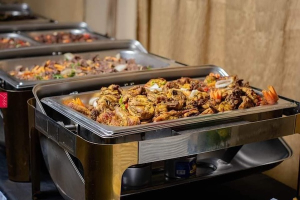
Le ministère de l’Éducation nationale et Nouvelle citoyenneté a lancé un appel d’offres en vue de recruter un prestataire de services, en l’occurrence un traiteur, chargé de la restauration des intervenants mobilisés pour la composition et l’impression des épreuves de l’Examen d’État et du Jury national du cycle court 2026.
Selon le dossier d’appel d’offres, daté du 13 avril 2026, le marché porte sur la restauration de 440 intervenants et est structuré en deux lots. Le premier concerne 130 intervenants affectés à la composition des épreuves pendant 24 jours. Le second porte sur 310 intervenants mobilisés pour l’impression des épreuves pendant 50 jours.
Les candidats intéressés peuvent obtenir le dossier complet auprès de la Cellule de gestion des projets et des marchés publics du ministère, contre un paiement non remboursable fixé à 750 dollars. Les offres doivent être déposées au plus tard le 22 avril 2026 à 11 heures, avec une garantie bancaire équivalente à 1 % du montant de l’offre par lot.
Les conditions de qualification exigent notamment la présentation des documents administratifs usuels, d’états financiers certifiés pour 2023, 2024 et 2025, ainsi qu’une expérience d’au moins deux marchés similaires exécutés entre 2021 et 2025. Les soumissionnaires devront également justifier d’une capacité de préfinancement appuyée par une attestation bancaire représentant au moins 5 % du montant de l’offre.
L’ordre de grandeur financier de ce marché peut être apprécié à partir de l’exercice précédent. En 2025, le marché comparable de restauration des intervenants pour l’Examen d’État et le Jury national du cycle court avait été attribué aux Établissements Ralph Services Print pour un montant total de 1 504 379,70 dollars TTC, réparti entre 200 257,20 dollars pour le premier lot et 1 304 122,50 dollars pour le second.
Les décisions d’attribution provisoire consultées montrent aussi que cette entreprise a obtenu, la même année, plusieurs autres marchés du ministère liés à l’organisation des examens nationaux. Il s’agit notamment de l’acquisition de fournitures de bureau et d’équipements informatiques pour la session ordinaire de l’Examen d’État et du Jury national du cycle court, pour 1 071 883,67 dollars TTC, du Test national de sélection et d’orientation scolaire et professionnelle 2025, pour 1 494 880,32 dollars TTC, et de l’Examen national de fin d’études primaires 2025, pour 1 907 580,52 dollars TTC. Au total, ces contrats représentent près de 6 millions de dollars.
Dans ce contexte, Ralph Services Print apparaît comme un opérateur déjà bien positionné sur les marchés publics liés aux évaluations certificatives.
Timothée Manoke
Carburants : plus de 8 % de hausse à la pompe, plus de 22 % pour le secteur minier
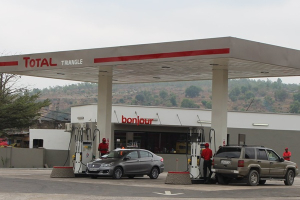
Depuis ce 17 avril 2026, de nouveaux prix des produits pétroliers sont en vigueur en République démocratique du Congo (RDC). Ils consacrent une hausse des prix à la pompe ainsi qu’une nouvelle augmentation pour le secteur minier, exclu des subventions aux carburants depuis la mi-2025.
Selon les nouvelles structures des prix, dans la zone Ouest, qui sert généralement de référence, le prix à la pompe du litre d’essence est relevé de 2 440 à 2 640 francs congolais (FC), tandis que celui du litre de gasoil passe de 2 430 à 2 635 FC, soit une hausse respective de 8,2 % et de 8,4 %. Dans la zone Nord, ces prix s’établissent respectivement à 3 350 FC et 3 345 FC.
Dans la zone Sud, les prix du litre d’essence et du litre de gasoil sont fixés respectivement à 3 930 FC et 4 465 FC. À l’est du pays, où les contraintes logistiques sont plus importantes, le litre d’essence et le litre de gasoil passent respectivement à 4 400 FC et 5 600 FC.
S’agissant du secteur minier, dans la zone Sud, les prix du litre d’essence et du litre de gasoil ont été relevés de 22,6 % et de 28,4 %, passant respectivement de 2,08 à 2,55 dollars et de 2,43 à 3,12 dollars. Cette hausse intervient après une première augmentation de 30 % pour l’essence et de 43 % pour le gasoil à la mi-mars. Cela porte la hausse cumulée à 59,4 % pour l’essence et à 83,5 % pour le gasoil en l’espace d’un mois.
Pour la zone Est, les prix du litre d’essence et du litre de gasoil sont passés respectivement à 2,06 dollars et 3,1 dollars contre 1,60 dollars et 1,65 dollars en juillet 2025, soit une hausse de 28,7% et 88%.
Sécurisation de l’approvisionnement
Selon un communiqué du ministère de l’Économie nationale, cette révision a été validée à l’issue de la réunion du Comité de suivi des prix des produits pétroliers (CSPPP), tenue du 15 au 16 avril. Elle vise à concilier la préservation du pouvoir d’achat des ménages avec l’adaptation aux fluctuations du marché international.
Cette décision intervient dans un contexte de fortes tensions sur les marchés internationaux des hydrocarbures. Depuis le début du conflit au Moyen-Orient, les prix du baril de Brent oscillent autour de 100 dollars, contre 60 à 70 dollars en moyenne auparavant.
Pour sécuriser l’approvisionnement du marché intérieur en produits pétroliers, le gouvernement prévoit la mise en place d’un mécanisme de paiement d’avances en faveur des sociétés commerciales, avec l’appui des ministères sectoriels. Par ailleurs, le CSPPP a retenu le principe du paiement anticipé des avances liées aux pertes et au manque à gagner, en amont du processus de certification trimestrielle, afin de répondre aux contraintes de trésorerie des opérateurs dans un environnement économique sous pression.
Dans la même dynamique, les autorités congolaises explorent également de nouveaux circuits d’approvisionnement. Le ministre de l’Économie nationale, Daniel Mukoko Samba, étudie notamment la possibilité de recourir à la raffinerie Dangote, au Nigeria, afin de diversifier les sources d’importation et de réduire les tensions sur la chaîne logistique.
Ronsard Luabeya
Lire aussi :
Carburants : de nouveaux prix attendus en RDC cette semaine
Carburants : Kinshasa prépare l’opinion à une possible hausse des prix à la pompe
Carburants : la RDC explore la piste Dangote, déjà convoitée en Afrique
Carburants : la fin des exonérations fiscales des miniers fait bondir les recettes en RDC
Eurobond : Tshisekedi met en place un dispositif de suivi des 1,25 milliard $
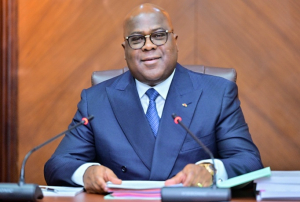
À peine l’eurobond de 1,25 milliard de dollars levé, le président Félix Tshisekedi a fixé une ligne claire : la réussite de cette opération dépendra désormais de la rigueur dans la gestion des fonds et de la concrétisation rapide des projets financés.
Lors de la réunion extraordinaire du Conseil des ministres du 15 avril, le chef de l’État a rappelé que « ce à quoi les marchés ont souscrit, ce n’est pas seulement une obligation financière, mais une promesse : celle d’un État gouverné avec ordre, prévoyance et responsabilité ». Cette émission, sursouscrite plus de quatre fois, traduit, selon lui, une « avancée de confiance » qu’il faudra consolider par des résultats tangibles.
Pour encadrer l’utilisation des fonds, Félix Tshisekedi a exigé la mise en place d’un dispositif de suivi strict et multiforme. Il a chargé la Première ministre, Judith Suminwa, de mettre en place une commission interinstitutionnelle chargée de superviser l’exécution des investissements. Celle-ci devra regrouper les ministères du Plan, des Finances et les secteurs concernés, ainsi que des représentants de la présidence de la République.
Le président a également insisté sur une « traçabilité irréprochable » des ressources et a chargé le ministre des Finances, Doudou Fwamba, de mettre en place un système de suivi « structuré, accessible et opposable ». Il a aussi demandé la mobilisation des institutions de contrôle : l’Inspection générale des finances (IGF) devra assurer un contrôle annuel de conformité, tandis que la Cour des comptes transmettra au Parlement un rapport sur l’exécution de l’emprunt.
En complément, le gouvernement devra produire un rapport trimestriel détaillant l’état d’avancement des projets, les montants engagés et les écarts constatés.
Par ailleurs, lors d’une conférence de presse tenue le 13 avril à Kinshasa, le ministre des Finances a annoncé vouloir associer le PNUD comme tiers témoin du suivi de l’utilisation des fonds. Il a également promis d’informer la population sur l’affectation des 1,25 milliard de dollars et d’inviter, dans un délai d’un an, les investisseurs à constater l’état d’avancement des réalisations financées.
Portefeuille des projets
Le chef de l’État a posé un principe central : « la dette n’est soutenable que lorsqu’elle finance la création de richesses ». Les ressources devront être orientées vers des projets « structurants, bancables », capables de générer un retour économique. Dans cette logique, le ministre des Finances, Doudou Fwamba, a précisé que seuls les projets disposant d’un niveau de maturité suffisant, notamment des études de faisabilité, ont été retenus. L’objectif est d’éviter des financements improductifs, alors que le coût de l’emprunt atteint 9 %.
Ainsi, les projets appelés à absorber ces ressources sont au nombre de sept et s’inscrivent dans les priorités du Plan national stratégique de développement 2024-2028.
Le premier bloc concerne le transport. Il comprend la construction d’un nouveau terminal de 49 000 m² à l’aéroport de N’djili, avec une capacité annoncée de 5 millions de passagers par an. Il inclut aussi la réhabilitation de 750 km de route entre Kisangani et Beni, un axe clé pour la desserte du nord-est. À Kinshasa, le gouvernement prévoit en outre 300 km de routes urbaines ainsi qu’une rocade de 31 km avec échangeurs et ponts pour désengorger la capitale.
Le second bloc relève de l’énergie. Il porte sur une ligne de transmission de 330 kV entre la Zambie et la ceinture cuprifère congolaise, ainsi que sur la centrale hydroélectrique de Katende, projet auquel seraient associés les réseaux de distribution dans le Kasaï-Central. Le ministère présente ces investissements comme des actifs capables de produire des revenus et d’améliorer durablement l’offre d’électricité.
Le troisième bloc concerne le capital humain. Il prévoit la création de centres de formation professionnelle à Kinshasa, Kisangani, Mbuji-Mayi et Lubumbashi, avec l’objectif affiché de rapprocher l’offre de formation des besoins du marché du travail.
Pierre Mukoko et Boaz Kabeya
Lire aussi :
Eurobond : la RDC surprend en levant 1,25 milliard $ à un taux à un chiffre
DR Congo central bank, Citibank discuss reserves, compliance as gold strategy shifts
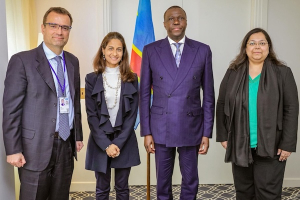
The Democratic Republic of Congo’s central bank held talks with Citibank on reserve management and compliance after a meeting in Kinshasa on April 14, 2026, between Governor André Wameso and a delegation from the U.S. bank.
In a statement, the Central Bank of the Congo (BCC) said discussions focused on foreign exchange reserve management, best practices for monetary gold holdings and compliance requirements for financial institutions.
Citibank backed the BCC’s plan to build gold reserves. The central bank also signaled it wants to strengthen cooperation with Citi through technical support and expertise in reserve asset management.
The talks come as the BCC shifts its reserve strategy, with growing interest in gold as a stabilizing asset. They also reflect efforts to align more closely with international standards, particularly on governance and compliance.
No formal agreement was announced, and discussions remain at the level of technical cooperation, with both sides exploring potential collaboration as central banks seek to improve reserve management and strengthen integration into the global financial system.
Citibank, a subsidiary of Citigroup, has operated in the Democratic Republic of Congo since 1971. It mainly serves multinational companies, public institutions and large enterprises, offering treasury management, trade finance and institutional financial services.
Ronsard Luabeya
Route Penemwanga–Bukavu : la RDC recrute une firme pour la réalisation des études
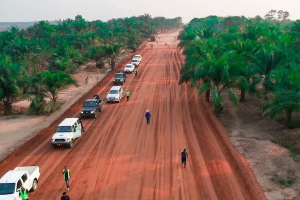
La République démocratique du Congo a lancé un avis de sollicitation de manifestations d’intérêt pour recruter une firme chargée de réaliser les études techniques et économiques du tronçon Penemwanga–Bukavu de la Route nationale n°2 (RN2), long de 344 km, ainsi que les dossiers d’appel d’offres en vue de son aménagement et de son bitumage. L’avis a été publié dans le cadre du Projet d’appui à la connectivité et au transport (PACT), financé par la Banque mondiale.
Selon l’avis, la mission du consultant comportera trois volets. Il devra d’abord déterminer l’option optimale d’aménagement de la route reliant Bukavu à Penemwanga, sur la base d’une évaluation comparative des variantes possibles, en tenant compte de critères techniques, économiques et environnementaux. Il devra ensuite réaliser les études techniques détaillées de l’option retenue, puis élaborer les dossiers d’appel d’offres, avec possibilité d’un allotissement en plusieurs tronçons afin de faciliter l’exécution future des travaux.
Le démarrage des prestations est prévu à partir du mois d’octobre 2026, pour une durée estimée à seize mois. La sélection se fera selon la méthode fondée sur la qualité et le coût, conformément aux règles de passation de marchés de la Banque mondiale.
Les firmes candidates devront justifier d’une expérience en ingénierie routière et en gestion de projets routiers, d’une maîtrise des procédures de la Banque mondiale, ainsi que d’au moins dix ans d’expérience générale dans les travaux publics. L’avis exige également au moins deux références prouvées dans le domaine des routes revêtues, dont une en Afrique subsaharienne, ainsi qu’une expérience d’études technico-économiques et d’études détaillées sur un linéaire significatif.
Le projet s’inscrit dans la logique du PACT, qui vise à restaurer des liaisons routières structurantes et à améliorer la connectivité dans plusieurs provinces du pays avec l’appui de la Banque mondiale. Pour Kinshasa, l’objectif est de préparer à terme l’aménagement d’un axe stratégique pour la desserte du Sud-Kivu, dans un contexte marqué par de forts besoins de mobilité, de réduction des coûts logistiques et de désenclavement.
Les manifestations d’intérêt doivent être déposées auprès de la Cellule Infrastructures au plus tard le 22 avril 2026.
Boaz Kabeya
Lire aussi :
Inga 3, routes, réformes… : Kinshasa en voie d’obtenir 1,5 milliard $ de la Banque mondiale
Un projet d’autoroute reliant des provinces du centre et de l’est en cours de finalisation
DR Congo pitches youth benefits card, eyes wider access to services
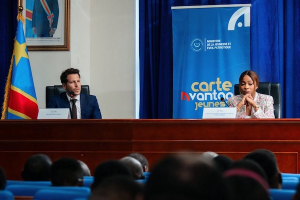
Democratic Republic of Congo’s Minister of Youth and Patriotic Awakening, Grace Kutino, has presented the “Carte Avantage Jeune RDC” project to a panel of companies and partners, the ministry said in a statement on April 15, 2026.
The initiative aims to provide young people with everyday benefits through a network of partner companies.
Targeted sectors address several priority needs. In healthcare, the project offers discounts on medical consultations and easier access to essential medicines. In transport and mobility, it provides for preferential rates on public and private services. The employment and entrepreneurship component includes access to internships and job opportunities, discounts on selected professional services, and support for business creation through coaching and mentoring.
The ministry said companies are invited to join the program and specify the benefits they will offer, such as discounts, cashback, services or experiences. They are also expected to progressively integrate into a partner network supporting the rollout of the system.
The Congolese project follows a model already implemented in Côte d’Ivoire. Officially launched in December 2025, the “Carte Jeunes” targets people aged 15 to 40 and provides access to benefits across sectors including telecommunications, transport, commerce, education, training and leisure, through both a physical card and a mobile application. That experience suggests the model’s success depends largely on sustained private-sector participation and the provision of simple, tangible benefits.
In the DRC, the initiative remains at a preparatory stage. A memorandum of understanding was signed in early April 2026 between the ministry and Gravity Group Ind. LLC, a subsidiary of Toppan Security, to support the system’s development. The company specializes in the production and personalization of secure documents, including identity cards, bank cards, transport tickets and SIM cards.
At this stage, the “Carte Avantage Jeune RDC” remains under development. Its success will depend on companies’ effective participation, the quality of the benefits offered, and the government’s ability to build a credible partner network targeting young people.
Timothée Manoke
Debt, Taxes and Hard Choices: Africa Must Maintain Its Fiscal Reform Momentum" — Era Dabla-Norris, IMF

The April 2026 Fiscal Monitor reveals that the global fiscal gap has nearly closed, yet Africa's picture remains deeply uneven. Several African countries have returned to international bond markets, raising nearly $31 billion since 2025, but at the cost of shorter maturities and higher yields.
In this exclusive interview, Era Dabla-Norris, Deputy Director of the IMF's Fiscal Affairs Department, assesses the real fiscal outlook for sub-Saharan Africa against a backdrop of tightening global financing conditions and declining official development assistance.
She addresses the risks of front-loading sovereign debt refinancing, the role of diaspora remittances, and the growing sovereign-bank nexus that threatens private credit in the region. She also explains why the IMF's call for tax base broadening is not about squeezing households further, but about closing compliance gaps and eliminating inefficient exemptions.
Ecofin Agency: What we've seen is that the April Fiscal Monitor documents the global fiscal gap has virtually disappeared. But what we've seen is that Africa is often treated as a monolithic reality by debt investors — those who are providing the funds. So my question is: we are in the middle of this conflict in the Persian Gulf, but before this reality, which we all hope will reach an end, what was the picture of the fiscal gap in Africa? Who was genuinely closing the gap, and who was having more challenges within the region?
Era Dabla-Norris: First, let me define what we mean by the global fiscal gap. By global fiscal gap, we mean the distance between countries' actual primary balances and the level needed to stabilise debt ratios. That's the gap we're looking at. And what we find in this Fiscal Monitor is that this gap is expected to narrow significantly — from 1.2% of GDP in the five years before the pandemic (2014 to 2019) to just 0.1% between 2024 and 2029. And this gap is really driven almost entirely by higher primary spending and weaker revenue performance.
That's the global picture. When you zoom in on low-income developing countries, including countries in sub-Saharan Africa, the picture is slightly different. Public debt is projected to decline on average from about 48.2% of GDP in 2025 to about 44% by 2031. So if you look at the longer-term trajectory, debt is projected to decline. And while this outlook is definitely encouraging — and much of it is coming from higher real growth in many countries — African countries in sub-Saharan Africa have been doing pretty well on the growth front, and that higher growth has supported stronger fiscal outcomes. But it masks substantial heterogeneity. Within the region, there is significant variation in the extent to which fiscal balances are improving. Let's not forget that many countries continue to remain in debt distress. Let's not forget that foreign aid flows have declined. And for many non-investment-grade, non-frontier market countries, access to financial markets remains very constrained. So there is considerable heterogeneity in fiscal outcomes, future growth prospects, and the availability of financing. And there remains considerable scope to strengthen primary balances across several countries.
EA: Since 2025, until very recently, with the DRC raising $1.25 billion in the international debt market, we have seen several African countries returning to the international bond markets. From our calculations, they have raised almost $31 billion. Some have been successful with attractive interest rates, but some have returned with really high yields. So my question is: how do you see the opportunities for African countries to continue relying on these international bond markets, given that some are facing fiscal space constraints? They cannot raise more taxes, but they still have significant fiscal spending needs from their populations.
Era Dabla-Norris: For the countries that have been able to borrow, it is a good thing — but as you said, it is also a bit of a mixed blessing. Let me make two points.
Firstly, we are seeing a broad rise in sovereign borrowing costs across even the systemically important, large economies. This reflects a combination of factors — domestic fiscal pressures in the US and other advanced economies, as well as external shocks and the uncertainty we have been discussing: geopolitical tensions, trade fragmentation, and heightened policy uncertainty. These are pushing up the term premium. While there was a window where financing conditions had eased, conditions since the war in Iran have begun to tighten again. Global investors are increasingly moving towards safer assets. And one big concern is that, irrespective of what countries in sub-Saharan Africa are doing, the global landscape really matters. Higher term premia in systemically important countries such as the US can spill over to other countries, as we show in the Fiscal Monitor. This can be very damaging, particularly for countries with limited fiscal space and low policy credibility, because it pushes up refinancing costs even if domestic policy does not change much.
Now, for lower-rated emerging-market borrowers — B-rated borrowers, including several African sovereigns — issuance volumes have fallen to about a third of 2017 levels. At the same time, average maturities have shortened from about 16 to 8 years. This sharp decline in maturity suggests that market access is really being maintained by front-loading refinancing risk, rather than measurably improving debt sustainability. So there is a real risk that countries could be vulnerable to further tightening in global financing conditions. Given the uncertainty we're facing, we don't know whether financing conditions globally will tighten further.
Now, for lower-rated emerging-market borrowers — B-rated borrowers, including several African sovereigns — issuance volumes have fallen to about a third of 2017 levels. At the same time, average maturities have shortened from about 16 to 8 years.
My second point is that, on top of these refinancing risks stemming from the external environment, interest payments for many countries have reached historic levels, averaging up to 15% of total revenues in low-income developing countries. This is more than 5 percentage points higher than in 2015. At the same time, official development assistance has fallen from about 1.8 to 1.5% of GDP over the same period. So there is good news for countries that have been able to borrow, but we need to be mindful that front-loading carries risks, and that interest payments are taking a significant chunk of revenues.
In the Fiscal Monitor, we underscore that even in this challenging environment, market access can continue — but it really hinges on credible domestic fiscal frameworks. Countries that have more realistic macro assumptions, clear medium-term anchors, and a track record of fiscal discipline are better positioned to contain spreads and maintain access. Fiscal discipline is an important ingredient in this equation.
EA: We keep talking about this, Era. I know these are tough questions, but African countries have been asked to maintain fiscal discipline, even though many developed countries are not at all disciplined in how they manage their finances. But now we have this war in the Middle East, raising the cost of energy and fertilisers, and it is going to raise the cost of imported goods because maritime transport will be more expensive. While reading the Fiscal Monitor, I still saw this warning about broad-based price subsidies. The IMF is still warning countries against jumping into broad-based price subsidies. But as you may know, in the African region, it is never easy because 60% of the economy is informal, and reliable data is hard to come by. Are you working on alternatives to these warnings?
Era Dabla-Norris: Let me answer your question in three points. I completely agree that many systemically important economies need to get their fiscal house in order. But the important point for emerging markets and developing economies, including in Africa, is that — as the saying goes — when a large country sneezes, the rest of the world catches a cold. Your availability of fiscal space is really conditional on the external shocks that come your way. The Fiscal Monitor makes this point forcefully: countries are subject to spillovers from uncertain market conditions and higher term premia in advanced economies, which means they have less room for manoeuvre automatically, even when the domestic situation is going well.
On top of that, countries in sub-Saharan Africa, like many other parts of the world, have a weaker starting point than existed before the pandemic. We are fundamentally in a different world. Initial conditions are different. The possibility of spillover shocks from large countries is high. There is rampant uncertainty. And there is more limited fiscal space. That is the environment in which all countries — not just in sub-Saharan Africa — are operating.
Having said that, when we consider the current war and energy subsidies, we recognise that this is very challenging for vulnerable households and some firms. But the advice is that in the face of energy price shocks, allowing domestic energy prices to adjust remains the first-best option where feasible. This does not mean an immediate pass-through of negative supply shocks, but rather an established mechanism to smooth the process, preserving price signals without compounding supply constraints.
Many African countries have in place surprisingly modern technologies to support citizens, such as mobile money wallets. Leveraging these ready-to-use digital technologies allows governments to reach the most vulnerable households rather than implementing broad-based mechanisms in an environment of much more constrained fiscal space.
Given that many countries in sub-Saharan Africa have much more limited fiscal space than they did in 2017, 2018, or even 2019, broad discretionary interventions should really be the exception rather than the norm. If governments are going to face pressures to provide support, it should be temporary, narrowly focused on measures that protect the most vulnerable, and scalable back as conditions normalise — rather than open-ended subsidies that are fiscally very costly and, as we know from experience, very difficult to unwind. Many of these subsidies are regressive.
I hear your point about low-capacity settings. But I think the COVID pandemic taught us something important: it is possible to leverage existing mechanisms, however imperfect, rather than building new systems to address shocks. For instance, many African countries have in place surprisingly modern technologies to support citizens, such as mobile money wallets. Leveraging these ready-to-use digital technologies allows governments to reach the most vulnerable households rather than implementing broad-based mechanisms in an environment of much more constrained fiscal space.
EA: It has been documented that diaspora remittances in Africa are almost exceeding both foreign direct investment and official development assistance, given that both have declined. Some countries, like Senegal and Nigeria, have engaged their diaspora through diaspora bonds. But most of the time, the extent to which diaspora remittances can contribute to fiscal consolidation or strengthen fiscal space is not well measured by African governments. How does the IMF see diaspora remittances playing a role in strengthening the fiscal space for African governments?
Era Dabla-Norris: It is very important to recognise that in sub-Saharan Africa and many other developing economies, remittances can be a very important source of income flows. They are fundamentally private transfers between families and households. When remittances are spent on goods and services domestically, they support economic activity and can have important fiscal implications. In many countries, they serve as a safety net for households and families.
When we think about fiscal adjustment and what governments can do, the heavy lifting should come from efforts to mobilise additional revenues — broadening tax bases and improving spending efficiency — rather than from trying to capture remittances directly. In fact, remittances are often a stable and counter-cyclical source of income: when things are going badly in a country, remittances from abroad tend to increase, and vice versa. They can be a very important source of consumption and investment.
With the right policies, countries can leverage their diaspora by reducing remittance costs, building communication strategies, relaxing legal barriers for diaspora investors, and marketing infrastructure bonds — channelling remittances not just into consumption but into investment that supports future growth.
With the right policies in place, countries can leverage their diaspora communities. There are a few practical steps the IMF has outlined. First, countries could reduce remittance costs by improving payment infrastructure, strengthening regulation, and enhancing competition, thereby allowing remittances to reach intended beneficiaries at a lower cost. Second, they could have a sound communication strategy that highlights the benefits of the diaspora and develops these networks — formal or informal — for communities. Third, governments could encourage investment by relaxing legal barriers and capital flow restrictions faced by diaspora members. They could support public investment by marketing bonds that cater to diaspora interests — such as infrastructure bonds. And more broadly, improving the overall business environment and governance can allow remittances to be channelled not just into consumption but into investment that supports future growth.
On diaspora bonds specifically, we always advocate that they be carefully designed, with proper safeguards against tax evasion, to ensure they do not crowd out other domestic funding priorities and align with broader fiscal management practices.
EA: The IMF has increasingly highlighted that borrowing from local commercial banks can have positive effects, yet one significant consequence is the crowding out of financing for the private productive sector. The IMF also argues that strengthening tax administration capacity could help generate additional revenue. However, higher corporate taxes risk making businesses less willing to cooperate with the state — fueling a perception that they are simply working to hand their earnings over to governments. So how do you see African governments breaking out of this double bind: on one side, sovereign borrowing from local banks that leaves those banks with less to lend to businesses; and on the other, raising the tax burden on companies in ways that may drive them to conceal part of their income?
Era Dabla-Norris: The pressures you identify are increasingly relevant. With high external borrowing costs, elevated financing needs, and limited international market access, governments in the region have definitely shifted to domestic financing. Domestic bank holdings of sovereign debt now exceed about 20% of bank assets in sub-Saharan Africa as of 2024, and they have grown faster than in the rest of the world. You are right that this growing sovereign-bank nexus could crowd out private credit and increase financial stability risks. A sharp decline in bond values would weaken bank balance sheets at precisely the time when governments have limited capacity to support distressed banks. That financial stability risk is well understood.
But I genuinely believe that broadening the tax base tends to alleviate rather than exacerbate this constraint. The government has a financing gap and is issuing debt held by commercial banks. If that financing could be done in a less distortionary way — without shakedowns, with the right processes and mechanisms in place — then it could be addressed through revenue mobilisation, as is done in many other parts of the world.
The Fiscal Monitor shows that, with tax gaps at about 5% of GDP in low-income developing countries, well-designed tax administration reforms — not even tax policy changes, not raising rates — can increase compliance and raise revenue by 0.8 to 1.8% of GDP per year. That is significant. These gains come from strengthening core functions: how taxpayers file, how they register. Countries can leverage digitalisation and AI for this. Countries can also rationalise tax expenditures — about 20% of tax revenues in low-income developing economies are effectively given away through the tax system. Closing these loopholes can generate additional revenue without raising statutory rates or placing an additional burden on existing formal-sector taxpayers. Countries in Africa — Nigeria, Rwanda, Togo, and Ghana — have actually pursued reforms precisely along these lines.
At the same time, countries will need to strengthen financial resilience to mitigate risks associated with the sovereign-bank nexus. Priorities include strengthened supervision, disclosures, and stress testing. And deepening local capital markets could also help reduce reliance on the domestic banking system for sovereign finance.
EA: The Monitor has shown that reforms — rather than simply raising tax rates — can bring more taxpayers into the system. And households are frequently identified as under-contributing to personal income tax, which does remain relatively low across many African countries as a share of total tax revenue. But one dimension the Monitor may not fully address is the already heavy burden of consumption taxes — a 20% VAT, steep excise duties, and high customs tariffs. When you add all of this up, out of every $100 a household earns in Africa, the effective tax burden approaches 70%, leaving very little disposable income for consumption, savings, or any further contribution to the fiscal system. So how do you see governments broadening the tax base to include more households, while being mindful that doing so risks further squeezing the already thin margins those households have left?
Era Dabla-Norris: The concern you raise about highly effective fiscal pressure on households is well taken — and I should emphasise this is not just true for sub-Saharan Africa, but for many developing economies more broadly, where corporate income tax and personal income tax collections tend to be very low. But this also underscores the need to clarify what we mean by broadening the tax base in practice.
In many low-income countries, as you have pointed out, simply raising tax rates is unlikely to address the root cause of low revenue collection. Our advice has not been about placing an income tax on poor households. Our advice focuses on broadening the base through two things.
In many low-income countries, as you have pointed out, simply raising tax rates is unlikely to address the root cause of low revenue collection. Our advice has not been about placing an income tax on poor households. Our advice focuses on broadening the base through two things.
First, eliminating inefficient tax exemptions. In most low-income developing economies, including sub-Saharan Africa, tax expenditures amount to about 20% of revenues. These are holes in the tax system — spending done through it. By removing some of these exemptions, you increase revenue and reduce preferential treatment that benefits some sectors or households over others.
Second, when we talk about broadening the tax base, we mean strengthening state capacity and tax administration to ensure better compliance. Compliance is the key aspect — reducing reliance on a very narrow pool of taxpayers. And part of improved compliance is that the public must know that if they pay their taxes, those revenues will be used better and in a way that is more tangible to them. In this Monitor and in past monitors, we have always emphasised that improving the efficiency and quality of public service delivery is absolutely critical. You cannot broaden a tax base and provide poor services to your people. By ensuring that existing revenues translate into better services, governments can reduce the private costs that households currently face for education, health, and infrastructure. We see this as two sides of the same coin: improving compliance and improving service delivery.
My final point is that bringing more firms and workers into the formal economy can expand the tax base without increasing the burden on already compliant taxpayers. Creating incentives for firms and households to formalise is not an instantaneous process, but countries have achieved this over time. It requires reforms that make formalisation more attractive and fundamentally reduce the cost of compliance for households.
Interview By Idriss Linge, with Ecofin Agency
Grace Kutino mobilise les entreprises autour de la Carte Avantage Jeune RDC
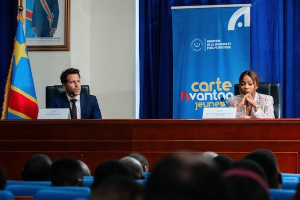
La ministre de la Jeunesse et Éveil patriotique, Grace Kutino, a présenté à un panel d’entreprises et de partenaires le projet Carte Avantage Jeune RDC, selon une communication du ministère publiée le 15 avril 2026. Le dispositif est présenté comme un mécanisme d’inclusion destiné à offrir aux jeunes des avantages utiles au quotidien grâce à un réseau de partenaires.
Les secteurs ciblés couvrent plusieurs besoins jugés prioritaires. Dans la santé, le projet prévoit des réductions sur les consultations médicales ainsi qu’un accès facilité aux médicaments essentiels. Dans le transport et la mobilité, il est question de tarifs préférentiels sur les transports publics et privés. Le volet emploi et entrepreneuriat comprend, pour sa part, l’accès à des stages et à des opportunités d’emploi, des réductions sur certains services professionnels, ainsi qu’un appui à la création d’activités à travers le coaching et le mentorat.
Le ministère indique que les entreprises intéressées sont invitées à rejoindre le programme, à définir les avantages qu’elles souhaitent proposer — réductions, cashback, services ou expériences — et à intégrer progressivement le réseau des partenaires appelés à soutenir l’activation du dispositif.
Le projet congolais s’inscrit dans une logique proche de celle déjà déployée en Côte d’Ivoire. Lancée officiellement en décembre 2025, la Carte Jeunes ivoirienne cible les 15 à 40 ans et donne accès à des avantages dans plusieurs secteurs, notamment la téléphonie, le transport, le commerce, l’éducation, la formation et les loisirs, via une carte physique et une application mobile. Cette expérience montre qu’un tel mécanisme repose d’abord sur la capacité à mobiliser durablement des partenaires privés autour d’offres simples et directement utiles.
En RDC, l’initiative demeure encore à un stade préparatoire. Début avril 2026, un mémorandum d’entente a été annoncé entre le ministère de la Jeunesse et Éveil patriotique et Gravity Group Ind. LLC, membre de Toppan Security, en vue d’accompagner le développement du dispositif. L’entreprise est spécialisée dans la fabrication et la personnalisation de supports sécurisés, notamment les cartes d’identité, cartes bancaires, titres de transport et cartes SIM.
À ce stade, la Carte Avantage Jeune RDC apparaît donc comme un projet en construction, dont la réussite dépendra en grande partie de l’adhésion effective des entreprises, de la qualité des avantages proposés et de la capacité des autorités à structurer un réseau crédible de partenaires autour de la jeunesse.
Timothée Manoke
UNCDF launches clean energy financing window offering up to $10M in DR Congo
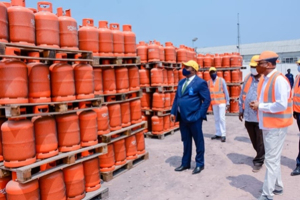
The United Nations Capital Development Fund has launched a call for expressions of interest to identify and support companies and financial institutions operating in the clean energy sector in the Democratic Republic of Congo. The initiative is part of the "Sustainable Energy 2" program (2026–2030), which aims to accelerate the energy transition while reducing dependence on wood energy, the main driver of deforestation in the country.
The call targets a broad range of actors, including small and medium-sized enterprises, large companies and financial institutions such as banks, microfinance institutions and other intermediaries that provide financing to households and small businesses.
Selected projects may receive funding of between $500,000 and $10 million, depending on their stage of development, viability and impact. The financing structure relies on tailored financing structures combining concessional debt, guarantees and, in some cases, investment grants to complement other instruments. Funding may be granted directly to companies or passed through financial institutions responsible for lending to final beneficiaries.
The program prioritizes value chains such as liquefied petroleum gas, electrification, notably through solar or micro-hydroelectric solutions, as well as improved cookstoves and sustainable charcoal production.
Beyond direct project financing, UNCDF also intends to support local financial institutions to reduce lending risks, thereby facilitating the adoption of clean energy solutions.
Selection Process
Applicants must be legally established in the DRC, demonstrate at least three years of operations and demonstrate measurable environmental and social impact, particularly in terms of emissions reductions and efforts to combat deforestation.
The selection process includes several stages, from pre-screening to in-depth due diligence, before making a final investment decision. Applications will be reviewed in batches, with periodic deadlines set for May 15, June 15, July 15 and Aug. 15, 2026, until funds are fully allocated.
The initiative is part of a broader strategy to transform the Congolese energy mix. In the DRC, more than 90 percent of households still rely on wood or charcoal for cooking, with direct consequences for deforestation and public health.
In Kinshasa, the penetration rate for liquefied petroleum gas remains limited to around 14 percent, covering approximately 250,000 households. The government aims to raise that figure to 1.2 million by 2030, partly relying on innovative financing mechanisms such as the one proposed by UNCDF.
Ronsard Luabeya
Énergie propre : l’UNCDF ouvre un guichet de financement jusqu’à 10 millions $ en RDC
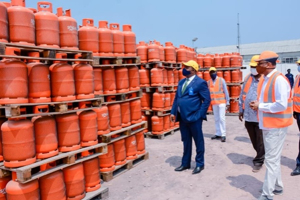
Le Fonds d’équipement des Nations unies (UNCDF) a lancé un appel à manifestation d’intérêt (AMI) visant à identifier et à accompagner les entreprises et institutions financières actives dans le secteur de l’énergie propre en République démocratique du Congo (RDC). Cette initiative s’inscrit dans le cadre du programme « Énergie Durable 2 » (2026-2030), dont l’objectif est d’accélérer la transition énergétique tout en réduisant la dépendance au bois-énergie, principal facteur de déforestation dans le pays.
L’AMI cible un large éventail d’acteurs, incluant les PME, les grandes entreprises ainsi que les institutions financières — banques, établissements de microfinance et autres intermédiaires — susceptibles de financer les ménages et les petites entreprises.
Les projets retenus pourront bénéficier de financements compris entre 500 000 et 10 millions de dollars, selon leur maturité, leur viabilité et leur impact. Le dispositif repose sur des montages financiers sur mesure combinant dette concessionnelle, garanties et, dans certains cas, subventions d’investissement en complément des autres instruments. Les financements pourront être accordés directement aux entreprises ou transiter par des institutions financières chargées de les rétrocéder aux bénéficiaires finaux.
Le programme cible en priorité les chaînes de valeur liées au gaz de pétrole liquéfié (GPL), à l’électrification — notamment via des solutions solaires ou micro-hydroélectriques — ainsi qu’aux foyers améliorés et à la production de charbon de bois durable.
Au-delà du financement direct des projets, l’UNCDF entend également soutenir les institutions financières locales afin de réduire les risques liés au financement des ménages et des PME, et de faciliter ainsi l’adoption de solutions énergétiques propres.
Processus de sélection
Les candidats devront notamment être légalement établis en RDC, justifier d’au moins trois années d’activité et démontrer un impact environnemental et social mesurable, en particulier en matière de réduction des émissions et de lutte contre la déforestation.
Le processus de sélection comprend plusieurs étapes, allant de la présélection à une diligence approfondie, avant une décision finale d’investissement. Les candidatures seront examinées par vagues successives, avec des échéances périodiques, notamment fixées aux 15 mai, 15 juin, 15 juillet et 15 août 2026, jusqu’à épuisement des fonds disponibles.
Ce dispositif s’inscrit dans une stratégie plus large visant à transformer le mix énergétique congolais. En RDC, plus de 90 % des ménages recourent encore au bois ou au charbon pour la cuisson, avec des effets directs sur la déforestation et la santé des populations.
À Kinshasa, le taux de pénétration du GPL reste limité à environ 14 %, soit près de 250 000 ménages. Le gouvernement ambitionne de porter ce chiffre à 1,2 million à l’horizon 2030, en s’appuyant notamment sur des mécanismes de financement innovants comme celui proposé par l’UNCDF.
Ronsard Luabeya
Lire aussi :
Bassin du Congo : 93 millions $ mobilisés pour des projets sans déforestation
Foresterie, agroforesterie, cuisson propre : des millions de dollars de subventions disponibles
Gaz domestique: Kinshasa prépare un projet de loi pour structurer la filière
Biogaz : la stratégie de la RDC pour produire 1,5 milliard de Nm³ d’ici 2030
Gaz domestique: 1,2 million de ménages ciblés à Kinshasa d’ici 2030
Déforestation : la RDC a perdu 590 000 ha de forêts primaires en 2024 (GFW)