





Equipe Publication
Sud-Kivu : la fermeture de l’usine de Lemera fragilise les planteurs de thé
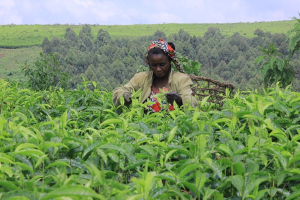
Déjà affectée depuis janvier par une recrudescence de l’insécurité, l’usine de thé de Lemera, située dans le territoire de Kalehe (Sud-Kivu), a subi un nouveau coup dur. Selon la presse locale, ses équipements de production ont été pillés le 6 juin 2025 par des éléments du M23, qui contrôlent plusieurs localités de la région avec le soutien de l’armée rwandaise. L’ensemble des machines, y compris les équipements agricoles et industriels, aurait été emporté vers une destination inconnue, affirme Radio Okapi. Cette attaque a entraîné l’arrêt complet des activités.
Héritée de l’époque coloniale, cette usine transformait les feuilles de thé en produit fini destiné au marché locale et à l’exportation. Elle représentait un pilier économique pour les territoires de Kalehe et Kabare-Kabamba, où près d’une centaine de familles dépendaient directement de son fonctionnement. L’unité disposait d’engins spécialisés pour l’entretien des plantations et offrait un débouché stable aux producteurs locaux. Son arrêt prive désormais de nombreux petits exploitants de revenus.
Cette fermeture intervient dans un contexte de crise généralisée dans la filière théicole des provinces du Nord et du Sud-Kivu, toutes deux lourdement affectées par l’insécurité. Au Nord-Kivu, par exemple, les Jardins Théicoles de Ngeri (JTN), autrefois florissants à l’époque coloniale, sont aujourd’hui à l’abandon. Cette vaste concession de près de 450 hectares produisait environ 240 tonnes de thé par an. Son usine est désormais à l’arrêt, victime elle aussi du cycle d’insécurité qui frappe la région depuis plusieurs années.
Une situation qui pourrait empêcher la République démocratique du Congo (RDC) de tirer parti de la hausse attendue de la demande en thé écologique aux États-Unis et en Europe. Selon un rapport publié début 2024 par l’Institut international du développement durable (IISD), cette demande pourrait croître respectivement de +8,4 % et +6,6 % d’ici 2026. D’après les dernières données disponibles de la FAO, la RDC a produit environ 2 000 tonnes de thé en 2020, se classant au 11ᵉ rang des producteurs africains.
Ronsard Luabeya, stagiaire
Lire aussi :
Sud-Kivu : 1600 entreprises minières illégales recensées (gouverneur)
À Bukavu et Goma, les bières burundaises et rwandaises profitent du conflit
Conflit à l’est de RDC : des « pertes considérables » pour les entreprises
Commerce transfrontalier : des trajets plus longs entre Goma, Bukavu et l’Ouganda
DRC: Two New Bills Adopted to Better Regulate Industrial Sector
At the 46th meeting of the Council of Ministers on June 6, 2025, the Democratic Republic of Congo (DRC) government adopted two significant bills in the industrial sector. The first revises the 2017 law on subcontracting in the private sector, while the second establishes, for the first time, a comprehensive legal framework on local content. Both aim to better integrate Congolese businesses and workers into national value chains, especially in strategic sectors like mining, energy, and agro-industry.
This initiative addresses the ongoing challenge of anchoring processing, subcontracting, and industrial services locally in an economy still heavily reliant on raw material exports.
The revised subcontracting law clarifies key concepts and reaffirms the central role of the Autorité de régulation de la sous-traitance dans le secteur privé (ARSP). It confirms that subcontracting activities are reserved exclusively for companies with majority Congolese ownership, managed and promoted by nationals, while also defining exceptions to this rule. The law introduces a dispute resolution mechanism and a system of graduated sanctions—administrative, financial, and criminal—to enforce compliance.
The new local content law imposes specific obligations on both the State and private companies, formalized through a national local content plan. This plan will outline mechanisms for training, technology transfer, and skill development to strengthen Congolese participation in key sectors. Its goal is to help local SMEs advance up the value chain and ensure their involvement at all stages—from exploration to ancillary services. The law also provides incentives for compliant companies and penalties for offenders, including administrative, financial, and criminal sanctions.
In 2024, the ARSP estimated that $8.5 billion in value was lost locally due to non-compliance with subcontracting rules reserved for Congolese firms. Several multinational mining companies were reprimanded, underscoring the urgent need for a more coherent and enforceable legal framework to protect and promote local economic interests.
Boaz Kabeya (intern)
DRC: Government Plans Sovereign Wealth Fund to Finance Development
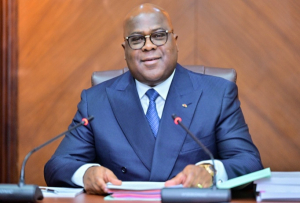
At the 46th meeting of the Council of Ministers, President Félix-Antoine Tshisekedi instructed government members to draft a law establishing a sovereign wealth fund for the Republic of the Democratic Republic of Congo (DRC). According to the meeting minutes, the fund will finance major national projects and support entrepreneurship, with the overarching goal of reducing the country’s reliance on foreign aid and mining revenues.
"It will be a structuring lever to consolidate our economic independence, drive long-term development and build, today, the legacy of future generations," the President declared.
A sovereign wealth fund is a public financial instrument typically funded by revenues from natural resources or budget surpluses. It can be used to invest in strategic projects or to accumulate savings for future generations. In the DRC’s case, the future fund would be mainly financed by the Mining Fund for Future Generations (FOMIN), along with other public resource structures, as presented to the Council of Ministers.
Other African countries already have a similar fund. Gabon, for example, created its sovereign fund in 2012 to co-finance major infrastructure projects, particularly in the energy sector. The Gabonese fund also supports startup development and the marketing of carbon credits.
However, despite these objectives, such funds often face governance and efficiency challenges. In Gabon's case, the sovereign wealth fund has yet to fully resolve the country’s financing issues, illustrating the complexities involved in managing these instruments effectively.
Timothée Manoke (intern)
Cement: In Kisangani, Many Depots Do Not Comply with $16 Bag Price
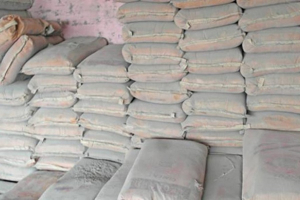
In the Democratic Republic of Congo (DRC), local media reported that on June 10, 2025, the Tshopo Public Prosecutor's Office in Kisangani closed several cement depots for failing to comply with the official price ceiling of $16 per bag, set by provincial Minister of Economy Sénold Tandia Akomboyo.
Since May, the price of cement in Kisangani had surged to $22 per bag, up from the usual $14, with traders citing the war in the east and high transport costs from Kinshasa as reasons for the increase.
Minister Tandia, however, attributed the spike to unjustified speculation. “According to the data in our possession, there is no justification for the increase in cement prices. Some operators are taking advantage of the war and the modernization drive to reap illicit profits. This is unacceptable,” he stated after meeting with major distributors including Cimenterie de Lukala (Cilu), PPC Barnet RDC, and Afri Food.
After this meeting, the price was provisionally capped at $16, but inspections later revealed widespread non-compliance, with some merchants expressing concern over supply logistics while others matched the legal price
PPC Barnet director Patrick Kahasha announced on June 7 the imminent arrival of over 120,000 bags of cement from Kinshasa via the Congo River, acknowledging that recent scarcity had fueled speculation.
This article was previously published in French by Timothée Manoke (intern)
Edited in English byOla Schad Akinocho
SMIG en RDC : la hausse entre en vigueur, des implications à surveiller
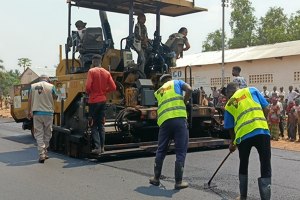
Le décret signé le 30 mai 2025 par la Première ministre Judith Suminwa marque l’entrée en vigueur de la hausse du Salaire minimum interprofessionnel garanti (SMIG). Il s’agit de l’aboutissement d’un processus initié après l’abrogation, en début d’année, de l’arrêté du ministre de l’Emploi et du Travail du 31 décembre 2024 pour « vice de forme » et « incompétence matérielle de l’auteur ».
Ce nouveau texte résulte d’un processus inclusif mené sur plusieurs mois, avec pour point culminant la 37 ᵉ session du Conseil national du travail tenue les 25 et 29 avril dernier. Il est contresigné par le ministre de l’Emploi et du Travail, Éphraïm Akwakwa Nametu.
Le nouveau montant cible du SMIG est de 21 500 francs congolais (FC) par jour pour le manœuvre ordinaire. Il représente une hausse de 204 % par rapport au montant de 7 075 FC établi en 2018. Sa mise en œuvre sera progressive : 14 500 FC dès fin mai 2025, puis 21 500 FC à partir de janvier 2026. Le décret maintient par ailleurs la tension salariale de 1 à 10 entre le manœuvre ordinaire et le cadre de collaboration.
Dans ce contexte, l’augmentation du SMIG entraîne automatiquement une revalorisation proportionnelle de toutes les catégories salariales dans les entreprises. Concrètement, si le SMIG journalier du manœuvre ordinaire passe de 7 075 à 21 500 FC, celui du cadre de collaboration du dernier échelon passe mécaniquement de 70 750 à 215 000 FC. Cette règle s’applique à toutes les catégories intermédiaires selon leur coefficient respectif.
Points à surveiller
Le texte prévoit cependant, conformément à l’article 91 du Code du travail, que des dispositions spécifiques peuvent être adoptées pour tenir compte des difficultés du secteur agro-industriel et pastoral à appliquer cette hausse. La Fédération des entreprises du Congo (FEC) a proposé treize mesures d’allègement fiscal et parafiscal en faveur de ces secteurs. Ces mesures ont été examinées lors de la réunion de la Commission Économie, Finances et Reconstruction (ECOFIRE) du 24 février 2025, mais doivent encore être consacrées par un décret du président de la République pour entrer en vigueur.
Le décret fixe également les allocations familiales minimales et la contre-valeur du logement. Les allocations familiales sont désormais calculées sur la base de 1/27 ᵉ du SMIG journalier par enfant, et la contre-valeur du logement est plafonnée à 1/5 ᵉ du montant journalier des allocations familiales. Les indemnités de logement et de transport continuent toutefois à être versées selon les dispositions légales en vigueur, sans possibilité de réduction par les conventions collectives.
Pour le gouvernement, l’objectif est de « maintenir la paix sociale, renforcer le pouvoir d’achat des travailleurs en vue d’améliorer leurs conditions de vie et celles de leur famille, ainsi que d’augmenter la productivité des entreprises ».
Mais l’atteinte de cet objectif dépendra de l’application effective des mesures prévues dans le décret. Le respect de cette nouvelle réglementation, qui remplace celle de 2018, fera l’objet de contrôles par l’inspection du travail, conformément aux dispositions du Code du travail congolais. Son impact sur les charges des entreprises dépendra notamment de la proportion du personnel dont les rémunérations se situent en dessous des nouveaux seuils fixés.
À fin avril 2025, l’inflation cumulée depuis janvier s’est établie à 2,94 %, contre 4,55 % sur la même période en 2024. En glissement annuel, les prix ont augmenté de 9,96 %, contre 21,17 % l’année précédente. Le taux de change, lui, reste stable à 2 855,09 FC pour un dollar américain au marché interbancaire. Toutefois, l’augmentation attendue des salaires pourrait générer une pression sur les prix, surtout si l’offre des biens et services n’évolue pas au même rythme que la hausse de la demande induite par l’amélioration des revenus.
Georges Auréole Bamba et Ronsard Luabeya, stagiaire
Lire aussi :
Hausse du SMIG : Tshisekedi recommande de cibler les « travailleurs les plus vulnérables »
SMIG : le patronat plaide pour un élargissement de la hausse à tous les travailleurs
Huile de palme : les agro-industries réclament un soutien fiscal et une protection du marché
Kisangani : la pression s’accentue pour ramener le prix du ciment à 16 $
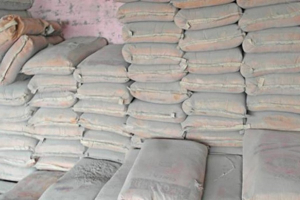
D’après les médias locaux, le parquet général de la Tshopo a procédé, le 10 juin 2025, à la fermeture de plusieurs dépôts de ciment pour non-respect du prix plafond fixé à 16 dollars par le ministre provincial de l’Économie, Sénold Tandia Akomboyo.
Depuis le mois de mai, une flambée du prix du sac de ciment a été observée à Kisangani, atteignant jusqu’à 22 dollars contre environ 14 dollars habituellement. Les commerçants évoquent la guerre à l’Est et le coût du transport depuis Kinshasa.
Pour le ministre provincial, il s’agit plutôt d’une spéculation injustifiée : « Selon les données en notre possession, rien ne justifie l’augmentation du prix du ciment. Certains opérateurs profitent de la guerre et de l’élan de modernisation pour engranger des bénéfices illicites. C’est inacceptable », avait-il déclaré le 23 mai, à l’issue d’une réunion avec les représentants de la Cimenterie de Lukala (Cilu), PPC Barnet RDC et Afri Food, principaux distributeurs dans la Tshopo.
C’est à l’issue de cette réunion qu’il avait provisoirement plafonné le prix du sac de ciment à 16 dollars. Mais, fin mai, lors d’une mission de contrôle sur le marché local, le ministre a constaté le non-respect du prix fixé. Certains commerçants avaient accepté de s’aligner au prix légal, tout en exprimant leurs préoccupations sur les coûts logistiques d’approvisionnement.
Le 7 juin, le directeur de PPC Barnet, Patrick Kahasha, a annoncé l’arrivée imminente de plus de 120 000 sacs de ciment à Kisangani, en provenance de Kinshasa par le fleuve Congo. Il a reconnu une période de rareté sur le marché, qui aurait favorisé la spéculation, après une réunion avec le gouverneur de province.
L’arrivée de ce lot, combinée aux mesures coercitives du parquet, pourrait contribuer à la baisse du prix du ciment, dont la pénurie a entraîné l’arrêt temporaire de plusieurs chantiers dans la ville.
Timothée Manoke, stagiaire
Lire aussi :
Ciment : le Chinois WIH Cement en voie de devenir le premier producteur en RDC
Un fonds souverain pour financer les ambitions de développement de la RDC
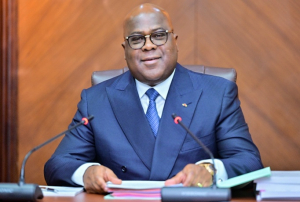
Lors de la 46 ᵉ réunion du Conseil des ministres, le président Félix-Antoine Tshisekedi (photo) a chargé les membres du gouvernement d’élaborer un projet de texte portant création, organisation et fonctionnement d’un fonds souverain de la République. Selon le compte rendu de cette réunion, ce mécanisme aura pour vocation de financer les grands projets nationaux et de soutenir le secteur entrepreneurial, avec pour ambition de réduire la dépendance du pays à l’aide extérieure et aux revenus miniers pour ce type de financement.
« Il s’agira d’un levier structurant pour consolider notre indépendance économique, impulser le développement à long terme et bâtir, dès aujourd’hui, l’héritage des générations futures », a déclaré le président de la République.
Un fonds souverain est un outil financier public, généralement alimenté par des recettes issues des ressources naturelles ou par des excédents budgétaires. Il permet d’investir dans des projets structurants, ou encore de constituer une épargne pour les générations futures. Dans le cas de la RDC, le futur fonds serait principalement financé par le Fonds minier pour les générations futures (FOMIN) ainsi que par d’autres structures pourvoyeuses de ressources publiques, selon les éléments présentés au Conseil des ministres.
Kinshasa s’inscrirait ainsi dans la dynamique engagée par plusieurs pays africains disposant déjà d’un fonds souverain. Au Gabon, par exemple, un fonds a été créé en 2012 pour cofinancer de grands projets d’infrastructure, notamment dans l’énergie avec la construction de centrales hydroélectriques. Il soutient également le développement de startups et la commercialisation des crédits carbone gabonais.
Toutefois, malgré ces attributions, ce fonds n’a pas encore permis de résoudre les problèmes de financement du pays, illustrant les défis de gouvernance et d’efficacité qui accompagnent souvent ce type d’outil.
Timothée Manoke, stagiaire
Lire aussi :
Marchés boursiers : la RDC pose les bases de son cadre légal
Un nouveau cadre légal pour ancrer les Congolais dans les chaînes de valeur industrielles
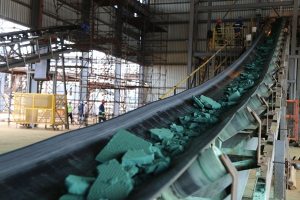
Lors de la 46 ᵉ réunion du Conseil des ministres, tenue le 6 juin 2025, le gouvernement a adopté deux projets de loi dans le secteur de l’industrie. Le premier révise la loi de 2017 relative à la sous-traitance dans le secteur privé ; le second établit, pour la première fois, un cadre juridique global sur le contenu local, avec pour objectif d’assurer une meilleure intégration des Congolais dans les chaînes de valeur nationales, notamment dans les secteurs stratégiques tels que les mines, l’énergie ou l’agro-industrie.
Cette initiative intervient dans un contexte où l’économie congolaise, largement tournée vers l’exportation de matières premières, peine encore à ancrer localement la transformation, la sous-traitance et les prestations de services industriels.
Le projet de loi révisant la législation sur la sous-traitance clarifie plusieurs notions clés et confirme le rôle central de l’Autorité de régulation de la sous-traitance dans le secteur privé (ARSP). Il réaffirme que les activités de sous-traitance sont exclusivement réservées aux entreprises à capitaux majoritairement congolais, dirigées et promues par des nationaux, tout en encadrant désormais les exceptions à ce principe. Le texte introduit également un mécanisme de règlement des différends, ainsi qu’un régime de sanctions graduées — administratives, financières et pénales.
De son côté, le projet de loi sur le contenu local impose des obligations spécifiques tant à l’État qu’aux entreprises privées. Celles-ci seront formalisées à travers un plan national du contenu local, qui précisera les mécanismes de formation, de transfert de technologies et de renforcement des compétences congolaises dans les secteurs concernés. L’objectif est de favoriser la montée en gamme des PME locales et d’assurer leur participation effective à toutes les étapes de la chaîne de valeur — de l’exploration aux services auxiliaires.
Le dispositif prévoit également des incitations pour les entreprises respectueuses des nouvelles obligations, tandis que les contrevenants s’exposeront à des sanctions administratives, financières et pénales.
En 2024, l’ARSP avait estimé à 8,5 milliards de dollars la valeur non captée localement du fait du non-respect des règles sur la sous-traitance, pourtant réservée aux entreprises congolaises. Plusieurs multinationales opérant notamment dans le secteur minier avaient été rappelées à l’ordre. Cette situation a contribué à renforcer la nécessité de doter le pays d’un encadrement juridique plus cohérent et plus contraignant.
Boaz Kabeya, stagiaire
Lire aussi :
Entrepreneuriat : des décrets pour activer le soutien aux startups en RDC
Sous-traitance en RDC : plus de 2 milliards $ de contrats signés en 2024
Banque mondiale–RDC : 73,8 millions $ de subventions disponibles pour les entrepreneurs
Accès au crédit : l’IFC s’apprête à garantir les prêts de BOA RDC aux PME
Pétrole : face aux soupçons de fraude, la RDC renforce le contrôle des exportations
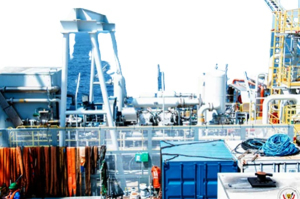
Sans attendre les conclusions de l’audit sur les activités du pétrolier franco-britannique Perenco, unique opérateur actif en République démocratique du Congo (RDC), le ministre des Hydrocarbures, Aimé Sakombi Molendo, a présenté deux mesures destinées à renforcer le contrôle des exportations pétrolières. Ces propositions ont été soumises au gouvernement lors du Conseil des ministres du 6 juin 2025 qui en a pris acte.
La première mesure interdit, sans délai, l’affrètement de pétroliers répertoriés comme « blacklistés ». Ces navires figurent sur la liste noire du transport maritime international en raison de pratiques frauduleuses telles que le transbordement illégal, la dissimulation de cargaisons ou des manquements aux normes de traçabilité.
« Cette mesure répond à l’urgence d’encadrer les exportations pétrolières, dans l’attente des conclusions définitives de l’audit global sur le secteur. Elle ne vise pas à bloquer les activités commerciales légitimes, mais à encourager une exploitation plus rigoureuse et transparente des ressources nationales », indique le compte rendu du Conseil. Elle doit ainsi prévenir la fraude, l’évasion fiscale et limiter les risques environnementaux, en écartant les navires vétustes susceptibles de provoquer des marées noires et en bloquant tout moyen de fuite ou de dissimulation des cargaisons.
La seconde mesure concerne la modernisation du terminal pétrolier de Muanda, avec le remplacement du Floating, Storage and Offloading (FSO) Kalamu, un réservoir flottant destiné à stocker le brut avant expédition. Le ministre mise sur un modèle d’actionnariat public-privé, avec la participation des producteurs du bassin côtier, de la Sonahydroc SA et d’un partenaire chargé de fournir un FSO moderne.
Selon le gouvernement, cette modernisation s’inscrit dans une vision à long terme, visant à renforcer le contrôle des volumes de brut exporté, améliorer leur traçabilité, et optimiser la rentabilité du secteur par une meilleure maîtrise de la chaîne de valeur.
Aux sources des soupçons
L’audit sur Perenco a été lancé fin 2024. L’entreprise opère en RDC via la Société congolaise de recherche et d’exploration de pétrole (Socorep), détentrice de l’unique titre d’exploitation en activité. L’objectif est d’évaluer la production réelle, la conformité aux engagements fiscaux, contractuels et environnementaux. Cet audit fait suite à une visite ministérielle dans les installations de Perenco, qui a révélé une baisse de la production de 25 000 à 18 000 barils par jour.
Bien que l’audit soit en cours jusqu’à fin 2025, le ministre Sakombi affirme avoir déjà reçu des rapports intermédiaires, dont le contenu reste confidentiel. On ignore s’ils ont motivé les nouvelles mesures. Néanmoins, les soupçons de fraude sont nourris par plusieurs documents officiels. Le dernier rapport de l’Initiative pour la transparence des industries extractives (ITIE) signale un écart de 972 000 barils entre les chiffres de production 2022 déclarés par la Société générale des hydrocarbures (SGH) et les entreprises pétrolières (principalement Perenco), et ceux de la Banque centrale du Congo. Le même rapport indique également un écart de plus de 200 millions de dollars entre les exportations déclarées par la RDC et les importations recensées par ses principaux clients.
Sur le plan environnemental, des ONG comme Sherpa et Les Amis de la Terre ont dénoncé de longue date les pratiques de Perenco en RDC, accusant l’entreprise spécialisée dans les puits pétroliers en fin de vie de négliger les compensations dues aux populations riveraines.
L’audit semble avoir refroidi les relations entre Perenco et les autorités congolaises. Le ministre regrette une collaboration partielle de la multinationale. Le président du groupe, François Perrodo, a effectué un voyage en RDC fin 2024 sans rencontrer les autorités, un fait inhabituel pour un dirigeant de ce niveau.
Georges Auréole Bamba
Lire aussi :
Pétrole : la RDC annonce une révision totale de son code pour attirer les investisseurs
Exploitation pétrolière : la Sonahydroc au cœur de la nouvelle stratégie de la RDC
Air Transport: Europe Still Has DRC-Approved Airlines on Safety Blacklist

On June 3, 2025, the European Commission confirmed that all airlines certified by the Democratic Republic of Congo (DRC) remain on its aviation safety blacklist, barring them from operating in European Union airspace and excluding them from the European market.
Despite progress made by the DRC since 2023, including a rise in compliance with international aviation safety standards from 11% in 2006 to 64.07% in 2023, the country has yet to meet all requirements to be removed from the list.
Following a 2023 audit by the International Civil Aviation Organization (ICAO), which noted significant improvements, the DRC government has taken steps to address safety concerns. These include adopting a new civil aviation law in late 2023 that mandates airport certification and adherence to international protocols, and signing a ten-year partnership in May 2024 between the Régie des voies aériennes (RVA) and British firm Westminster Group PLC to enhance security at five major airports—Kinshasa, Lubumbashi, Goma, Kisangani, and Mbuji-Mayi—through expert deployment, staff training, and equipment modernization.
Despite surpassing the ICAO’s 60% compliance threshold, the European Commission’s decision to maintain the ban cites ongoing safety concerns and inadequate oversight by the DRC’s aviation authorities. The Commission has informed the affected airlines of the reasons behind the continued restrictions, but has not publicly detailed the specific issues.
Ronsard Luabeya (intern)