





Equipe Publication
Advans Congo : forte hausse des revenus, mais rentabilité sous pression en 2025
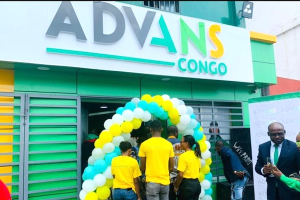
L’institution de microfinance Advans Congo a clôturé l’exercice 2025 sur des résultats contrastés. Son activité commerciale et ses revenus ont progressé, mais sa rentabilité a nettement reculé sous l’effet de la hausse des charges d’exploitation et du coût du risque.
Selon son rapport Pilier III, le résultat net est passé de 2,15 milliards de francs congolais en 2024 à 745,8 millions de francs congolais en 2025, soit une baisse d’environ 65 % en monnaie locale. Converti aux taux de clôture indiqués dans le rapport, il passe d’environ 756 000 dollars à 342 000 dollars, soit un recul d’un peu plus de moitié.
Cette baisse intervient pourtant dans un contexte de croissance des revenus. Le produit net financier, principal indicateur des revenus générés par l’activité bancaire, a progressé de 38,5 %, pour atteindre 52,8 milliards de francs congolais en 2025, contre 38,1 milliards un an plus tôt.
Le résultat brut d’exploitation a également augmenté de 18,6 %, passant de 9,85 milliards à 11,68 milliards de francs congolais. Cette progression montre que l’activité opérationnelle est restée dynamique, malgré un environnement encore marqué par des contraintes de pouvoir d’achat, de remboursement et de risque.
Portefeuille en hausse
La croissance se reflète aussi dans le portefeuille de crédits. Les crédits bruts ont atteint 119,36 milliards de francs congolais à fin 2025, contre 114,2 milliards en 2024. Converti aux taux de change de clôture de chaque exercice, le portefeuille est passé d’environ 40,1 millions à 54,7 millions de dollars.
Advans Congo indique également avoir servi 101 262 clients à fin 2025, avec 96,05 milliards de francs congolais de dépôts mobilisés et 116,84 milliards de francs congolais d’encours de crédits.
Cette dynamique s’est toutefois accompagnée d’une forte hausse des charges. Les charges générales d’exploitation ont progressé de 43,7 %, pour atteindre près de 21 milliards de francs congolais, tandis que les charges du personnel ont augmenté de 46,8 %, à 19,7 milliards de francs congolais.
Cette évolution doit être analysée à la lumière de l’expansion récente du réseau de l’institution. Advans Congo avait ouvert deux nouvelles agences à Lubumbashi et Kolwezi, dans le Grand Katanga, au cours du dernier trimestre 2024. Ces implantations ont fonctionné sur une année complète en 2025, ce qui a mécaniquement accru leur poids dans les charges.
Risque de crédit
Le rapport souligne d’ailleurs la montée en puissance de ces agences, portées par le dynamisme économique des zones minières et commerciales du Haut-Katanga et du Lualaba. Depuis fin 2024, Advans Congo est passée de neuf à onze agences, dans le cadre de sa stratégie d’expansion géographique.
La qualité du portefeuille a également pesé sur les résultats. Les crédits litigieux bruts sont passés de 8,83 milliards de francs congolais en 2024 à 10,75 milliards en 2025. Leur part dans le total des crédits bruts est passée de 7,7 % à 9 %.
Pour couvrir cette hausse du risque, l’institution a renforcé ses provisions sur crédits litigieux, qui ont atteint 6,59 milliards de francs congolais, contre 5,33 milliards un an auparavant. Les dotations et pertes sur créances irrécouvrables se sont élevées à 8,76 milliards de francs congolais en 2025, contre 5,3 milliards en 2024.
Cette évolution explique en grande partie le recul du résultat net, malgré la progression du produit net financier et du résultat brut d’exploitation.
Le rapport mentionne aussi un environnement marqué par la volatilité du franc congolais et par des pressions sur la capacité de remboursement des ménages et des entreprises. Les taux de conversion retenus montrent un net raffermissement du franc congolais en fin d’exercice, le dollar passant de 2 845 francs congolais fin 2024 à 2 181 francs congolais fin 2025.
Transformation numérique
Cette évolution a pu affecter certains emprunteurs dont les revenus sont libellés en devises mais les engagements en monnaie locale. Toutefois, le rapport d’Advans Congo n’établit pas de lien direct entre l’évolution du taux de change et la hausse des crédits litigieux. Cette hypothèse doit donc être considérée avec prudence.
Pour 2026, l’institution entend poursuivre sa stratégie de transformation. Ses priorités portent notamment sur le renforcement de sa présence territoriale, avec l’ouverture de nouvelles agences dans des zones encore peu desservies par les services financiers formels.
Advans Congo prévoit également d’accélérer sa transformation numérique, notamment avec le développement de services digitaux comme la solution Bank-to-Wallet, qui permet des transferts entre comptes Advans et portefeuilles mobiles.
L’institution prévoit par ailleurs le lancement de nouveaux produits, notamment dans le crédit agricole, l’entrepreneuriat féminin, la bancassurance et le financement des énergies renouvelables.
Timothée Manoke
Lire aussi :
Jean-Luc Nzoubou prend la tête de l’association des microfinances de RDC
Financement : Advans Congo prévoit d’injecter 100 millions $ dans l’économie 2025
DRC looks to Côte d'Ivoire's cocoa model to develop its sector

The Democratic Republic of Congo is looking to leverage Côte d'Ivoire's expertise to accelerate the development of its cocoa sector and strengthen the organisation of its producers. The issue was a key focus of a meeting held on June 2 in Abidjan between Congolese Foreign Trade Minister Julien Paluku Kahongya and his Ivorian counterpart for Trade, Industry and Crafts, Ibrahim Kalil Konaté, on the sidelines of the signing of the International Cocoa Agreement.
According to the Congolese Ministry of Foreign Trade, Kinshasa hopes to benefit from Ivorian expertise in organising local cooperatives, particularly to strengthen the protection and support of cocoa farmers.
The world's largest cocoa producer, with nearly 2 million tonnes a year, Côte d'Ivoire serves as a benchmark for the DRC, whose cocoa sector remains largely underdeveloped despite significant potential across several provinces.
The two countries also stressed the need to process more cocoa locally to capture a greater share of the value generated by the industry. They said Africa should produce more chocolate, cocoa butter, cocoa powder and other value-added cocoa products instead of relying largely on exports of raw beans.
Local processing
Discussions also covered global cocoa price volatility and ways to better protect the incomes of African producers. Kinshasa and Abidjan said they intend to coordinate their positions in response to the growing use of cocoa substitutes by manufacturers, which they view as a threat to the sector.
The Congolese ministry also said both sides discussed the Inga project, describing it as a key source of reliable energy needed to support cocoa processing and other agricultural value chains.
The meeting comes as the DRC seeks to revive its own cocoa sector. In May, Julien Paluku presented an inter-ministerial plan aimed at organising smallholder farmers into cooperatives, strengthening local processing and providing financing for cocoa purchases during the marketing season through the Fund for the Promotion of Industry.
Through this strategy, Kinshasa aims to make the DRC one of the world's leading cocoa producers within five years. The government has set a target of 3 million tonnes by 2030, up from around 100,000 tonnes in 2024, according to data from the Ministry of Foreign Trade. Reaching that goal would require major investment in production, farmer support, logistics and processing capacity.
Ronsard Luabeya
DRC regulator seeks clearer picture of subcontracting's impact on jobs
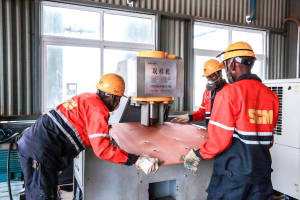
The Democratic Republic of Congo's private-sector subcontracting regulator has moved to strengthen oversight of job creation in the industry. A decision signed on May 29, 2026, by then-Director General Miguel Kashal Katemb requires all registered subcontracting firms to report the jobs created under their contracts.
The measure is part of the implementation of Law No. 17/001 of Feb. 8, 2017, which governs subcontracting in the private sector. Under the decision, companies registered with the Authority for the Regulation of Subcontracting in the Private Sector (ARSP) must submit data on workers hired since receiving their registration certificate.
The information must be submitted through the authority's digital platform or any other officially recognised channel. The aim is to develop reliable indicators on the subcontracting sector's contribution to job creation while promoting the use of national labour and local employment.
The move is significant because the subcontracting market remains heavily concentrated in mining. By value, more than 90% of declared contracts originate from the mining sector, which generates relatively few direct jobs relative to the sums involved. The market has also contracted: after reaching $2.456 billion in 2024, the total declared value of contracts fell to $1.713 billion in 2025, a decline of about 30.2%.
The decision also establishes a permanent mechanism for updating workforce data. Subcontractors will be required to notify the ARSP of any changes to their workforce, including new hires, departures and changes in workers' contractual status.
For each contract awarded, the companies concerned must simultaneously submit to both the ARSP and the principal company a list of workers assigned to the execution of that contract.
The rules also place obligations on principal companies. They will be responsible for ensuring that their subcontractors comply with the reporting requirements and that the required information is duly submitted to the authority.
The ARSP reserves the right to conduct checks and audits to verify the accuracy of the data reported. Companies found in breach of the rules face administrative sanctions under existing regulations, including the possible withdrawal of their ARSP registration certificate.
Ronsard Luabeya
Cacao : la RDC veut s’inspire du modèle ivoirien pour structurer sa filière

La République démocratique du Congo veut s’appuyer sur l’expérience de la Côte d’Ivoire pour accélérer la structuration de sa filière cacao et mieux organiser ses producteurs. Le sujet a été au centre d’une réunion tenue le 2 juin 2026 à Abidjan entre le ministre congolais du Commerce extérieur, Julien Paluku Kahongya, et son homologue ivoirien du Commerce, de l’Industrie et de l’Artisanat, Ibrahim Kalil Konaté, en marge de la signature de l’Accord international sur le cacao.
Selon le ministère congolais du Commerce extérieur, Kinshasa souhaite bénéficier de l’expertise ivoirienne « en matière de structuration des coopératives locales », notamment pour renforcer « la protection, l’encadrement et l’accompagnement des producteurs de cacao ».
Premier producteur mondial de cacao, avec près de 2 millions de tonnes par an, la Côte d’Ivoire apparaît comme une référence pour la RDC, dont la filière reste encore peu structurée malgré un potentiel de développement dans plusieurs provinces.
Les deux pays ont également insisté sur la nécessité de renforcer la transformation locale des fèves afin de capter davantage de valeur ajoutée sur le continent. Ils estiment que l’Afrique doit produire davantage de chocolat, de beurre, de poudre et d’autres dérivés du cacao, au lieu de rester principalement exportatrice de fèves brutes.
Transformation locale
Les discussions ont aussi porté sur la volatilité des cours mondiaux du cacao et sur les moyens de mieux protéger les revenus des producteurs africains. Kinshasa et Abidjan disent vouloir coordonner leurs positions face au développement de produits de substitution industrielle au cacao naturel, perçus comme une menace pour la filière.
Le ministère congolais indique également que les deux parties ont évoqué le projet Inga, présenté comme un levier essentiel pour garantir une énergie stable à l’industrialisation du cacao et à d’autres chaînes de valeur agricoles.
Cette réunion intervient alors que la RDC cherche à relancer sa propre filière cacao. En mai, Julien Paluku avait présenté un plan interministériel visant notamment l’organisation des petits producteurs en coopératives, le renforcement de la transformation locale et l’appui au financement des campagnes d’achat à travers le Fonds de promotion de l’industrie.
À travers cette stratégie, Kinshasa ambitionne de faire de la RDC l’un des grands producteurs mondiaux de cacao d’ici cinq ans. Le gouvernement évoque un objectif de 3 millions de tonnes à l’horizon 2030, contre environ 100 000 tonnes en 2024, selon les données du ministère du Commerce extérieur. Cet objectif suppose toutefois une forte montée en puissance de la production, de l’encadrement des producteurs, des capacités logistiques et des outils de transformation locale.
Ronsard Luabeya
Lire aussi :
Cacao : face à la chute des cours, Kinshasa mise sur une réponse intégrée
Cacao : la RDC veut former des experts en certification pour sécuriser ses exportations
Cacao: début des saisies des lots mal fermentés en Ituri pour stabiliser les prix
Cacao : les prix à l’exportation en RDC s’effondre de 40 % en quelques mois
Sous-traitance : l’ARSP veut mesurer l’impact réel sur l’emploi
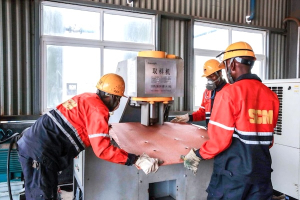
L’Autorité de régulation de la sous-traitance dans le secteur privé (ARSP) renforce le contrôle de l’impact de la sous-traitance sur l’emploi en République démocratique du Congo. Une décision signée le 29 mai 2026 par son directeur général d’alors, Miguel Kashal Katemb, oblige désormais toutes les entreprises sous-traitantes enregistrées à déclarer les emplois générés dans le cadre de l’exécution de leurs marchés.
Cette mesure s’inscrit dans l’application de la loi n°17/001 du 8 février 2017 fixant les règles relatives à la sous-traitance dans le secteur privé. Selon le texte, les entreprises titulaires d’une attestation d’enregistrement délivrée par l’ARSP devront transmettre les informations relatives aux travailleurs recrutés depuis l’obtention de cette attestation.
Les données devront être communiquées via la plateforme numérique de l’Autorité ou par tout autre canal officiellement reconnu. L’objectif est de disposer d’indicateurs fiables sur la contribution du secteur de la sous-traitance à la création d’emplois, tout en favorisant la promotion de la main-d’œuvre nationale et de l’emploi local.
L’enjeu est d’autant plus important que le marché de la sous-traitance reste fortement concentré dans les mines. En valeur, plus de 90 % des marchés déclarés proviennent du secteur minier, pourtant relativement peu créateur d’emplois directs au regard des montants engagés. Ce marché est par ailleurs en recul : après avoir atteint 2,456 milliards de dollars en 2024, le montant total déclaré est tombé à 1,713 milliard de dollars en 2025, soit une baisse d’environ 30,2 %.
La décision instaure également un dispositif permanent de mise à jour des effectifs. Les sous-traitants devront ainsi notifier toute évolution de leur personnel, notamment en cas de recrutement, de départ ou de modification de la situation contractuelle d’un travailleur.
Pour chaque marché obtenu, les entreprises concernées seront aussi tenues de transmettre simultanément à l’ARSP et à l’entreprise principale la liste des travailleurs affectés à l’exécution du contrat.
Les entreprises principales sont également mises à contribution. Elles devront veiller au respect de cette obligation par leurs sous-traitants et s’assurer que les informations requises sont effectivement transmises à l’Autorité.
L’ARSP se réserve le droit de procéder à des contrôles et vérifications afin de s’assurer de l’exactitude des données déclarées. En cas de manquement, les contrevenants s’exposent à des sanctions administratives prévues par la réglementation, pouvant aller jusqu’au retrait de l’attestation d’enregistrement délivrée par l’Autorité.
Ronsard Luabeya
Lire aussi :
Sous-traitance : chute de 30 % des marchés déclarés en 2025, Kamoa quasi absente du fichier
Sous-traitance en RDC : un contrôle annoncé pour assainir un marché de 8,5 milliards $
Sous-traitance en RDC : plus de 2 milliards $ de contrats signés en 2024
Albert Zeufack appelle à faire de l’emploi une priorité nationale en RDC
DRC signs $187 mln in contracts with Chinese firms for Mbanga-Lualaba highway
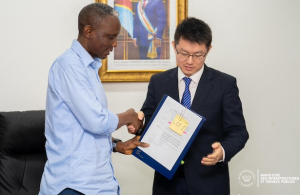
The Democratic Republic of Congo signed three construction contracts worth a combined estimated $187 million on June 3 in Kinshasa for work on the Mbanga-Lualaba section of National Highway No. 2 (RN2).
The contracts cover the paving of 206 kilometres of road between Mbanga and the Lualaba River, as well as the construction of a 714-metre bridge. Infrastructure and Public Works Minister John Banza Lunda signed the agreements with three Chinese firms: China First Highway Engineering Company Limited, Sinohydro Bureau 14 and the China Jiangxi International Economic consortium.
The project is part of the World Bank-funded Transport and Connectivity Support Project (PACT) and marks a new phase in efforts to modernise RN2, which is intended to become a strategic corridor linking central and eastern DRC.
Two road sections
The 206 kilometres will be divided into two sections of roughly 100 kilometres each, according to the Ministry of Infrastructure and Public Works. The work will complement 280 kilometres already under development between Mbuji-Mayi, Kabinda and Mbanga. With this new phase, the total length of upgraded road on the corridor is expected to reach approximately 480 kilometres.
The project calls for a dual two-lane carriageway, which the government says will be among the country's first highways built to modern standards. The infrastructure will also include provisions for the future deployment of fibre optic cable and electrical power transmission equipment.
One of the programme's major structures is a 714-metre bridge over the Lualaba River. The ministry said the crossing will also feature two lanes in each direction.
Road construction costs are estimated at approximately $150 million, with an execution period of 36 months. The bridge is valued at $37 million and is expected to be completed within 24 months.
Work set to begin in October
The ministry said the procurement process was conducted in accordance with World Bank requirements. Technical studies were launched at the start of 2025, ahead of an international competitive tender process and the evaluation of submitted bids.
Before construction begins, currently scheduled for October 2026, the companies will have a four-month mobilisation period to transport equipment and establish construction camps. The ministry also announced a technical planning meeting with stakeholders.
The corridor is ultimately intended to improve connectivity for the Kasai-Oriental, Lomami, Maniema and South Kivu provinces. It is also expected to boost the movement of people and goods between Mbuji-Mayi, Kabinda, Mbanga and communities beyond the Lualaba River.
The project confirms the phased approach to modernising RN2. The section now under contract covers the Mbanga-Lualaba stretch, while the continuation toward Penemwanga and then Bukavu is expected to be addressed in subsequent stages.
Boaz Kabeya
DR Congo watchdog seeks wider scrutiny of FRIVAO contracts following DIVO probe order

The Centre for Research on Public Finance and Local Development (CREFDL) has called for judicial scrutiny to be extended to all public contracts awarded by the Fund for Reparations and Compensation for Victims of Uganda's Illegal Activities in the Democratic Republic of Congo (FRIVAO).
The call follows a directive issued on April 17, 2026, by the Justice Ministry instructing the Prosecutor General at the Court of Cassation to open an investigation into a contract awarded to the company DIVO SARL.
In a statement published on April 23, CREFDL estimated the value of public contracts it considers irregular at $34.6 million for the period from 2022 to 2025. According to the organization, those payments were made in violation of public procurement legislation and should be subject to judicial review.
The organization's call comes as Chançard Bolukola, who served as FRIVAO's national coordinator from August 2024 to July 2025, remains in custody following his arrest on July 25, 2025. He faces charges including the alleged misappropriation of funds earmarked for victim compensation and violations of public procurement law. CREFDL said the ongoing judicial proceedings are consistent with recommendations contained in a citizen-led investigation report published in September 2025.
According to that report, FRIVAO received nearly $195 million between 2022 and 2024, a portion of which was intended to compensate victims of the Kisangani war. CREFDL said, however, that only $2.08 million had actually been disbursed to victims as of October 8, 2024, representing less than 2% of the $105.1 million allocated for that purpose.
Contested payments
The April 23 statement listed several disputed payments, including $14.9 million to Congo Energy for the rehabilitation of the Tshopo power plant, $9 million to state utility SNEL for work on the Kisangani electricity network, $4 million to the Congolese Institute for Nature Conservation (ICCN) for Kisangani's zoological and botanical garden, and $1.75 million to OVDA Tshopo for a peace stabilization project.
The DIVO SARL contract, which prompted the Justice Ministry's directive, also appears on CREFDL's list. The organization cited a $512,000 advance payment for the production of a documentary on GENOCOST, a campaign seeking recognition of mass killings and economic crimes committed in Congo. In its April 17 statement, the Justice Ministry pointed to strong presumptions of irregularities, including the disbursement of more than $1 million, the absence of compliant deliverables, and alleged violations of public financial management rules.
Writing from his cell at Makala central prison, Bolukola disputed claims that the documentary cost $1.6 million despite running only six minutes. In a handwritten letter dated April 19, 2026, relayed by Actualite.cd, he said the contract was worth $640,000 excluding taxes and that the film runs approximately one hour and 14 minutes. He rejected the accusations leveled against his management of the fund.
The conflicting accounts highlight key questions facing investigators, who will need to establish the amounts actually committed, the payments made, whether the deliverables complied with contractual requirements, and any potential liabilities arising from the management of funds intended for victims.
Boaz Kabeya
Autoroute Mbanga-Lualaba : 187 millions $ de contrats signés avec des entreprises chinoises
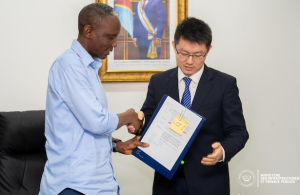
Le gouvernement congolais a signé, le 3 juin 2026 à Kinshasa, trois contrats de travaux d’un montant cumulé estimé à 187 millions de dollars pour la construction de l’axe Mbanga-Lualaba, sur la Route nationale n°2 (RN2).
Ces contrats portent sur le bitumage de 206 kilomètres de route entre Mbanga et la rivière Lualaba, ainsi que sur la construction d’un pont de 714 mètres. Ils ont été signés par le ministre des Infrastructures et Travaux publics, John Banza Lunda, avec trois entreprises chinoises : China First Highway Engineering Company Limited, Sinohydro Bureau 14 et le Groupement China Jiangxi International Economic.
Le projet s’inscrit dans le cadre du Projet d’appui à la connectivité et au transport (PACT), financé par la Banque mondiale. Il marque une nouvelle étape dans la modernisation progressive de la RN2, appelée à devenir un axe stratégique de liaison entre le centre et l’est de la République démocratique du Congo.
Deux lots routiers
Selon le ministère des Infrastructures et Travaux publics, les 206 kilomètres concernés seront exécutés en deux lots routiers d’environ 100 kilomètres chacun. Ces travaux viendront compléter les 280 kilomètres déjà en cours d’aménagement entre Mbuji-Mayi, Kabinda et Mbanga. Avec cette nouvelle phase, le linéaire total de routes modernisées sur cet axe devrait atteindre environ 480 kilomètres.
Le projet prévoit une chaussée en deux fois deux voies, présentée par le gouvernement comme l’une des premières véritables autoroutes modernes du pays. Les infrastructures intégreront également des réservations destinées au déploiement futur de la fibre optique et des équipements de transport de l’énergie électrique.
L’un des ouvrages majeurs du programme est la construction d’un pont de 714 mètres sur la rivière Lualaba. Selon le ministère, cet ouvrage comprendra également deux fois deux voies de circulation.
Le coût des travaux routiers est estimé à environ 150 millions de dollars, pour un délai d’exécution de 36 mois. La construction du pont est évaluée à 37 millions de dollars, avec un délai prévu de 24 mois.
Démarrage prévu en octobre
Le ministère indique que la procédure d’attribution des marchés a été menée conformément aux exigences de la Banque mondiale. Les études techniques auraient été lancées dès le début de l’année 2025, avant une phase d’appel d’offres international ouvert et d’évaluation technique des offres.
Avant le démarrage effectif des travaux, annoncé pour octobre 2026, les entreprises disposeront d’une période de mobilisation de quatre mois afin d’acheminer les équipements et d’installer leurs bases de chantier. Une réunion de cadrage technique avec les parties prenantes est également annoncée.
À terme, cet axe doit contribuer au désenclavement du Kasaï-Oriental, de la Lomami, du Maniema et du Sud-Kivu. Il devrait aussi renforcer la circulation des personnes et des marchandises entre Mbuji-Mayi, Kabinda, Mbanga et les zones situées au-delà de la rivière Lualaba.
Le projet confirme ainsi le découpage progressif de la modernisation de la RN2. La phase actuellement contractualisée concerne l’axe Mbanga-Lualaba, tandis que la poursuite vers Penemwanga puis Bukavu devrait relever d’étapes ultérieures.
Boaz Kabeya
Lire aussi :
Route Penemwanga–Bukavu : la RDC recrute une firme pour la réalisation des études
Inga 3, routes, réformes… : Kinshasa en voie d’obtenir 1,5 milliard $ de la Banque mondiale
Un projet d’autoroute reliant des provinces du centre et de l’est en cours de finalisation
DR Congo suspends mining activities adjacent to Maiko National Park
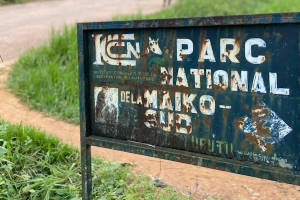
DR Congo's Ministry of Mines announced on June 2 the precautionary suspension of all mining activities in areas adjacent to Maiko National Park in the eastern Democratic Republic of Congo.
The decision followed inspections by technical teams from the ministries of Mines and Environment after the Congolese Institute for the Conservation of Nature (ICCN) raised concerns in a letter to the authorities.
In that letter, the ICCN warned that two mining companies -Stone Mining SARLU and Xin Hong Kuang Ye SARL which hold exploration permits No. 16591 and No. 16594 respectively- had been operating near the boundaries of Maiko National Park.
According to the Ministry of Mines, consultations between the relevant government agencies identified several concerns. The two companies are suspected of using their exploration permits to carry out activities that effectively amount to mining, in violation of the Mining Code and Mining Regulations.
A mission announced
The authorities also raised the possibility of breaches of nature conservation laws, which prohibit activities incompatible with the protection of designated conservation areas. The ministry noted that the activities in question were taking place in environmentally sensitive zones near a national park.
The statement also cited the presence of unidentified armed individuals within the permit areas, adding a security dimension to a case already marked by environmental and mining concerns.
In response, the Ministry of Mines ordered a precautionary suspension of mining activities in the affected permit areas. According to the authorities, the measure is intended to safeguard natural resources and protected areas pending a more comprehensive assessment of the situation.
A joint mission involving officials from the ministries of Interior, Defence, Environment and Mines is expected to be deployed in the coming days. It will be tasked with assessing conditions on the ground and recommending appropriate measures.
Boaz Kabeya
Maiko : Kinshasa suspend des activités minières près du parc national
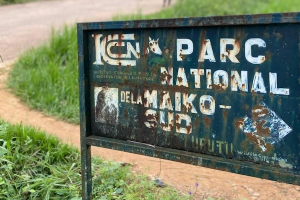
Le ministère des Mines a annoncé, le 2 juin 2026, la suspension à titre conservatoire de toutes les activités minières exercées dans les zones contiguës au parc national de la Maiko, dans l’est de la République démocratique du Congo.
Cette décision intervient après des constats effectués par les services techniques des ministères des Mines et de l’Environnement, à la suite d’une correspondance de l’Institut congolais pour la conservation de la nature (ICCN).
Dans ce courrier, l’ICCN signalait que deux entreprises minières, Stone Mining SARLU et Xin Hong Kuang Ye SARL, titulaires respectivement des permis de recherche n°16591 et n°16594, menaient des activités à proximité des limites du parc national de la Maiko.
Selon le ministère des Mines, les échanges entre les administrations concernées ont mis en évidence plusieurs préoccupations. Les deux sociétés sont notamment soupçonnées d’utiliser abusivement leurs permis de recherche pour mener des activités assimilées à de l’exploitation minière, en violation des dispositions du Code minier et du Règlement minier.
Une mission annoncée
Les autorités évoquent également une possible violation de la législation relative à la conservation de la nature, qui interdit les activités incompatibles avec la protection des aires protégées. Le ministère rappelle que les activités concernées se déroulent dans des zones sensibles, proches d’un parc national.
Le communiqué fait aussi état de l’intrusion d’individus armés non autrement identifiés dans les périmètres couverts par les permis visés. Cet élément ajoute une dimension sécuritaire à un dossier déjà marqué par des enjeux environnementaux et miniers.
Face à ces constats, le ministère des Mines a décidé de suspendre, à titre conservatoire, les activités minières dans les périmètres concernés. Cette mesure vise, selon les autorités, à préserver les ressources naturelles et les aires protégées en attendant une évaluation plus complète de la situation.
Une mission mixte regroupant les services spécialisés des ministères de l’Intérieur, de la Défense, de l’Environnement et des Mines doit être dépêchée dans les prochains jours. Elle aura pour mandat d’évaluer la situation sur le terrain et de proposer les mesures appropriées.
Boaz Kabeya
Lire aussi :
Financements climatiques : comment Tshisekedi veut passer du potentiel au concret
Écologie contre pétrole : 29 blocs superposés au Couloir vert Kivu-Kinshasa
Sud-Kivu : les raisons de la suspension des activités minières à Mwenga et Shabunda
Lutte contre la fraude minière : Kinshasa muscle son dispositif de contrôle