





Equipe Publication
Air Congo : après Bruxelles en juillet, Paris et Dubaï dans les plans long-courriers
Air Congo prépare son entrée sur le marché long-courrier avec le lancement annoncé de sa liaison Kinshasa-Bruxelles à partir du 1er juillet 2026. Au-delà de la capitale belge, la compagnie cite également Paris et Dubaï parmi ses ambitions internationales, sans calendrier opérationnel encore communiqué pour ces deux destinations.
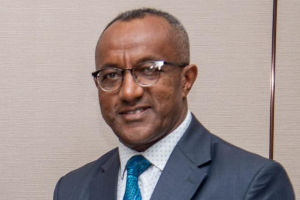
L’information sur Dubaï a été rapportée par le média spécialisé ch-aviation, sur la base des déclarations du directeur général d’Air Congo, Mesfin Biru (photo). Selon lui, les plans long-courriers de la compagnie incluent Brussels Airport, Paris-Charles-de-Gaulle et Dubai International.
À ce stade, Bruxelles est la seule destination intercontinentale disposant d’un calendrier précis. Air Congo prévoit d’y opérer cinq vols par semaine à partir du 1er juillet 2026, à bord d’un Boeing 787 Dreamliner.
Détenue à 51 % par l’État congolais et à 49 % par Ethiopian Airlines, Air Congo s’appuie sur le transporteur éthiopien pour accélérer son développement. Selon les informations disponibles, ses plans long-courriers reposent sur deux Boeing 787-8 fournis par Ethiopian Airlines dans le cadre d’un contrat de type ACMI, également appelé wet lease.
Ce mécanisme permet à une compagnie d’utiliser un appareil fourni avec son équipage, sa maintenance et son assurance. Dans le cas d’Air Congo, il permet aussi de s’appuyer sur l’expertise opérationnelle d’Ethiopian Airlines, alors que les transporteurs certifiés par les autorités congolaises restent soumis aux restrictions européennes de sécurité aérienne.
Dubaï, marché stratégique
Si Bruxelles constitue la première étape, Paris et Dubaï relèvent encore d’une phase d’ambition stratégique. Aucun programme de vols, aucune fréquence ni date de lancement n’ont été officiellement communiqués pour ces deux destinations.
Le choix de Dubaï n’est toutefois pas anodin. L’émirat est généralement perçu comme une destination importante pour les commerçants congolais, qui s’y rendent pour s’approvisionner en produits destinés au marché local, notamment dans l’électronique, l’électroménager, l’habillement, l’ameublement ou encore les véhicules.
La desserte Kinshasa-Dubaï a déjà existé dans une formule avec escale. Flydubai avait lancé, en avril 2018, des vols entre Dubaï et Kinshasa via Entebbe, en Ouganda. La compagnie émiratie annonçait alors une desserte quotidienne, avant d’y mettre fin le 1er février 2019. Certaines sources évoquaient quatre vols hebdomadaires au moment de l’arrêt de la route.
Si Air Congo concrétise son projet, Dubaï pourrait redevenir une destination importante dans le réseau international au départ de Kinshasa. Aujourd’hui, les voyageurs congolais rejoignent généralement l’émirat avec correspondance, notamment via Addis-Abeba, Nairobi, Entebbe ou d’autres hubs régionaux.
Restrictions sanitaires
Cette ambition devra toutefois tenir compte du contexte sanitaire. Début juin 2026, les autorités des Émirats arabes unis ont annoncé des mesures restrictives visant les voyageurs en provenance de la République démocratique du Congo, de l’Ouganda et du Soudan du Sud, dans le cadre du renforcement des dispositifs de prévention contre Ebola.
Ces mesures prévoient notamment la suspension de la délivrance de nouveaux visas pour les ressortissants des trois pays concernés, ainsi que des restrictions d’entrée pour les voyageurs arrivant de ces pays ou y ayant transité. Certaines catégories de voyageurs peuvent être admises si elles ont séjourné plus de 21 jours hors des pays visés avant leur arrivée.
Les autorités émiraties ont toutefois indiqué que les vols cargo continuent d’être opérés normalement. Les vols de transit via les Émirats ne sont pas non plus affectés par ces restrictions.
Pour Air Congo, l’enjeu sera donc double : réussir le lancement de Bruxelles avec l’appui d’Ethiopian Airlines, puis transformer ses ambitions vers Paris et Dubaï en lignes effectivement programmées. La réussite de cette stratégie dépendra à la fois de la disponibilité des appareils, des autorisations nécessaires, de la demande passagers et de l’évolution des restrictions sanitaires ou réglementaires sur certains marchés.
Timothée Manoke
Lire aussi :
Liaison Kinshasa-Bruxelles: comment Air Congo échappe aux restrictions européennes
Nearly $12M Paid to DRC State Since Launch of Biometric Driver's License Program, Bemba Says
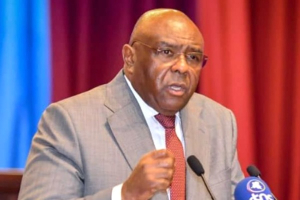
At a June 12 session of the National Assembly, Deputy Prime Minister and Minister of Transport, Communications Routes and Territorial Access Jean-Pierre Bemba answered a parliamentary question raised by lawmaker Saidi Balikwisha regarding the biometric driver's license program.
During the session, he revealed that the issuance of the new driver's licenses had generated nearly $23.9 million in revenue since the system was launched on Nov. 25, 2024.
According to Bemba, 50% of that amount, or nearly $12 million, went to the Congolese state. The remaining half was paid to Otojuste Sarl, the company responsible for producing and issuing the biometric licenses.
The minister said this revenue-sharing arrangement resulted from an amendment to the original contract signed with the company. Under the revised agreement, the Congolese state's share of revenue increased to 50% from 40%, while the private partner's share fell to 50% from 60%.
Bemba also said the private partner's investment is now valued at $102.1 million, compared with $86 million previously.
These changes come in addition to those previously highlighted by Bankable in an earlier article. The amendment notably increased the production target to 7 million biometric driver's licenses from the 5 million initially planned.
The number of issuance sites was also revised upward, rising to 23 centers nationwide from 20.
Rollout
Among the other concerns raised by lawmaker Saidi Balikwisha was the rollout of the system across the country. Since the official launch of the new biometric driver's license, only seven sites are currently operational in three of the Democratic Republic of Congo's 26 provinces. Those centers are located in Kinshasa, Kongo Central and Haut-Katanga.
Responding to that concern, Bemba said that under the partnership agreement with Otojuste, it is the government's responsibility to provide the facilities that will host the issuance centers.
He said letters had been sent to all provincial governors requesting suitable sites for their installation. According to him, only Kasai Oriental and Tshopo provinces have so far agreed to provide locations for the centers.
The minister said the centers planned for Kisangani and Mbuji-Mayi should become operational in the coming weeks, along with the one announced for Kolwezi.
Regarding North Kivu and South Kivu provinces, Bemba said insecurity linked to the armed conflict had delayed the rollout, even though the planned sites had already been prepared.
To maintain services in those provinces, he announced the installation of two centers in North Kivu, one in Beni, the province's temporary capital, and another in Butembo. In South Kivu, a biometric driver's license issuance center is expected to open in Uvira.
For the government, the gradual expansion of the network is intended to improve access to biometric driver's licenses while advancing its goal of nationwide coverage.
Timothée Manoke
Permis biométrique : Bemba annonce près de 12 millions $ déjà versés à l’État
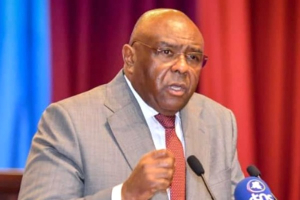
À l’Assemblée nationale, le 12 juin 2026, le vice-Premier ministre, ministre des Transports, Voies de communication et Désenclavement, Jean-Pierre Bemba, a répondu à la question orale avec débat de l’honorable Saidi Balikwisha sur le dossier du permis de conduire biométrique.
À cette occasion, il a révélé que la délivrance des nouveaux permis de conduire avait déjà généré près de 23,9 millions de dollars de recettes depuis le lancement du système, le 25 novembre 2024.
Selon lui, 50 % de ce montant, soit près de 12 millions de dollars, sont revenus à l’État congolais. L’autre moitié a été reversée à la société Otojuste Sarl, chargée de la production et de la délivrance de ces documents sécurisés.
Le ministre a expliqué que cette répartition résulte d’un avenant au contrat initial conclu avec la société. Ce document a porté la part des recettes revenant à l’État congolais à 50 %, contre 40 % dans le contrat initial, tandis que celle du partenaire privé a été ramenée de 60 % à 50 %.
Jean-Pierre Bemba a également indiqué que l’investissement du partenaire privé est désormais évalué à 102,1 millions de dollars, contre 86 millions auparavant.
Ces modifications s’ajoutent à celles déjà relevées par Bankable dans un précédent article. L’avenant a notamment porté l’objectif de production à 7 millions de permis de conduire biométriques, contre 5 millions initialement prévus.
Le nombre de sites de délivrance a également été revu à la hausse, passant de 20 à 23 centres répartis sur l’ensemble du territoire national.
Le déploiement en question
Parmi les autres préoccupations soulevées par l’honorable Saidi Balikwisha figure la question du déploiement du dispositif à travers le pays. Depuis le lancement officiel du nouveau permis biométrique, seuls sept sites sont actuellement opérationnels dans trois des 26 provinces que compte la RDC. Ces centres sont localisés à Kinshasa, au Kongo Central et dans le Haut-Katanga.
Répondant à cette préoccupation, Jean-Pierre Bemba a indiqué que, dans le cadre du partenariat conclu avec Otojuste, il revient au gouvernement de mettre à disposition les espaces destinés à accueillir les centres de délivrance.
Il a précisé que des correspondances avaient été adressées à l’ensemble des gouverneurs de province afin d’obtenir les sites nécessaires à leur implantation. Selon lui, seules les provinces du Kasaï Oriental et de la Tshopo ont, à ce jour, répondu favorablement à cette demande.
Le ministre a indiqué que les centres prévus à Kisangani et Mbuji-Mayi devraient être opérationnels dans les prochaines semaines, tout comme celui annoncé à Kolwezi.
Concernant les provinces du Nord-Kivu et du Sud-Kivu, Jean-Pierre Bemba a expliqué que l’insécurité liée au conflit armé avait retardé le déploiement, alors même que les sites destinés à accueillir les centres avaient déjà été aménagés.
Pour assurer la continuité du service dans ces provinces, il a annoncé l’installation de deux centres au Nord-Kivu, l’un à Beni, chef-lieu provisoire de la province, et l’autre à Butembo. Au Sud-Kivu, un centre de délivrance de permis de conduire biométrique devrait être ouvert à Uvira.
Pour le gouvernement, cette extension progressive du réseau doit permettre d’améliorer l’accès au permis de conduire biométrique tout en poursuivant l’objectif de couverture nationale.
Timothée Manoke
Lire aussi :
Permis de conduire : le contrat d’Otojuste en RDC étendu à 7 millions de pièces
Mbanza-Ngungu Project Advances Toward Bankability, Development Partners Weigh Funding Options
The Mbanza-Ngungu Agro-Industrial Park project, which aims to produce 650,000 metric tons of food annually, is entering a critical phase of development. After several months of consultations with development partners, the Ministry of Agriculture and Food Security is seeking to secure funding for feasibility studies estimated at more than $15 million.
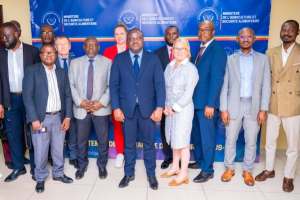
To that end, a roundtable meeting was held on June 11, 2026, at the ministry's offices in Kinshasa. According to sources who participated in the discussions, the meeting helped establish the framework for an operational timetable.
The objective is to finalize the financing structure for the studies before September, complete the selection of service providers before October and launch the feasibility studies no later than October.
"Since the beginning of the year, the minister had approached several institutional donors to finance the agro-industrial park project, starting with the feasibility studies," one of the sources said.
Among the partners approached were the World Bank, the African Development Bank (AfDB), the International Fund for Agricultural Development (IFAD), the French Development Agency (AFD), the Japan International Cooperation Agency (JICA) and Germany's public development bank KfW.
Donors Mobilized
Discussions launched in February 2026 have revealed strong interest from donors in the project, but also a demand for greater clarity. The institutions approached requested additional details on the terms of reference, the overall budget for the studies, the expected contribution of each institution and the arrangements for coordinating the process.
One of the main outcomes of the June 11 meeting was the designation of the United Nations Industrial Development Organization (UNIDO) as the lead coordinating agency and the World Bank as lead donor.
Their role would be to ensure technical and institutional consistency across the various study components and donor interventions, helping to avoid fragmented support and duplication of efforts.
The feasibility study budget is now known. It is structured around several components. Industrial engineering accounts for the largest allocation at $5.1 million, representing 32.3% of the total. Studies related to buildings and urban planning are estimated at $4 million, followed by infrastructure and energy studies at $2.05 million.
Technical field and agricultural studies, environmental and social assessments, and pre-project coordination account for the remainder of the budget.
Funding Prospects
This breakdown confirms the integrated nature of the project. Led by Swiss commodities trading group Mole, which specializes in agricultural raw materials, the Mbanza-Ngungu Agro-Industrial Park extends well beyond a conventional agricultural initiative. It also requires infrastructure, industrial equipment, energy solutions, land development, environmental assessments and a financing framework that meets international donor standards.
During the initial institutional consultations, the AfDB expressed its willingness to finance the study phase. The World Bank also confirmed that the project aligns with its agricultural priorities, while considering support through the National Agricultural Development Program.
AFD and IFAD, for their part, are seen as potential partners through the AVENIR project. JICA indicated the possibility of support through existing instruments, with a preference for fiduciary management by UNIDO. KfW expressed interest in components related to irrigation and renewable energy.
The International Finance Corporation (IFC), meanwhile, showed interest in the capital structure and governance of the project company, with a potential role as an anchor investor at a later stage.
According to preliminary studies, the total investment is estimated at $1 billion. Donor interest is viewed as a positive signal that the project could attract large-scale financing, but no financing agreement has yet been signed. The mobilization of funds for the studies before September is therefore expected to be the first concrete step toward converting that interest into tangible commitments. It is notably contingent on an official funding request from the government of the Democratic Republic of Congo.
Pierre Mukoko
Parc agro-industriel de Mbanza-Ngungu : 15 millions $ recherchés pour lancer les études
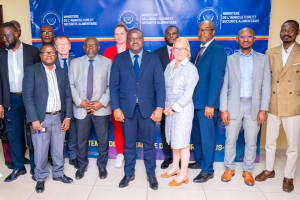
Le projet de Parc agro-industriel de Mbanza-Ngungu, qui vise une production annuelle de 650 000 tonnes de denrées alimentaires, entre dans une phase décisive de structuration. Après plusieurs mois de consultations avec des partenaires techniques et financiers, le ministère de l’Agriculture et de la Sécurité alimentaire veut boucler le financement des études de faisabilité, évaluées à plus 15 millions de dollars.
Dans cette perspective, une table ronde a été organisée le 11 juin 2026 dans les locaux du ministère, à Kinshasa. Selon des sources ayant participé aux échanges, cette réunion a permis de poser les bases d’un calendrier opérationnel.
L’objectif est de finaliser la structuration financière des études avant septembre, de boucler la sélection des prestataires avant octobre et de lancer les études de faisabilité au plus tard en octobre.
« Depuis le début de l’année, le ministre avait sollicité plusieurs bailleurs officiels afin de financer le projet du parc agro-industriel, en commençant par les études de faisabilité », indique une de ces sources.
Parmi les partenaires approchés figurent notamment la Banque mondiale (BM), la Banque africaine de développement (BAD), le Fonds international de développement agricole (FIDA), l’Agence française de développement (AFD), l’Agence japonaise de coopération internationale (JICA) et la banque publique allemande de développement (KfW).
Bailleurs mobilisés
Les échanges engagés depuis février 2026 montrent un intérêt marqué des bailleurs pour le projet, mais aussi une exigence de clarification. Les partenaires sollicités ont demandé des précisions sur les termes de référence, le budget global des études, les contributions attendues de chaque institution et les modalités de coordination du processus.
L’un des principaux acquis de la réunion du 11 juin serait la désignation de l’Organisation des Nations unies pour le développement industriel (ONUDI) comme intégrateur du processus, et de la Banque mondiale comme chef de file des bailleurs.
Leur rôle devrait consister à assurer la cohérence technique et institutionnelle entre les différentes composantes des études et les interventions des bailleurs, afin d’éviter la fragmentation des appuis et les chevauchements.
Le budget des études de faisabilité est aussi désormais connu. Il est structuré autour de plusieurs volets. L’ingénierie industrielle représente la plus grande enveloppe, avec 5,1 millions de dollars, soit 32,3 % du total. Les études relatives aux bâtiments et à l’urbanisme sont estimées à 4 millions de dollars, suivies par les infrastructures et l’énergie, pour 2,05 millions de dollars.
Les études techniques de terrain et agricoles, les études environnementales et sociales, ainsi que la coordination de l’avant-projet complètent l’enveloppe globale.
Intentions de financement
Cette répartition confirme la nature intégrée du projet. Porté par le groupe suisse Mole, spécialisé dans le trading de matières premières agricoles, le Parc agro-industriel de Mbanza-Ngungu ne se limite pas à une initiative agricole. Il suppose aussi des infrastructures, des équipements industriels, des solutions énergétiques, des aménagements fonciers, des études environnementales et une structuration financière compatible avec les standards des bailleurs internationaux.
Lors des premières consultations institutionnelles, la BAD avait exprimé sa disposition à financer la phase des études. La BM avait également confirmé l’alignement du projet avec ses priorités agricoles, tout en envisageant une intervention via le Programme national de développement agricole.
L’AFD et le FIDA apparaissent, de leur côté, comme des partenaires potentiels à travers le projet AVENIR. La JICA a ouvert la possibilité d’une intervention via des instruments existants, avec une préférence pour une gestion fiduciaire par l’ONUDI. La KfW a manifesté un intérêt pour les composantes liées à l’irrigation et aux énergies renouvelables.
L’IFC, pour sa part, s’est intéressée à la structuration du capital et à la gouvernance de la société de projet, avec un potentiel rôle d’investisseur d’ancrage à un stade ultérieur.
Selon les études préliminaires, l’investissement global est estimé à un milliard de dollars. L’intérêt des bailleurs constitue un signal positif pour la bancabilité du projet, mais aucun accord financier n’a encore été signé à ce stade. La mobilisation des fonds destinés au financement des études avant septembre est donc attendue comme le premier acte de matérialisation de cet intérêt. Elle est notamment conditionnée par une demande officielle de financement de l’État de RDC.
Pierre Mukoko
Lire aussi :
Parc agro-industriel : Mole Groupe prépare le terrain à la sécurisation de 105 000 ha
Agro-industrie : le Suisse Mole signe un PPP avec la RDC pour son projet d'un milliard
Mai-Ndombe Announces Roads, Airport Project to Improve Access to Inongo
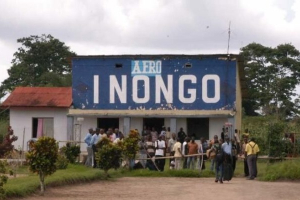
Mai-Ndombe province plans to launch a major infrastructure program in the coming days that combines the rehabilitation and modernization of more than 80 kilometers (50 miles) of roads with plans for a modern airport in Inongo.
The announcement was made by Governor Lebon Nkoso Kevani, who said funding has been secured and that site preparations are already underway.
According to information released by the provincial government, the road component includes 14 kilometers of urban roads in Inongo, 64 kilometers along the Inongo-Nkolobeke route, as well as 3 kilometers of urban roads in Nioki and another 3 kilometers in Bokoro. The official start of construction is expected to be marked by a ceremony led by the national minister of Infrastructure and Public Works.
At this stage, authorities have not yet released a detailed schedule, construction timeline, total budget or the identity of the contractor selected for the overall program. Official announcements have mainly focused on a start expected "in the coming days" and ongoing site preparation work in several localities.
The project comes as road infrastructure remains one of the biggest barriers to the movement of people and goods across the province. According to provincial data cited by Actualite.cd, Mai-Ndombe's road network extends for 2,514 kilometers, including 1,078 kilometers of primary provincial roads and 968 kilometers of secondary provincial roads.
Despite its size, much of the network has yet to be upgraded. According to the same data, no road in the province has been paved using public funds, with the exception of one kilometer improved in Bendela by a private company and a short stretch of concrete pavement laid in Inongo by the outgoing provincial administration.
Further Details Expected
Technical details of the airport project announced for Inongo remain limited. Authorities have not yet specified whether the project will involve upgrading the existing airfield, extending its runway or constructing an entirely new airport facility.
The issue has, however, been under consideration for several years. A video published by the Congolese Agency for Major Works (ACGT) stated that an assessment team had been sent to Inongo to collect and verify data on the airfield, carry out topographical and hydrological surveys, inventory existing infrastructure and prepare future expansion plans.
According to the video, the current facility has a runway measuring 1,400 meters in length and 30 meters in width, dimensions considered restrictive for handling larger aircraft. The ACGT highlighted the airfield's importance to regional connectivity in an area where poor road conditions limit transportation alternatives.
In March 2025, state broadcaster RTNC also reported that an ACGT team was working on preparations for a modern airport project in Inongo. At the time, the project was presented as a candidate for funding under Sino-Congolese cooperation.
The prospect of a modern airport in Inongo therefore complements the road program announced by provincial authorities. Together, the two projects seek to address the same challenge: improving access to a province that remains heavily isolated and strengthening connections between Inongo, other localities in Mai-Ndombe and the rest of the country.
Boaz Kabeya
RN5 Reopens, but Eastern DRC Crisis Still Disrupts Bukavu-Uvira Corridor
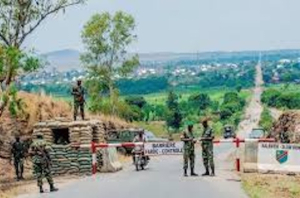
The Bukavu-Uvira section of National Road No. 5 (RN5) reopened to traffic after nearly a month of closure. Traffic resumed on June 12, 2026, at Luvungi, where several vehicles had been stranded for weeks.
According to local sources, trucks, buses and cars that had been blocked on the route were able to continue their journeys after the restrictions were lifted. The reopening ends another period of disruption on one of South Kivu's most strategic road corridors.
The closure was ordered in mid-May for security reasons. Traffic was halted at Luvungi on the orders of South Kivu's interim governor, Jean-Jacques Elakano. The measure was intended partly to prevent traffic from moving between AFC/M23-controlled areas and government-held territory.
The decision took effect on May 15, leaving many travelers and vehicles stranded. The June 12 reopening came after 28 days of disruption, in a context where movement along the route remains closely tied to the security situation in the province.
During the closure, civil society groups, local elected officials and several economic stakeholders warned of its impact. They cited difficulties supplying markets, rising transport costs and restrictions on travel between Bukavu, Uvira and communities in the Ruzizi Plain.
Provincial lawmaker Jackson Kalimba had called for the urgent reopening of RN5, saying the closure was worsening conditions for residents and economic operators. Local stakeholders say the road remains essential for transporting goods, agricultural products, fuel and consumer items.
Vulnerable Corridor
The closure was not an isolated incident. Between March and early April 2026, the Bukavu-Uvira route had already experienced a prolonged traffic disruption. According to sources, that earlier closure lasted between about two weeks and nearly four weeks before traffic gradually resumed.
Even after traffic resumed, several road users continued to report difficulties crossing the route, the presence of barriers and constraints linked to the security situation. The return of traffic therefore did not amount to a lasting return to normal conditions.
RN5 remains a vital corridor for South Kivu. It directly links Bukavu and Uvira, two of the province's main economic and administrative centers, in a region where transport alternatives remain limited.
The corridor supports a significant share of trade in the southern part of the province. Any disruption quickly affects the movement of people, the transport of agricultural products, market supplies and commercial activity.
The June 12 reopening therefore brings immediate relief to transporters, traders and travelers. It also highlights the continuing vulnerability of transport infrastructure in eastern Democratic Republic of Congo.
As long as insecurity continues to affect areas crossed by or connected to the route, traffic on RN5 will remain exposed to repeated disruptions, with direct consequences for the local economy and residents' daily lives.
Boaz Kabeya
ARSP Resumes Inspections of Companies Subject to Subcontracting Rules
The Democratic Republic of Congo's private subcontracting regulator, the Authority for the Regulation of Subcontracting in the Private Sector (ARSP), has authorized the resumption of inspections of companies subject to its oversight. The decision was signed on June 12, 2026, by the director-general of the public institution, Juan Ted Beleshayi Kasanda.
The measure applies to inspections that had been initiated but not completed in Kinshasa and the provinces of Kasaï Oriental, Kongo Central, Lualaba, Haut-Katanga, Haut-Uélé and Tanganyika.
According to the decision, the inspections were suspended following leadership changes at the ARSP. The new management cited the principle of continuity of public service as the basis for allowing ongoing inspections to resume and be completed.
The ARSP said, however, that the resumption will not automatically extend to all companies operating in the provinces concerned. Only companies named in new inspection authorizations issued under the decision will be subject to inspection.
Resumption Under Supervision
The decision also sets out the conditions governing the resumption of inspections. Inspection activities must take into account the business environment and comply with applicable operational guidelines. They must be conducted in an orderly and coordinated manner, based on prior planning.
That planning must notably take into account risks requiring mitigation, the careful selection of inspection teams and a comprehensive review of previous inspections conducted at each targeted company.
ARSP inspectors will be required to carry an inspection authorization duly signed by the director-general. They may request companies under inspection to provide their financial statements.
Information collected during inspections must be reviewed through a formal right-of-response procedure. Following the verifications, inspectors may prepare a report of findings after, where appropriate, issuing a notice of observations to the company concerned.
Employment and Statistics
The ARSP plans to conduct a systematic assessment of data collected from each company once the inspection deadlines have passed. The analysis is intended to produce statistics on access to subcontracting contracts by companies majority-owned by Congolese nationals.
The authority also intends to measure the impact of subcontracting on job creation. This objective remains central to Congo's law on subcontracting in the private sector, which seeks in particular to increase the participation of Congolese companies in contracts awarded by large corporations.
The inspection campaign was launched under the previous ARSP management led by Miguel Kashal Katemb. It forms part of broader efforts to monitor compliance with regulations governing subcontracting in the private sector, particularly in mining provinces and major economic centers.
Ronsard Luabeya
RN5 : la crise à l’Est perturbe encore l’axe Bukavu-Uvira
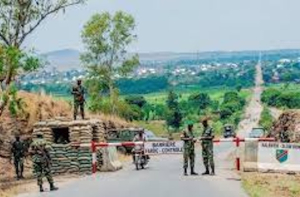
La circulation a repris sur la Route nationale n°5 entre Bukavu et Uvira, après près d’un mois de fermeture. Le trafic a été rétabli le 12 juin 2026 au niveau de Luvungi, où plusieurs véhicules étaient immobilisés depuis plusieurs semaines.
Selon des sources locales, des camions, bus et voitures bloqués sur cet axe ont pu reprendre leur trajet après la levée de la mesure. Cette réouverture met fin à un nouvel épisode de paralysie sur l’un des axes routiers les plus stratégiques du Sud-Kivu.
La fermeture avait été décidée à la mi-mai pour des raisons sécuritaires. Le trafic avait été bloqué à Luvungi sur ordre du gouverneur intérimaire du Sud-Kivu, Jean-Jacques Elakano. La mesure visait notamment à empêcher le passage de véhicules en provenance de zones contrôlées par l’AFC/M23 vers les zones sous contrôle gouvernemental.
Entrée en vigueur le 15 mai, cette décision a provoqué l’immobilisation de nombreux véhicules et voyageurs. La réouverture du 12 juin intervient après 28 jours d’interruption, dans un contexte où les mouvements sur cet axe restent étroitement liés à l’évolution de la situation sécuritaire dans la province.
Durant cette période, la société civile, des élus locaux et plusieurs acteurs économiques ont alerté sur les conséquences de la fermeture. Ils ont notamment évoqué les difficultés d’approvisionnement des marchés, la hausse des coûts de transport et les contraintes imposées aux populations entre Bukavu, Uvira et les localités de la plaine de la Ruzizi.
Le député provincial Jackson Kalimba avait appelé à la réouverture urgente de la RN5, estimant que la fermeture aggravait les difficultés des habitants et des opérateurs économiques. Pour les acteurs locaux, cette route reste indispensable au transport des marchandises, des produits agricoles, du carburant et des biens de consommation.
Corridor vulnérable
Cette fermeture n’est pas un épisode isolé. Entre mars et début avril 2026, l’axe Bukavu-Uvira avait déjà connu une interruption prolongée du trafic. Selon les sources, cette première fermeture aurait duré entre une quinzaine de jours et près de quatre semaines, avant une reprise progressive de la circulation.
Même après cette réouverture, plusieurs usagers continuaient de signaler des difficultés de passage, la présence de barrières et des contraintes liées au contexte sécuritaire. La reprise du trafic ne signifie donc pas un retour durable à la normale.
La RN5 demeure un corridor essentiel pour le Sud-Kivu. Elle relie directement Bukavu et Uvira, deux pôles économiques et administratifs majeurs de la province, dans une région où les alternatives de transport restent limitées.
Son fonctionnement conditionne une partie importante des échanges dans le sud de la province. Toute interruption se répercute rapidement sur la mobilité des populations, l’acheminement des produits agricoles, l’approvisionnement des marchés et les activités commerciales.
La réouverture du 12 juin apporte donc un soulagement immédiat aux transporteurs, commerçants et voyageurs. Mais elle illustre aussi la vulnérabilité persistante des infrastructures de transport dans l’Est de la RDC.
Tant que l’insécurité continuera de peser sur les zones traversées ou connectées à cet axe, la circulation sur la RN5 restera exposée à des interruptions répétées, avec des conséquences directes sur l’économie locale et les conditions de vie des populations.
Boaz Kabeya
Lire aussi :
Bukavu-Uvira : reprise de la circulation après deux semaines d’interruption
How Air Congo Plans to Reach Europe Despite the EU Airspace Ban

On June 12, 2026, Transport Minister Jean-Pierre Bemba reiterated that Air Congo would launch a direct route between Kinshasa and Brussels on July 1, 2026. He also cited Paris among the carrier's next planned international destinations as part of its network expansion.
However, in its June 9, 2026 update, the European Commission kept airlines certified by authorities in the Democratic Republic of Congo on the list of carriers banned from operating in European Union airspace because of persistent shortcomings in aviation safety oversight.
European regulations nevertheless provide an option for airlines subject to a ban. They may operate flights to the European Union using aircraft from a carrier that is not banned under a lease agreement covering aircraft, crew, maintenance and insurance. The arrangement is commonly known as a wet lease, or ACMI, for Aircraft, Crew, Maintenance and Insurance.
Air Congo plans to use that option through its partnership with Ethiopian Airlines. The Congolese carrier is owned 49% by Ethiopian Airlines and 51% by the Congolese state.
Strategic route
Air Congo has announced that the Kinshasa-Brussels service will be operated with a Boeing 787 Dreamliner provided by Ethiopian Airlines.
In practical terms, the Boeing 787-8 that will operate the Kinshasa-Brussels route, although carrying Air Congo branding, will be supplied by Ethiopian Airlines. The aircraft's crew, maintenance and insurance will also be provided by the Ethiopian carrier.
The launch of the Brussels route represents an important symbolic and commercial milestone. The Kinshasa-Brussels route is one of the most strategic for the Congolese diaspora, the business community and the longstanding political and institutional ties between the Democratic Republic of Congo and Belgium.
Air Congo plans to offer five weekly flights on Mondays, Wednesdays, Fridays, Saturdays and Sundays. The carrier will enter a market currently dominated by Brussels Airlines, which operates direct flights between Kinshasa and Brussels. Travelers also have connecting options through other European and African hubs.
Strengthening oversight
For Congolese authorities, the strategy is a transitional solution. It allows Air Congo to accelerate its international expansion while continuing reforms aimed at improving compliance of the national aviation system with international standards.
ICAO's removal of a Significant Security Concern (SSeC), announced on June 5, is a positive signal. The decision relates to aviation security, including measures designed to prevent unlawful acts and screening and security controls for passengers, cargo and access to restricted areas.
However, it does not by itself resolve the issue of the European Union's aviation safety list. That depends on the assessment of the Democratic Republic of Congo's Civil Aviation Authority (CAA) and its ability to sustainably oversee carriers, airworthiness, operations, maintenance and certification.
In the short term, the partnership with Ethiopian Airlines provides Air Congo with a pathway into the European market. In the medium term, the key challenge for the Democratic Republic of Congo remains strengthening the CAA's oversight capabilities so that carriers certified locally can eventually operate in Europe using their own operating certificates.
Timothée Manoke