





Equipe Publication
Polish investors explore industrial entry into DR Congo’s mining supply chain
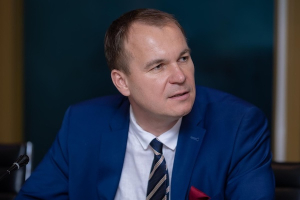
A group of Polish investors is considering setting up a mining equipment manufacturing plant in the Democratic Republic of Congo, where the mining sector remains heavily dependent on imported machinery. The group presented the project to Mines Minister Louis Watum Kabamba at a meeting on April 29, 2026.
The delegation was led by Dawid Kostempski, a former local politician in Poland, and included Marie-Claire Kengo, president of the DRC-Poland Friendship and Cooperation Network. Their involvement highlights the project’s economic and diplomatic dimensions, although it remains at an early stage.
Focus of the talks
According to the Ministry of Mines, discussions focused on how to structure the investment project, which aims to establish a manufacturing plant for machinery used in mineral extraction and processing.
Beyond equipment production, the initiative includes a technical training and skills transfer component for Congolese executives and technicians. It is part of the government’s broader strategy to strengthen local value creation and build an industrial base around the mining sector.
In the DRC, mining equipment supply relies heavily on imports. This dependence poses significant challenges in terms of costs, delivery times and technological control.
Companies such as CIS SARL supply and maintain equipment used at mining sites, while other firms, particularly in Lualaba, operate in engineering and technical support. However, the country still lacks a structured local industry for large-scale mining equipment manufacturing.
In that context, if it moves forward, the project led by Polish investors could introduce a largely undeveloped activity in the DRC: local manufacturing of mining equipment. For now, the project remains at an early stage, with details on the investment model, industrial partners, potential sites and implementation timeline yet to be clarified.
Boaz Kabeya
Paradigm Holdings opens new DRC-UAE gold export route
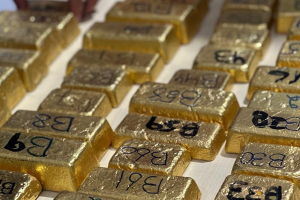
Dubai-based Paradigm Holdings announced on April 28, 2026, that it had signed a gold supply agreement with the Congolese government, as part of its international expansion in the precious metals sector. The Congolese authorities have not disclosed details of the deal.
According to Paradigm Holdings, the partnership aims to establish a formalized gold supply network from the DRC while strengthening the UAE’s role as a precious metals trading, refining and distribution hub. The company describes the agreement as its third government-backed partnership in Africa in less than two years.
The announcement does not specify the volumes involved, the duration of the agreement, the applicable tax framework or the identity of the Congolese signatory. It also provides no details on traceability mechanisms, which are considered essential in a sector vulnerable to smuggling, money laundering and the financing of armed groups.
Commercially, the UAE is already among the top destinations for Congolese gold, alongside South Africa. According to Congolese mining statistics for 2025, nearly three metric tons of gold were exported to the UAE, valued at more than $337 million.
Paradigm Holdings describes itself as a private investment group active in commodities, real estate and clean energy. The company says it is developing operations in the extraction, trading and management of precious metals, gemstones and rare earths, with a presence in the Middle East, Africa and South America.
The Primera Gold precedent
Since 2023, the DRC has sought to formalize part of its artisanal gold production through Primera Gold DRC, a joint venture between the Congolese state and an Emirati partner. The arrangement enabled the export of more than five metric tons of artisanal gold in 2023, worth more than $300 million, before Kinshasa reasserted full control over Primera Gold in late 2024 and renamed it DRC Gold Trading.
That partnership with the UAE was presented as part of an official strategy to combat fraud and smuggling, particularly in the country’s east. However, the Primera Gold model drew criticism over its lack of transparency and tax advantages, as well as doubts about its actual capacity to clean up supply chains. U.N. experts noted that the preferential conditions granted to Primera Gold created a near-monopoly over legal artisanal gold exports.
The arrival of Paradigm Holdings could mark a new chapter in the gold relationship between Kinshasa and the UAE. For the DRC, the issue goes beyond opening a new commercial outlet. The central question is whether this new corridor will genuinely increase formal exports, secure public revenues and improve traceability in a sector historically dominated by informal networks.
Ronsard Luabeya
Mines : des investisseurs polonais visent la fabrication locale d’équipements en RDC
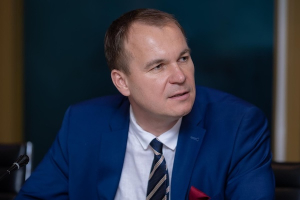
Un groupe d’investisseurs polonais explore la possibilité d’implanter en République démocratique du Congo (RDC) une unité de fabrication d’équipements miniers, dans un contexte marqué par la dépendance persistante du secteur aux importations. Le projet a été présenté au ministre des Mines, Louis Watum Kabamba, lors d’une audience tenue le 29 avril 2026.
La délégation était conduite par Dawid Kostempski (photo), ancien responsable politique local en Pologne, accompagné de Marie-Claire Kengo, présidente du Réseau d’amitié et de coopération entre la RDC et la Pologne. Leur présence traduit un portage du projet à la fois économique et diplomatique, encore en phase de prospection.
Selon le ministère des Mines, les échanges ont porté sur les orientations à donner à ce projet d’investissement, qui vise à mettre en place une unité industrielle dédiée à la fabrication de machines destinées à l’exploitation et à la transformation des minerais.
Au-delà de la production d’équipements, l’initiative comprend un volet de formation technique et de transfert de compétences en faveur des cadres et techniciens congolais. Elle s’inscrit dans la stratégie des autorités visant à renforcer la valeur ajoutée locale et à développer une base industrielle autour du secteur minier.
En RDC, l’approvisionnement en équipements miniers repose largement sur des machines importées. Cette dépendance constitue un enjeu majeur pour le secteur, en termes de coûts, de délais d’approvisionnement et de maîtrise technologique.
Des entreprises comme CIS SARL opèrent dans la fourniture et l’entretien d’équipements utilisés sur les sites miniers, tandis que d’autres sociétés, notamment dans le Lualaba, se positionnent sur l’ingénierie et le support technique. En revanche, il n’existe pas à ce jour d’industrie locale structurée de fabrication de machines minières à grande échelle.
Dans ce contexte, s’il se concrétise, le projet porté par les investisseurs polonais pourrait introduire une activité encore peu développée en RDC : la fabrication locale d’équipements miniers. Pour l’heure, le dossier reste à un stade préliminaire, en attente de précisions sur le modèle d’investissement, les partenaires industriels, les sites d’implantation et le calendrier de mise en œuvre.
Boaz Kabeya
French firm InnoVent explores renewable energy investment in DR Congo
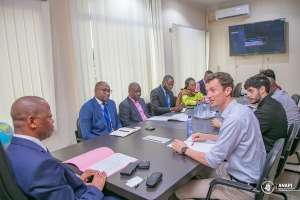
French renewable energy developer InnoVent is exploring an expansion into the Democratic Republic of Congo. ANAPI announced the move on April 28, 2026, after a delegation from the group began an exploratory visit on April 25.
Talks between InnoVent representatives and the agency focused on incentives for foreign investors. ANAPI said the company is interested in Congo’s energy potential as electricity demand rises and new capacity is needed.
The delegation requested details on incentives under the Investment Code, including tax and related benefits, as well as legal guarantees for investors.
ANAPI outlined the eligibility conditions, including setting up a company under Congolese law, submitting a structured investment plan, complying with environmental standards, and committing to local workforce training and value creation.
The agency said it is ready to support the investor throughout the process, from legal setup to project implementation.
According to ANAPI, InnoVent plans to start operations in the DRC before the end of 2026, with a first solar and wind plant in Kinshasa expected about 12 months after construction begins.
Founded in 2001 by Grégoire Verhaeghe, InnoVent develops and operates renewable energy infrastructure. The company operates in several African markets, including Namibia, Senegal, Morocco and Kenya.
The expansion comes as the DRC seeks to diversify its power mix and improve access to electricity, which remains limited. Fewer than a quarter of the population currently has access, according to official data, while the government targets 62.5% by 2030.
Ronsard Luabeya
AfDB Approves $48.8 Million for Crisis Response Project in Eastern DR Congo
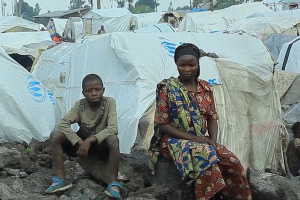
The African Development Bank (AfDB) approved $48.83 million on April 29, 2026, in Abidjan, to fund a crisis response project for conflict-affected people in eastern Democratic Republic of Congo (DRC). The financing supports the Crisis Response Project to Assist Affected Populations in the East, known by its French acronym PRECAPE, and targets Uvira in South Kivu, and Beni and Walikale in North Kivu.
The package includes a $33.91 million loan, alongside grants from the Transition Support Facility and the African Development Fund. The funding aims to address the immediate needs of crisis-affected communities while supporting the recovery of local economic activity.
The project will rehabilitate and equip several basic infrastructure facilities, including five vocational training centers, seven schools and seven health centers, as well as markets and water and sanitation facilities.
PRECAPE also includes measures to support employment and human capital. It will train 1,500 young people in high-demand trades, provide capacity-building support for 2,000 people, and offer psychosocial and medical assistance to 4,500 women survivors of gender-based violence.
According to the AfDB, more than 800,000 people, including internally displaced persons and host communities, are expected to benefit from the program.
The project will also explore innovative initiatives, including the tokenization of natural resources, notably gold and carbon, to mobilize alternative financing and improve incomes for rural communities.
This funding is part of a series of recent AfDB interventions in the DRC. In February 2026, the institution committed $49.6 million for the Regional Program to Support Infrastructure Development and the Enhancement of Transboundary Water Resources, known as PREDIRE, covering the provinces of North Ubangi, South Ubangi and Mongala.
Boaz Kabeya
Sino-Congolese mission set to assess Tshikapa airport for planned overhaul
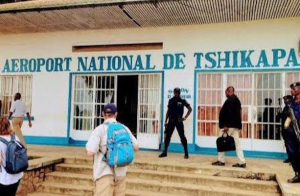
A technical mission from the Sino-Congolese Infrastructure Company (SISC S.A.), which is implementing a Sicomines-funded program under the mines-for-infrastructure deal, is expected to visit Tshikapa, in Kasai province, in May 2026 to prepare for the rehabilitation of the local airport.
The announcement followed an April 27 meeting in Kinshasa between Governor Crispin Mukendi Bukasa and company officials, local media reported.
The mission will conduct preparatory work, including a site assessment, ahead of a possible launch of modernization works at the facility. Discussions focused on technical and organizational aspects of the project.
The start of construction depends on resolving several administrative issues, particularly those linked to a previously awarded contract, which must be clarified before work can begin.
Tshikapa airport has been closed since Nov. 22, 2025, after heavy rains rendered its runway unusable. Provincial authorities said its condition no longer allowed aircraft to land.
The governor of Kasai also referred to a rehabilitation project announced about a year ago, noting that a $400,000 pre-financing arrangement had not led to any work.
Tshikapa airport is among the infrastructure projects included in the Sino-Congolese program, though financing and implementation details are still being finalized. In 2025, discussions focused on the financial guarantees required for the project. The Agency for Steering, Coordination and Monitoring of Collaboration Agreements (APCSC) had sought support from a bank to help structure the financing.
Boaz Kabeya
Or : Paradigm Holdings ouvre un nouveau corridor d’exportation de la RDC vers les Émirats
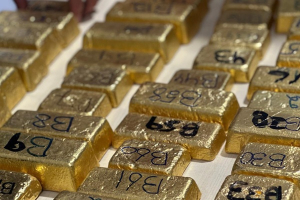
Un nouveau canal d’exportation formelle de l’or de la République démocratique du Congo (RDC) vers les Émirats arabes unis vient de s’ouvrir. La société émiratie Paradigm Holdings a annoncé, le 28 avril 2026, avoir conclu un accord d’approvisionnement en or avec le gouvernement congolais, dans le cadre de son expansion internationale dans les métaux précieux. À ce stade, les autorités congolaises n’ont pas encore communiqué publiquement les détails de cet accord.
Selon Paradigm Holdings, ce partenariat vise à structurer un réseau d’approvisionnement en or à partir de la RDC, tout en consolidant le rôle des Émirats arabes unis comme plateforme de négoce, de raffinage et de distribution des métaux précieux. L’entreprise présente cet accord comme son troisième partenariat soutenu par un gouvernement africain en moins de deux ans.
Depuis 2023, la RDC cherche à formaliser une partie de son or artisanal à travers Primera Gold DRC, une coentreprise entre l’État congolais et un partenaire émirati. Ce dispositif avait permis d’exporter plus de cinq tonnes d’or artisanal en 2023, pour une valeur supérieure à 300 millions USD, avant que Kinshasa ne reprenne le contrôle total de Primera Gold fin 2024 et ne rebaptise la société DRC Gold Trading.
Le partenariat avec les Émirats s’inscrivait alors dans une stratégie officielle de lutte contre la fraude et la contrebande, particulièrement dans l’est du pays. Mais le modèle Primera Gold a aussi été critiqué pour son opacité, ses avantages fiscaux et sa capacité réelle à assainir les chaînes d’approvisionnement. Des experts de l’ONU avaient notamment relevé que les conditions préférentielles accordées à Primera Gold créaient un quasi-monopole sur les exportations légales d’or artisanal.
Un accord encore peu détaillé
L’arrivée de Paradigm Holdings pourrait donc marquer une nouvelle étape dans la relation aurifère entre Kinshasa et les Émirats. Le communiqué ne précise toutefois ni les volumes concernés, ni la durée de l’accord, ni le régime fiscal applicable, ni l’entité congolaise signataire. Il ne détaille pas non plus les mécanismes de traçabilité, pourtant essentiels dans un secteur exposé à la contrebande, au blanchiment et au financement de groupes armés.
Sur le plan commercial, les Émirats arabes unis figurent déjà parmi les principales destinations de l’or congolais, aux côtés de l’Afrique du Sud. Selon les statistiques minières congolaises pour 2025, près de trois tonnes d’or auraient été exportées vers ce marché, pour une valeur supérieure à 337 millions de dollars.
Basée aux Émirats arabes unis, Paradigm Holdings se présente comme un groupe d’investissement privé actif dans les matières premières, l’immobilier et les énergies propres. L’entreprise indique développer des activités liées à l’extraction, au négoce et à la gestion de métaux précieux, de pierres précieuses et de terres rares, avec une présence au Moyen-Orient, en Afrique et en Amérique du Sud.
Pour la RDC, l’enjeu dépasse la simple ouverture d’un nouveau débouché commercial. Il s’agit de savoir si ce nouveau corridor permettra réellement d’accroître les exportations formelles, de sécuriser les recettes publiques et d’améliorer la traçabilité d’un secteur historiquement dominé par les circuits informels.
Ronsard Luabeya
Lire aussi :
Or artisanal : DRC Gold Trading vise plus de 2 milliards $ de recettes en 2026
RDC–Émirats : un accord économique global pour viser 10 milliards $ d’échanges d’ici 2030
Achat de l’or artisanal : après le Sud-Kivu, DRC Gold Trading s’implante dans le Tanganyika
Dollar cash: how DRC Plans to choke off money laundering
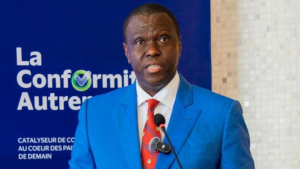
The Democratic Republic of Congo's central bank, Bank of The Congo (BCC) has moved to centralize physical foreign currency imports and ban cash transactions in foreign currencies, effective April 9, 2027. The Bank of Congo (BCC) says the measures are aimed at tackling money laundering and terrorism financing.
BCC Governor André Wamesso said the country imports a steady volume of dollars each month, a pattern he describes as evidence that cash is flowing out of the formal economy into illicit circuits.
"The lifespan of the dollar, according to the Federal Reserve, is more or less 18 months, or even two years. If, despite that, you have to import dollars every month, it means you are not in control of the cash introduced into your economy. That cash is exiting the system. This suggests a money laundering problem and, potentially, terrorism financing," Wamesso said in an interview broadcast April 18 on Top Congo.
He added, pointing to the country's neighbors and to armed groups operating in the east: "Most neighboring countries do not import dollars, yet they have them in their economies. Those dollars come from our economy. I will go even further: the dollars used today by rebel groups — where do they come from, given that they do not import cash and their leader is sanctioned by the United States?"
In March, nearly $4 million was seized at N'djili Airport. Wamesso said the funds belonged to a money transfer agency and were being sent to its branch in eastern Congo, but the amount seized exceeded what had been declared to the central bank, highlighting gaps in oversight of cash flows.
The Congolese Banking Association (ACB) has identified the dominance of cash transactions and the informal sector as one of the main obstacles banks face in meeting compliance requirements, particularly on anti-money laundering and counter-terrorism financing. The BCC measures, adopted at the Monetary Policy Committee meeting on April 9, are intended to address that challenge by banning cash transactions in dollars, the most widely used currency by value in the country.
U.S. Support
From April 9, 2027, "any transaction in foreign currency, regardless of amount, may only be conducted through non-cash means" — that is, by bank transfer, payment card or mobile money, including M-Pesa, Orange Money and Airtel Money. The goal is to strengthen the traceability of financial flows in order to combat money laundering and terrorism financing.
The governor warned that anyone attempting to import dollars outside official channels would be acting not only in violation of Congolese regulations, but also contrary to the position of the U.S. government, which, he said, supports these measures "100%."
According to the BCC, U.S. Treasury officials met on April 16 and expressed their institution's readiness to support "this effort to modernize the Congolese financial system." They reportedly underscored that the measures would contribute both to strengthening transparency and to improving the quality and availability of financial intelligence.
"This regulatory shift is expected to accelerate the adoption of digital payments," Visa's DRC country manager Sophie Kafuti said in an interview with Agence Ecofin. Wamesso has also presented the measures as incentives to invest in the development of digital payment infrastructure.
"For this transition to succeed, it is essential that it be collective, progressive, structured and secure," Kafuti said. The head of one of the world's leading digital payment technology companies in the DRC called for close support for banks and merchants through the harmonization and expansion of payment systems, the introduction of robust and inclusive customer identity verification systems, and strengthened transaction monitoring.
Digitalization also brings new risks, including digital fraud, money mules, crypto-assets and a proliferation of low-value, high-frequency transactions.
Pierre Mukoko
Aéroport de Tshikapa : la SISC attendue pour préparer le projet de réhabilitation
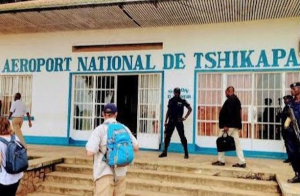
Une mission technique de la Société d’infrastructures sino-congolaise (SISC S.A.), chargée de l’exécution du programme financé par la Sino-Congolaise des Mines (Sicomines) dans le cadre du contrat mines contre infrastructures, est attendue en mai 2026 à Tshikapa, dans la province du Kasaï, afin de préparer la réhabilitation de l’aéroport local.
L’annonce fait suite à une réunion tenue le 27 avril à Kinshasa entre le gouverneur Crispin Mukendi Bukasa et les responsables de la société, selon la presse locale.
D’après la même source, cette mission devra mener des travaux préparatoires, notamment une évaluation de terrain, en amont d’un éventuel lancement des travaux de modernisation de l’infrastructure. Les échanges ont porté sur les aspects techniques et organisationnels du projet.
La concrétisation du chantier reste toutefois conditionnée à la résolution de certaines contraintes administratives, notamment liées au contrat précédemment attribué, dont l’issue devra être clarifiée avant tout engagement opérationnel.
L’aéroport de Tshikapa est fermé depuis le 22 novembre 2025, après que sa piste d’atterrissage a été rendue impraticable à la suite de fortes pluies. Sur place, les autorités provinciales avaient indiqué que l’état de dégradation ne permettait plus l’accueil d’appareils.
Le gouverneur du Kasaï avait également évoqué l’existence d’un projet de réhabilitation annoncé depuis environ un an, tout en faisant état d’un préfinancement de 400 000 dollars pour lequel aucun travail n’avait encore été engagé à ce stade.
L’aéroport de Tshikapa figure parmi les infrastructures évoquées dans le cadre du programme sino-congolais, même si les modalités précises de financement et d’exécution restent à consolider. En 2025, des discussions avaient été engagées autour des garanties financières nécessaires au projet. L’Agence de pilotage, de coordination et de suivi des conventions de collaboration (APCSC) avait notamment sollicité l’appui d’un établissement bancaire pour accompagner le montage.
Boaz Kabeya
Lire aussi :
Tshikapa : l’aéroport fermé, la piste d’atterrissage impraticable
Programme sino-congolais : un appui de BGFIBank pour débloquer 150 millions $ de marchés
Est de la RDC : la BAD mobilise 48,83 millions $ pour plus de 800 000 personnes
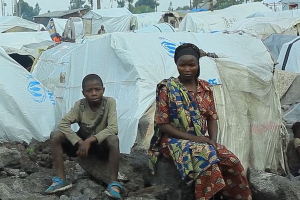
La Banque africaine de développement (BAD) a approuvé, le 29 avril 2026 à Abidjan, un financement de 48,83 millions de dollars en faveur de la République démocratique du Congo (RDC), dans le cadre du Projet de réponse à la crise en appui aux populations affectées dans l’Est (PRECAPE). L’intervention cible les zones d’Uvira, au Sud-Kivu, ainsi que Beni et Walikale, au Nord-Kivu.
Le financement comprend un prêt de 33,91 millions de dollars, complété par des dons provenant notamment de la Facilité d’appui à la transition et du Fonds africain de développement. Il vise à répondre aux besoins immédiats des populations touchées par la crise, tout en soutenant la relance des activités locales.
Le projet prévoit la réhabilitation et l’équipement de plusieurs infrastructures de base, dont cinq centres de formation professionnelle, sept écoles, sept centres de santé, ainsi que des marchés et des ouvrages d’eau et d’assainissement.
Le PRECAPE comprend également des actions en faveur de l’emploi et du capital humain. Il prévoit la formation de 1 500 jeunes dans des métiers porteurs, le renforcement des capacités entrepreneuriales de 2 000 bénéficiaires, ainsi qu’un appui psychosocial et médical à 4 500 femmes victimes de violences basées sur le genre.
Selon la BAD, plus de 800 000 personnes, dont des déplacés internes et des communautés hôtes, devraient bénéficier des retombées du programme.
Le projet prévoit aussi d’explorer des initiatives innovantes, dont la tokenisation des ressources naturelles, notamment l’or et le carbone, afin de mobiliser des financements alternatifs et d’améliorer les revenus des communautés rurales.
Ce financement s’inscrit dans une série d’interventions récentes de la BAD en RDC. En février 2026, l’institution avait notamment engagé 49,6 millions de dollars pour le Programme régional d’appui au développement des infrastructures et de valorisation des ressources en eau transfrontalière (PREDIRE), couvrant les provinces du Nord-Ubangi, du Sud-Ubangi et de la Mongala.
Boaz Kabeya
Lire aussi :
Ituri : un programme de 5 millions $ pour soutenir les populations affectées par les conflits
BAD : 49,6 millions $ pour les infrastructures dans les Ubangi et la Mongala
Cryptoactifs : la RDC ouvre la prévente d’un jeton adossé à l’or, sur fond de zones d’ombre