





Equipe Publication
Contrat Sicomines : la transparence parmi les engagements de la RDC auprès du FMI
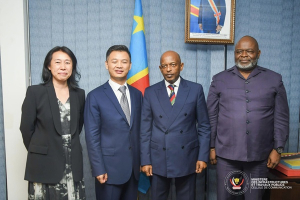
Dans le cadre du nouveau programme conclu avec le Fonds monétaire international (FMI), dont la première revue est en cours, la République démocratique du Congo (RDC) s’est engagée « à évaluer le mécanisme de collaboration avec Sicomines et à l’adapter si nécessaire, afin que les ressources allouées soient entièrement utilisées ou décaissées chaque année », selon le dernier rapport du FMI publié fin janvier 2025.
Dans cet esprit de transparence et de redevabilité, le gouvernement prévoit plusieurs mesures. Il s’est notamment engagé à publier, d’ici fin décembre 2024, sur les sites des ministères du Plan et des Infrastructures, la liste des projets financés par les ressources issues du partenariat Sicomines. Une vérification effectuée sur ces sites le 13 mai 2025 n’a toutefois pas permis de trouver une telle liste.
L’exécutif a également promis de publier les études de faisabilité, les analyses coûts-bénéfices et autres évaluations ex-ante des projets retenus. Il prévoit aussi de produire un rapport annuel sur l’utilisation des fonds Sicomines, incluant les rapports d’exécution physique et financière des projets, d’adopter en Conseil des ministres les mécanismes opérationnels et financiers de mise en œuvre, et de réaliser des évaluations ex-post indépendantes. Aucun calendrier n’a encore été fixé pour ces engagements.
Signée en 2008, la convention sino-congolaise des mines (ou contrat Sicomines) lie la RDC à un consortium chinois composé notamment de Crec, Sinohydro et Zhejiang Huayou. Présenté à l’époque comme le « contrat du siècle », ce partenariat repose sur un échange : des concessions minières contre des infrastructures publiques.
Mais la mise en œuvre du contrat a suscité de nombreuses critiques, notamment sur la répartition des bénéfices et le niveau d’exécution des projets. Face à ces critiques, l’accord a été révisé en mars 2024. Désormais, Sicomines s’est engagée à verser 324 millions de dollars par an soit 32 % de ses bénéfices pour financer des projets d’infrastructure en RDC.
La gestion de cette manne, sujette à la volatilité des cours du cuivre, constitue un enjeu de gouvernance. « Il convient de renforcer les mécanismes de transparence et de responsabilisation concernant l’utilisation des fonds générés par le nouveau contrat », recommandait déjà le FMI dans son rapport de juillet 2024, publié à la fin de son précédent programme avec la RDC.
L’institution de Bretton Woods préconise d’intégrer pleinement ces ressources au budget de l’État, tout en assurant la publication régulière des rapports financiers et des suivis d’exécution. Si le gouvernement a commencé, dès 2024, à inscrire les ressources Sicomines dans le budget national, la publication des rapports reste, à ce jour, attendue. Dans sa déclaration faite de 13 mai à l’issue de la mission du FMI à Kinshasa, débutée le 30 avril dernier, son chef de mission, Calixte Ahokpossi, n’a pas abordé cette question.
Pierre Mukoko
Lire aussi :
Projets d’infrastructures : 5,5 milliards $ attendus de la révision du contrat Sicomines
DR Congo: Fuel Subsidies Drop from $288.6M to $31.5M in 2023-2024, Down 89%
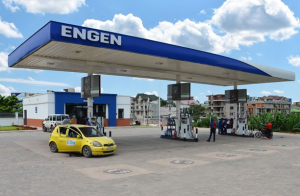
Over the past year, oil suppliers active in the Democratic Republic of Congo (DRC) recorded losses and shortfalls of $31.5 million, down from $288.6 million in 2023 (-89%). Daniel Mukoko Samba, Minister of the National Economy, disclosed the figures on May 6, 2025. This gap is bridged by subsidies.
Without providing specific figures, Calixte Ahokpossi, mission chief of the International Monetary Fund (IMF), confirmed Samba’s report: “We found that losses and revenue shortfalls have decreased significantly.” Earlier this month, the IMF began the first review of its new program with the DRC.
This sharp decline contrasts with the IMF’s January 2025 report, which estimated deficits of $77 million for the first half of 2024-more than double the annual total now announced by Daniel Mukoko Samba. According to the latest certified figures, shortfalls amounted to $16 million in the first half and $15.52 million in the second half of 2024.
While Congolese authorities have not explained this discrepancy yet, the IMF report notes that the government has pledged “to strengthen transparency in the calculation and certification of losses and shortfalls due to oil companies, by improving the operational capacities of the Strategic Products Price Regulation Committee, set up in February 2023, and by involving all the ministries concerned”. This suggests earlier assessments may have been inaccurate.
Planned improvements include revising methods for calculating revenue losses, rigorously monitoring key parameters influencing petroleum product pricing, and ending the cumulative remuneration of oil logistics companies in the tariff structure by eliminating the mutualization of their operating costs.
Roadmap
These measures are part of a roadmap adopted in November 2023, following a May 2023 audit on the price structure and an IMF technical assistance mission in July 2023. In September 2024, the government launched molecular tagging in the eastern zone to prevent subsidized fuel diversion to ineligible uses. The decision to exclude the mining sector from diesel subsidies in the southern zone also aligns with this reform effort.
The IMF’s July 2024 report acknowledged that the roadmap helped “contain the accumulation of liabilities to oil companies, which were reduced from $545 million to $122 million in 2023.” The institution encourages continued efforts to reduce revenue shortfalls. However, subsidies could rise again in 2025 due to a 13% drop in pump prices, which has increased domestic consumption of finished petroleum products to nearly 50%.
This article was initially published in French by Pierre Mukoko and Boaz Kabeya (intern)
Edited in English by Ola Schad Akinocho
River Transport: 240 Unapproved Ports Set to Close Soon
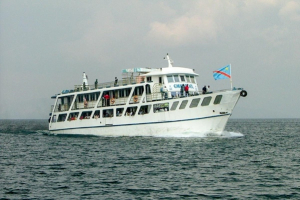
On May 8, 2025, the Ministry of Transport, Communication Routes and Opening-up issued an official letter listing 240 unapproved river and lake ports slated for immediate closure. The document, referenced N° VPM/MTVCD/CAB/563/2025 and signed by Deputy Prime Minister Jean-Pierre Bemba, was addressed to the Ministry of the Interior, Security, Decentralization, and Customary Affairs.
The measure aligns with resolutions from the 46ᵉ and 52ᵉ meetings of the Council of Ministers held on August 28 and October 9, 2020, respectively, focusing on regulating the river sector. It also follows Ministerial Letter No. VPM/MTVCD/CAB/458/2024 dated October 15, 2024, concerning the closure of so-called "illegal" ports.
The listed sites span multiple provinces, with the document specifying the names, locations, and in some cases, the owners of the affected infrastructures.
At the 17ᵉ ordinary Council of Ministers meeting on October 11, 2024, President Félix Tshisekedi instructed the government to enhance safety in river and lake navigation after a shipwreck on Lake Kivu. He emphasized combating clandestine ports, supervising boat construction, and strengthening regular technical monitoring by Ministry of Transport experts.
Following this directive, the Ministry had already initiated an operation to close unauthorized ports in response to a series of incidents on the waterways.
Boaz Kabeya (intern)
DR Congo: Over $440M Worth of Public Contracts Open in Agriculture Sector
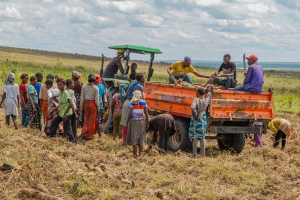
Between February and March 2025, the African Development Bank (AfDB) issued general procurement notices for two major agricultural projects in the Democratic Republic of Congo (DRC): the $311.6 million Projet d'appui au développement des chaînes de valeur (PADCV) and the $130.5 million Projet d'appui à la gouvernance et au développement des compétences (PAGDC). Together, these projects open up $442.1 million in public contracts covering works execution, goods acquisition, and consultancy services.
Tender documents are expected from March 2025, though detailed procurement timelines remain unclear. AfDB credits totaling $377.9 million fund the projects, with the balance provided by the Congolese government and stakeholders, and financing active through 2029. The overarching goal is to reduce food imports by 60% over five years, currently valued at around $3 billion annually.
PADCV and PAGDC form part of the Agricultural Transformation Program (PTA), a flagship $6.6 billion, ten-year (2023–2032) initiative by the Congolese government to modernize agriculture by boosting productivity, linking rural areas to markets, strengthening youth and women’s skills, and improving sector governance.
The PTA is being rolled out in three phases. The first phase, spanning three years and costing $2.3 billion, targets nine provinces-Kongo Central, Kwango, Maï-Ndombe, Kasaï Oriental, Lomami, Sud-Kivu, Tshopo, Sud-Ubangi, and Nord-Ubangi-selected for their agricultural potential and capacity to become production hubs.
On May 8, 2025, at the 42nd edition of Macfrut-the international fruit and vegetable trade fair in Rimini, Italy-the DRC officially launched the PTA’s operational phase and presented the PADCV and PAGDC procurement notices. A press release highlighted that “Italian companies, recognized for their technological lead in this field, are therefore called upon to play a major role.”
This article was initially published in French by Ronsard Luabeya (intern)
Edited in English by Ola Schad Akinocho
Maritime Transport: Lignes Maritimes Congolaises Prepares to Buy Two New Ships
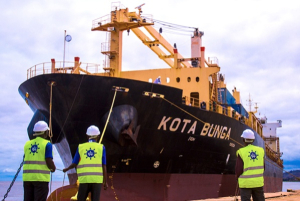
In the Democratic Republic of Congo (DRC), state-owned Lignes Maritimes Congolaises (LMC) is about to add two vessels to its fleet, according to its Board Chairman Lambert Mende Omalanga. The executive announced the move on May 6 in Matadi, after meeting with Kongo Central Governor Grâce Bilolo.
“I have come to announce to the governor of Kongo Central province, Grâce Bilolo, that we are about to acquire two floating units to improve working conditions for our provincial management,” Omalanga said.
Mende, a former Communications Minister, emphasized that the two ships have been ordered from shipyards in Rotterdam, Netherlands, as part of LMC’s five-year recovery plan (2023–2027). Under the latter, the firm should buy five new vessels and second-hand multipurpose ships, using state funds.
The five-year plan aims to bolster the state-owned company’s fleet and increase its share of Congolese foreign trade shipping from 0.3% in 2021 to 2% by 2027. This would represent a growth in transported volume from 45,000 tonnes to 395,195 tonnes.
To support this expansion, LMC also plans to develop dry ports in Matadi, Boma, Lufu, and Kinshasa, reinforce storage facilities in Dar es Salaam, and build a dry port in Kolwezi (Lualaba). The company intends to acquire containers to optimize the logistics chain and improve trade flow.
LMC used to have 10 sea-going vessels, but its whole fleet was liquidated two decades ago. The public shipowner was created in 1974 to handle the international maritime transport of Congolese goods.
Lambert Mende also noted that the government has instructed LMC to collect shipping royalties, a measure intended to compensate the company for past losses.
This article was initially published in French by Ronsard Luabeya (intern)
Edited in English by Ola Schad Akinocho
DRC: Mobile Internet Segment Generates Nearly $1B in 2024

The mobile Internet market in the Democratic Republic of Congo (DRC) generated $970.2 million in revenue in 2024. The figure, revealed by the country’s telecom regulator, the ARPTC, accounted for 46.4% of the sector’s total sales, which reached $2.09 billion.
Mobile Internet’s contribution to operators’ revenues rose from 29% in 2022 to 27.3% in 2023 and 46.4% in 2024. Between 2023 and 2024, the revenues from the Mobile Internet segment jumped 30.3%, while the whole mobile sector recorded an 8.7% growth in revenues.
This growth is driven more by a surge in data consumption than by subscriber growth. Over one year, the number of subscribers rose by 10% to nearly 33 million, while the volume of data consumed soared by 54% to a record 1,083 billion gigabytes. For comparison, data consumption in 2024 was 2.5 times higher than in 2022 (around 486 billion gigabytes).
Kinshasa and Haut-Katanga remain the main hubs for subscriptions, but the two Kivus (North and South) are emerging as markets to watch, with 5.8 million subscribers by the end of 2024, making the region second only to Kinshasa.
Market shares among operators vary. Vodacom RDC leads in active subscribers (over 90 days) with a 37.78% share, followed by Orange (29.97%), Airtel (29.33%), and Africell (2.92%). However, Airtel dominates Internet revenues, bringing in $365.5 million (37.7%), ahead of Orange (31.5%), Vodacom (27%), and Africell (3.8%). Airtel has held this leading position since 2021.
The DRC’s mobile Internet market still has significant growth potential. The GSMA forecasts 15 million additional subscribers by 2030, underscoring the sector’s role as a key growth driver for telecom operators and justifying recent efforts to expand coverage and enhance competitiveness
This article was initially published in French by Georges Auréole Bamba
Edited in English by Ola Schad Akinocho
Cité de Chine : un projet immobilier de plus de 200 millions $ lancé à Kinshasa
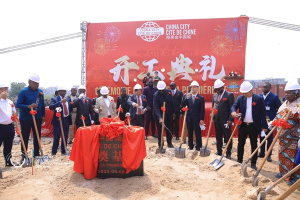
Le ministre de l’Industrie et du Développement des PME, Louis Watum Kabamba, a procédé, le samedi 10 mai 2025 à Kinshasa, à la pose de la première pierre de la Cité de Chine. Ce projet, porté par le groupe African Sunrise, prévoit la construction d’un complexe sur une superficie de 150 000 m². Il comprendra notamment des centres commerciaux, des infrastructures logistiques, des services financiers, des espaces résidentiels et des établissements hôteliers.
Selon les informations fournies par le ministère, l’investissement initial est estimé à 200 millions de dollars, avec une possibilité d’attirer jusqu’à 300 millions de capitaux supplémentaires. À terme, le projet devrait générer 30 000 emplois. Les travaux sont organisés en deux phases : une mise en service partielle est attendue pour décembre 2025, et l’achèvement complet est prévu pour mai 2027.
Lors de la cérémonie, le ministre a souligné que ce projet s’inscrit dans une volonté de renforcer la coopération économique entre la RDC et la Chine, notamment dans les infrastructures commerciales et industrielles. « La Cité de Chine, c’est l’avenir industriel de la RDC qui prend forme, au cœur de Kinshasa », a-t-il déclaré.
La collaboration entre le gouvernement congolais et le groupe chinois African Sunrise a été amorcée lors du Forum sur la coopération sino-africaine (FOCAC) organisé à Beijing. Ces échanges se sont poursuivis en RDC lors d’une réunion tenue le 13 novembre 2024 entre le ministre Louis Watum Kabamba et les dirigeants du groupe. Au cours de cette rencontre, l’entreprise a présenté ses projets en RDC, dont celui de développer un centre commercial et un parc industriel à Kinshasa.
African Sunrise Investment Group a déjà mené à bien plusieurs projets similaires en Angola, traduisant une stratégie d’implantation à grande échelle sur le continent, destinée à offrir des débouchés aux produits fabriqués en Chine. Une logique qui contraste cependant avec la politique de réduction des importations et de promotion de l’industrie locale défendue par le ministère congolais du Commerce extérieur.
En mars 2023, le groupe a lancé à Cacuaco (Luanda) la construction du centre commercial Nova Era, un complexe de 460 000 m² comprenant plus de 1 000 magasins, des centres logistiques et divers services, pour un investissement de 200 millions de dollars. En juillet 2024, il a également entamé, toujours à Cacuaco, le développement du parc industriel de Funda, un projet de 600 millions de dollars destiné à accueillir 160 usines, avec à la clé plus de 30 000 emplois.
Boaz Kabeya et Timothée Manoke, stagiaires
Lire aussi :
Extension de Kinshasa : un fonds en création pour financer un projet de 50 milliards $
Paiements internationaux : en RDC, Ecobank et XTransfer ciblent plus de 18 milliards $ d’échanges
Promotion des exportations : un programme de financement en préparation avec Equity BCDC
Gold: Kibali Delivers 141,000 Ounces in Q1 2025, Down 16% YoY

The Kibali mine in Haut-Uélé province, Democratic Republic of Congo (DRC), produced 141,000 ounces (4,384.6 kg) of gold in the first quarter of 2025, according to Barrick Mining’s quarterly report published on May 7. The output dropped 16% year-on-year and 20.3% compared to Q4 2024.
Barrick expects an output of 688,000–755,000 ounces this year. However, first-quarter results fall short of the quarterly average needed to meet this goal, estimated at 172,000 to 188,750 ounces. The company points to "higher grades for later in the year, mainly thanks to underground mining," but does not specify if this will be enough to meet annual targets.
In 2024, due to lower gold grades, Kibali delivered 688,000 ounces, 10% less than in 2023. Despite the decline, the mine’s contribution to Barrick’s sales rose by 30% to $316 million. Factoring in Barrick’s 45% stake, Kibali’s total sales are estimated at $702.2 million.
This revenue boost is attributed to the ongoing surge in gold prices. On April 22, the spot price of gold surpassed $3,500 an ounce for the first time, driven by Sino-American trade tensions and disputes between President Donald Trump and the Federal Reserve. JP Morgan, in a note published at the end of April, projected that gold prices could exceed $4,000 an ounce by 2026.
This article was initially published in French by Pierre Mukoko
Edited in English by Ola Schad Akinocho
Cobalt in Lualaba: In the DRC, National Business Federation in Disagrement with Customs Directorate
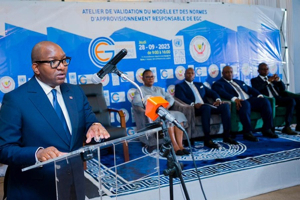
In Lualaba province, the Business Federation of Congo (Fédération des Entreprises du Congo—FEC) is challenging decisions made by the Directorate of Customs (DGDA). In a letter dated May 5, 2025, to DGDA Director General Bernard Kabese Musangu, FEC provincial president Germain Pungwe Mabwe called these decisions "irregular" and "potentially detrimental to the business and investment climate" in the province.
The dispute centers on the DGDA’s move to open proceedings against FEC members involved in processing and exporting cobalt from artisanal mining. Official statements of offence have been issued against these companies.
According to the DGDA, between 2020 and 2024, the firms failed to source cobalt from Entreprise Générale du Cobalt (EGC) or its approved partners, as mandated by the November 5, 2019 decree on safeguarding activities related to artisanally-mined strategic minerals.
The FEC argues that strict enforcement of this decree ignores the reality on the ground. The Federation said that at the time, sourcing cobalt via EGC was impossible because the state-owned company was not yet operational.
"If the services of the Ministry of Mines have not yet sanctioned this infraction linked to the obligation to source cobalt from EGC, this shows that the preconditions for the effective application of the provisions of the said decree have not been met," Germain Pungwe Mabwe writes.
The FEC also points to the Manual of procedures for traceability of mining products, noting that "if the obligation to source strategic mineral substance (cobalt) from the EGC is not explicitly mentioned as a mandatory document in this manual, the DGDA's requirement could be perceived as a non-compliant addition to the procedures established to date."
This situation underscores the challenges of implementing regulatory reforms where institutional capacity may not match legislative ambition. The FEC letter does not clarify whether its members attempted to comply with the rules before encountering EGC’s inoperability.
EGC announced the launch of its artisanal cobalt activities in March 2021, stating it had published responsible mining standards. In September 2023, it held a workshop to validate responsible purchasing standards. The procedures manual cited by the FEC was established by ministerial order before the November 5, 2019 decree, which nullified all contrary provisions.
The exact volume of cobalt exports deemed non-compliant by the DGDA remains unknown, but Lualaba province accounts for a significant share of the country’s artisanal cobalt output.
This article was initially published in French by Georges Auréole Bamba
Edited in English by Ola Schad Akinocho
Pétrole : la RDC annonce une révision totale de son code pour attirer les investisseurs
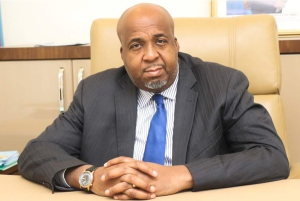
Dans un entretien accordé à Jeune Afrique, le ministre des Hydrocarbures, Aimé Sakombi Molendo (photo), a annoncé que la République démocratique du Congo (RDC) va revoir « totalement » son Code pétrolier. Selon lui, le projet de réforme sera présenté au Conseil des ministres d’ici trois mois, avant d’être transmis au Parlement pour adoption.
Pour justifier cette réforme, le ministre explique que l’actuel Code est à l’origine de l’échec de l’appel d’offres lancé le 28 juillet 2022 pour l’attribution de 27 blocs pétroliers. Sa fiscalité est jugée peu attractive. Parmi les raisons ayant freiné l’intérêt des compagnies pétrolières, Molendo Sakombi cite également l’absence de données sismiques précises et la présence d’aires protégées dans les blocs proposés.
À l’issue du Conseil des ministres du 2 mai dernier, le gouvernement a indiqué que 52 nouveaux blocs pétroliers venaient d’être ouverts à l’exploration. Avec trois blocs déjà attribués (Mbandaka, Lokoro et Busira) à la Compagnie minière congolaise, le portefeuille atteint désormais 55 blocs dans la Cuvette centrale, selon le compte rendu de la réunion.
D’après le ministre des Hydrocarbures, ces blocs ont été « détoxifiés » en excluant toutes les aires protégées. Ce nouveau découpage, réalisé avec l’appui technique du ministère de l’Environnement, visait également à répondre aux critiques formulées par des ONG environnementalistes.
Mais cela ne semble pas les rassurer. Après l’annonce de cette ouverture à l’exploration, la coalition « Notre terre sans pétrole » a immédiatement réagi, demandant l’arrêt de la procédure et l’annulation de l’attribution des trois premiers blocs. Ce collectif, qui rassemble plus de 170 organisations, estime que cette décision va à l’encontre de la stratégie de la RDC, qui entend se positionner comme un acteur clé dans la lutte mondiale contre le dérèglement climatique.
Entreprises américaines
« Le gouvernement ne reculera plus », a réagi le ministre face à ces critiques. Il a précisé que la politique actuelle vise à explorer et produire, tout en préservant les intérêts des générations futures.
Selon lui, la révision du Code s’accompagnera d’une mise à jour des données géologiques, afin d’offrir aux investisseurs une meilleure lisibilité sur le potentiel pétrolier du pays. Il affirme que des opérations sismiques seront lancées dans les prochains mois pour constituer une base de données fiable et sécurisée.
Molendo Sakombi indique que cette démarche s’inspire notamment des recommandations des compagnies pétrolières internationales, ainsi que des expériences des pays voisins, comme l’Angola et le Congo-Brazzaville, avec lesquels la RDC entretient désormais une coopération technique.
Le ministre précise également que des discussions avancées sont en cours avec des entreprises américaines spécialisées dans le retraitement des données sismiques. Une telle collaboration, selon lui, pourrait ouvrir la voie à des partenariats futurs avec de grandes compagnies pétrolières américaines.
Ronsard Luabeya, stagiaire
Lire aussi :
Exploitation pétrolière : la Sonahydroc au cœur de la nouvelle stratégie de la RDC
Attribution des blocs pétroliers : la RDC opte pour des appels d’offres restreints
Tête à tête Tshisekedi-Museveni : sécurité, pétrole et infrastructures au menu