





Equipe Publication
Telecom operators call for state support to improve network quality
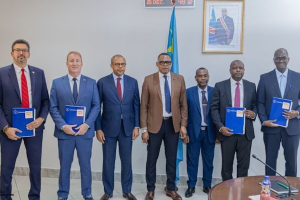
Telecom companies operating in the Democratic Republic of Congo have called on authorities to support long-term improvements to network infrastructure, arguing that persistent service disruptions stem not only from internal shortcomings but also from broader structural challenges.
In a joint statement relayed last week by the Ministry of Posts, Telecommunications and Digital Affairs, the operators said they were ready to work with the government on short-, medium- and long-term solutions that are expected to be presented soon.
The companies said the deterioration in service quality cannot be attributed solely to problems within their own networks. They pointed to several external constraints that continue to affect sector performance despite ongoing investment efforts.
Among the challenges cited were unstable electricity supply, repeated fiber-optic cable cuts, destruction of infrastructure, insecurity along several road corridors, limited spectrum availability and underdeveloped infrastructure. According to the operators, these constraints are complicating technical teams’ access to telecom sites and hindering network maintenance operations.
The statement comes as Congolese authorities intensify pressure on telecom companies over service quality. During a cabinet meeting in January, President Felix Tshisekedi ordered that sanctions against operators failing to meet obligations related to quality of service, continuity, coverage and consumer protection be enforced “firmly and without leniency.”
The president also called for stronger regulation, tighter oversight and permanent network monitoring mechanisms amid persistent consumer complaints over dropped calls, slow mobile internet connections and unstable services.
High Energy Costs
The concerns raised by operators echo findings published by the GSMA, the global mobile industry association. In a report released in September 2025 on the DRC’s digital economy, the organization said the country’s telecom infrastructure remains heavily dependent on diesel-powered generators.
According to the GSMA, a large proportion of telecom sites are not connected to the national electricity grid, a situation expected to worsen as network coverage expands into rural and remote areas. The organization estimates that operators already spend between 40% and 60% of their operating costs on purchasing and transporting diesel to power antennas and technical equipment.
These expenses weigh heavily on operators’ finances, undermine service continuity and may ultimately be passed on to consumers.
The GSMA also described the Congolese telecom market as particularly costly to operate in, citing tax pressure, regulatory and administrative hurdles affecting infrastructure deployment, as well as high maintenance and energy costs.
For now, authorities are holding telecom operators chiefly responsible for service quality. The 2020 law on telecommunications and information and communication technologies provides for financial penalties in cases where operators fail to comply with obligations set out in their licenses and technical specifications.
The law states that “any violation of one or more clauses of the license, the authorization or the technical specifications attached thereto that does not result in the suspension or withdrawal of the license shall be punishable by a fine not exceeding one quarter of the price of the license.”
With the measures announced by operators still pending, the dispute is increasingly centered on accountability. Authorities are demanding immediate improvements in service quality, while telecom companies argue that sustainable network upgrades will also require greater public investment in electricity supply, security and national infrastructure.
Pierre Mukoko
Télécoms : menacés de sanctions, les opérateurs renvoient la responsabilité à l’État
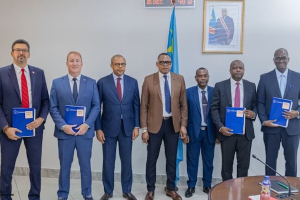
Dans un communiqué conjoint relayé la semaine dernière par le ministère des Postes, Télécommunications et Numérique, les sociétés du secteur sollicitent l’appui des autorités pour améliorer durablement les réseaux en République démocratique du Congo. Elles affirment vouloir travailler avec le gouvernement à des solutions « à court, moyen et long terme », qui devraient être présentées prochainement.
Les opérateurs soutiennent que la dégradation de la qualité des services ne résulte pas uniquement de problèmes internes aux réseaux. Ils évoquent des « facteurs structurels et externes » qui continuent d’affecter les performances du secteur malgré les investissements engagés.
Parmi les difficultés citées figurent l’instabilité de l’alimentation électrique, les coupures répétées de fibre optique, les destructions d’infrastructures, l’insécurité sur plusieurs axes routiers, le déficit de spectre ainsi que la faiblesse des infrastructures de base. Ces contraintes compliquent notamment l’accès des équipes techniques aux sites télécoms et la maintenance des réseaux.
Cette prise de position intervient alors que les autorités congolaises accentuent la pression sur les sociétés télécoms. En janvier dernier, lors d’un Conseil des ministres, le président Félix Tshisekedi avait exigé l’application « sans faiblesse ni complaisance » des sanctions prévues contre les opérateurs ne respectant pas leurs obligations en matière de qualité, de continuité, de couverture et de protection des usagers.
Le chef de l’État avait également demandé un renforcement des mécanismes de régulation, de contrôle et de suivi permanent des réseaux, dans un contexte marqué par des plaintes récurrentes des consommateurs concernant les coupures d’appels, la lenteur de l’internet mobile et l’instabilité des services.
Coût élevé de l’énergie
Les arguments avancés par les opérateurs rejoignent plusieurs constats établis par la GSMA, l’association mondiale de l’industrie mobile. Dans un rapport publié en septembre 2025 sur l’économie numérique de la RDC, l’organisation souligne que les infrastructures télécoms congolaises restent fortement dépendantes des générateurs électriques.
Selon la GSMA, une grande partie des sites télécoms n’est pas connectée au réseau national d’électricité, une situation appelée à s’aggraver avec l’extension de la couverture vers les zones rurales ou enclavées. L’organisation estime que les opérateurs consacrent déjà entre 40 % et 60 % de leurs dépenses opérationnelles à l’achat et au transport du diesel utilisé pour alimenter les antennes et les équipements techniques. Ces coûts pèsent directement sur les charges d’exploitation des entreprises, fragilisent la continuité des services et peuvent se répercuter sur les prix payés par les consommateurs.
La GSMA évoque aussi un environnement opérationnel particulièrement coûteux pour les télécoms en RDC, en raison notamment de la pression fiscale, des contraintes réglementaires et administratives liées au déploiement des infrastructures, ainsi que des dépenses permanentes de maintenance et d’alimentation énergétique des réseaux.
Pour l’instant, les autorités semblent maintenir la responsabilité principale des opérateurs dans l’amélioration de la qualité des services. La loi de 2020 sur les télécommunications et les TIC prévoit d’ailleurs des sanctions financières en cas de non-respect des obligations fixées dans les licences et cahiers des charges.
Le texte stipule que « toute violation d’une ou de plusieurs clauses de la licence, de l’autorisation ainsi que du cahier des charges y annexé n’entraînant pas la suspension ou le retrait du titre est punie d’une amende ne dépassant pas le quart du prix du titre ».
En attendant les mesures annoncées par les opérateurs, le bras de fer semble désormais se déplacer sur le terrain des responsabilités : les autorités réclament des améliorations immédiates des services, tandis que les entreprises estiment qu’une amélioration durable des réseaux passera aussi par des investissements publics plus importants dans l’électricité, la sécurité et les infrastructures nationales.
Pierre Mukoko, avec l’Agence Ecofin
Lire aussi :
Télécoms : l’Internet mobile pèse désormais plus de la moitié des revenus du secteur en RDC
Télécoms : Tshisekedi demande des sanctions contre les opérateurs défaillants
Télécoms : José Mpanda alerte sur la dégradation de la qualité des services en RDC
Kinshasa : le gouvernorat donne 60 jours aux opérateurs pour retirer les câbles des caniveaux
MyHydro Nears Financial Close on Kasai-Oriental Hydropower Project
U.S. company MyHydro says it is close to securing financing for the Kabeya-Kamwanga hydropower project on the Lubi River in the Democratic Republic of Congo’s Kasai-Oriental province.
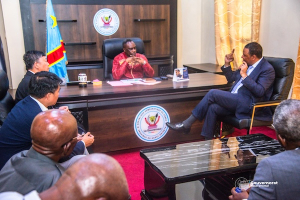
The announcement followed a May 14 meeting between a company delegation and provincial Governor Jean-Paul Mbwebwa Kapo. According to the provincial government, cited by the Agence congolaise de presse (ACP), the delegation was led by MyHydro partner Singoma Mwanza and included the deputy director general of China Hydropower Construction Group (HCC), which is expected to build the project’s infrastructure.
Speaking after the meeting, Mwanza said the project was nearing financial close, clearing the way for construction to start in the coming months. A groundbreaking ceremony could take place as early as next quarter, he added, pending final administrative approvals.
No investment amount has yet been disclosed. The project is currently described as having a planned capacity of around 5 megawatts, aimed at improving electricity supply in Mbuji-Mayi and several other localities in Kasai-Oriental.
Revised capacity, delayed rollout
When the project was first announced in 2023, MyHydro said the plant would have a capacity of 4.48 MW and be developed in two phases: an initial 1.2 MW unit expected before the end of September 2024, followed by a second 3.6 MW phase scheduled for March 2025. Those targets were missed.
MyHydro is a joint venture between Symbion Power and Natel Energy focused on low-head hydropower systems. In 2023, the company signed a contract to acquire four turbines from Natel Energy for the first of 33 sites it has identified in the DRC, on the Lubi River.
Through the Kabeya-Kamwanga project, the company aims to promote a model of mini-hydropower plants designed to supply communities with limited access to the national grid. MyHydro has said it plans to deploy at least 150 similar installations across Africa and invest more than $1 billion over the next decade in small-scale hydropower projects.
Ronsard Luabeya
DRC Turns to Angola for Power as Inga 3 Remains Years Away
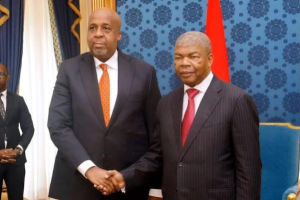
The Democratic Republic of Congo is looking to import electricity from neighbouring Angola as it waits for progress on the long-delayed Inga 3 hydropower project. On May 14, 2026, Congolese Water Resources and Electricity Minister Aimé Sakombi Molendo travelled to Luanda for talks with Angolan President João Lourenço on a proposed electricity interconnection between the two countries.
According to Angola’s state news agency ANGOP, Kinshasa and Luanda are considering the construction of two high-voltage transmission lines. The first would run from Malanje in Angola to Fungurume in Lualaba province, at the centre of the DRC’s copper belt. The second would connect Soyo, in Angola’s Zaire province, to the Inga site in western Congo, with capacity to supply up to 2,000 megawatts to Congolese consumers.
The project, estimated to cost several hundred million dollars, will require extensive technical and feasibility studies before construction can begin. Sakombi Molendo said that once the report is submitted to President Félix Tshisekedi, authorities intend to fast-track the studies, with the aim of completing the Soyo-Inga line and launching the Malanje-Dilolo-Fungurume corridor within 18 months.
A Chronic Power Shortage
The DRC’s interest in Angolan electricity reflects a long-standing domestic power deficit. Despite possessing one of Africa’s largest hydroelectric potential reserves, the country continues to struggle to meet demand, particularly in its mining regions.
The south-east, which produces most of the country’s copper and cobalt, is facing rapidly rising electricity demand as mining activity expands. According to figures from the Congolese Ministry of Mines, the electricity shortfall for mining operators alone exceeds 1,500 MW.
The proposed imports from Angola are therefore being presented as a temporary solution while authorities continue efforts to advance the governance framework for the planned Inga 3 dam project, which remains years away from completion. In the meantime, imported electricity could provide faster relief for households, businesses and mining operations, the minister said.
Expanding Regional Energy Projects
The latest initiative adds to a growing list of projects already announced along the Angola-DRC energy corridor.
In July 2024, commodity trader Trafigura and ProMarks signed a memorandum of understanding with the Angolan government to study the technical and economic viability of a regional electricity transmission project under a public-private partnership model.
Moroccan construction group Somagec has also been associated with plans for a high-voltage line linking Angola and the DRC, in a project estimated at around $1.3 billion.
In October 2025, U.S. company Hydro-Link finalised preliminary agreements for a 1,150-kilometre transmission line aimed at supplying 1.2 gigawatts of Angolan electricity to mining areas in south-eastern Congo. The project is estimated to cost about $1.5 billion.
Regional Ambitions
Beyond bilateral cooperation, the projects reflect wider strategic ambitions on both sides of the border.
For the DRC, the priority is securing reliable electricity supplies for its mining sector and reducing a major constraint on local mineral processing and industrial development. For Angola, the projects offer a chance to monetise surplus hydropower production and strengthen its position as a regional energy exporter.
According to the African Development Bank, Angola’s exportable clean hydropower capacity could reach 3.5 GW by 2027.
Questions remain over how the various projects would be coordinated, including their financing structures, implementation schedules, and the respective roles of Congo’s state utility SNEL, Angolan authorities and private-sector partners.
For now, however, the Luanda discussions confirm a broader trend: long before Inga 3 becomes operational, the DRC is already looking beyond its borders to address its immediate electricity needs.
Pierre Mukoko
Hydroélectricité : MyHydro proche du bouclage financier pour Kabeya-Kamwanga
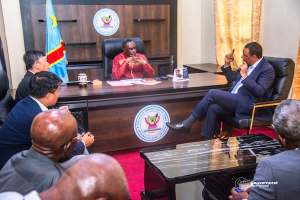
L’entreprise américaine MyHydro affirme être proche de finaliser le financement du projet hydroélectrique de Kabeya-Kamwanga, développé sur la rivière Lubi, dans la province du Kasaï-Oriental.
L’annonce a été faite le 14 mai 2026, à l’issue d’une rencontre entre une délégation de la société et le gouverneur Jean-Paul Mbwebwa Kapo. Selon les informations publiées par le gouvernorat provincial et relayées par l’Agence congolaise de presse (ACP), la délégation était conduite par Singoma Mwanza, associé partenaire de MyHydro, accompagné notamment du directeur général adjoint de HCC, China Hydropower Construction Group, l’entreprise appelée à construire les infrastructures.
À l’issue de la rencontre, Singoma Mwanza a indiqué que le projet était « pratiquement arrivé à la fin du bouclage financier », ouvrant ainsi la voie au démarrage des travaux dans les prochains mois. La pose de la première pierre pourrait intervenir « d’ici le trimestre prochain », sous réserve de la finalisation de certaines formalités administratives.
Aucun montant global d’investissement n’a toutefois été communiqué à ce stade. Le projet est désormais présenté avec une capacité d’environ 5 mégawatts, destinée à améliorer l’approvisionnement électrique de Mbuji-Mayi et de plusieurs localités du Kasaï-Oriental.
Lors des premières annonces faites en 2023, MyHydro évoquait une centrale de 4,48 MW, développée en deux phases : une première tranche de 1,2 MW attendue avant fin septembre 2024, puis une seconde de 3,6 MW prévue pour mars 2025. Ces échéances n’ont finalement pas été respectées.
MyHydro est une coentreprise réunissant Symbion Power et Natel Energy, spécialisée dans les petites centrales hydroélectriques à basse chute. En 2023, l’entreprise avait signé un contrat portant sur l’acquisition de quatre turbines auprès de Natel Energy pour le premier de ses 33 sites identifiés en RDC, sur la rivière Lubi.
À travers ce projet, MyHydro cherche à développer un modèle de mini-centrales hydroélectriques destinées à alimenter des réseaux locaux dans des zones insuffisamment couvertes par les infrastructures électriques nationales. Le groupe a annoncé vouloir déployer au moins 150 installations similaires en Afrique et investir plus d’un milliard de dollars sur dix ans dans des projets hydroélectriques de petite taille.
Ronsard Luabeya
Lire aussi :
Est de la RDC: l’Américain Symbion Power rehausse à 700 millions $ son projet électrique
Électricité : la RDC se tourne vers l’Angola en attendant Inga 3
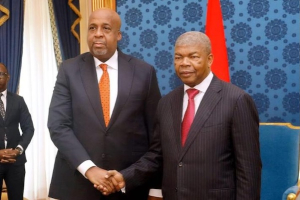
La République démocratique du Congo cherche à sécuriser une partie de ses besoins énergétiques auprès de l’Angola, en attendant la réalisation du projet Inga 3. Le 14 mai 2026, le ministre congolais des Ressources hydrauliques et de l’Électricité, Aimé Sakombi Molendo, a été reçu à Luanda par le président angolais João Lourenço pour discuter d’un projet d’interconnexion électrique entre les deux pays.
Selon l’agence publique angolaise ANGOP, Kinshasa et Luanda envisagent la construction de deux lignes de transport. La première relierait Malanje, en Angola, à Fungurume, dans le Lualaba, au cœur de la ceinture minière congolaise. La seconde connecterait Soyo, dans la province angolaise du Zaïre, au site d’Inga, en RDC, avec l’objectif d’acheminer jusqu’à 2 000 MW vers le territoire congolais.
Le projet, évalué à « plusieurs centaines de millions de dollars », doit encore faire l’objet d’études techniques approfondies. D’après Aimé Sakombi Molendo, après la présentation du rapport au président Félix Tshisekedi, les études devraient être accélérées afin de permettre, dans un délai de 18 mois, l’achèvement de la première ligne Soyo-Inga et le lancement de la liaison Malanje-Dilolo-Fungurume.
L’intérêt de la RDC pour l’électricité angolaise s’explique par son déficit structurel. Malgré un potentiel hydroélectrique souvent présenté comme l’un des plus importants du continent, le pays reste confronté à une offre insuffisante, notamment dans les zones minières. Le sud-est congolais, qui concentre l’essentiel de la production de cuivre et de cobalt, fait face à des besoins croissants en énergie pour soutenir l’activité industrielle. Selon des données du ministère congolais des Mines, le déficit des seuls opérateurs miniers dépasse 1 500 MW.
Le projet angolais apparaît ainsi comme une solution de transition avant Inga 3. Le gouvernement congolais cherche à accélérer la gouvernance du futur barrage, mais celui-ci demeure un chantier de long terme. En attendant, l’importation d’électricité depuis l’Angola permettrait de répondre plus rapidement aux besoins des populations, des industries et des communautés, selon les termes du ministre congolais.
Plusieurs projets en maturation
Cette nouvelle initiative s’ajoute à plusieurs projets déjà annoncés sur l’axe Angola-RDC. En juillet 2024, Trafigura et ProMarks ont signé un protocole d’accord avec le gouvernement angolais pour étudier la viabilité technique et économique d’un projet régional de transport d’électricité, avec un modèle de partenariat public-privé. Le groupe marocain Somagec a également été associé à un projet de ligne haute tension Angola-RDC d’environ 1,3 milliard de dollars.
En octobre 2025, l’américain Hydro-Link a, de son côté, finalisé les accords préliminaires pour une ligne de 1 150 km destinée à importer 1,2 GW d’électricité angolaise vers les zones minières du sud-est congolais, pour un coût estimé à 1,5 milliard de dollars.
L’enjeu dépasse donc la seule coopération bilatérale. Pour la RDC, il s’agit de sécuriser l’alimentation électrique de son industrie minière et de réduire un goulet d’étranglement qui pèse sur la transformation locale. Pour l’Angola, ces projets ouvrent la voie à la valorisation de ses surplus hydroélectriques et à un positionnement comme fournisseur régional d’énergie. Selon la Banque africaine de développement (BAD), l’Angola dispose d’un surplus exportable d’énergie hydroélectrique propre, qui devrait atteindre 3,5 GW d’ici 2027.
Reste à clarifier l’articulation entre ces différents projets, leurs financements, leur calendrier et le rôle respectif de la SNEL, des autorités angolaises et des opérateurs privés. À ce stade, l’annonce de Luanda confirme surtout une tendance : avant de pouvoir compter sur Inga 3, la RDC cherche déjà son électricité au-delà de ses frontières.
Pierre Mukoko
Lire aussi :
Grand Inga: vers l’adoption d’une loi pour accélérer le projet hydroélectrique
Ligne électrique Angola–RDC : l’Américain Hydro-Link boucle les accords préliminaires
Kamoa-Kakula : le projet Somagec, une alternative pour importer l’électricité d’Angola
Interconnexion électrique avec Kinshasa : Brazzaville lance ses études de faisabilité
Électricité : les premières exportations de l’Angola vers la RDC espérées d’ici 2030
DR Congo reclaims over 12,000 sq km of mining permits linked to Acacia and Kwango Mines
The Democratic Republic of Congo has revoked mining permits covering more than 12,000 square kilometers that were held by two companies, as part of an ongoing effort to clean up the country's mining registry.
According to a statement from the Mining Cadastre, known by its French acronym CAMI, relayed on May 14, 2026, by Agence congolaise de presse, the permits held by Acacia and Kwango Mines were revoked for failure to pay annual surface fees, in accordance with the Mining Code and related regulations.
The two companies jointly held 90 mining titles covering 15,029 permit blocks across the provinces of Kwango, Kwilu, Mai-Ndombe, Kongo Central and Kasai. The total area affected reaches 12,767.5 square kilometers, larger than Kinshasa.
In detail, Kwango Mines held 47 titles covering 5,282.5 sq km, while Acacia held 43 titles spanning 7,485 sq km. The permits cover minerals including gold, diamonds and bauxite.
Together, the concessions form a broad mining corridor stretching from Kongo Central to Kasai, crossing several territories in Kwango province, including Kahemba, Popokabaka and Kasongo-Lunda.
The move is part of a broader campaign launched in 2023 by CAMI to recover inactive or non-compliant mining permits. The mining administration said it has reclaimed more than 50,000 sq km of mining areas over the past three years through reviews of permit validity, compliance with payment obligations and respect for development deadlines.
The stated objective is to recover permits held by operators deemed inactive or non-compliant and make them available for new mining investment.
Before revoking the permits, CAMI had already launched a warning procedure against the companies concerned. In a statement published on April 16, 2026, the institution said several annual surface fee payments for the 2026 fiscal year had not been recorded by its financial services as of April 10.
CAMI then granted the affected permit holders 45 days to provide proof of payment or face cancellation of their licenses. Kwango Mines was explicitly named among the companies concerned at the time.
The case also carries political sensitivity. Acacia and Kwango Mines have previously been cited in several investigations as companies linked to the family of former President Joseph Kabila.
In 2017, the Congo Research Group published an investigation into the business interests attributed to the Kabila family, citing links between certain mining companies and Jaynet Kabila, the former president's twin sister. Subsequent reporting by Deutsche Welle and other international media also associated Acacia and Kwango Mines with that network of economic interests.
At this stage, however, the documents reviewed do not clearly establish the current ownership structure of either company.
Boaz Kabeya
Or, diamant… : plus de 12 000 km² de titres liés à Acacia et Kwango Mines récupérés
Le processus d’assainissement du cadastre minier congolais franchit une nouvelle étape avec la mise en déchéance de vastes périmètres miniers couvrant plus de 12 000 km² dans plusieurs provinces stratégiques de la République démocratique du Congo.
Selon un communiqué du Cadastre minier (CAMI) relayé le 14 mai 2026 par l’Agence congolaise de presse (ACP), les sociétés Acacia et Kwango Mines ont été classées en déchéance pour non-paiement des droits superficiaires annuels, conformément aux dispositions du Code minier et du règlement minier.
Les deux sociétés détenaient ensemble 90 titres miniers représentant 15 029 carrés miniers répartis dans le Kwango, le Kwilu, le Maï-Ndombe, le Kongo Central et le Kasaï. La superficie totale concernée atteint 12 767,5 km², soit davantage que la ville-province de Kinshasa.
Dans le détail, Kwango Mines contrôlait 47 titres couvrant 5 282,5 km², tandis qu’Acacia détenait 43 titres répartis sur 7 485 km². Les permis portent notamment sur des substances comme l’or, le diamant et la bauxite.
L’ensemble dessine un vaste corridor minier allant du Kongo Central jusqu’au Kasaï, en passant par plusieurs territoires du Kwango, notamment Kahemba, Popokabaka et Kasongo-Lunda.
Cette mesure s’inscrit dans la campagne d’assainissement du fichier cadastral engagée depuis 2023 par le CAMI. L’administration minière affirme avoir déjà récupéré plus de 50 000 km² de périmètres miniers au cours des trois dernières années grâce à des contrôles portant sur la régularité des titres, le paiement des obligations légales ainsi que le respect des délais de mise en exploitation.
Dimension politique
L’objectif affiché est de récupérer les permis détenus par des opérateurs considérés comme inactifs ou défaillants afin de les rendre disponibles pour de nouveaux investissements miniers.
Avant cette décision, le CAMI avait déjà lancé une procédure d’alerte à l’endroit des opérateurs concernés. Dans un communiqué publié le 16 avril 2026, l’institution indiquait que plusieurs paiements des droits superficiaires annuels pour l’exercice 2026 n’avaient pas été retracés dans ses services financiers à la date du 10 avril.
Le Cadastre minier avait alors accordé un délai de 45 jours aux titulaires concernés afin de produire les preuves de paiement sous peine de déchéance. Dans la liste publiée à cette occasion, Kwango Mines figurait explicitement parmi les sociétés concernées.
Le dossier présente également une dimension politique sensible. Acacia et Kwango Mines ont déjà été citées dans plusieurs enquêtes antérieures comme des sociétés liées à la famille de l’ancien président Joseph Kabila.
En 2017, le Groupe d’étude sur le Congo (GEC) avait notamment publié une enquête sur le portefeuille d’affaires attribué à la famille Kabila, évoquant des liens entre certaines sociétés minières et Jaynet Kabila, sœur jumelle de l’ancien chef de l’État. Des publications ultérieures de Deutsche Welle et d’autres médias internationaux ont également associé Acacia et Kwango Mines à ce réseau d’intérêts économiques.
À ce stade toutefois, les documents consultés ne permettent pas d’établir publiquement la structure actuelle de propriété des deux sociétés.
Boaz Kabeya
Lire aussi :
Lithium de Manono : AVZ perd un permis de recherche pour non-paiement des droits superficiaires
Non-paiement des droits : l’Américain Miminco perd deux permis miniers en RDC
Mines : sept entreprises perdent leurs titres pour non-paiement des droits superficiaires
Zambia reopens sulfuric acid flows to the DRC while Kamoa cashes in on the crunch
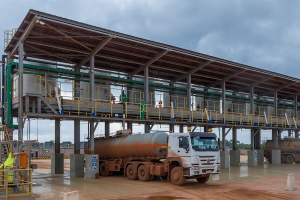
Zambia has authorized a limited resumption of sulfuric acid exports to the Democratic Republic of Congo, offering partial relief to Congolese copper and cobalt producers facing shortages of the critical processing input for several months.
Zambian Trade Minister Chipoka Mulenga told Reuters that Chambishi Copper Smelter and Mopani Copper Mines have been allowed to resume some deliveries to Congo after rebuilding stocks allocated to the domestic market.
Lusaka remains cautious, however. Zambia will cap export volumes to avoid renewed pressure on local supply. The government could broaden its authorizations if market conditions continue to improve.
Sulfuric acid is essential for processing oxidized copper and cobalt ores, particularly in Congo's Copperbelt. Zambia suspended exports in September 2025 before introducing export controls from March onward, worsening supply difficulties for several mining companies in Congo, the world's largest cobalt producer and second-largest copper producer.
DR Congo consumes roughly 2 million metric tons of sulfuric acid per year, some of which is supplied through imports from Zambia, which itself produces close to 2 million metric tons annually. According to Reuters, Zambia's restrictions had already forced some Congolese producers to reduce sulfuric acid consumption and consider output adjustments. Mopani is expected to supply Glencore, while Chambishi Copper Smelter would export to three Chinese mining companies operating in DR Congo.
Kamoa turns the shortage into a revenue source
The regional supply crunch is not affecting all miners equally. At Ivanhoe Mines, sulfuric acid shortages have instead become a strategic commercial advantage for the Kamoa-Kakula complex.
According to Ivanhoe Mines' quarterly report published on May 6, the Kamoa-Kakula smelter produced 117,871 metric tons of high-concentration sulfuric acid in the first quarter of 2026, of which 107,700 metric tons were sold to six customers at an average price of $467 per metric ton.
The company said a new delivery contract for June was signed at $725 per metric ton, while other contracts are due for renegotiation.
The surge in sulfuric acid prices is directly improving Kamoa-Kakula's margins. Revenue from acid sales already covers the smelter's operating costs. In the first quarter, those revenues represented approximately $705 per metric ton of copper produced, compared with estimated smelter operating costs of around $595 per metric ton.
Ivanhoe Mines co-chair Robert Friedland now describes sulfuric acid production as a strategic advantage for the project. He said Kamoa-Kakula could generate close to $1 million per day in operating credits from sulfuric acid sales, helping offset rising diesel and logistics costs.
That is positive news for shareholders in Kamoa Copper, the joint venture that operates the mine.
Zambia's easing therefore does not fully resolve the problem. While it may reduce pressure on some Congolese miners in the short term, it also highlights the sector's dependence on regional suppliers for strategic industrial inputs.
Against that backdrop, Kamoa-Kakula stands out because of its vertically integrated operations. Its smelter not only reduces the logistics costs associated with exporting concentrates, but also produces locally a key input that has become scarce and expensive across the Copperbelt.
Pierre Mukoko & Ronsard Luabeya
Fresh accusations against Ruashi Mining reignite debate over mining impacts in Katanga
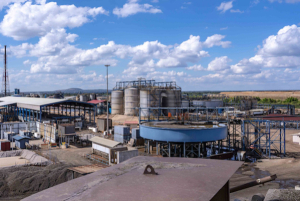
Ruashi Mining is facing fresh accusations over environmental and health impacts in several neighborhoods of Kolwezi, in the Democratic Republic of Congo's Lualaba province. The allegations were made public in Kinshasa on May 14, 2026, by the NGO Initiative Bonne Gouvernance et Droits Humains (IBGDH), which is calling for the suspension of the company's operations until protective measures for surrounding communities are put in place.
According to Donatien Kambola, the IBGDH's coordinator, residents living near the mining site have reported respiratory problems, persistent coughing, nosebleeds and skin irritations. The organization also cited strong odors and the rapid deterioration of rooftops in certain neighborhoods.
The IBGDH had already raised concerns about health conditions around the Ruashi Mining site in February 2026. In a publication focused on the Dilungu neighborhood, it reported nosebleeds among children and breathing difficulties attributed to dust and emissions from mining activities.
No independent official assessment has yet been made public to establish a direct link between the reported health problems and the company's operations. The case nonetheless raises fresh questions about the proximity of mining operations to residential areas in the Katanga copper-cobalt basin.
Establish no-go zones
In March 2026, the government announced the deployment of an inspection mission to a site operated by Tenke Fungurume Mining (TFM), a subsidiary of Chinese group CMOC, following pollution accusations relayed by civil society organizations. The findings have not been made public.
A few weeks earlier, Congo Dongfang Mining (CDM), a company active in mineral processing, was sanctioned with $12.6 million in fines and reparations for pollution-related violations in Lubumbashi.
These cases differ in nature and in how far they have progressed. But they reflect growing pressure over the environmental and social impacts of mining in Lualaba and Haut-Katanga provinces, at a time when the DRC is consolidating its central role in global copper and cobalt supply chains.
Through its recommendations, the IBGDH is urging authorities to strengthen oversight mechanisms for mining activities, conduct regular epidemiological studies in Kolwezi and establish no-go zones for mining operations near residential areas. The organization is also calling for the involvement of public authorities, financial institutions, international buyers and the company's shareholders in developing long-term solutions for affected communities.
Based in Kolwezi, Ruashi Mining specializes in copper and cobalt production. The company is controlled by Metorex, a subsidiary of Chinese group Jinchuan. According to 2025 mining statistics, the company exported more than 14,625 metric tons of copper cathodes during the year, highlighting its contribution to Lualaba's mining sector.
Boaz Kabeya