





Equipe Publication
Crédits aux PME : Ecobank s’appuie sur BII pour partager les risques et élargir son portefeuille
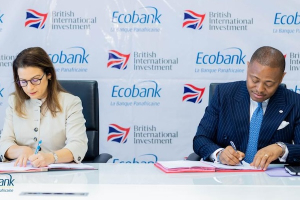
Ecobank RDC, filiale du groupe Ecobank, et British International Investment (BII) ont annoncé, le 12 mai 2026 à Kinshasa, la signature d’un partenariat destiné à renforcer l’accès des petites et moyennes entreprises (PME) au financement en République démocratique du Congo.
Selon le communiqué conjoint, l’accord porte sur une facilité de partage de risque de 30 millions de dollars. Ce mécanisme doit permettre à Ecobank RDC d’accroître sa capacité de financement en partageant une partie du risque lié à un portefeuille ciblé de prêts accordés aux entreprises locales.
L’objectif est d’ouvrir de nouvelles perspectives de financement aux PME souhaitant structurer leur croissance, investir, moderniser leurs activités ou développer de nouveaux projets. Les secteurs ciblés incluent notamment l’agriculture et l’agro-transformation, l’industrie, les infrastructures, les projets climatiques, les énergies renouvelables et l’entrepreneuriat local.
Le partenariat comprend également une assistance technique fournie par BII. Celle-ci doit contribuer à améliorer la qualité des portefeuilles financés, renforcer les capacités opérationnelles des entreprises bénéficiaires et favoriser une croissance plus résiliente.
Pour Joel Kabuya, directeur général ad intérim d’Ecobank RDC, ce partenariat constitue « une étape majeure » dans le renforcement du dispositif de financement des PME en RDC. Il estime qu’il permettra à la banque d’accompagner durablement le secteur privé tout en appliquant des standards internationaux en matière de gestion des risques et de finance responsable.
De son côté, Chris Chijiutomi, directeur général pour l’Afrique de BII, souligne que les PME constituent « un pilier essentiel du développement économique et de la création d’emplois » en RDC, mais continuent de faire face à des obstacles importants pour accéder au financement nécessaire à leur croissance.
Cette opération s’inscrit dans la stratégie de BII en faveur des marchés frontières africains. Pour Ecobank RDC, elle s’aligne également sur la vision du groupe à l’horizon 2030, centrée sur le financement du secteur privé, l’inclusion financière et la transformation économique des marchés africains.
Ronsard Luabeya
Lire aussi :
Paiements internationaux : en RDC, Ecobank et XTransfer ciblent plus de 18 milliards $ d’échanges
After Eurobond success, DRC sees early boost in local debt market
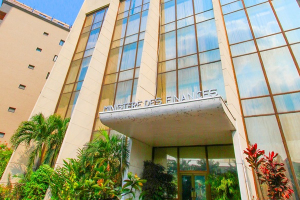
The Democratic Republic of Congo has issued its first dollar-denominated Treasury bond, a two-year instrument, just weeks after completing its debut Eurobond.
According to a communiqué dated May 12, 2026, the offering sought $70 million and closed at an annual rate of 8%, drawing $86.6 million in bids — $16.6 million above the target amount. The bid-to-cover ratio stood at 123.7%, indicating that investor demand exceeded the Treasury's initial supply.
The Finance Ministry said the auction also reflected an improvement in the terms available to the Congolese state on the domestic market. The maturity was extended from 18 months to two years, while the interest rate fell to 8% from 9%. In other words, the Treasury was able to borrow for a longer period at a lower cost than on comparable previous issuances.
A first dividend from the international markets
Kinshasa presented the result as one of the first effects of its entry onto international capital markets. In April 2026, the DRC completed its first sovereign international issuance, raising a total of $1.25 billion with the support of Citigroup, Rawbank and Standard Chartered. That transaction attracted more than $5 billion in demand, over four times the amount raised.
The Finance Ministry's reading echoes statements made in April by Central Bank of The Congo Governor André Wamesso, who said the success of the Eurobond could help develop the local financial market by stimulating long-term savings and bond issuances, including by Congolese companies.
Those signals have yet to be confirmed. A single successful auction is not enough to establish a lasting trend. The Eurobond prospectus notes that the DRC remains exposed to several risks: dependence on minerals, conflict in the east, fiscal pressures, domestic arrears, vulnerabilities related to money laundering and sanctions, and still-fragile access to international markets.
The authorities did not disclose the investor profile of participants in the May 12 auction. The ministry noted, however, that the public securities market remains open to both bank and non-bank investors, with the latter able to participate in auctions through their custodian banks.
Boaz Kabeya
Ituri : l’effondrement d’un pont coupe une liaison commerciale locale avec l’Ouganda
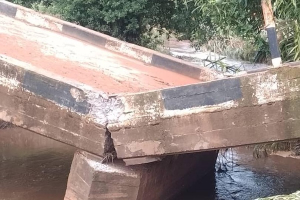
Les échanges entre le centre commercial de Djegu, dans le territoire de Mahagi en Ituri, et la ville ougandaise de Parombo sont perturbés depuis l’effondrement du pont jeté sur la rivière Acodho, emporté après plusieurs épisodes de fortes pluies signalés dans la région.
Selon Radio Okapi et plusieurs médias locaux, l’ouvrage s’est effondré dans la nuit du 11 au 12 mai 2026, interrompant la circulation entre cette partie de l’Ituri et l’Ouganda voisin. Le pont constituait un point de passage utilisé pour les déplacements des populations locales ainsi que pour les échanges commerciaux transfrontaliers.
Cette rupture affecte notamment les mouvements de marchandises sur cet axe local reliant Mahagi à la région ougandaise de Parombo, dans un contexte où les infrastructures routières restent essentielles pour l’approvisionnement et les activités commerciales dans cette zone frontalière.
L’incident intervient alors que Kinshasa et Kampala viennent de tenir la 9e session de leur Commission permanente mixte à Kampala. Les discussions ont notamment porté sur le renforcement de la coopération bilatérale en matière d’infrastructures et de connectivité régionale.
Depuis 2021, la RDC et l’Ouganda travaillent sur plusieurs projets routiers transfrontaliers, notamment l’asphaltage des axes Kasindi–Beni, Beni–Butembo et Bunagana–Rutshuru–Goma, représentant un total d’environ 223 kilomètres de routes dans le Nord-Kivu.
Même si ces grands projets concernent principalement d’autres corridors frontaliers, l’effondrement du pont d’Acodho illustre les fragilités persistantes des infrastructures locales de connexion entre l’est de la RDC et l’Ouganda, où une partie importante des échanges commerciaux continue de dépendre d’ouvrages routiers vulnérables aux intempéries.
Boaz Kabeya
Lire aussi :
RDC-Ouganda : six accords sur les corridors routiers, le commerce et la sécurité
Dette : après l’Eurobond, Kinshasa obtient un premier signal positif sur le marché local
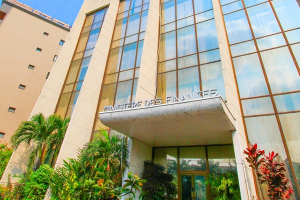
Quelques semaines après sa première émission d’Eurobond, la République démocratique du Congo a émis sa première obligation du Trésor libellée en dollars américains, d’une maturité de deux ans. Selon un communiqué daté du 12 mai 2026, l’opération, qui portait sur un montant annoncé de 70 millions de dollars, s’est clôturée au taux de 8 % l’an, avec des soumissions de 86,6 millions de dollars, soit 16,6 millions de plus que le montant recherché. Le taux de couverture s’est ainsi établi à 123,7 %, signe que la demande des investisseurs a dépassé l’offre initiale du Trésor.
Cette adjudication marque aussi une amélioration des conditions proposées à l’État congolais sur le marché local. Le ministère des Finances souligne que la maturité passe de 1 an et 6 mois à 2 ans, tandis que le taux d’intérêt recule de 9 % à 8 %. Autrement dit, le Trésor a pu emprunter sur une durée plus longue, à un coût inférieur à celui des précédentes émissions comparables.
Kinshasa présente ce résultat comme l’un des premiers effets de son entrée sur les marchés internationaux. En avril 2026, la RDC avait réalisé sa première émission souveraine internationale, pour un montant total de 1,25 milliard de dollars, avec l’appui de Citigroup, Rawbank et Standard Chartered. L’opération avait suscité une demande supérieure à 5 milliards de dollars, soit plus de quatre fois le montant levé.
La lecture du ministère rejoint les déclarations faites en avril par le gouverneur de la Banque centrale du Congo, André Wamesso. Il estimait que le succès de l’Eurobond pouvait contribuer à développer le marché financier local, en stimulant l’épargne longue et les émissions obligataires, y compris pour les entreprises congolaises.
Mais ces signaux restent à confirmer. Une seule adjudication réussie ne suffit pas à établir une tendance durable. Le document d’émission de l’Eurobond rappelle que la RDC reste exposée à plusieurs risques : dépendance aux minerais, conflit dans l’Est, pressions budgétaires, arriérés intérieurs, vulnérabilités liées au blanchiment et aux sanctions, ainsi qu’un accès encore fragile aux marchés internationaux.
Les autorités n’ont pas communiqué le profil des investisseurs ayant participé à l’adjudication du 12 mai. Le ministère rappelle toutefois que le marché des titres publics reste ouvert aux investisseurs bancaires et non bancaires, ces derniers pouvant participer aux adjudications à travers leurs banques teneurs de comptes conservateurs.
Boaz Kabeya
Lire aussi :
Eurobond : Tshisekedi met en place un dispositif de suivi des 1,25 milliard $
Eurobond : la RDC surprend en levant 1,25 milliard $ à un taux à un chiffre
Kongo Central starts work on 160 km of rural feeder roads
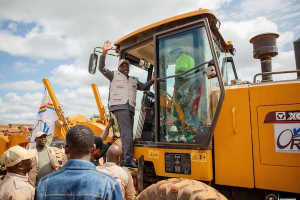
Kongo Central Vice Governor Prospère Ntela Ntambidila on May 12, 2026 launched rehabilitation works covering 160 kilometers of rural feeder roads in the territories of Luozi and Songololo, according to a statement from the provincial government.
The works cover two routes: the Malanga-Luozi axis, stretching 95 kilometers, and the Kongo dia Kati-Songamani-Vila 1-Vila 2 axis, covering 65 kilometers. The project is financed by the provincial government through the Bureau central de coordination (BCECO) and will be carried out by Oriental Roads and Constructions (ORC) over a projected period of 12 months, according to the provincial government.
The two axes are described as key corridors for the local economy. Their rehabilitation is intended to open up several agricultural production zones, facilitate the movement of food crops to consumer markets and reduce transportation costs in that part of the province.
This new tranche is part of a wider program launched in 2025. On Oct. 25, 2025, Governor Grâce Nkuanga Bilolo inaugurated rehabilitation works covering 550 kilometers of agricultural feeder roads across the province in Kinzau-Mvuete, aimed at improving the flow of food products to markets.
The first phase of that program covered 230 kilometers of priority roads over an announced period of nine months. The routes included Kinzau-Mvuete, Seke-Banza, Mbatassiala and Lombo-Fuese-Kilukweta, in the territories of Kasangulu and Mbanza-Ngungu, with execution entrusted to the Agence des travaux publics du Kongo Central.
The May 2026 announcement marks the opening of a new sequence, with different routes and a different implementation arrangement. The statement does not specify, however, whether the 160 kilometers represent a new phase of the 550-kilometer program or a separate project financed independently by the province.
Ronsard Luabeya
Road degradation on Banalia-Télé axis disrupts commercial activity in northeastern DRC
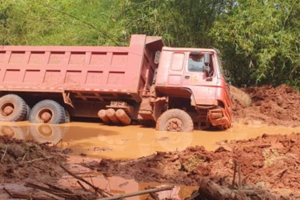
The deteriorating condition of the Banalia-Télé stretch of National Route 4 continues to disrupt traffic between the Tshopo and Bas-Uélé provinces in northeastern Democratic Republic of Congo.
According to the Congolese Press Agency, about 40 tanker trucks and one dump truck are stuck at the PK37 and PK45 markers on the route. The Nouvelle Société Civile Congolaise in Banalia also reports that several motorcycle convoys are bogged down at various points along the road.
Prince Yongo, the territorial coordinator of the NSCC/Banalia, said the problems affect the stretch running from PK0, after the crossing of the Aruwimi River on the Kisangani-Banalia axis, all the way to Télé, at the boundary between Tshopo and Bas-Uélé. He was quoted by the ACP as saying the situation is hampering commercial exchanges between the two provinces and affecting the living conditions of local residents.
The current disruptions follow a deterioration already reported in August 2025. At the time, Actualite.cd reported that around 50 kilometers of road had become barely passable on the Kisangani-Banalia axis, with major muddy stretches at PK70 and PK120.
That situation had already led to the blocking of several trucks, shortages of some consumer goods in local markets and rising prices in the Banalia territory. Access to healthcare had also become more difficult for some communities.
The Banalia-Télé route is one of the main overland links between Tshopo and Bas-Uélé. Its deterioration is slowing the movement of people, the transport of goods and the circulation of tanker trucks along this local corridor.
Boaz Kabeya
DRC: Mobile internet revenue exceeds half of telecom sector earnings for first time in 2025

In 2025, mobile internet revenue exceeded half of the telecommunications market's total turnover in DRC, confirming a gradual pivot in operators' business models toward data.
According to data from DR Congo's postal and telecommunications regulator, the ARPTC, the sector's overall revenue reached $2.394 billion in 2025, with mobile internet services alone generating $1.287 billion. Data now accounts for roughly 53.8% of market revenue, up from around 14% in 2016.
BDO RDC highlighted the same trend in a sector note published in May 2026, stating that data has become the primary growth driver of the Congolese telecoms sector.
The ARPTC's fourth-quarter 2025 report confirmed this shift in usage patterns. Traditional services such as voice calls and SMS are declining, while consumers are increasingly turning to multimedia content, messaging applications, streaming and digital services.
Average data consumption per subscriber has risen sharply. According to BDO RDC, it increased more than 24-fold between 2016 and 2025, driven by the spread of smartphones, improved connectivity and the expansion of digital applications.
Airtel still leads
In the mobile internet revenue segment, Airtel held the top position with a 43.02% market share in the fourth quarter of 2025, ahead of Orange at 28.44%, Vodacom at 24.63% and Africell at 3.91%. The regulator attributed Airtel's performance to the appeal of its data packages, the strength of its infrastructure and one of the country's most extensive 4G deployments. It also cited a strategy aimed at broadening enterprise access to data services.
The growth of mobile internet has come alongside a significant challenge: service quality. The ARPTC noted deteriorating service as perceived by subscribers across all operators over several quarters, a problem that has become more acute as digital usage increases.
Beyond revenue, the expansion of mobile internet is part of a broader digital transformation dynamic. The DRC had 73.9 million active mobile subscriptions at the end of 2025, for an overall penetration rate of 65.9%. The mobile internet penetration rate reached 33%.
Mobile money continued to advance as well. The ARPTC recorded 34.3 million active mobile money subscriptions in the fourth quarter of 2025, representing a penetration rate of 30.6%. The trend confirms the growing integration of telecommunications into digital financial services.
Boaz Kabeya
Kongo Central : la réhabilitation de 160 nouveaux kilomètres de routes agricoles lancée
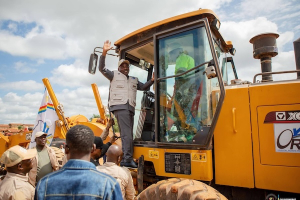
Le Kongo Central poursuit son programme de désenclavement agricole. Le vice-gouverneur Prospère Ntela Ntambidila a procédé, le 12 mai 2026, au lancement des travaux de réhabilitation de 160 kilomètres de routes de desserte agricole dans les territoires de Luozi et Songololo, selon une communication du gouvernorat provincial.
Les travaux concernent deux axes : Malanga-Luozi, long de 95 kilomètres, et Kongo dia Kati-Songamani-Vila 1-Vila 2, long de 65 kilomètres. D’après le gouvernorat, le projet est financé par le gouvernement provincial à travers le Bureau central de coordination (BCECO) et exécuté par Oriental Roads and Constructions (ORC), pour une durée prévisionnelle de douze mois.
Ces axes sont présentés comme des corridors importants pour l’économie locale. Leur réhabilitation doit permettre de désenclaver plusieurs bassins de production agricole, de faciliter l’évacuation des produits vivriers vers les centres de consommation et de réduire les coûts de transport dans cette partie de la province.
Cette nouvelle tranche s’inscrit dans un programme plus large engagé en 2025. Le 25 octobre 2025, le gouverneur Grâce Nkuanga Bilolo avait lancé, à Kinzau-Mvuete, les travaux de réhabilitation de 550 kilomètres de routes de desserte agricole dans la province, destinés à améliorer la circulation des produits vivriers vers les marchés.
La première phase de ce programme portait sur 230 kilomètres de routes prioritaires, pour une durée annoncée de neuf mois. Les axes concernés comprenaient notamment Kinzau-Mvuete, Seke-Banza, Mbatassiala et Lombo-Fuese-Kilukweta, dans les territoires de Kasangulu et Mbanza-Ngungu, avec une exécution confiée à l’Agence des travaux publics du Kongo Central.
L’annonce de mai 2026 marque donc l’ouverture d’une nouvelle séquence, avec d’autres axes et un montage d’exécution différent. Le communiqué ne précise toutefois pas si ces 160 kilomètres constituent une nouvelle phase du programme de 550 kilomètres ou un chantier parallèle financé par la province.
Ronsard Luabeya
Lire aussi :
Kongo central : la réhabilitation de 550 km de routes de desserte agricole lancé
Routes agricoles : la réhabilitation de 280 km lancée dans le Mai-Ndombe
Entretien de routes agricoles : le PNDA vise 707 km au Kasaï Central
Télécoms : l’Internet mobile pèse désormais plus de la moitié des revenus du secteur en RDC

Le marché des télécommunications en RDC poursuit sa mutation vers les services numériques. En 2025, les revenus générés par l’Internet mobile ont dépassé la moitié du chiffre d’affaires total du secteur, confirmant le basculement progressif du modèle économique des opérateurs vers la data.
Selon les données de l’Autorité de Régulation de la Poste et des Télécommunications du Congo (ARPTC), le chiffre d’affaires global du secteur a atteint 2,394 milliards de dollars en 2025, contre 1,287 milliard de dollars pour les seuls services Internet mobile. La data représente ainsi environ 53,8 % des revenus du marché, contre près de 14 % en 2016.
Cette évolution est également relevée par BDO RDC, qui souligne, dans sa note sectorielle publiée en mai 2026, que la data constitue désormais le principal moteur de croissance du secteur télécom congolais.
Le rapport du quatrième trimestre 2025 de l’ARPTC confirme cette transformation des usages. Les services traditionnels, comme la voix et les SMS, reculent, tandis que les consommateurs utilisent davantage les contenus multimédias, les applications de messagerie, le streaming et les services numériques.
La consommation moyenne de données par abonné a fortement progressé. Selon BDO RDC, elle a été multipliée par plus de 24 entre 2016 et 2025, sous l’effet de la diffusion des smartphones, de l’amélioration de la connectivité et du développement des applications numériques.
Airtel, toujours leader
Sur le segment des revenus Internet mobile, Airtel arrive en tête avec 43,02 % de parts de marché au quatrième trimestre 2025, devant Orange avec 28,44 %, Vodacom avec 24,63 % et Africell avec 3,91 %. Le régulateur attribue cette performance à l’attractivité des forfaits d’Airtel, à la solidité de son infrastructure ainsi qu’à l’un des déploiements 4G les plus robustes du pays. Il évoque également une stratégie destinée à faciliter l’accès des entreprises aux services data.
Mais cette croissance de l’Internet mobile s’accompagne d’un défi important : la qualité du service. L’ARPTC relève une dégradation ressentie par les abonnés de tous les opérateurs depuis plusieurs trimestres. Ce problème devient plus sensible à mesure que les usages numériques augmentent.
Au-delà des revenus, la progression de l’Internet mobile s’inscrit dans une dynamique plus large de transformation numérique. La RDC comptait 73,9 millions d’abonnements mobiles actifs fin 2025, pour un taux de pénétration global de 65,9 %. Le taux de pénétration de l’Internet mobile a atteint 33 %.
Le mobile money poursuit également sa progression. L’ARPTC recense 34,3 millions d’abonnements actifs à la monnaie mobile au quatrième trimestre 2025, soit un taux de pénétration de 30,6 %. Cette évolution confirme l’intégration croissante des télécommunications dans les services financiers numériques.
Boaz Kabeya
Lire aussi :
Mobile Money: avec 194,8 millions $ de revenus en 2025, Airtel Money talonne M-Pesa en RDC
Télécoms : Airtel reste leader en RDC avec 741 millions $ de revenus en 2024
Internet mobile : en RDC, le marché frôle le milliard de dollars en 2024
Hong Feng awarded $41.8 mln contract for 22-km road upgrade in Kalemie
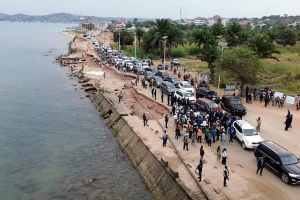
The Roads and Drainage Department (OVD) has awarded Hong Feng SARL a contract to modernize 22.021 km of roads in the city of Kalemie, in Tanganyika province.
Under a May 4, 2026 decision signed by OVD Director General Victor Tumba Tshikela, the contract is valued at $41.79 million, equivalent to nearly $2 million per kilometer.
The award followed a restricted tender process approved after OVD requested authorization in February 2026. According to the decision, the companies consulted included Hong Feng, Safrimex, Groupe Guang Ping International, China Guangdong Provincial Changda Highway Engineering, Kin Prestige, Colosse Construction, Bahari Engineering, Jin Jin International and Shandong Construction International.
OVD then sought a no-objection opinion on March 31, 2026, regarding the bid evaluation report. The opinion was issued on April 24, 2026, clearing the way for the provisional award to Hong Feng.
The contract must still complete the remaining procedures required under public procurement regulations before it can be formally signed and construction work can begin.
The project covers the modernization of an urban road network in Kalemie. The decision does not specify the technical scope of the works, the construction timeline or the final contractual terms.
Established in the Democratic Republic of Congo in 2012, Hong Feng is a Chinese company specializing in construction and infrastructure rehabilitation. It has participated in several public projects, including the construction of the building housing the General Inspectorate of Finance and anti-erosion works in Kinshasa.
Ronsard Luabeya