





Equipe Publication
Carburants : la RDC prolonge de 45 jours l’allègement de certaines taxes à l’importation
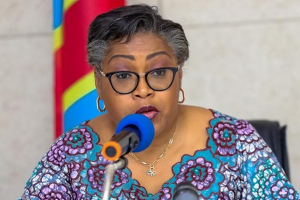
Le gouvernement congolais a décidé de prolonger de 45 jours la suspension ou la réduction de plusieurs taxes et frais liés à l’importation des produits pétroliers. La décision figure dans une lettre signée le 5 mai 2026 par la Première ministre Judith Suminwa Tuluka (photo). Elle concerne notamment les ministères de l’Économie nationale, des Hydrocarbures et des Finances.
Selon la Primature, cette mesure est liée à « la persistance de la crise pétrolière découlant du conflit dans le golfe Persique ». Le gouvernement estime que cette situation continue de peser sur les coûts d’approvisionnement en carburants.
Plusieurs frais restent donc suspendus, notamment les frais sanitaires, les frais d’hygiène aux frontières, certains frais de régulation, les frais LMC, les frais CGW ainsi que la redevance DGDA. D’autres frais, comme ceux liés à l’inspection, au contrôle et à la CVM, restent réduits de moitié.
Cette prolongation intervient alors que le gouvernement vient aussi de revoir à la baisse les prix des carburants dans la zone Est. Par arrêté signé le 4 mai 2026, le vice-Premier ministre chargé de l’Économie nationale, Daniel Mukoko Samba, a fixé de nouveaux prix applicables à partir du 5 mai 2026 dans le Nord-Kivu, le Sud-Kivu, l’Ituri, le Maniema, le Haut-Uele et le Bas-Uele. Dans cette zone, le litre d’essence passe de 4 400 à 4 205 FC et celui du gasoil de 5 600 à 5 395 FC.
Cette révision intervient après plusieurs semaines de tensions sur l’approvisionnement dans certaines localités de l’Est. À Beni, le litre d’essence avait parfois dépassé 20 000 FC sur le marché parallèle, selon des médias locaux.
Quelques semaines plus tôt, le gouvernement avait déjà relevé les prix réglementés des carburants dans plusieurs zones du pays. Dans la zone Ouest, le litre d’essence était passé de 2 440 FC à 2 640 FC, tandis que celui du gasoil passait de 2 430 FC à 2 635 FC. Dans la zone Nord, ces prix s’établissent respectivement à 3 350 FC et 3 345 FC. Dans la zone Sud, les prix du litre d’essence et du litre de gasoil sont fixés respectivement à 3 930 FC et 4 465 FC.
Avec cette prolongation, Kinshasa cherche à limiter une nouvelle hausse des prix à la pompe. Le carburant reste un produit sensible en RDC, car son coût influence directement le transport, les prix des biens de consommation et l’activité économique.
Boaz Kabeya
Lire aussi :
Carburants : le prix du litre d’essence chute de 75 % à Beni
Carburants : plus de 8 % de hausse à la pompe, plus de 22 % pour le secteur minier
Maïs : des subventions pour contenir l’envolée des prix dans le Haut-Katanga
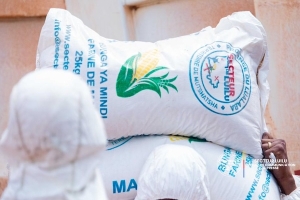
Le gouvernement congolais a engagé une nouvelle phase d’intervention sur le marché du maïs dans le Haut-Katanga. Le 6 mai 2026, le Fonds de régulation économique (FOREC) a signé un protocole d’accord avec les producteurs regroupés au sein du Consortium des agriculteurs du Congo (AGRICO), en vue de soutenir à la fois la consommation et la production locale.
Selon les informations relayées par les médias locaux, l’accord prévoit un programme de subvention de la farine de maïs sur trois mois, destiné à contenir la hausse des prix et à améliorer l’accès des ménages à ce produit de base. Le dispositif repose sur une intervention ciblée du FOREC, appelée à être évaluée à l’issue de cette période en vue d’une éventuelle prolongation.
Cette initiative marque le retour opérationnel du FOREC dans son rôle de stabilisation des marchés. Le secrétaire exécutif de l’institution, Jean-Paul Nemoyata, souligne que la mesure vise à appuyer les efforts du gouvernement provincial, dans un contexte de forte pression sur le coût de la vie.
Au-delà de la réponse conjoncturelle, le dispositif intègre également un volet structurel, avec des mesures envisagées pour soutenir la production locale et réduire la dépendance aux importations.
La mesure, dont le coût n’a pas été dévoilé, intervient alors que le marché du maïs connaît de fortes tensions dans la région. À Lubumbashi, le prix du sac de farine de maïs de 25 kg est passé de 35 000 à 60 000 francs congolais en mars 2026, soit une hausse de plus de 70 % en quelques semaines.
Cette volatilité est largement liée à la dépendance du Katanga aux importations. Selon la Banque centrale du Congo, près de 70 % des besoins en maïs des provinces du Haut-Katanga, du Lualaba et du Tanganyika étaient encore couverts par des importations en 2024.
Pour répondre à cette demande, les opérateurs économiques ont mis en place, en 2025, un dispositif logistique permettant d’acheminer environ 150 000 tonnes de maïs par an, principalement depuis les pays voisins comme la Zambie.
Les subventions agricoles ne constituent pas une nouveauté dans le Haut-Katanga. Les autorités provinciales ont déjà mis en place, ces dernières années, des programmes d’appui aux producteurs, notamment à travers la distribution d’intrants et le soutien aux exploitations locales.
Cependant, la mobilisation du FOREC introduit une évolution notable : l’État ne se limite plus à soutenir la production, mais intervient directement sur le marché pour influencer les prix, dans une logique de régulation.
Ronsard Luabeya
Lire aussi :
Farine de maïs : à Kinshasa, la RSG vend ses sacs de 25 kg à 35 000 FC
Maïs : les prix en baisse au premier trimestre 2025 dans le Kasaï et le Katanga
La RDC interdit les importations depuis la Zambie de 8 marques de farine de maïs
Rawbank reports record $681.8 mln revenue for 2025, eyes $10 bln balance sheet by 2030
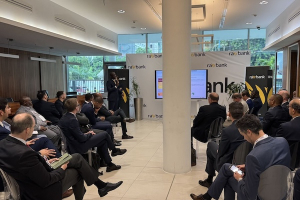
Rawbank reported net banking income of $681.8 million in 2025, a record 32.6% increase year-on-year, compared with 6% growth in 2024. Pre-tax profit rose 34% to $329.4 million, while net profit increased 8.9% to $231.6 million as tax charges nearly tripled to $97.7 million.
The strong revenue growth “reflects a broader revenue base, with significant contributions from lending, transaction banking and treasury operations across all our business segments,” Chief Financial Officer Kadija Sangho Keita said.
That broader revenue mix reflects Rawbank’s shift toward a more diversified banking model built around payments, financial structuring, markets, digital services and transaction banking.
RAW 2030
In 2025, Rawbank launched several initiatives to support that strategy. In investment banking, the lender structured a $400 million syndicated loan for the Kamoa-Kakula copper project and helped arrange the Democratic Republic of Congo’s first eurobond, which raised $1.25 billion in April. The bank also set up the country’s first modern trading floor.
Rawbank also accelerated its push into small and medium enterprise financing, deploying more than 5,000 financing packages worth about $500 million through its 20,000 SME program. It signed a partnership with COPA-Transforme to channel grants to around 5,000 SMEs over five years, for an estimated volume of $300 million.
The bank expanded its product range with the launch of leasing services and grew adjacent businesses such as bancassurance, whose business volume rose more than 150%. Digital services, agent networks and programs supporting women entrepreneurs also helped broaden its client base.
“These achievements are part of strong growth momentum, ahead of the rollout of the RAW 2030 strategic plan,” the bank said. The plan, whose implementation began this year, “aims to turn Rawbank’s solidity into a driver of economic impact for its clients and the financing of the real economy.”
The new direction was symbolized by an April 2025 rebranding, with a logo inspired by the Congolese leopard, intended to embody strength and resilience, and a new tagline that translates to “Rawbank. Beyond a bank, the future starts here.”
For Chief Executive Mustafa Rawji, the priority is now “the real economy — the one that creates jobs, income and productive capacity.” That focus is reflected in a 10% rise in the loan book to $2.29 billion, while deposits grew 1.1% to $4.8 billion. Over the next five years, the bank aims to lift its loan-to-deposit ratio from 47.8% to 50%.
The strategy also puts greater emphasis on financing SMEs and productive supply chains, rather than relying mainly on large mining accounts. Through its 20,000 SME program, Rawbank aims to support 20,000 small and medium enterprises by 2030.
RAW 2030 is also defensive. “The environment is changing rapidly. The economic, financial and regulatory landscape is becoming more demanding. The African banking sector is consolidating around increasingly powerful players. Competition is intensifying. Margins are tightening. In this shifting landscape, standing still means falling behind,” Strategy Director Thomas De Dreux-Brézé said.
To maintain its position as the leading bank in the DRC and Central Africa, Rawbank has set 2030 targets to grow its balance sheet from $6.8 billion to more than $10 billion, raise net banking income from $681.8 million to $938 million, and increase net profit from $231.6 million to $350 million, while keeping its capital and liquidity ratios above Central Bank of Congo requirements.
Pierre Mukoko & Boaz Kabeya
Rawbank : ce que révèle la hausse record du revenu à 682 millions $ en 2025
Selon les données de son rapport annuel, Rawbank a enregistré, en 2025, un produit net bancaire (PNB) de 681,8 millions de dollars, soit une progression record de 32,6 % sur un an, contre seulement 6 % en 2024. Le résultat avant impôts atteint 329,4 millions de dollars (+34 %), mais le résultat net s’établit à 231,6 millions de dollars (+8,9 % seulement), sous l’effet des charges fiscales, qui ont triplé à 97,7 millions de dollars.
Cette hausse exceptionnelle du PNB « confirme la diversification des revenus, avec une contribution significative des crédits, des activités de transaction et de trésorerie sur l’ensemble de nos segments de marché », indique la directrice des Finances, Kadija Sangho Keita. Cette diversification de plus en plus visible des revenus traduit une transformation de Rawbank vers un modèle beaucoup plus multicouche, fondé sur les paiements, la structuration financière, les marchés, le digital et les services transactionnels.
En 2025, Rawbank a multiplié les initiatives illustrant cette diversification. Elle s’est notamment illustrée dans la banque d’investissement, avec la structuration d’un prêt syndiqué de 400 millions de dollars pour le projet de cuivre de Kamoa-Kakula et la préparation du premier eurobond de la RDC, qui a abouti, en avril dernier, à la mobilisation de 1,25 milliard de dollars. Elle a également développé la première salle des marchés moderne du pays.
La banque a accéléré son positionnement sur le financement des PME, avec plus de 5 000 dossiers de financement déployés pour environ 500 millions de dollars grâce à l’opérationnalisation du programme 20 000 PME. Rawbank a aussi signé un partenariat avec COPA-Transforme, destiné à canaliser des subventions vers environ 5 000 PME sur cinq ans, pour un volume estimé à 300 millions de dollars.
Parallèlement, Rawbank a élargi son offre avec le lancement du crédit-bail, tout en renforçant des activités complémentaires comme la bancassurance, dont le volume d’affaires a progressé de plus de 150 %. Le développement des services digitaux et des réseaux d’agents, ainsi que des programmes dédiés à l’entrepreneuriat féminin, traduisent aussi une volonté d’élargir sa base clientèle.
RAW 2030
« Ces réalisations s’inscrivent dans une dynamique de performance solide, en préparation du déploiement du plan stratégique RAW 2030 », soutient la banque. Ce plan, dont la mise en œuvre a démarré cette année, « vise à transformer la solidité de Rawbank en une véritable puissance d’impact au service de ses clients et du financement de l’économie réelle ». Ce cap est symbolisé par un changement d’identité visuelle intervenu en avril 2025, avec un logo inspiré du léopard congolais, censé incarner la puissance et la résilience, ainsi qu’un nouveau slogan : « Rawbank. Au-delà d’une banque, l’avenir commence ici ».
Pour son directeur général, Mustafa Rawji, la priorité est désormais « l’économie réelle, celle qui crée de l’emploi, du revenu et du tissu productif ». Cela éclaire la hausse du crédit, dont l’encours a progressé de 10 %, à 2,29 milliards de dollars, alors que les dépôts ont évolué plus modérément, à 4,8 milliards de dollars (+1,1 %). En cinq ans, la banque veut d’ailleurs porter son ratio crédits/dépôts de 47,8 % à 50 %.
Cette orientation se traduit aussi par la volonté de financer davantage les PME et les chaînes productives, et non plus seulement les grands comptes miniers. Avec son programme « 20 000 PME », Rawbank ambitionne d’accompagner 20 000 petites et moyennes entreprises d’ici 2030.
Au-delà de la réponse aux dynamiques du marché, RAW 2030 est aussi une stratégie défensive. « Le contexte évolue rapidement. L’environnement économique, financier et réglementaire devient plus exigeant. Le secteur bancaire africain se structure autour d’acteurs de plus en plus puissants. La concurrence s’intensifie. Les marges se resserrent. Dans ce paysage en mouvement, rester immobile serait prendre du retard », explique le directeur de la stratégie, Thomas De Dreux-Brézé.
Ainsi, pour demeurer la première banque de la RDC et d’Afrique centrale, Rawbank s’est fixé pour objectifs, à l’horizon 2030, de faire passer son bilan de 6,8 milliards à plus de 10 milliards de dollars, son PNB de 681,8 millions à 938 millions de dollars et son résultat net de 231,6 millions à 350 millions de dollars, tout en maintenant ses ratios prudentiels au-dessus des exigences de la Banque centrale du Congo.
Pierre Mukoko et Boaz Kabeya
Lire aussi :
Rawbank renforce sa direction pour mener à bien son plan stratégique 2026-2030
Financement minier durable : Rawbank cité en exemple par le Forum économique mondial
LMC, TASHICO eye partnership to capture more Congolese freight via Dar es Salaam corridor
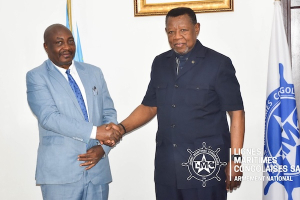
DR Congo’s state-owned shipping line, Lignes maritimes congolaises (LMC), is seeking to strengthen its presence on the Dar es Salaam corridor, one of the main gateways for Congolese foreign trade via the Indian Ocean.
Lambert Mende, chairman of the board of the Congolese public shipping company, met a delegation from Tanzania Shipping Company Limited (TASHICO) in Kinshasa on May 4, 2026.
According to LMC, talks focused on building a strategic partnership to improve logistics links between Kinshasa and Dar es Salaam. The two companies are considering signing a memorandum of understanding in the near term. They have already appointed representatives to oversee joint projects once the agreement is formalized.
LMC said the initiative aims to develop an integrated logistics offering between the Democratic Republic of Congo and Tanzania. The partnership is designed to attract cargo moving through eastern and southern DRC, where a significant share of mineral exports already passes through Tanzanian ports, particularly Dar es Salaam.
The partners also aim to position the DRC and Tanzania as a logistics bridge between Africa’s Atlantic and Indian Ocean coastlines. Tanzania’s ambassador to the DRC, Saidi Juma Mchana, said the countries’ complementary trade routes could open access to a regional market of more than 160 million consumers and ease the movement of goods across the subregion.
The partnership is part of LMC’s 2023-2027 revival plan, which aims to reposition the company as a maritime and multimodal transport operator for Congolese foreign trade. The plan includes expanding operations along corridors where LMC currently has a limited presence, including the Dar es Salaam corridor, as well as developing storage capacity and a broader maritime and multimodal transport offering.
The goal is economic: to secure a larger share of Congolese freight, which is still overwhelmingly carried by foreign shipping companies. Under its revival plan, LMC aims to increase its share of the country’s seaborne trade from 0.3% in 2021 to 2% by 2027, raising volumes carried from 45,000 metric tons to about 395,000 metric tons.
Ronsard Luabeya
Housing project in Tshopo suspended following environmental concerns
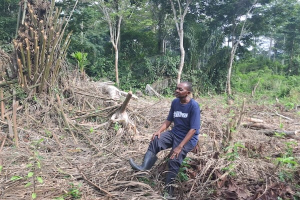
The governor of Tshopo province, Paulin Lendongolia Lebabonga, has suspended construction work in the Tshopo River bend, a forested area on the outskirts of Kisangani. The decision followed repeated warnings from environmental organizations and civil society groups about a housing project in an area NGOs say is critical to the city’s environmental protection and hydropower infrastructure.
The project, named “Batiambomake,” was approved under a decree signed on March 17, 2026. It provided for the development of 560 residential plots measuring 25 by 30 meters, along with 20 commercial parcels. Land clearing and plot demarcation had already begun before the suspension was ordered.
Located on the right bank of the Tshopo River, the Tshopo River bend covers about 400 hectares. According to NGO ADN-RDC, the reserve was established under colonial ordinance No. 304/AGRI, dated Sept. 9, 1953. It helps regulate the local climate, protect the Tshopo hydroelectric dam, and preserve water sources used by REGIDESO, the national water utility.
Facing mounting criticism, the president of the Tshopo Provincial Assembly, Matheus Kanga, convened a meeting on May 1, 2026, with several provincial officials, including the provincial minister in charge of land and the provincial directors of state-owned power utility SNEL and water utility REGIDESO. Officials also visited the site to assess conditions inside the reserve.
Several experts and environmental organizations have warned about the consequences of urbanizing the area. Professor Corneille Ewango, quoted by Singamwambe, said the project could increase erosion and silt buildup around the hydroelectric plant. NGO OCEAN also warned that the development could threaten the structural stability of the Tshopo bridge.
ADN-RDC said about 70% of the reserve is already illegally occupied, with deforestation, makeshift farms, encampments and moved boundary markers documented on the site. The organization called for an immediate halt to further development plans, investigations into the encroachment, and stronger legal protection for the area.
Boaz Kabeya
Tshopo : un projet immobilier suspendu après des alertes environnementales
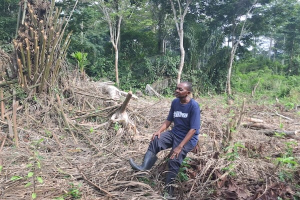
Le gouverneur de la Tshopo, Paulin Lendongolia Lebabonga, a suspendu les travaux engagés dans la Boucle de la Tshopo, à Kisangani, après plusieurs alertes lancées par des organisations environnementales et la société civile. Cette décision intervient alors qu’un projet de lotissement y avait été lancé, dans une zone présentée par des ONG comme stratégique pour l’équilibre environnemental et énergétique de la ville.
Selon la presse locale, le projet, baptisé « Batiambomake », avait été officialisé par un arrêté signé le 17 mars 2026. Il prévoyait l’aménagement de 560 parcelles résidentielles de 25 mètres sur 30, ainsi que 20 parcelles commerciales. Des opérations de défrichage et de piquetage avaient déjà commencé sur le site.
Située sur la rive droite de la rivière Tshopo, la Boucle de la Tshopo couvre environ 400 hectares. D’après l’ONG ADN-RDC, elle aurait été créée par l’ordonnance coloniale n°304/AGRI du 9 septembre 1953. Elle joue un rôle dans la régulation climatique locale, la protection du barrage hydroélectrique de la Tshopo et la préservation des sources d’eau exploitées par la REGIDESO.
Face aux critiques, le président de l’Assemblée provinciale de la Tshopo, Matheus Kanga, a convoqué, le 1er mai 2026, une réunion avec plusieurs responsables provinciaux, dont le ministre provincial des Affaires foncières ainsi que les directeurs provinciaux de la SNEL et de la REGIDESO. Une descente sur le site a également été effectuée pour évaluer l’état de la réserve.
Plusieurs experts et organisations environnementales ont alerté sur les conséquences possibles d’une urbanisation de cette zone. Le professeur Corneille Ewango, cité par Singamwambe, estime que le lotissement exposerait davantage la centrale hydroélectrique aux sables et à l’érosion. L’ONG OCEAN évoque également un risque de fragilisation du pont Tshopo.
ADN-RDC affirme, de son côté, qu’environ 70 % de la réserve serait déjà occupée illégalement, avec des déboisements, des champs agricoles improvisés, des campements et des déplacements de bornes. L’organisation réclame l’arrêt de toute tentative de lotissement, l’ouverture d’enquêtes et le renforcement de la protection juridique de la zone.
Boaz Kabeya
Corridor central : LMC se positionne à Dar es-Salaam pour capter le fret congolais
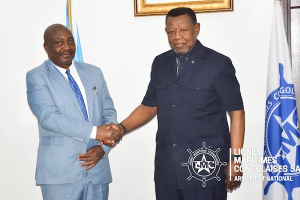
Les Lignes maritimes congolaises (LMC) cherchent à renforcer leur présence sur le corridor de Dar es-Salaam, l’un des principaux axes d’entrée et de sortie du commerce extérieur congolais par l’océan Indien. Le 4 mai 2026, une délégation de la Tanzania Shipping Company Limited (TASHICO) a été reçue à Kinshasa par Lambert Mende, président du conseil d’administration de l’armateur public congolais.
Selon les LMC, les discussions ont porté sur la construction d’un partenariat stratégique destiné à renforcer la connectivité logistique entre Kinshasa et Dar es-Salaam. Les deux parties envisagent la signature prochaine d’un protocole d’accord, tandis que des points focaux ont déjà été désignés pour assurer le suivi des projets conjoints après la formalisation de l’accord.
D’après la communication de l’armateur public, cette initiative vise à structurer une offre logistique intégrée entre la RDC et la Tanzanie. Le partenariat s’inscrit dans une logique de captation des flux transitant par l’Est et le Sud de la RDC, où une part importante des exportations minières emprunte déjà les ports tanzaniens, notamment Dar es-Salaam.
Il est aussi question de positionner la RDC et la Tanzanie comme un pont logistique entre les façades atlantique et indienne de l’Afrique. Pour Saidi Juma Mchana, ambassadeur de Tanzanie en RDC, cette complémentarité pourrait ouvrir l’accès à un marché régional de plus de 160 millions de consommateurs et faciliter le transit des marchandises dans la sous-région.
Ce rapprochement s’inscrit directement dans le plan de relance 2023-2027 des LMC, qui vise à repositionner l’entreprise comme un acteur du transport maritime et multimodal du commerce extérieur congolais. Ce plan prévoit notamment un déploiement sur les corridors où l’armateur public reste peu présent, dont celui de Dar es-Salaam, ainsi que le développement de capacités de stockage et le renforcement de son offre de transport maritime et multimodal.
L’objectif est économique : capter une part plus importante du fret congolais, aujourd’hui largement transporté par des armateurs étrangers. Dans son plan de relance, les LMC ambitionnent de faire passer leur participation au transport maritime du commerce extérieur congolais de 0,3 % en 2021 à 2 % en 2027, soit une progression des volumes transportés de 45 000 tonnes à environ 395 000 tonnes.
Ronsard Luabeya
Lire aussi :
Transport maritime : LMC prévoit l’achat d’un navire de 21,5 millions de dollars en 2026
Transport maritime : l’armateur public LMC en passe d’acquérir deux navires
Complast seeks temporary mattress import restrictions in greater Katanga
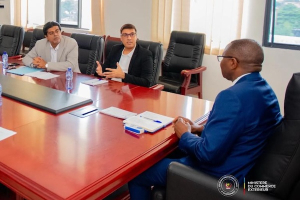
DR Congo’s Minister of Foreign Trade Julien Paluku Kahongya met on May 4, 2026, with executives from Complast RDC, a mattress and foam manufacturer. According to the ministry, the company is seeking temporary restrictions on mattress imports in the greater Katanga region.
Complast says its request is based on production capacity. The company says it can produce up to 5,000 mattresses per day at its Lubumbashi plants, more than local demand across Haut-Katanga, Lualaba and Tanganyika provinces, which its director general, Vishal Hemnani, estimates at fewer than 4,000 units per day.
The company says the plants are operating below capacity. Quoted by Journal des Nations, Ramji Mazahor, Complast’s legal and public affairs coordinator, said the company currently produces between 1,500 and 2,000 units per day. He attributed the gap to what Complast describes as unfair competition from imported mattresses.
Complast argues that temporary restrictions would raise factory utilization and support local employment in the mattress and foam production sector.
Following the meeting, the Ministry of Foreign Trade announced the creation of a commission to collect additional data for the minister. The data will help determine whether temporary import restrictions on mattresses are justified in that part of the country.
According to its website, Complast has operated in the Democratic Republic of Congo since 1967. Besides Lubumbashi, the company says it has a presence in Kinshasa, Mbuji-Mayi, Mbandaka, Kikwit, Boma and Matadi. It also reports more than 35 distribution points in Kinshasa and 50 across the country.
Timothée Manoke
Zambian firm SACOR pitches mining waste technology in DR Congo

A delegation from SACOR, described as part of a Zambian group, met DR Congo’s Minister of Mines, Louis Watum Kabamba, on May 5, 2026, to present a solution for separating solid residues from water produced during ore concentration, material known in the industry as tailings. The delegation was led by Solange Kappongo, the company’s general manager in the DRC.
According to the ministry, the technology is intended to improve mining waste management by separating solids from water. The aim is to enable water reuse in industrial processes and improve the handling of solid residues at mining sites.
The technology relies on an established industrial process. Solid-liquid separation by centrifugation has long been used across several industries. The innovation lies mainly in its application to modern mining waste management, with the goal of reducing waste volumes, recovering process water and limiting environmental risks. On its website, SACOR claims water recovery rates of up to 85%.
The minister welcomed the initiative but urged caution before any rollout. Before large-scale implementation, Louis Watum Kabamba called for pilot tests to assess the solution’s effectiveness under local conditions. The ministry also said it would help connect SACOR with mining companies operating in the DRC.
For now, the discussions remain exploratory. No contract or pilot project has been announced. Available public sources do not confirm that the technology has been used at any specific mining site in Zambia.
The initiative comes as scrutiny over mining pollution in the DRC has intensified. In November 2025, Congo Dongfang Mining, active in cobalt processing, was implicated in an environmental incident in Lubumbashi after a tailings pond ruptured. The discharge of contaminated water affected rivers, soil and several outlying neighborhoods. The company was later ordered to pay about $12.6 million and carry out remediation measures.
Against that backdrop, SACOR is seeking to tap demand for better mining waste treatment in Congo’s mining sector, including reduced water use, improved waste handling and lower risks for surrounding communities. But any future presence in the market will depend mainly on the results of pilot tests and the interest of mining operators.
Ronsard Luabeya