





Equipe Publication
Minister Bandubola Alleges $800 Million Tax Evasion on Southern DRC Fuel Imports

In a Jan. 30, 2026 letter to the head of the Directorate General of Customs and Excise (DGDA), Hydrocarbons Minister Acacia Bandubola Mbongo alleged “massive and organized” customs fraud involving finished petroleum products in the southern zone of the Democratic Republic of Congo.
In the letter, the former land affairs minister, who served from May 2024 to August 2025, said that of nearly 2 million cubic meters of fuel imported via the southern route in 2025, only half was properly cleared. The remainder allegedly entered the country without payment of required duties and taxes, resulting in an estimated shortfall of nearly $800 million for the public treasury.
Some industry players dispute that assessment, arguing it assumes that all finished petroleum products imported through the southern corridor were destined exclusively for the mining sector. They note that the 2025 finance law, under Article 22, removed import duty and VAT exemptions specifically for road and aviation fuels, including gasoline, kerosene, diesel, fuel oil, lamp oil and LPG, used in mining activities or sold to mining companies and their subcontractors. Moreover, the provision only took effect in August 2025 and therefore could not apply to the entire year.
To enforce the measure, mining companies are now required to procure fuel under customs supervision and to use products marked under a specific identification system designed to distinguish them from fuel sold at service stations, which remains exempt from import taxes.
Long-standing suspicions
Some mining operators, however, are accused of attempting to circumvent the system, including by resisting surprise inspections conducted by the Marking Brigade, which monitors compliance. In a Sept. 13, 2025 statement, the Federation of Congolese Enterprises said the DGDA had observed what it described as an excessive increase in volumes of petroleum products declared for domestic consumption in Haut-Katanga, reinforcing suspicions that some operators were bypassing the requirement to source fuel under customs supervision.
In her letter, the hydrocarbons minister also alleged that certain DGDA departments were complicit in the fraudulent practices. She said her ministry had documented a system built on mechanisms designed to circumvent customs procedures.
As an example, she cited the Jan. 16, 2026 seizure of three tanker trucks carrying unmarked fuel. According to the hydrocarbons administration, the products initially attributed to Vexhor were transferred under customs supervision to Panda International Congo on Jan. 9, 2026. The transfer was allegedly authorized by the deputy director of the DGDA customs brigade in Haut-Katanga, who is also accused of transmitting sensitive information to the operator and exposing field agents to reprisals.
The minister further questioned the DGDA’s response, noting that as the authority responsible for managing the SIDONIA customs system, it would have had access to data revealing discrepancies. She raised concerns over the absence of formal complaints, internal alerts or visible disciplinary action given the scale of the alleged incidents.
She called in particular for the precautionary suspension of the officials cited and for the publication of a detailed report on the matter.
Timothée Manoke
Carburants : Acacia Bandubola dénonce une fraude douanière massive au Haut-Katanga

Dans un courrier adressé, le 30 janvier 2026, au directeur général de la Direction générale des douanes et accises (DGDA), la ministre des Hydrocarbures, Acacia Bandubola Mbongo, dénonce une fraude douanière « massive et organisée » sur les produits pétroliers finis dans la zone Sud de la République démocratique du Congo.
Dans sa correspondance, l’ancienne ministre des Affaires foncières (mai 2024–août 2025) révèle que, sur près de 2 millions de mètres cubes de carburants importés par la voie Sud en 2025, seule la moitié aurait été régulièrement dédouanée. L’autre moitié serait entrée sur le territoire national sans acquittement des droits et taxes dus, générant un manque à gagner estimé à près de 800 millions de dollars pour le Trésor public.
Cette conclusion est toutefois jugée problématique par certains acteurs du secteur. Elle suppose en effet que l’ensemble des produits pétroliers finis importés par la voie Sud seraient exclusivement destinés au secteur minier. En effet, ce sont précisément les carburants terrestres et d’aviation (essence, kérosène, gasoil, fuel, pétrole lampant, GPL) destinés à l’activité minière, ou cédés aux entreprises minières et à leurs sous-traitants, qui ont été exclus de toute exonération de droits et taxes à l’importation (droits de douane et de TVA) par la loi de finances 2025 (article 22). En plus, cette disposition, entrée en vigueur en août 2025, ne pouvait s’appliquer sur l’ensemble de l’année.
Pour garantir l’application de cette nouvelle mesure, les sociétés minières sont désormais tenues de s’approvisionner sous douane et d’utiliser des carburants soumis à un marquage spécifique, destiné à les distinguer des produits vendus en stations-service, qui demeurent exonérés des taxes à l’importation.
Soupçons anciens
Cependant, certains opérateurs miniers sont accusés de contourner le dispositif, en s’opposant notamment aux contrôles inopinés menés par la Brigade de marquage, chargée de vérifier leur conformité. Dans un communiqué publié le 13 septembre 2025, la Fédération des entreprises du Congo (FEC) indiquait que la DGDA avait relevé une hausse jugée excessive des volumes de produits pétroliers déclarés pour la consommation domestique dans le Haut-Katanga, renforçant les soupçons de contournement des règles imposant un approvisionnement sous douane des sociétés minières.
Dans son courrier, la ministre des Hydrocarbures estime par ailleurs que ces pratiques frauduleuses se déroulent avec la complicité de certains services de la DGDA. Elle affirme que ses services ont documenté un système reposant sur des mécanismes de contournement des procédures douanières.
À titre illustratif, la correspondance fait état d’événements survenus le 16 janvier 2026, avec l’appréhension de trois camions-citernes transportant du carburant non marqué. Selon l’administration des Hydrocarbures, ces produits, initialement attribués à la société Vexhor, auraient fait l’objet d’une cession sous douane en faveur de Panda International Congo le 9 janvier 2026. L’autorisation de cette cession aurait été signée par le sous-directeur de la Brigade douanière de la DGDA dans le Haut-Katanga, un responsable également accusé d’avoir transmis des informations sensibles à l’opérateur mis en cause, exposant ainsi les agents de terrain à des représailles.
Enfin, la ministre s’interroge sur le silence de la DGDA, en tant que propriétaire et gestionnaire du système SIDONIA, lequel aurait mis en évidence ces écarts dans les données douanières. Elle questionne l’absence de dénonciations officielles, d’alertes internes et de mesures disciplinaires visibles face à l’ampleur des faits relevés. À ce titre, elle sollicite notamment la suspension préventive des agents cités ainsi que la production d’un rapport circonstancié et rendu public sur cette affaire.
Timothée Manoke
Lire aussi :
Carburants : les recettes fiscales bondissent de 1 700 % après la fin des exonérations minières
Carburants : face au blocage des contrôles, l’État hausse le ton contre les miniers
Haut-Katanga : des miniers dans le viseur pour non-respect des règles sur les carburants
DRC, Congo Republic agree harmonised tax regime for Kinshasa-Brazzaville bridge
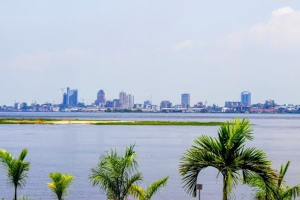
Finance ministers from the Democratic Republic of Congo (DRC) and the Republic of Congo are set to sign a bilateral agreement on Feb. 12, 2026, establishing a special tax regime for the construction and operation of the Kinshasa-Brazzaville road-rail bridge.
The announcement followed technical meetings in Kinshasa held to finalise the documents. The project was officially launched on Feb. 3 by Jean-Claude Mido Mbuete, deputy director-general of the Congolese Agency for Major Works (ACGT), and was described as a key step toward implementation.
“Today we have a harmonised tax and customs framework for this project. We also have a bilateral agreement establishing that framework, which will allow us to relaunch the call for tenders for the Congo River road-rail bridge between Brazzaville and Kinshasa in the coming days,” said Caddy Elisabeth Ndala, head of the Brazzaville delegation, after the meetings.
The absence of a dedicated tax regime had delayed the selection of a concessionaire. The signing of the bilateral agreement is expected to restart the process.
According to Congolese authorities in Brazzaville, the tender had initially been scheduled for June, followed by the selection of a partner in September 2025 and the opening of negotiations with the chosen concessionaire to reach financial close. Authorities on both sides of the river had said construction would be officially launched before the end of the year.
A project valued at more than $700 million
“Technical assessments put the cost of the project at around $700 million. This should be seen as a first phase, as additional components are expected to be added over time,” Alexis Gisaro, then DRC minister of Infrastructure and Public Works, said in January last year. In 2017, the African Development Bank (AfDB) estimated the cost of the project at $550 million.
The road-rail bridge, designed to link the two closest capital cities in the world, is among the major infrastructure projects aimed at boosting regional integration under the New Partnership for Africa’s Development (NEPAD). It is also a strategic link along the Tripoli–Windhoek transport corridor, which runs through Chad, Cameroon, the two Congos and Angola.
Project coordination and implementation have been assigned to the Economic Community of Central African States (ECCAS). Feasibility studies have already been completed and were financed by the AfDB and the two Congolese states.
First proposed in the 1990s under former Zaire president Mobutu Sese Seko, the project involves the construction of a 1,575-metre toll bridge across the Congo River. It will include a railway line, a roadway with pedestrian access and a border control post on each bank.
Once completed, the bridge is expected to ease mobility and trade between the two cities, which are currently linked only by river transport. Annual passenger traffic is projected to rise from 750,000 to more than 3 million, while freight volumes are expected to increase from 340,000 to nearly 2 million tonnes.
Boaz Kabeya
Pont Kinshasa–Brazzaville : un régime fiscal harmonisé pour relancer l’appel d’offres
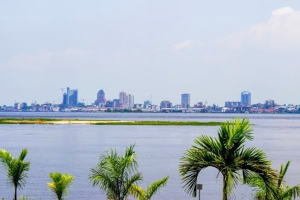
Les ministres des Finances de la République démocratique du Congo (RDC) et de la République du Congo doivent signer, le 12 février 2026, un accord bilatéral établissant le régime fiscal particulier qui sera appliqué à la construction et à l’exploitation du pont rail-route Kinshasa–Brazzaville.
L’information a été annoncée à l’issue des assises techniques tenues à Kinshasa pour finaliser les documents. Ces travaux, officiellement lancés le 3 février par le directeur général adjoint de l’Agence congolaise des grands travaux (ACGT), Jean-Claude Mido Mbuete, ont été présentés comme une nouvelle étape vers la concrétisation du projet.
« Aujourd’hui, nous avons un régime fiscal et douanier harmonisé pour ce projet. Nous avons également un accord bilatéral qui vient consacrer ce régime fiscal et douanier pour nous permettre, dans les prochains jours, de relancer la demande de propositions en ce qui concerne le projet pont-route-rail sur le fleuve Congo entre les villes de Brazzaville et de Kinshasa », a expliqué Caddy Elisabeth Ndala, cheffe de la délégation de Brazzaville, à l’issue des travaux.
À l’analyse, la nécessité d’un régime fiscal dédié aurait retardé le processus de sélection du concessionnaire. La signature de l’accord bilatéral consacrant ce régime fiscal devrait donc relancer la procédure.
Selon les informations communiquées par Brazzaville au début de l’année dernière, l’appel d’offres aurait dû intervenir en juin, puis la sélection du partenaire en septembre 2025, suivie de l’ouverture des discussions avec le concessionnaire retenu en vue du closing financier. Les autorités des deux rives annonçaient d’ailleurs un lancement officiel des travaux avant la fin de l’année.
Un projet de plus 700 millions de dollars
« Les évaluations techniques portent le coût de ce projet autour de 700 millions de dollars. Mais il faut savoir qu’il s’agit d’une première étape, car le projet est appelé à évoluer. D’autres projets viendront s’arrimer à ce projet principal », a indiqué, en janvier de l’année dernière, Alexis Gisaro, alors ministre des Infrastructures et des Travaux publics de la RDC. En 2017, la Banque africaine de développement (BAD) pour sa part estimait le coût de l’infrastructure à 550 millions de dollars.
Le projet de pont-route-rail destiné à relier les deux capitales les plus proches au monde fait partie des infrastructures majeures censées stimuler l’intégration régionale dans le cadre du NEPAD. Il figure également parmi les maillons stratégiques du système de transport le long du corridor Tripoli–Windhoek, qui traverse le Tchad, le Cameroun, les deux Congo et l’Angola. La coordination et l’exécution du projet ont été confiées au Secrétariat général (devenu Commission) de la CEEAC, tandis que les études de faisabilité déjà réalisées ont été financées par la BAD et les deux États congolais.
Selon les détails techniques dévoilés initialement, ce projet — initié dans les années 1990 sous Mobutu Sese Seko — consiste en la construction d’un pont à péage de 1,575 km de long au-dessus du fleuve Congo. Il devrait comprendre, entre autres, une voie ferrée, une route avec des passages piétons, ainsi qu’un poste de contrôle frontalier de chaque côté.
À terme, le projet devrait faciliter la mobilité et les échanges entre les deux villes, actuellement reliées par voie fluviale. Il était projeté une progression du trafic annuel de personnes de 750 000 à plus de 3 millions et du fret de 340 000 à près de 2 millions de tonnes.
Boaz Kabeya
Lire aussi :
Pont Brazzaville-Kinshasa : lancement officiel du projet prévu pour 2025
Gold prices lift Kibali mine revenue to a record $2.3 billion in 2025
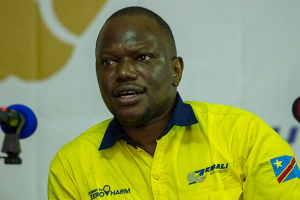
The Kibali gold mine in northeastern Democratic Republic of Congo reported revenue of $2.3 billion in 2025, according to figures published by operator Barrick Mining.
In its annual results released on Feb. 5, 2026, the Canadian miner said its share of revenue from Kibali, based on its 45% stake, totalled $1.04 billion last year. On a 100% basis, the mine generated about $2.3 billion in revenue.
It was the first time since industrial-scale operations began in 2014 that Kibali’s revenue exceeded $2 billion. Revenue rose 40% from 2024, which had already been a record year.
The increase came despite lower production. Kibali produced about 673,000 ounces of gold in 2025, down from nearly 687,000 ounces in 2024, a 2% decline following a 10% drop the previous year. Output also fell short of the mine’s annual target of at least 688,000 ounces.
Barrick attributed the shortfall to lower ore grades and reduced volumes mined from its highest-grade underground zones. Production was also disrupted in the fourth quarter by a fatal accident that led to a temporary shutdown of some operations and weighed on year-end output.
Gold prices offset lower output
The revenue growth was largely driven by higher gold prices. In 2025, Barrick’s average realised gold price rose to $112,210 per kilogram, up 45% from $77,300 in 2024.
According to the World Gold Council, the average annual gold price climbed 44% to $110,280 per kilogram in 2025, supported by strong demand and a geopolitical and financial environment favourable to the metal.
Higher prices boosted Kibali’s contribution to Barrick’s earnings. Despite a 13% increase in costs, the mine contributed $527 million to group results, up from $316 million in 2024, a 67% increase.
The contribution had already risen 30% the previous year, underlining Kibali’s strategic importance within Barrick’s portfolio. The results also benefit the mine’s other shareholders, AngloGold Ashanti, which holds 45%, and state-owned miner Sokimo, with 10%.
For 2026, Barrick forecast Kibali production of between 600,000 and 688,889 ounces, compared with guidance of 688,000 to 755,000 ounces last year, pointing to a possible further decline. The company said output would depend on geological conditions as well as ongoing maintenance and development work.
Kibali is expected to continue generating strong revenue, reinforcing its role as a key contributor to Barrick’s African operations. Gold prices have remained elevated, with the metal trading above $5,000 an ounce in January. Deutsche Bank, UBS and JPMorgan forecast prices could reach $6,000 an ounce by the end of the year.
Pierre Mukoko
Or : Kibali enregistre un chiffre d’affaires record de 2,3 milliards de dollars en 2025
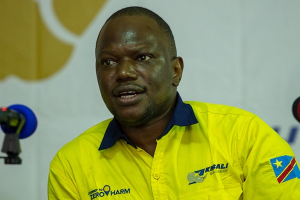
La mine d’or de Kibali, située au nord-est de la République démocratique du Congo (RDC), a enregistré un chiffre d’affaires de 2,3 milliards de dollars en 2025, d’après les chiffres publiés par Barrick Mining, opérateur de la mine.
Dans son rapport financier annuel publié le 5 février 2026, le groupe canadien indique en effet que le revenu de Kibali Goldmines qui lui est attribuable, sur la base de sa participation de 45 %, a atteint 1,04 milliard de dollars l’an dernier. En le rapportant à 100 %, le chiffre d’affaires total ressort à environ 2,3 milliards de dollars.
Pour la première fois depuis le démarrage, en 2014, de l’exploitation industrielle à plein régime, l’entreprise dirigée par Cyrille Mutombo (photo) franchit le seuil des 2 milliards de dollars de chiffre d’affaires. Le revenu est en hausse de 40 % par rapport à 2024, qui constituait déjà un record.
Ce record intervient pourtant dans un contexte de baisse de la production. En 2025, Kibali a produit 673 333 onces, contre près de 687 000 onces en 2024, soit un recul de 2 %, après une baisse de 10 % enregistrée en 2024. Cette production est aussi inférieure à l’objectif annuel d’au moins 688 000 onces.
Barrick attribue cette contre-performance à une baisse des teneurs des minerais traités et à une réduction des volumes extraits dans les zones souterraines présentant les meilleures teneurs. Les opérations ont également été affectées au quatrième trimestre par un incident mortel, ayant entraîné un arrêt temporaire de certaines activités et pesé sur les volumes de fin d’exercice.
L’effet prix
La progression du chiffre d’affaires est donc essentiellement imputable à la hausse soutenue des prix de l’or. En 2025, le prix moyen réalisé par Barrick a fortement augmenté, atteignant 112 210 dollars le kilogramme, contre 77 300 dollars en 2024, soit une hausse de 45 %.
Cette évolution s’inscrit dans un marché haussier. Selon le World Gold Council, le prix moyen annuel de l’or a augmenté de 44 % pour atteindre 110 280 dollars le kilogramme en 2025, porté par une demande élevée et un environnement géopolitique et financier favorable au métal jaune.
La hausse des revenus s’est traduite par une amélioration de la contribution de Kibali aux résultats de Barrick. Malgré une hausse des charges de 13 %, la contribution de la mine aux résultats du groupe a atteint 527 millions de dollars, contre 316 millions en 2024, soit une hausse de 67 %.
Cette contribution était déjà en hausse de 30 % l’année précédente. Ces performances confirment le poids stratégique de Kibali dans le portefeuille de Barrick, et devraient également profiter aux autres actionnaires de la mine : AngloGold Ashanti (45 %) et l’entreprise publique Sokimo (10 %).
Pour 2026, Barrick anticipe une production comprise entre 600 000 et 688 888,8 onces pour Kibali, contre une fourchette de 688 000 à 755 000 onces l’an dernier. Cette projection suggère une nouvelle baisse possible, que le groupe conditionne aux paramètres géologiques ainsi qu’à la poursuite des investissements de maintien et de développement.
Kibali devrait toutefois continuer à générer des revenus significatifs, consolidant sa place de pilier des performances africaines de Barrick. En effet, le prix de l’or poursuit sa tendance haussière. Au cours du premier mois de l’année, l’once s’est maintenue au-dessus de 5 000 dollars (plus de 160 000 dollars le kilogramme). Deutsche Bank, UBS et JP Morgan projettent notamment que les cours pourraient atteindre 6 000 dollars l’once (plus de 190 000 dollars le kilogramme) d’ici la fin de l’année.
Pierre Mukoko
Lire aussi :
Mine d’or de Kibali : la production s’accélère, mais l’objectif annuel reste incertain
Or : la contribution de Kibali au chiffre d’affaires de Barrick Gold en hausse de 30% en 2024
DRC: Mining companies given six-month deadline to allocate 5% equity to employees
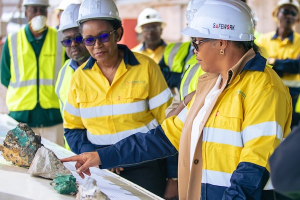
Mining companies operating in the Democratic Republic of Congo have until July 31, 2026, to allocate 5% of their equity to Congolese employees, according to a letter dated January 30, 2026, from Mines Minister Louis Watum Kabamba.
By that deadline, companies must submit evidence of compliance to the ministry, including updated articles of association, shareholder agreements, an up to date shareholder or member register, and any other legally valid documentation in line with Congolese law and the OHADA Uniform Acts.
The minister said the measure is based on provisions of the Mining Code, notably Article 71 bis, Article 144 bis of the Mining Regulations, and related legislation. These require mining companies to ensure at least 10% ownership by Congolese individuals. Five percent must be allocated to one or more Congolese shareholders and 5% to the workforce. Compliance is a prerequisite for obtaining an operating permit.
No mining company has yet met this requirement, which was introduced in the 2018 revision of the Mining Code, according to a 2022 report by the African Natural Resources Observatory. The report, titled The Establishment of Headquarters and Congolese Participation in Mining Companies’ Share Capital, said implementation has been hindered by a lack of awareness among employees, the absence of support policies, limited access to financing and training, insufficient information, and weak incentives to encourage Congolese investment in the sector.
The government plans to enforce a similar provision in the telecommunications sector. At a Council of Ministers meeting on January 30, 2026, President Félix Tshisekedi instructed the minister of posts and telecommunications and the Postal and Telecommunications Regulatory Authority of Congo to engage with telecoms companies to establish procedures for allocating 5% of their equity to Congolese employees.
According to the presidency, the continued failure to implement the measure denies workers a right guaranteed by law, entrenches imbalances in corporate governance, and weakens social dialogue within the companies concerned.
Ronsard Luabeya
Sociétés minières : six mois pour réserver 5 % du capital aux salariés congolais
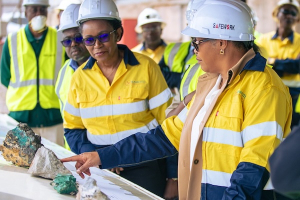
Les entreprises minières opérant en République démocratique du Congo (RDC) ont jusqu’au 31 juillet 2026 pour céder 5 % de leur capital à leurs employés congolais. Ce moratoire est contenu dans une correspondance datée du 30 janvier 2026, adressée par le ministre des Mines, Louis Watum Kabamba, aux sociétés concernées.
Au plus tard le 31 juillet, elles doivent transmettre au cabinet du ministre les preuves attestant de leur conformité à cette exigence légale : statuts actualisés, pactes d’actionnaires, registre des actionnaires ou des associés régulièrement tenu, ainsi que tout autre document juridiquement probant, conforme à la législation congolaise et aux Actes uniformes de l’OHADA.
Selon le ministre, cette mesure découle des dispositions du Code minier, notamment l’article 71 bis, de l’article 144 bis du Règlement minier, ainsi que d’autres textes applicables. Ces dispositions exigent la participation de personnes physiques congolaises à hauteur d’au moins 10 % du capital pour constituer une société minière : 5 % sont attribués à un ou plusieurs Congolais capables d’acquérir des parts ou actions, et 5 % à la masse des employés de l’entreprise. Cette obligation fait partie des conditions à remplir pour solliciter un permis d’exploitation.
Aucune entreprise minière ne se serait encore conformée à cette disposition, introduite dans le Code minier lors de sa révision de mars 2018, affirmait l’Observatoire africain des ressources naturelles (Afrewatch) dans un rapport publié en 2022. Intitulé « La construction des sièges sociaux et la participation des Congolais aux capitaux sociaux des entreprises minières », ce document souligne que l’application de la mesure est freinée par l’ignorance des salariés, l’absence de politiques d’accompagnement, de financements, de formations, d’informations accessibles et de mesures incitatives favorisant l’investissement des Congolais dans le secteur minier.
Le gouvernement veut également faire appliquer une disposition similaire dans le secteur des télécommunications. Lors du Conseil des ministres du 30 janvier 2026, le président Félix Tshisekedi a instruit le ministre des Postes et Télécommunications et l’Autorité de régulation de la poste et des télécommunications du Congo (ARPTC) d’engager des échanges avec les entreprises du secteur en vue de définir les modalités de cession de 5 % de leur capital aux salariés congolais.
Pour le chef de l’État, la non-application persistante de cette mesure, qualifiée d’« anomalie juridique et sociale », prive les travailleurs d’un droit légalement reconnu, maintient des déséquilibres dans la gouvernance des entreprises concernées et affaiblit le dialogue social.
Ronsard Luabeya
Lire aussi :
Télécoms : la RDC veut appliquer la règle des 5 % du capital réservés aux salariés congolais
900 MW Kinsuka Hydroelectric Project Clears Regulatory Hurdles
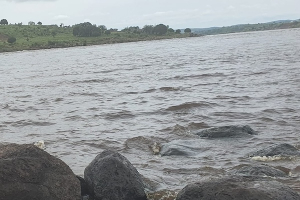
The Kinsuka hydroelectric power plant project, developed by the Kinsuka Power joint venture between Great Lakes Energy, owned by entrepreneur Yves Kabongo, and Forrest Group subsidiary Congo Énergie, has secured all required regulatory approvals for electricity generation. The announcement was made by Minister of Hydraulic Resources and Electricity Aimé Molendo Sakombi during a briefing at the Council of Ministers meeting on February 6, 2026.
The minister, however, called for government backing to facilitate the final steps needed to move the project into construction, without elaborating. These may include site preparation, financial close, or tax exemptions for the import of machinery and equipment. Total investment in the project is estimated at around $2.8 billion, with construction expected to take five years.
The project involves the construction of a hydroelectric power plant on Kwidi Island in Kongo Central province. Feasibility studies conducted by Tractebel and validated in 2018 provide for the installation of 12 turbines, each with a capacity of 75 MW, for total installed capacity of 900 MW and average annual output estimated at 7,450 GWh.
Of the electricity generated, around 600 MW is expected to be supplied to mining companies via new high-voltage transmission lines to be developed by Great Lakes Energy, while the remaining 300 MW will be allocated to supply Kinshasa.
According to the minister, the project is intended to address several of the country’s structural challenges. It aims to reduce Kinshasa’s chronic power deficit by improving electricity availability and reliability for households, public services, and economic activity, strengthen national energy security by expanding generation capacity from a renewable and competitive source, and support the objectives of the DRC Energy Compact by accelerating electricity access and economic growth.
Ronsard Luabeya
Centrale hydroélectrique de Kinsuka (900 MW) : les étapes administratives franchies
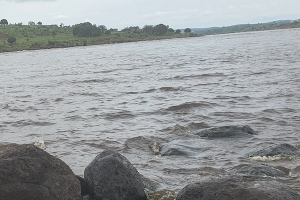
Le projet de centrale hydroélectrique de Kinsuka, développé par la joint-venture Kinsuka Power réunissant Great Lakes Energy, de l’entrepreneur Yves Kabongo, et le groupe Forrest via sa filiale Congo Énergie, a franchi « l’ensemble des étapes administratives requises en vue de la production d’énergie électrique ». L’information provient d’une note présentée par le ministre des Ressources hydrauliques et Électricité, Aimé Molendo Sakombi, lors du Conseil des ministres du 6 février 2026.
Le ministre a toutefois sollicité l’accompagnement du gouvernement « pour faciliter la réalisation des étapes menant au lancement effectif des travaux », sans les détailler. Il pourrait s’agir notamment de la libération du site, du closing financier ou encore d’exonérations fiscales pour l’importation des machines et du matériel. Selon lui, le coût global de l’investissement est évalué à environ 2,8 milliards de dollars, pour un délai de réalisation estimé à cinq ans.
Le projet prévoit la construction d’une centrale hydroélectrique sur l’île de Kwidi, dans la province du Kongo Central. Les études de faisabilité, réalisées par le cabinet Tractebel et validées depuis 2018, prévoient l’installation de 12 turbines d’une capacité unitaire de 75 MW, pour une puissance installée totale de 900 MW, et une production annuelle moyenne estimée à 7 450 GWh. Selon les projections, environ 600 MW de l’énergie produite devraient être destinés aux groupes miniers, via de nouvelles lignes à haute tension développées par Great Lakes Energy, tandis que 300 MW seraient affectés à l’approvisionnement de la ville de Kinshasa.
Selon le ministre des Ressources hydrauliques et Électricité, le projet répond à des « enjeux majeurs pour le pays ». Il vise à réduire le déficit énergétique structurel de Kinshasa en améliorant la disponibilité et la stabilité de l’électricité pour les ménages, les services publics et les activités économiques ; à renforcer la sécurité énergétique nationale en augmentant les capacités de production à partir d’une source renouvelable et compétitive ; et s’aligne sur les objectifs du Compact énergétique RDC, en tant que projet structurant susceptible d’accélérer l’accès à l’électricité et de soutenir la croissance économique.
Ronsard Luabeya
Lire aussi :
Kongo Central : les besoins du projet d’Asia Minerals projetés à plus de 300 MW
Électricité : Kinshasa menacée de coupure massive, des travaux d’urgence lancés