





Equipe Publication
DRC expects $200 mln revenue from standardized invoice reform by end-2026
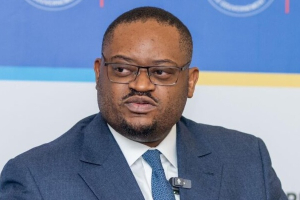
The Democratic Republic of Congo’s standardized invoice reform could generate about $200 million in additional revenue by the end of 2026, Finance Minister Doudou Fwamba said in an interview published by Geopolis Magazine on March 13, 2026.
The projection comes as value-added tax (VAT) accounts for a significant share of public revenue. According to the 2023 annual report of the General Directorate of Taxes (DGI), 8,895 companies collected VAT on behalf of the state, totaling 2,776.2 billion Congolese francs, or 23.7% of tax revenue.
Authorities see tighter oversight of VAT as a key lever to mobilize domestic resources. The standardized invoice reform aims to strengthen the traceability of commercial transactions and limit fraud or under-reporting through secure billing tools connected to the tax administration.
Implementation accelerated early this year. On March 1, 2026, the Finance Ministry launched a support program for economic operators to facilitate compliance with the new system. The initiative includes the distribution of 4,000 electronic fiscal devices (EFDs) used to issue secure electronic invoices.
The equipment will be allocated to eligible operators on a first-come, first-served basis, subject to available stock. Beneficiary companies must, however, cover certain related services, including activation, training and technical maintenance.
The reform is part of a broader process launched in 2025. In June 2025, the DGI began certifying company billing systems, with the objective of gradually restricting invoice issuance to software compliant with tax administration requirements.
Through the standardized invoice system, the government aims to strengthen VAT collection, improve tax transparency and boost domestic revenue amid increasing pressure on public finances.
Boaz Kabeya
Dépenses publiques : Kinshasa serre la vis sur la création des cellules et établissements
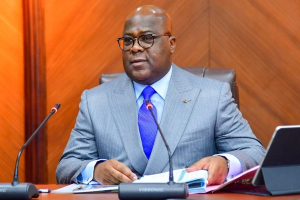
Le président Félix Tshisekedi (photo) a ordonné un encadrement plus strict de la création des fonds, commissions, cellules et établissements publics, dans le cadre de la rationalisation des dépenses de l’État.
Lors de la 82e réunion du Conseil des ministres du 13 mars 2026, le chef de l’État a demandé que toute nouvelle structure publique soit désormais soumise à une validation préalable de la Première ministre, chargée d’en apprécier l’opportunité, la pertinence stratégique et l’impact financier avant arbitrage final.
Selon le compte rendu du Conseil, cette démarche vise à mieux maîtriser les ressources publiques et à éviter la multiplication de structures jugées peu efficaces ou redondantes. L’exercice doit permettre d’identifier les entités dont l’utilité est avérée, celles dont la pertinence reste limitée, ainsi que les cas de chevauchement de compétences ou de duplication institutionnelle.
Cette décision s’inscrit dans un processus amorcé depuis plusieurs mois. Lors de la 74e réunion du Conseil des ministres du 9 janvier 2026, Félix Tshisekedi avait déjà insisté sur la nécessité de renforcer la discipline budgétaire, en présentant la rationalisation des dépenses publiques comme un « levier immédiat, crédible et indispensable » pour préserver les équilibres macroéconomiques.
Le président avait alors appelé à l’élimination des dépenses non prioritaires ou insuffisamment justifiées, tout en demandant à la Première ministre un rapport sur l’état d’avancement des mesures engagées.
Cette orientation remontait déjà à la 42e réunion du Conseil des ministres du 2 mai 2025, au cours de laquelle le gouvernement avait été instruit d’identifier les structures publiques créées ces dernières années, d’en évaluer la valeur ajoutée et d’envisager, le cas échéant, la suppression ou la restructuration de celles jugées improductives ou budgétivores. Pour l’instant, les résultats de ces différentes directives n’ont pas rendu public.
Ce resserrement intervient dans un contexte de pression persistante sur les finances publiques. La loi de finances 2026, promulguée fin décembre 2025, a été arrêtée à environ 22 milliards de dollars, après un projet initial présenté en septembre 2025 à 20,3 milliards de dollars.
Dans ce contexte, le pouvoir exécutif cherche à contenir les charges de fonctionnement de l’État, à limiter la dispersion des moyens budgétaires et à concentrer les ressources sur les priorités gouvernementales, notamment la sécurité, la reconstruction et les infrastructures.
À travers cette nouvelle séquence, l’exécutif entend donc faire de la rationalisation administrative un instrument de discipline budgétaire et d’efficacité de l’action publique.
Boaz Kabeya
Facture normalisée : 200 millions $ de recettes supplémentaires visés d’ici fin 2026
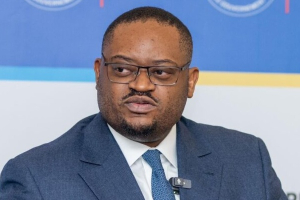
La réforme de la facture normalisée pourrait générer environ 200 millions de dollars de recettes additionnelles d’ici fin 2026 en République démocratique du Congo. L’estimation a été avancée par le ministre des Finances Doudou Fwamba (photo) dans un entretien publié le 13 mars 2026 par Geopolis Magazine.
Cette projection intervient dans un contexte où la taxe sur la valeur ajoutée (TVA) occupe une place importante dans les recettes publiques. Selon des données reprises à partir du rapport annuel 2023 de la Direction générale des impôts (DGI), 8 895 entreprises ont collecté la TVA pour le compte de l’État, pour un total de 2 776,2 milliards de francs congolais, soit 23,7 % des recettes fiscales.
Pour les autorités, l’amélioration du contrôle de cette taxe constitue l’un des leviers majeurs de mobilisation des ressources internes. La réforme de la facture normalisée vise précisément à renforcer la traçabilité des opérations commerciales et à limiter les marges de fraude ou de sous-déclaration, grâce à des outils de facturation sécurisés et connectés à l’administration fiscale.
La mise en œuvre opérationnelle du dispositif s’est accélérée au début de l’année. À partir du 1er mars 2026, le ministère des Finances a lancé un programme d’accompagnement destiné aux opérateurs économiques afin de faciliter leur mise en conformité avec le nouveau système. Ce programme prévoit la mise à disposition de 4 000 dispositifs électroniques fiscaux (DEF), destinés à l’émission de factures électroniques sécurisées.
Ces équipements sont attribués aux premiers opérateurs économiques éligibles qui en font la demande, dans la limite du stock disponible, selon le principe du premier arrivé, premier servi. Les entreprises bénéficiaires doivent toutefois prendre en charge certains services associés, notamment l’activation, la formation et la maintenance technique.
Cette réforme s’inscrit dans un processus plus large engagé depuis 2025. Dès juin 2025, la DGI avait lancé l’homologation des systèmes de facturation d’entreprise, avec l’objectif de réserver progressivement l’émission des factures aux seuls logiciels conformes aux exigences de l’administration fiscale.
À travers la facture normalisée, le gouvernement cherche ainsi à consolider la collecte de la TVA, améliorer la transparence fiscale et accroître les recettes intérieures dans un contexte de pression croissante sur les finances publiques.
Boaz Kabeya
Lire aussi :
Facture normalisée : 4 000 dispositifs fiscaux à distribuer pour accélérer la conformité
Facturation : seuls les logiciels homologués autorisés dès le 1er juillet en RDC
DRC Opens Talks to Update Studies for 6,450-MW Pioka-Tombe Hydropower Project
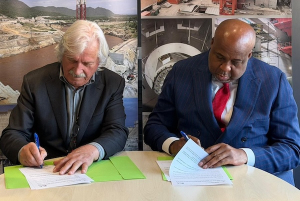
The Democratic Republic of Congo has opened talks to update technical studies for the Pioka-Tombe hydroelectric project, a 6,450-MW cross-border hydropower project.
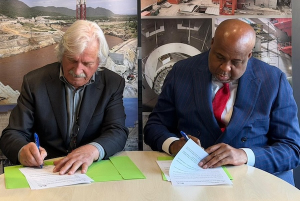
According to a statement published on March 12, 2026, Mines and Electricity Minister Aimé Sakombi Molendo met in Milan with officials from Italian engineering firm Electroconsult, which conducted the site’s first technical studies in 1978.
The ministry said discussions focused on updating the project’s technical and economic studies, a prerequisite for relaunching the development. The objective is to refresh existing data ahead of the next phases of the project.
Founded in 1955 and headquartered in Italy, Electroconsult is an engineering and consulting firm involved in hydropower, geothermal energy, electricity and civil infrastructure projects.
At a Cabinet meeting on Jan. 9, 2026, Sakombi Molendo outlined several technical steps needed to revive Pioka-Tombe, including updating existing studies, conducting topographic surveys, carrying out pre-feasibility and feasibility studies, and preparing a detailed preliminary design.
The minister also said an appropriate institutional and financial framework would be required to mobilize the investment needed to build the project.
Development of the site is also covered by a bilateral cooperation agreement between the DRC and the Republic of Congo. On Feb. 26, 2026, Sakombi Molendo and his Congolese counterpart Émile Ousso signed a memorandum of understanding on the hydroelectric development of the Pioka-Tombe site on the Congo River.
Once completed, the project could help ease Kinshasa’s power deficit, estimated at more than 1,000 MW, while supporting industrial development in Kongo Central and areas connected to the Inga grid.
Ronsard Luabeya
Projet hydroélectrique Pioka-Tombe : discussions avec Electroconsult pour actualiser les études
La République démocratique du Congo (RDC) a engagé des discussions en vue d’actualiser les études du projet hydroélectrique Pioka-Tombe, un aménagement transfrontalier dont la capacité est estimée à 6 450 MW.
Selon une communication publiée le 12 mars 2026, le ministre des Ressources hydrauliques et de l’Électricité, Aimé Sakombi Molendo, a rencontré à Milan les responsables de la société italienne Electroconsult, qui avait réalisé les premières études techniques du site en 1978.
D’après le ministère, les échanges ont porté sur la mise à jour des études techniques et économiques du projet, une étape préalable à sa relance. L’objectif est d’actualiser les données existantes afin de préparer les phases suivantes de développement du projet.
Fondée en 1955 et basée en Italie, Electroconsult est une société d’ingénierie et de conseil active dans le développement de projets dans les secteurs de l’hydroélectricité, de la géothermie, de l’électricité et des infrastructures de génie civil.
Lors du Conseil des ministres du 9 janvier 2026, Aimé Sakombi Molendo avait indiqué que la relance du projet Pioka-Tombe nécessitait plusieurs étapes techniques, notamment l’actualisation des études existantes, la réalisation de campagnes topographiques, la conduite d’études de préfaisabilité et de faisabilité, ainsi que l’élaboration d’un avant-projet détaillé.
Le ministre avait également évoqué la nécessité de mettre en place un cadre institutionnel et financier adapté pour permettre la mobilisation des investissements nécessaires à la réalisation de l’ouvrage.
Le développement du site fait par ailleurs l’objet d’une coopération bilatérale entre la RDC et la République du Congo. Le 26 février 2026, Aimé Sakombi Molendo et son homologue congolais Émile Ousso ont signé un protocole d’accord relatif à l’aménagement hydroélectrique du site de Pioka-Tombe, situé sur le fleuve Congo.
À terme, ce projet pourrait contribuer à renforcer l’approvisionnement électrique de Kinshasa, où le déficit énergétique est estimé à plus de 1 000 MW, tout en soutenant le développement industriel du Kongo Central et des zones connectées au réseau d’Inga.
Ronsard Luabeya
Lire aussi :
Électricité : la RDC et le Congo signent un protocole d’accord sur Pioka-Tombe (6 450 MW)
MCC Resources suspends operations after attack in Muchacha, Ituri
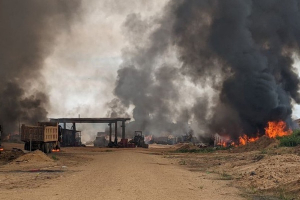
MCC Resources, a gold mining company operating in Ituri province in the Democratic Republic of Congo, has suspended operations at its Muchacha and Mavuvu sites in Mambasa territory following an armed attack on the night of March 11-12, 2026.
In a statement reported by local media, the company said it halted operations on March 12 until further notice after armed assailants breached the mine’s security perimeter. The attack led to looting and sabotage of the company’s facilities. MCC Resources said no casualties were reported at its sites, noting that it had evacuated personnel weeks before the incident as a precaution.
In a communiqué issued on March 15, 2026, the Congolese government strongly condemned the attack on the Muchacha mining sites. Authorities said the assault, attributed to the ADF and claimed by the Islamic State group, killed several people, sparked fires at the site and displaced civilian populations.
MCC Resources said it is closely monitoring the security situation before deciding whether to gradually resume operations. The company is among the gold miners operating in this part of Ituri. According to provisional 2025 mining statistics, it produced 168.47 kilograms of gold.
Muchacha, a key gold-producing area, has repeatedly faced incursions by armed groups. In August 2016, the locality was hit by an attack attributed to the Mai-Mai Simba that killed three people and led to several kidnappings. More recently, in January 2026, attacks attributed to the ADF in the Walese Vonkutu chieftaincy in Irumu territory killed at least 25 civilians, highlighting the persistent insecurity in the province.
Ronsard Luabeya
Or : MCC Ressources suspend ses activités après l’attaque de Muchacha en Ituri
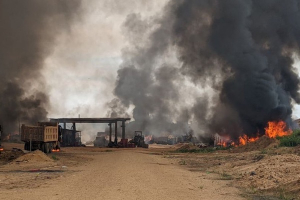
La société minière MCC Ressources, active dans l’exploitation de l’or en Ituri, a annoncé la suspension de ses activités sur ses sites de Muchacha/Mavuvu, dans le territoire de Mambasa, à la suite de l’attaque armée survenue dans la nuit du 11 au 12 mars 2026.
Dans une correspondance relayée par des médias locaux, l’entreprise indique avoir interrompu ses opérations à partir du 12 mars et jusqu’à nouvel ordre, après une incursion armée ayant visé son périmètre d’exploitation. Selon la société, l’attaque a provoqué des pillages et des actes de sabotage sur ses installations. MCC Ressources précise toutefois n’avoir enregistré aucune perte en vie humaine sur ses propres sites, expliquant avoir procédé à l’évacuation préventive de son personnel plusieurs semaines avant les faits.
Dans un communiqué publié le 15 mars 2026, le gouvernement congolais a condamné avec fermeté cette attaque menée contre des sites miniers situés dans le périmètre de Muchacha. Les autorités indiquent que l’assaut, attribué aux ADF et revendiqué par l’organisation État islamique, a fait plusieurs morts, entraîné l’incendie d’installations et provoqué le déplacement de populations civiles.
MCC Ressources affirme suivre de près l’évolution de la situation sécuritaire avant d’envisager une reprise progressive de ses activités. L’entreprise figure parmi les opérateurs aurifères actifs dans cette partie de l’Ituri. D’après les statistiques minières provisoires de 2025, sa production s’est élevée à 168,47 kilogrammes d’or.
Zone aurifère stratégique, Muchacha reste exposée aux incursions de groupes armés. En août 2016, la localité avait déjà été frappée par une attaque attribuée aux Maï-Maï Simba, qui avait fait trois morts et donné lieu à plusieurs enlèvements. Plus récemment, en janvier 2026, des attaques attribuées aux ADF dans la chefferie de Walese Vonkutu, en territoire d’Irumu, ont causé la mort d’au moins 25 civils, illustrant la persistance de l’insécurité dans la province.
Ronsard Luabeya
Lire aussi :
Face au conflit à l’est de la RDC, Heineken cède sa brasserie de Bukavu à Synergy Ventures
Twangiza : le M23 cherche à relancer l’exploitation aurifère après les frappes des FARDC
Étain : Alphamin suspend sa production face à l’avancée du M23, les prix en hausse
Conflit à l’est de RDC : des « pertes considérables » pour les entreprises
Kalelu River ferry service resumes with load limits after February accident
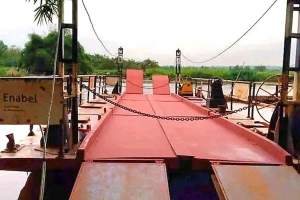
Ferry crossings on the Kalelu River linking Lomami and Kasaï-Oriental provinces resumed on March 11-12, 2026, nearly a month after an accident on Feb. 13 halted traffic on the route.
The reopening was marked by a ceremony presided over by Kasaï-Oriental's provincial Finance Minister, Kabuya Mende Eli Elias, in the presence of representatives from Ngandajika territory and the Lomami General Directorate of Revenue.
Authorities said the reopening follows new safety rules. The maximum load per crossing has been set at 20 metric tons, and ferry operations are now restricted to 7 a.m. to 6 p.m. Local officials said the measures aim to better regulate passenger and goods transport and reduce risks linked to overloading.
The crossing is vital to the movement of people and the flow of trade between the two provinces, particularly for the transport of agricultural produce and consumer goods. Its suspension following the February accident had severely disrupted traffic along the route.
The accident that triggered the shutdown occurred on Feb. 13, 2026, when a vehicle fell into the river during a maneuver connected to the ferry. In the immediate aftermath, eight people were reported missing, according to Radio Okapi. By the time service resumed, authorities reported an official toll of eight deaths, including six bodies recovered and two people still listed as missing, according to Actualite.cd.
With operations resuming under tighter supervision, provincial authorities say they aim to restore a vital service while enforcing stricter compliance with safety regulations to prevent another tragedy.
Boaz Kabeya
Kalelu : la traversée entre la Lomami et le Kasaï-Oriental reprend sous restrictions
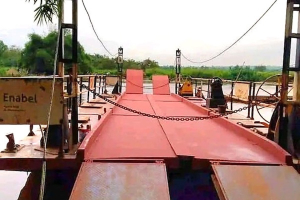
La traversée par bac sur la rivière Kalelu, entre les provinces de la Lomami et du Kasaï-Oriental, a repris autour des 11 et 12 mars 2026, près d’un mois après l’accident survenu le 13 février. Cette reprise a été officialisée lors d’une cérémonie présidée notamment par le ministre provincial des Finances du Kasaï-Oriental, Kabuya Mende Eli Elias, en présence de représentants du territoire de Ngandajika et de la Direction générale des recettes de la Lomami.
Les autorités ont assorti cette réouverture de nouvelles mesures de sécurité. La charge maximale autorisée pour la traversée est désormais fixée à 20 tonnes, tandis que les rotations du bac sont limitées à la plage horaire de 7 heures à 18 heures. Selon les autorités locales, ces restrictions visent à mieux encadrer le transport des passagers et des marchandises, et à réduire les risques liés à la surcharge.
Cette liaison reste essentielle pour les déplacements des populations et les échanges commerciaux entre les deux provinces, notamment pour le transport des produits agricoles et des biens de consommation. Sa suspension, après le drame de février, avait fortement perturbé la circulation sur cet axe.
L’accident à l’origine de l’arrêt du trafic s’était produit le 13 février 2026, lorsqu’un véhicule était tombé dans la rivière lors d’une manœuvre liée au bac. Dans l’immédiat, huit personnes avaient été portées disparues, selon Radio Okapi. Au moment de la reprise, les autorités faisaient état d’un bilan officiel de huit morts, dont six corps repêchés et deux personnes toujours portées disparues, selon Actualite.cd.
À travers cette reprise encadrée, les autorités provinciales disent vouloir rétablir un service vital tout en imposant un respect plus strict des règles de sécurité afin d’éviter un nouveau drame.
Boaz Kabeya
DRC launches $11 million+ overhaul of Akula river port
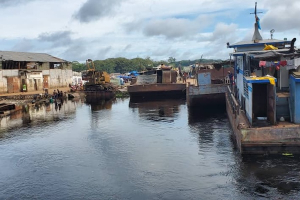
Work to upgrade the port of Akula, located about 117 kilometers from Gemena in the province of Sud-Ubangi, was officially launched on March 11, 2026, by interim governor Jean-René Galekwa Vundawe. The project is financed by the Congolese government at a cost of more than $11 million and is being carried out by the firm Envol Construct Lambo SARL, according to national media reports.
Jules Timbisa, a representative of the firm in charge of the project, said the project includes the rehabilitation of port infrastructure and the construction of several facilities aimed at improving port operations. The program includes the construction of a two-story administrative building of approximately 600 square meters to accommodate government offices at the port, a second similar building, and two warehouses for the storage of goods.
The project also includes the construction of a 166-meter reinforced concrete road designed to improve traffic flow and access to the port facilities. Work is expected to be completed within six months.
Strategic objectives
Provincial authorities said the modernization of the port of Akula is part of a broader strategy to revitalize logistics infrastructure in Sud-Ubangi. The objective is to facilitate river transport of goods, particularly the transport of agricultural products to Kinshasa and the delivery of manufactured goods to the province.
The port of Akula is an important logistical hub for trade between the northwestern Democratic Republic of Congo and the capital, primarily through the river network. However, the port’s development still depends partly on the condition of National Road No. 6, which links Zongo, Gemena and Akula, and whose deteriorated condition complicates the transport of goods to the port.
In October 2025, Minister of Infrastructure and Public Works John Banza announced the launch of rehabilitation works on the Gemena-Akula axis, as well as the Ndongo road, saying the necessary funding had been secured for those projects. The restoration of these road corridors is considered an essential complement to the port modernization effort, in order to remove the logistical constraints that continue to hinder economic development in Sud-Ubangi.
Ronsard Luabeya