





Equipe Publication
Envahissement des sites miniers : Kinshasa prépare la libération d’une concession d’ERG
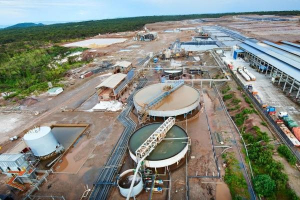
A la suite de l’éboulement survenu dans la nuit du 10 au 11 mars 2026 sur le site de Safi, à Kakanda, dans la province du Lualaba, qui a fait 11 morts, Kinshasa a dévoilé un plan pour reprendre le contrôle de cette concession de Boss Mining, filiale du groupe Eurasian Resources Group (ERG), occupée par des exploitants illégaux. Dans un communiqué daté du 17 mars, le gouvernement congolais annonce une série de mesures articulées autour de l’évacuation du site, de la relocalisation des creuseurs artisanaux et de la sécurisation de ce périmètre minier.
Concrètement, il est question d’identifier et transférer progressivement les creuseurs artisanaux vers des zones d’exploitation artisanale (ZEA) spécifiquement aménagées, afin de les éloigner des concessions industrielles. La mise en œuvre se fera avec le concours du Service d’assistance et d’encadrement des exploitants miniers artisanaux et à petite échelle (SAEMAPE) et des autorités provinciales.
« Ce dispositif vise à offrir aux exploitants de bonne foi un cadre de travail digne et légal, hors des périmètres industriels, tout en assurant un accompagnement technique et sécuritaire permanent par les services de l’État », explique le ministère des Mines. Objectif revendiqué : « rétablir le titulaire légal, Boss Mining, dans la plénitude de ses droits sur la concession (PE 469) ». Pour ce faire, l’État dit d’ailleurs s’engager « à mener à bien les étapes nécessaires à la sécurisation totale du site, afin de permettre, à terme, la reprise des activités industrielles dans un environnement assaini, libéré de toute occupation non autorisée ou interférence illicite ».
Depuis quelques années, les concessions d’ERG font face à des intrusions récurrentes d’exploitants illégaux. La concession de Boss Mining a, par exemple, été envahie après la suspension, en 2023, des activités de l’entreprise à la suite de plusieurs incidents. Selon Boss Mining, ces intrusions peuvent mobiliser quotidiennement plus de 200 camions transportant des cargaisons de cuivre et de cobalt, représentant des pertes évaluées à 1,8 million de dollars par jour.
Pour répondre à cette situation, ERG a signé, le 10 février 2026, un protocole d’accord avec l’Entreprise générale du cobalt (EGC). Ce partenariat vise à structurer l’exploitation artisanale à travers des zones encadrées, des mécanismes de traçabilité et une amélioration des conditions de travail, tout en séparant cette production des circuits industriels.
« Rétablir l’autorité de l’État »
De l’avis même des autorités, l’ampleur du phénomène est telle que la question préoccupe aujourd’hui jusqu’au sommet de l’État : « Le secteur minier artisanal commence réellement à devenir une difficulté. Il y a beaucoup de morts parmi nos compatriotes dits artisans miniers. Mais il y a aussi l’envahissement des sites industriels, ce qui ne donne pas une bonne image à l’extérieur de la capacité de la RDC à garantir la sécurité des investissements qui y sont réalisés. Nous sommes donc très préoccupés par cette situation. Ce sont des questions qui sont portées au plus haut niveau, et nous avons foi que des solutions seront bientôt trouvées. », a indiqué Jean-Marie Kanda, conseiller principal du président Félix Tshisekedi en charge des mines, dans le podcast du cabinet Innogence Consulting diffusé en janvier dernier.
Maintes fois interpellé sur le sujet, le ministre des Mines, Louis Watum Kabamba, affirme être à la tâche, notamment avec son collègue de l’Intérieur, pour « rétablir l’autorité de l’État ». Il faut dire que les exploitants illégaux sont réputés bénéficier du soutien d’acteurs politiques haut placés et de responsables des forces de sécurité. Il y a quelques semaines, la question était d’ailleurs au centre d’une réunion de la Commission de la fraude minière réunissant les deux ministres.
Dans son communiqué du 17 mars, le ministère des Mines dit réaffirmer son engagement à mettre un terme à l’exploitation minière illégale et à accélérer la formalisation du secteur artisanal. Il indique que les entités de traitement ayant acquis des minerais issus de sites illicites restent suspendues et que la justice a été saisie afin de poursuivre les responsables de l’exploitation clandestine.
Il reste que certaines mesures prennent du temps à se concrétiser. À titre d’illustration, l’identification de 64 ZEA dans le Lualaba, annoncée en novembre 2025 après le drame survenu sur le site de Kalando, n’était toujours pas opérationnelle au mois de février. Selon le directeur général du Cadastre minier, Popol Mabolia, seule une dizaine de zones avaient déjà été identifiées. Et celles-ci devaient encore être viabilisées avant leur attribution aux coopératives minières et aux exploitants artisanaux.
Pierre Mukoko et Boaz Kabeya
Lire aussi :
Envahissement des sites miniers : ERG mise sur EGC pour limiter la saignée
Lualaba : la mise en place des 64 ZEA s’annonce longue et progressive
Guillaume Ngefa s’attaque à l’exploitation minière illégale dans le Lualaba
Cuivre-cobalt artisanal : la RDC suspend toutes les entités de traitement
Exploitation artisanale : la tragédie de Kalando réveille le plan de Tshisekedi
DR Congo defines licensing rules for digital platforms and services

The Democratic Republic of Congo’s digital economy minister has introduced a new regulatory framework for certain digital activities and services in the country.
In an order signed on March 11, 2026, Digital Economy Minister Augustin Kibassa Maliba outlined the procedures for reviewing applications and granting authorizations for activities requiring prior approval under the Digital Code.
The order provides a transitional period until June 30, 2026, for affected operators to comply with the new requirements. From July 1, 2026, the provisions will take full effect.
The measure does not apply to all digital operators. It covers only activities and services that require authorization.
Affected entities include operators building data centers; qualified trust service providers (including electronic signatures, seals, timestamping, archiving, certification, website authentication, electronic registered mail and cryptology); application hosting providers; certain large digital platforms such as cloud services, online marketplaces, app stores, social networks, content-sharing platforms, online banking platforms, fintech firms, matchmaking platforms and search engines; as well as essential digital services.
During the transition period, responsibility for processing authorization applications has been assigned to the Postal and Telecommunications Regulatory Authority of Congo (ARPTC). The regulator will verify the completeness and compliance of application files, assess applicants’ legal, technical, organizational and financial capacity, and issue a recommendation to the minister, who retains final decision-making authority.
Authorizations valid for five years
To obtain authorization, applicants must submit a file including legal, tax, technical and administrative documents, a detailed description of the relevant activities, and a business plan.
Authorizations are valid for five years and may be renewed. They do not exempt holders from complying with other applicable legal and regulatory obligations.
The order also includes administrative sanctions in cases of non-compliance, including fines, reduced validity periods, suspension or withdrawal of authorization. Operating without the required authorization may also expose operators to penalties under existing legislation.
Through this order, the government aims to implement the Digital Code and tighten oversight of segments of Congo’s digital economy deemed strategic or sensitive.
Butembo copper project: drilling set for mid-April to assess potential
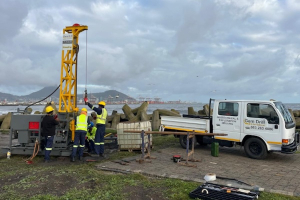
Copper Intelligence, formerly African Discovery Group (AFDG), announced on March 3, 2026, the deployment of a drill rig at its Butembo copper project in eastern Democratic Republic of Congo, in partnership with South African company Gemdrill. The campaign aims to further assess the site’s geology.
According to the company’s timeline, and subject to potential delays due to customs procedures and road conditions, drilling could begin in mid-April 2026, with preliminary core sample analyses expected in early May.
Copper Intelligence said it has deployed an XY-44 drill rig. Manufacturer specifications indicate that this type of equipment can reach depths of up to around 1,000 meters, depending on configuration, target diameter and ground conditions. This capacity could enable testing of mineralization continuity at depth, although actual performance will depend on site-specific conditions and the equipment used.
Preliminary grades
The copper grades reported at this stage are based on initial results published by the company in October 2025. The data are derived from artisanal shafts and Phase 1 work conducted along the floodplain of the Talihya River over a stretch of about 500 meters. The company reported grades of up to 18% copper at one point and 16.3% at another.
It noted, however, that these figures do not constitute a resource estimate or reserves, but reflect early-stage surface sampling results.
At this stage, the data do not confirm the existence of a continuous or economically viable deposit. The drilling campaign is intended to verify mineralization continuity at depth and to better define the project’s potential.
The company also pointed to the site’s location, approximately 33 kilometers from the DRC-Uganda border, with potential access to the East African corridor leading to the port of Mombasa in Kenya. This logistical advantage remains a company claim at this stage and depends on successful geological confirmation and subsequent project development.
Copper Intelligence is listed on OTC Markets’ OTC Pink segment, which is subject to less stringent reporting and listing requirements than major U.S. exchanges such as the NYSE or Nasdaq.
Timothée Manoke
DRC, South Africa to revisit 2,500 MW Inga 3 power export deal
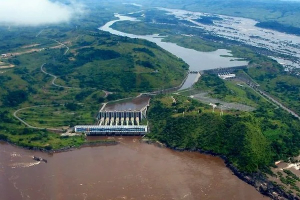
The Democratic Republic of Congo and South Africa plan to resume discussions on the Inga 3 hydroelectric project in April 2026, according to a March 12 statement by the Congolese Ministry of Hydraulic Resources and Electricity.
South Africa's Minister of Electricity and Energy, Kgosientsho Ramokgopa, has confirmed an official visit to the DRC to advance work on renewing and updating bilateral energy cooperation agreements tied to the project, the ministry said.
A political memorandum of understanding already exists between the DRC and South Africa to export 2,500 megawatts, according to the World Bank's Inga 3 project document. The institution also noted that the two countries must continue discussions to renew that agreement and increase the export target to 5,000 megawatts.
The World Bank further noted that the development of Inga 3 could reshape the DRC’s role in regional electricity trade, enabling the country to supply not only its domestic market but also several African power pools, including the Southern African Power Pool (SAPP), the Eastern Africa Power Pool (EAPP) and the Central African Power Pool (CAPP). The bank described the project as a potential source of export revenue, as well as a tool to secure power supply to Kinshasa and the industrial corridor around the Inga site.
Financing and new agreements
According to the Congolese ministry, authorities are also preparing to sign a memorandum of understanding with the Agency for the Development and Promotion of the Grand Inga Project (ADPI) to develop the financing structure of Inga 3 with World Bank support. On Feb. 2, 2026, the French Development Agency (AFD) and ADPI had already signed a memorandum of understanding in Kinshasa to support project preparation.
Inga 3 remains at the preparation stage. The World Bank noted that its final specifications have not yet been determined, with options under study ranging from approximately 4,800 megawatts to 11,000 megawatts, at an estimated cost expected to exceed $10 billion. The institution stressed the need not only to prepare the project itself, but also to ensure the country is ready for it, given its institutional, social, territorial and financial scale.
To that end, the Inga 3 Development Program was established, backed by $1 billion in World Bank funding over a ten-year period, divided into four phases of $250 million each. The first tranche was approved on June 3, 2025.
Pending an investment decision, the steps now underway primarily reflect Kinshasa’s push to reactivate diplomatic, technical and financial partnerships around a project that Congolese authorities regard as central to the country’s national energy strategy.
Ronsard Luabeya
Projet Inga 3 : discussions prévues entre Kinshasa et Pretoria sur l’exportation de 5 000 MW
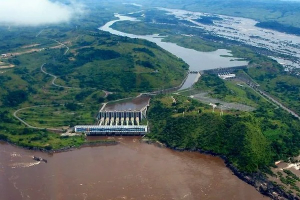
La République démocratique du Congo (RDC) et l’Afrique du Sud prévoient de relancer, en avril 2026, leurs discussions autour du projet hydroélectrique Inga 3, selon une communication du ministère congolais des Ressources hydrauliques et Électricité publiée le 12 mars. D’après ce texte, le ministre sud-africain de l’Électricité et de l’Énergie, Kgosientsho Ramokgopa, a confirmé une visite officielle en RDC afin de poursuivre les travaux liés au renouvellement et à l’actualisation des instruments de coopération énergétique autour du projet.
Un mémorandum d’entente politique existe déjà entre la RDC et l’Afrique du Sud. Il porte sur l’exportation de 2 500 MW, indique la Banque mondiale dans le document de projet d’Inga 3. L’institution précise également que les deux pays doivent poursuivre les discussions en vue de renouveler cet accord et de porter ces exportations à 5 000 MW.
La Banque mondiale souligne par ailleurs que le développement d’Inga 3 pourrait transformer la place de la RDC dans le commerce régional de l’électricité, en permettant au pays d’approvisionner non seulement son marché intérieur, mais aussi plusieurs bassins électriques africains, dont le SAPP, l’EAPP et le CAPP. Elle présente le projet comme un levier potentiel de revenus d’exportation, mais aussi comme un instrument de sécurisation de l’offre pour Kinshasa et pour le corridor industriel lié au site d’Inga.
Toujours selon la communication du ministère congolais, les autorités s’apprêtent également à signer un protocole d’accord avec l’ADPI afin de faire progresser la structuration du financement d’Inga 3 avec l’appui de la Banque mondiale. Le 2 février 2026 déjà, l’Agence française de développement (AFD) et l’Agence pour le développement et la promotion du projet Grand Inga (ADPI) ont signé à Kinshasa un protocole d’accord destiné à accompagner la préparation du projet.
À ce stade, Inga 3 reste un projet en préparation. La Banque mondiale rappelle que ses caractéristiques finales ne sont pas encore figées et que les options étudiées vont d’environ 3000 MW à 11 000 MW, pour un coût qui devrait dépasser 10 milliards de dollars. L’institution insiste sur la nécessité non seulement de préparer le projet, mais aussi de préparer le pays à ce projet, compte tenu de son ampleur institutionnelle, sociale, territoriale et financière.
C’est dans cette logique qu’a été mis en place le Programme de développement d’Inga 3 avec l'appui de la Banque mondiale. Structuré dans le cadre d’un financement pouvant atteindre 1 milliard de dollars, ce programme est déployé par étapes successives, dont la première tranche de 250 millions de dollars a été approuvée en juin 2025.
En attendant une décision d’investissement, les démarches en cours traduisent surtout une volonté de Kinshasa de réactiver les partenariats diplomatiques, techniques et financiers autour d’un projet qui demeure, pour les autorités congolaises, au cœur de la stratégie énergétique nationale.
Ronsard Luabeya
Lire aussi :
Inga III : l’AFD s’engage aux côtés de la Banque mondiale pour préparer la RDC au projet
Data centers, fintech, cloud… tenus d’obtenir un agrément avant le 30 juin 2026

La République démocratique du Congo se dote d’un nouveau cadre d’encadrement pour certaines activités et services numériques. Dans un arrêté signé le 11 mars 2026, le ministre de l’Économie numérique, Augustin Kibassa Maliba, fixe les conditions et modalités d’examen des demandes ainsi que de délivrance des autorisations pour les activités relevant du régime d’autorisation prévu par le Code du numérique.
Le texte accorde une période transitoire jusqu’au 30 juin 2026 afin de permettre aux acteurs concernés de se conformer aux nouvelles exigences. À compter du 1er juillet 2026, les dispositions de l’arrêté deviendront pleinement applicables.
L’arrêté ne vise pas indistinctement tous les opérateurs du numérique. Il s’applique aux activités et services expressément soumis à autorisation.
Sont notamment concernés les opérateurs construisant des centres de données ; les prestataires de services de confiance qualifiés, comme la signature électronique, le cachet électronique, l’horodatage, l’archivage électronique, la certification, l’authentification de sites internet, l’envoi recommandé électronique et la cryptologie ; les fournisseurs de services d’hébergement d’applications ; certaines grandes plateformes numériques, notamment les services cloud, les places de marché, les boutiques d’applications, les réseaux sociaux, les plateformes de partage de contenus, les plateformes de banque en ligne, les fintechs, les plateformes de mise en relation et les moteurs de recherche ; ainsi que les services numériques essentiels.
À titre transitoire, l’instruction des demandes d’autorisation est confiée à l’Autorité de régulation de la poste et des télécommunications du Congo (ARPTC). Celle-ci est chargée de vérifier la complétude et la conformité des dossiers, d’évaluer les capacités juridiques, techniques, organisationnelles et financières des demandeurs, puis d’émettre un avis à destination du ministre, qui conserve la décision finale.
Autorisation valable cinq ans
Pour obtenir l’autorisation, les requérants devront déposer un dossier comprenant notamment des éléments juridiques, fiscaux, techniques et administratifs, ainsi qu’une présentation détaillée des activités concernées et un business plan.
L’autorisation est délivrée pour une durée de cinq ans, avec possibilité de renouvellement. Elle n’exonère pas son titulaire du respect des autres obligations légales et réglementaires applicables.
Le texte prévoit également des sanctions administratives en cas de non-respect des obligations : amende, réduction de la durée de validité du titre, suspension ou retrait de l’autorisation. L’exercice d’une activité soumise à autorisation sans titre régulièrement délivré expose aussi aux sanctions prévues par la législation en vigueur.
Avec cet arrêté, le gouvernement cherche à opérationnaliser le Code du numérique et à encadrer plus strictement certains segments jugés sensibles ou stratégiques de l’économie numérique congolaise.
Boaz Kabeya
Cuivre de Butembo : des forages attendus à la mi-avril pour tester le potentiel du projet
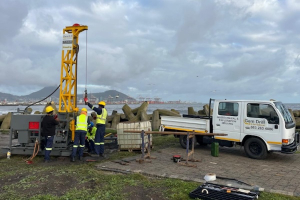
La société Copper Intelligence, anciennement African Discovery Group (AFDG), a annoncé le 3 mars 2026 l’acheminement d’une foreuse vers son projet cuprifère de Butembo, dans l’est de la République démocratique du Congo. L’opération est menée en partenariat avec l’entreprise sud-africaine Gemdrill et doit permettre le lancement d’une campagne de forage destinée à approfondir l’évaluation géologique du site.
Selon le calendrier communiqué par l’entreprise, et sous réserve d’éventuels retards liés notamment aux formalités douanières et à l’état des routes, les travaux de forage pourraient débuter à la mi-avril 2026. Les premières analyses préliminaires des carottes sont annoncées pour le début du mois de mai.
Copper Intelligence indique avoir mobilisé une foreuse de type XY-44. Selon les spécifications publiées par certains fabricants pour ce type d’équipement, ce modèle peut atteindre des profondeurs pouvant aller jusqu’à environ 1 000 mètres selon la configuration utilisée, le diamètre visé et les conditions du terrain. Cette capacité théorique pourrait permettre de tester la continuité du minerai en profondeur, mais les performances réelles dépendront du matériel exact déployé sur le site.
Les teneurs en cuivre avancées à ce stade reposent sur des résultats préliminaires publiés par la société en octobre 2025. Ces données proviennent de puits artisanaux et de travaux de première phase menés le long de la plaine inondable de la rivière Talihya, sur une longueur d’environ 500 mètres. L’entreprise avait alors indiqué des teneurs atteignant 18 % de cuivre sur un point et 16,3 % sur un autre. Elle précisait toutefois qu’il ne s’agissait ni d’une estimation de ressources ni de réserves, mais de résultats préliminaires issus d’échantillons de surface.
Dans ces conditions, ces teneurs ne permettent pas encore d’établir l’existence d’un gisement continu ou économiquement exploitable. La campagne de forage annoncée doit précisément servir à vérifier la continuité de la minéralisation en profondeur et à mieux caractériser le potentiel réel du projet.
La société met également en avant le positionnement géographique du site. D’après ses communications, le projet est situé à environ 33 kilomètres de la frontière entre la RDC et l’Ouganda, avec un accès potentiel au corridor est-africain menant vers le port de Mombasa, au Kenya. Cet argument logistique reste toutefois, à ce stade, un élément de présentation de l’entreprise, dans l’hypothèse où le projet franchirait ultérieurement les étapes de confirmation géologique et de développement.
Copper Intelligence est cotée sur OTC Markets, sur le segment OTC Pink, un compartiment qui n’impose pas les mêmes standards de cotation que les grandes places boursières américaines réglementées comme le NYSE ou le Nasdaq.
Timothée Manoke
Lire aussi :
Cuivre : Butembo entre dans le giron d’une société cotée aux États-Unis
DR Congo approves Chemaf takeover by Virtus Minerals
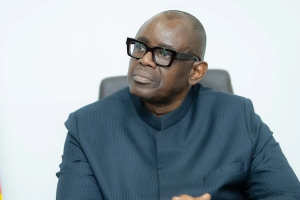
DRC approved the takeover of Chemaf (Chemical of Africa) by Virtus Minerals on March 13, Bankable learned from a source involved in the process. According to the source, the decision is contained in a letter from Mining Minister Louis Watum to Virtus CEO Phil Braun.
The approval is required under Congolese law for any formal transfer of mining assets. It clears the way for the finalization of a share transfer agreement signed in late January between Virtus and Zedra Skye Trustees, which represents nearly 95% of Chemaf's shareholders.
The decision was reached in consultation with Gécamines, which owns certain permits operated by the copper and cobalt producer. It also aligns with a strategic critical minerals partnership signed last December between the Democratic Republic of Congo and the United States. Implementation of that partnership is overseen by a coordination body that includes the mining minister and Gécamines leadership.
For the United States, engaged in a race to secure critical mineral supplies, Chemaf represents a near-turnkey asset. The company operates two active mines: Mutoshi, in Kolwezi, and Etoile, in Lubumbashi. Expansion projects at both sites are estimated to be at least 80% complete. An additional $300 million would be needed to complete the work. At full capacity, the two mines are expected to produce around 75,000 tonnes of copper cathodes and 25,000 tonnes of cobalt hydroxide per year.
In addition to permits leased from Gécamines, Chemaf holds around 60 titles, including about 30 exploitation permits across several provinces, according to the mining registry as of Sept. 30, 2025. The company carries close to $1 billion in debt.
Uncertainties
Washington is said to have backed Virtus to secure the asset. In recent months, several media outlets reported that officials from the National Security Council and the State Department applied diplomatic pressure on Congolese authorities in support of Virtus’s bid. That pressure appears to have overcome government reservations.
President Felix Tshisekedi had expressed doubts about Virtus’s financial and operational capacity to take over Chemaf, according to Africa Intelligence. The company, founded by former U.S. military personnel, has limited mining experience. In the DRC, it holds only a small metallurgical plant in Haut-Katanga, described by Africa Business+ as not comparable in scale to Chemaf’s operations.
Under the transfer agreement, Virtus would assume Chemaf’s debts and pay $30 million to shareholders. It also plans to hand over operations to Indian firm Lloyds Metals and Energy, which has limited experience in copper-cobalt projects, particularly in Africa. To finance the deal, Virtus has turned to New York-based Orion Resource Partners, which says it manages about $8.6 billion for institutional investors. No binding agreement has been signed to date.
The fate of Chemaf’s more than 3,000 direct employees and thousands of contractors remains unclear. In his letter, the mining minister is said to have noted only that the Congolese state and private Congolese interests should each hold a 10% stake in the company, in line with national legislation.
Kinshasa’s approval is a setback for Buenassa, a Congolese company that had hoped to acquire Chemaf to secure its raw material supply for more than 20 years. Buenassa, which is developing a refinery project, aimed to use the acquisition to accelerate vertical integration across extraction, refining, trading and strategic storage.
Pierre Mukoko
Rachat de Chemaf : Kinshasa donne son feu vert à l’offre de Virtus Minerals
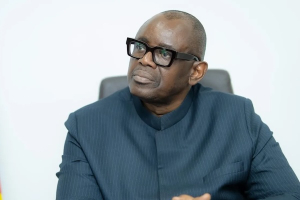
Après plusieurs mois de tractations, le gouvernement congolais a finalement donné, le 13 mars 2026, son approbation au rachat de Chemical of Africa (Chemaf) par Virtus Minerals, a appris Bankable auprès d’un acteur impliqué dans le processus. Selon notre source, cette décision est contenue dans un courrier du ministre des Mines, Louis Watum (photo), adressé au PDG de Virtus, Phil Braun.
Cet accord est indispensable, selon la législation congolaise, pour aboutir à une cession en bonne et due forme d’actifs miniers dans le pays. Il ouvre ainsi la voie à la finalisation du contrat de cession d’actions signé fin janvier entre Virtus et Zedra Skye Trustees, présenté comme le représentant de près de 95 % des actionnaires de Chemaf.
La décision du gouvernement aurait été prise en concertation avec la Gécamines, propriétaire de certains permis exploités par le producteur de cuivre et de cobalt. Il faut dire qu'elle s’inscrit dans le cadre du partenariat stratégique sur les minerais critiques, signé en décembre dernier entre la République démocratique du Congo (RDC) et les États-Unis. Sa mise en œuvre est supervisée par une cellule de coordination stratégique qui compte parmi ses membres le ministres des Mines et les dirigeants de la Gécamines.
Pour les États-Unis, engagés dans une course à la sécurisation de leurs approvisionnements en minerais critiques, Chemaf constitue un actif quasiment clé en main. L’entreprise possède deux mines déjà en exploitation : Mutoshi, à Kolwezi, et Étoile, à Lubumbashi. Les projets d’extension de ces deux sites seraient achevés à au moins 80 %. Un investissement de 300 millions de dollars serait encore nécessaire pour finaliser les travaux. À terme, ces deux mines devraient produire chaque année quelque 75 000 tonnes de cathodes de cuivre et 25 000 tonnes d’hydroxyde de cobalt.
En plus des permis amodiés par la Gécamines, Chemaf possède aussi, selon le registre minier dans sa situation arrêtée au 30 septembre 2025, une soixantaine de titres, dont une trentaine de permis d’exploitation répartis dans plusieurs provinces du pays. Seul hic : l’entreprise est endettée à près d’un milliard de dollars.
Incertitudes
Pour sécuriser cet actif, Washington aurait jeté son dévolu sur Virtus. Ces derniers mois, plusieurs médias ont rapporté que des responsables du National Security Council (lié à la Maison blanche) et du département d’État, soutenant la candidature de Virtus en vue de l’acquisition de Chemaf, exerçaient des pressions diplomatiques sur les autorités congolaises. Ces pressions américaines ont manifestement eu raison des réserves de l’exécutif congolais.
Selon Africa Intelligence, le président Félix Tshisekedi lui-même aurait exprimé des doutes quant à la capacité financière et opérationnelle de Virtus à reprendre Chemaf. L’entreprise, fondée par d’anciens membres de l’armée américaine, a peu d’expérience dans le secteur minier. En RDC, elle ne détiendrait, selon Africa Business+, qu’une petite usine métallurgique dans le Haut-Katanga, un actif jugé sans commune mesure avec les mines de cuivre et de cobalt exploitées par Chemaf.
Dans le contrat de cession, Virtus Minerals proposerait de reprendre les dettes de Chemaf et de verser 30 millions de dollars aux actionnaires. Elle prévoit aussi de confier l’exploitation à l’entreprise indienne Lloyds Metals and Energy, décrite comme « peu chevronnée sur les projets cuivre-cobalt, en particulier sur le continent africain ». Pour financer l’opération, Virtus s’est tournée vers le fonds d’investissement new-yorkais Orion Resource Partners, spécialisé dans les métaux et matériaux. Ce fonds affirme gérer environ 8,6 milliards de dollars pour des investisseurs institutionnels. Mais aucun accord contraignant n’aurait été signé à ce jour.
À ce stade, le sort que Virtus réserve aux plus de 3 000 employés directs de Chemaf ainsi qu’à ses milliers de sous-traitants reste par ailleurs inconnu. Dans sa correspondance à l’entreprise américaine, le ministre des Mines se serait contenté de rappeler que l’État et les privés congolais devraient chacun détenir une participation de 10 % du capital, conformément à la législation congolaise.
Avec le feu vert de Kinshasa à Virtus, les ambitions de Buenassa prennent un coup. Porteuse d’un projet de raffinerie, l’entreprise congolaise espérait acquérir Chemaf pour sécuriser ses approvisionnements en matières premières pendant plus de 20 ans et « accélérer l’intégration verticale : de l’extraction au raffinage, au négoce et au stockage stratégique ».
Pierre Mukoko
Lire aussi :
Chemaf : Buenassa dévoile une offre de 1,5 milliard $ avant le sommet de Washington
DR Congo tightens oversight of public bodies as it seeks to curb spending
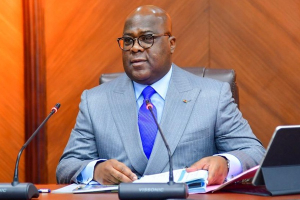
Democratic Republic of Congo President Félix Tshisekedi has ordered tighter oversight of the creation of public funds, commissions, cells and state institutions, in a bid to rationalize government spending.
At the 82nd Council of Ministers meeting on March 13, 2026, Tshisekedi said any new public body must receive prior approval from the prime minister, who will assess its relevance, strategic value and financial impact before a final decision.
According to the council’s communiqué, the measure aims to improve management of public resources and curb the proliferation of structures deemed ineffective or redundant. The review will identify entities with clear utility, those of limited relevance, and cases of overlapping mandates or institutional duplication.
A review process already underway
The decision builds on measures launched several months ago. At the 74th Council of Ministers meeting on Jan. 9, 2026, Tshisekedi stressed the need for stronger budget discipline, describing spending rationalization as an “immediate, credible and indispensable lever” to preserve macroeconomic stability.
He called for the elimination of non-priority or insufficiently justified expenditures and requested a progress report from the prime minister on measures already under way.
The directive dates back to the 42nd Council of Ministers meeting on May 2, 2025, when the government was instructed to identify recently created public bodies, assess their added value and consider dissolving or restructuring those deemed unproductive or a drain on the budget. The results have not yet been made public.
Pressure on public finances
The move comes amid continued pressure on public finances. The 2026 budget law, promulgated in late December 2025, was set at about $22 billion, up from an initial draft of $20.3 billion presented in September.
In this context, the executive is seeking to contain operating costs, limit the dispersion of budgetary resources and focus spending on priorities, notably security, reconstruction and infrastructure.
Through these measures, the government aims to use administrative rationalization as a tool to strengthen budget discipline and improve public governance.
Boaz Kabeya