





Equipe Publication
Importations de véhicules d’occasion : la RDC réduit le plafond d’âge à 15 ans
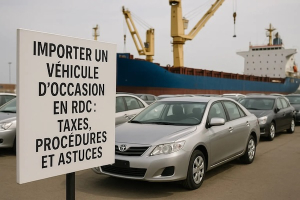
La République démocratique du Congo (RDC) s’est dotée d’un nouveau cadre réglementaire pour l’importation des véhicules d’occasion. Signé le 24 janvier 2026 par la Première ministre Judith Suminwa Tuluka, un décret fixe de nouvelles règles pour ce secteur et abroge les dispositions antérieures issues des décrets de 2012 et 2017.
Selon ce texte, l’âge maximal des véhicules importés est désormais limité à 15 ans pour plusieurs catégories, notamment les voitures particulières, les véhicules utilitaires, les poids lourds, ainsi que les ambulances, corbillards et camions-citernes. Seuls les tracteurs agricoles, forestiers et miniers peuvent être importés jusqu’à 20 ans d’âge. Ce resserrement marque un retour à un seuil plus strict, alors que le régime introduit en 2017 avait relevé la limite générale de 10 à 20 ans.
Le décret introduit également plusieurs exigences administratives et techniques. Tout véhicule importé doit être accompagné d’un certificat de contrôle technique délivré dans le pays de provenance et attestant de son état, de la carte grise ou du certificat d’immatriculation — ou d’une copie légalisée — ainsi que d’un acte de cession légalisé.
En cas de doute sur l’âge réel du véhicule ou sur son état technique, l’administration des douanes peut mandater un expert automobile agréé ou assermenté. Les frais de cette expertise sont à la charge de l’importateur. Les véhicules jugés non conformes peuvent faire l’objet soit d’une réexportation, soit d’une destruction, aux frais du transitaire ou du transporteur.
Le texte exclut de son champ d’application les véhicules de collection, définis comme des véhicules âgés d’au moins 30 ans, dont la production a cessé et qui sont conservés pour leur valeur historique, patrimoniale ou esthétique.
Le décret entre en vigueur à la date de sa signature. Il prévoit toutefois une période transitoire de six mois à compter de sa publication au Journal officiel, afin de permettre aux importateurs et aux opérateurs du secteur de se conformer aux nouvelles dispositions.
À travers cette réforme, le gouvernement entend à la fois renforcer la sécurité routière, réduire l’impact environnemental du parc automobile et moderniser la réglementation du commerce des véhicules d’occasion dans le pays.
Boaz Kabeya
Lire aussi :
Véhicules d’occasion : vers un durcissement des conditions d’importation en RDC
DR Congo considers strategic fuel reserve to cushion supply shocks
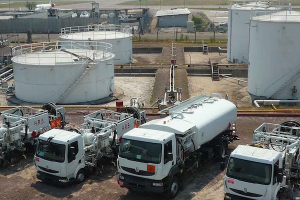
The Democratic Republic of Congo is considering building a strategic reserve of at least 50,000 tonnes of ground and aviation fuels to reduce the risk of supply disruptions, state broadcaster RTNC reported.
The option was discussed at a meeting chaired by Hydrocarbons Minister Acacia Bandubola Mbongo on March 9, 2026, amid heightened tensions on global oil markets.
The proposed reserve would cover only a small share of national demand. The DRC imports all of its refined petroleum products. According to the 2023 report from the Central Bank of The Congo, the country’s consumption stood at 2,804,698 cubic metres that year. Using standard conversion factors, that corresponds to roughly 2.3 to 2.4 million tonnes annually.
A 50,000-tonne reserve would therefore represent about 2% of yearly consumption, equivalent to only a few days of supply.
Recent demand trends suggest the gap could be even larger. After a pump-price reduction on Oct. 3, 2024, fuel demand at filling stations in Kinshasa tripled to about 4,500 cubic metres per day from 1,500 previously, according to the Ministry of National Economy.
RTNC did not say whether the planned reserve would come on top of existing legal requirements. According to the Hydrocarbons Ministry, the state is supposed to maintain minimum reserves equivalent to 60 days of consumption across different petroleum products. By the authorities' own admission, that target has not been met.
RTNC also reported that the government plans to make advance payments starting in early April to cover losses and foregone revenues from the first quarter of 2026, allowing oil companies to replenish fuel stocks. The downstream sector remains vulnerable to delays in compensation payments and cash-flow pressures.
The plan suggests authorities expect a reversal of the trend observed in 2025. The state said it recorded gains rather than losses in part of last year. It reported more than $22 million in the fourth quarter in the western zone, traditionally loss-making, and more than $44 million in the second quarter in the southern, eastern and northern zones, which are generally profitable.
Officials also discussed creating a mechanism to closely monitor developments in global oil markets, with stronger coordination between the Hydrocarbons Ministry and the Congo Central Bank to anticipate price swings and adjust pricing policies quickly.
Middle East tensions
The conflict involving the United States, Israel and Iran has disrupted energy markets. Fighting has forced production shutdowns and logistical disruptions in several Gulf countries, major hydrocarbon producers, affecting oil and gas exports from the Middle East.
The situation has been compounded by tensions around the Strait of Hormuz, a strategic chokepoint through which a large share of the world's oil and liquefied natural gas passes.
In a note published on March 10, 2026, UNCTAD said the strait handles around 20 million barrels per day, representing nearly 25% of global seaborne oil trade. The agency said the route is one of the world's main energy chokepoints and that recent disruptions have revived concerns about global supply.
The tensions have quickly pushed prices higher. Brent crude repeatedly rose above $100 a barrel and briefly approached $120 on March 9.
Pierre Mukoko & Boaz Kabeya
Carburants : la RDC envisage une réserve de 50 000 tonnes face aux tensions internationales
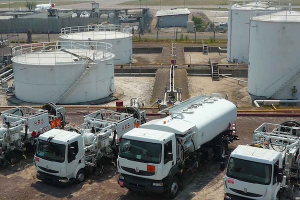
Le gouvernement congolais envisage la constitution d’un stock d’au moins 50 000 tonnes de carburants terrestres et d’aviation afin de limiter les risques de rupture d’approvisionnement, selon une information rapportée par la chaîne audiovisuelle publique RTNC. Cette option aurait été évoquée lors d’une réunion tenue le 9 mars 2026 autour de la ministre des Hydrocarbures, Acacia Bandubola Mbongo, dans un contexte de fortes tensions sur les marchés pétroliers internationaux. Les modalités de constitution de ce stock ne sont pas encore connues à ce stade.
Cette réserve apparaîtrait toutefois modeste au regard des besoins du pays, qui importe la totalité de sa consommation en produits pétroliers finis. Le rapport annuel 2023 de la Banque centrale du Congo indique une consommation de produits pétroliers de 2 804 698 m³ en 2023. Converti en tonnes selon les densités usuelles des produits, cet ordre de grandeur correspond à environ 2,3 à 2,4 millions de tonnes sur l’année. Un stock de 50 000 tonnes ne représenterait donc qu’environ 2 % de la consommation annuelle, soit seulement quelques jours de couverture.
Ces données sont, en outre, inférieures à la demande actuelle. Selon le ministère de l’Économie nationale, depuis la baisse des prix à la pompe intervenue le 3 octobre 2024, la demande en carburant dans les stations-service de la ville de Kinshasa a, par exemple, été multipliée par trois, atteignant 4 500 m³ par jour, contre 1 500 m³ auparavant.
La télévision publique n’indique pas s’il s’agit d’une mesure supplémentaire venant s’ajouter à ce qui est déjà prévu par le cadre légal. Le ministère des Hydrocarbures rappelle, dans sa présentation de l’aval pétrolier, que l’État doit constituer et maintenir un niveau minimal de stocks équivalant à 60 jours de consommation pour les différentes catégories de produits pétroliers. Cet objectif, de l’aveu même des autorités, n’est toujours pas respecté.
Selon les éléments relayés par la RTNC, le gouvernement prévoit également le paiement, dès début avril, des avances sur les pertes et manques à gagner du premier trimestre 2026 afin de permettre aux sociétés pétrolières de renouveler leurs stocks de carburants. Ce point s’inscrit dans un secteur aval toujours sensible aux retards de compensation et aux tensions de trésorerie.
Guerre contre l’Iran
Cela suppose que les autorités anticipent une inversion de la tendance observée en 2025. L’État a affirmé avoir enregistré des gains que de pertes sur une partie de l’année dernière : plus de 22 millions de dollars au quatrième trimestre pour la zone Ouest, « zone à pertes par nature », et plus de 44 millions de dollars au deuxième trimestre pour les zones Sud, Est et Nord, « zones à gains par nature ».
Au cours de la réunion, la mise en place d’un dispositif de suivi rapproché de l’évolution des marchés pétroliers internationaux a également été évoquée, avec une coordination renforcée entre le ministère des Hydrocarbures et la Banque centrale du Congo afin d’anticiper les fluctuations et d’adapter rapidement les politiques de prix.
La guerre menée par les États-Unis et Israël contre l’Iran a provoqué des perturbations sur les marchés énergétiques. Les combats ont entraîné des arrêts de production et des perturbations logistiques dans plusieurs pays du Golfe, grands producteurs d’hydrocarbures, affectant les exportations de pétrole et de gaz du Moyen-Orient. La situation a été aggravée par les tensions autour du détroit d’Ormuz, un passage stratégique par lequel transitent une grande partie de l’approvisionnement mondial en pétrole et en gaz naturel liquéfié.
Dans une note publiée le 10 mars 2026, la CNUCED rappelle que le détroit d’Ormuz assure le transit d’environ 20 millions de barils par jour, soit près de 25 % du commerce mondial de pétrole par voie maritime. Le document souligne que cette route constitue l’un des principaux goulets d’étranglement énergétiques de la planète et que les perturbations récentes y ont ravivé les craintes sur l’offre mondiale.
Les tensions ont aussitôt rejailli sur les prix. Le baril de Brent a plusieurs fois dépassé la barre des 100 dollars et a même frôlé les 120 dollars pendant un certain temps le 9 mars dernier.
Pierre Mukoko et Boaz Kabeya
Lire aussi :
Carburants : Acacia Bandubola dénonce une fraude douanière massive au Haut-Katanga
Carburants : les recettes fiscales bondissent de 1 700 % après la fin des exonérations minières
Carburants : la consommation augmente, les subventions plafonnent à 16 millions $
Kinshasa : la demande de carburant triple, accentuant la pression sur les finances publiques
DRC approves $7 mln poultry project with Egg's For Congo
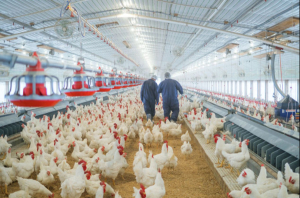
DR Congo's Ministry of Fisheries and Livestock approved an agreement with poultry company Egg's For Congo in February 2026 for the management and operation of a major poultry project in Kinshasa. According to a notice published by the ARMP, the project is valued at $7 million and will run for 10 years under a régie intéressée contract, a form of public service management arrangement.
Public documents link the agreement to a public-private partnership (PPP) project listed in the 2026–2028 Public Investment Program, titled "PPP Project for the Establishment of Parent Farms and Industrial Hatcheries in Kinshasa." A PPP refers to a collaboration in which a government partners with a private company to finance, build or operate a public project or service.
In that document, the private partner is also Egg's For Congo, the planned duration is 10 years, and the cost was still estimated at $11 million as of July 17, 2025, with a favorable opinion issued subject to the incorporation of observations and recommendations.
Documents reviewed indicate that both references concern the same project. However, the public documents do not explain with certainty why the total cost dropped from $11 million to $7 million between July 2025 and February 2026.
The contract is structured as a régie intéressée, a modality provided for under Congolese public procurement law. Under this type of contract, the government retains ownership and overall responsibility for the service but entrusts its management to an operator, which receives a fixed fee along with a share linked to the service's operating results.
Egg's For Congo describes itself, on its website, as a company active in the poultry sector in the Democratic Republic of Congo. According to information on that platform, the project was launched in 2014 by Jean-Pierre Mwipata, Didier Molisho and Hanno Kiezebrink, with the goal of promoting the development of the poultry sector in the country. The company says it is involved in the sale of SASSO chicks, the production and importation of poultry feed, the importation and distribution of veterinary medicines and poultry equipment, as well as technical and management training for farming operations. The company had not responded to requests for comment at the time of publication.
Drive to Revive the Poultry Sector
The deal comes against the backdrop of a broader effort to revive the poultry sector. On Oct. 18, 2024, the Council of Ministers approved a pilot program to restart poultry production in the DRC. The program is set to span eight production hubs across the country to structure poultry supply chains and create synergies between modern and smallholder poultry farming, with the stated aim of strengthening food security and sovereignty.
Separately, the DRC opened discussions with Chinese partners in March 2025 on a project to produce 5 million chicks per year. The plan would involve the annual importation of 50,000 parent breeding pairs, alongside technology transfers and training support for farmers. Those talks remain at the cooperation discussion stage and do not represent a program already under implementation.
The authorities' interest in poultry is driven by the country's persistent dependence on imports. According to data from the Central Bank of Congo, the national poultry flock was estimated at more than 18.9 million head in 2023, but domestic production remains insufficient to meet internal demand. According to Trade Map, imports of poultry meat rose from 122,964 tonnes in 2019 to more than 142,300 tonnes in 2023, while the associated import bill grew from $66.4 million to nearly $91 million over the same period.
In this context, the project validated with Egg's For Congo can be seen as one element of a broader strategy to strengthen the local supply of chicks and poultry inputs. At this stage, however, public documents do not provide a full operational timeline for the PPP, a detailed investment breakdown, or the specific observations made by the UC-PPP before issuing its favorable opinion.
Timothée Manoke
Kinshasa : un PPP de 7 millions $ pour mettre en place fermes parentales et couvoirs
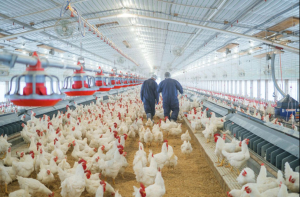
Le ministère de la Pêche et de l’Élevage a obtenu, en février 2026, l’approbation d’une convention conclue avec la société Egg’s For Congo pour la gestion et l’exploitation d’un projet avicole structurant dans la ville de Kinshasa. Publiée par l’ARMP, la fiche d’approbation indique un coût total de 7 millions de dollars, une durée de 10 ans et une contractualisation sous la forme d’une régie intéressée.
Les documents publics disponibles permettent de rapprocher cette convention d’un projet de PPP recensé dans le Programme d’investissement public 2026-2028, intitulé « Projet de PPP relatif à l’implantation des fermes parentales et de couvoirs industriels à Kinshasa ». Dans ce tableau, le partenaire privé est également Egg’s For Congo, la durée prévue est de dix ans et le coût y est encore estimé à 11 millions de dollars à la date du 17 juillet 2025, avec un avis favorable sous réserve de la prise en compte d’observations et de recommandations.
En l’état des documents consultés, il est donc possible d’affirmer qu’il s’agit du même projet. En revanche, les pièces publiques ne permettent pas d’expliquer avec certitude pourquoi le coût total est passé de 11 millions à 7 millions de dollars entre juillet 2025 et février 2026.
La convention prend la forme d’une régie intéressée, une modalité prévue par la loi congolaise sur les marchés publics. Ce type de contrat correspond à une formule dans laquelle l’autorité contractante confie la gestion d’un service public à une personne privée ou publique rémunérée par elle, tout en l’intéressant aux résultats d’exploitation du service.
La société Egg’s For Congo se présente, sur son site web, comme une entreprise active dans le secteur avicole en RDC. Selon les informations disponibles sur cette plateforme, le projet a été lancé en 2014 par Jean-Pierre Mwipata, Didier Molisho et Hanno Kiezebrink, avec pour objectif de promouvoir le développement de la filière avicole dans le pays. L’entreprise indique notamment intervenir dans la vente de poussins SASSO, la production et l’importation d’aliments pour volailles, l’importation et la distribution de médicaments et d’équipements avicoles, ainsi que dans la formation technique et la formation en gestion destinées aux unités d’élevage. Contactée afin d’obtenir davantage de précisions sur le PPP, la société n’avait pas encore donné suite à nos sollicitations.
Volonté de relance de la filière avicole
Cette opération s’inscrit dans un contexte plus large de relance de la filière avicole. Le 18 octobre 2024, le Conseil des ministres a approuvé un projet pilote de relance de la production avicole en RDC. Ce programme doit s’étendre sur huit pôles à travers le pays afin de structurer les filières avicoles et de créer des synergies entre aviculture moderne et aviculture paysanne, avec pour objectif affiché de renforcer la sécurité et la souveraineté alimentaires.
Dans la même dynamique, la RDC a engagé, en mars 2025, des discussions avec des partenaires chinois autour d’un projet visant à produire 5 millions de poussins par an. Ce schéma reposerait sur l’importation annuelle de 50 000 couples de reproducteurs parentaux, avec, en parallèle, un transfert de technologies et un appui à la formation des éleveurs. À ce stade, il s’agit toutefois de discussions de coopération, et non d’un programme déjà exécuté.
L’intérêt des autorités pour l’aviculture s’explique par la dépendance persistante du pays aux importations. Selon les données de la Banque centrale du Congo, le cheptel avicole national était estimé à plus de 18,9 millions de têtes en 2023, mais la production locale ne suffit pas à couvrir la demande intérieure. D’après la plateforme Trade Map, les importations de viande de volaille sont passées de 122 964 tonnes en 2019 à plus de 142 300 tonnes en 2023, tandis que la facture associée a augmenté de 66,4 millions de dollars à près de 91 millions de dollars sur la même période.
Dans ce contexte, le projet validé avec Egg’s For Congo peut être lu comme un maillon d’une stratégie plus large de renforcement de l’offre locale en poussins et en intrants avicoles. Mais, à ce stade, les documents publics consultés ne détaillent ni le calendrier opérationnel complet du PPP, ni les investissements poste par poste, ni les observations formulées par l’UC-PPP avant son avis favorable.
Timothée Manoke
Lire aussi :
Ferme présidentielle de la N’Sele : un investissement public de 19 millions $ prévus
Poulets, œufs et dérivés : un projet pilote de relance de la production en vue
Aviculture : vers un accord RDC-Chine pour produire 5 millions de poussins par an
Poulet : les importations de la RDC depuis l’UE devraient atteindre un record en 2024
Fire Hits Beni’s Mavivi Airport, Air Traffic Continues
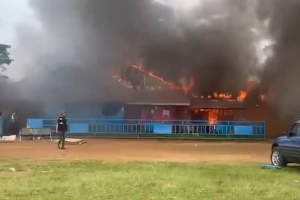
A fire broke out Tuesday morning at Beni Airport, commonly known as Mavivi, in North Kivu province in the Democratic Republic of Congo. The airport is currently undergoing upgrade work.
According to Radio Okapi, the blaze started in the kitchen of a restaurant inside the terminal building. The wooden structure was rapidly consumed by the flames.
The fire completely destroyed the building, which housed a passenger waiting area, check-in counters and administrative offices of the Civil Aviation Authority (RVA). North Kivu’s military governor, Evariste Somo Kakule, said the building had been constructed in 2010.
Major General Evariste Somo Kakule visited the site after the incident and said investigations were underway to determine the cause of the fire. He ruled out the possibility of an attack. The Beni area remains security-sensitive due to the presence of armed groups.
Fire response operations were led by teams from the United Nations Organization Stabilization Mission in the Democratic Republic of the Congo (MONUSCO), which deployed fire trucks in coordination with the Congolese National Police (PNC). Teams worked to prevent the fire from spreading to nearby installations, including parked aircraft and fuel depots.
Despite the damage, air traffic continued. According to local sources, passenger and baggage screening is now being carried out temporarily in the open air.
The incident comes as Mavivi Airport is undergoing a modernization project aimed at upgrading it to international status. The works were officially launched in December 2025 by Infrastructure and Public Works Minister John Banza. The project includes extending the runway to about 3,600 meters in length and 45 meters in width.
The project, being carried out by the company Services Vihumbira (SSV), aims to provide the region with modern airport infrastructure, improve connectivity and support the economic development of North Kivu.
Timothée Manoke
Beni : incendie à l’aéroport de Mavivi, le trafic maintenu malgré les dégâts
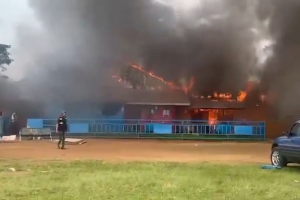
Selon des sources locales, un incendie s’est déclaré dans la matinée du 11 mars 2026 à l’aéroport de Beni, communément appelé Mavivi, dans la province du Nord-Kivu, alors que cette infrastructure fait actuellement l’objet de travaux de modernisation.
D’après les informations rapportées par Radio Okapi, le feu serait parti de la cuisine d’un restaurant installé dans le bâtiment servant d’aérogare. Entièrement construit en planches, l’édifice a rapidement été embrasé par les flammes.
Le sinistre a entièrement consumé cette structure en bois, qui servait de salle d’attente, de zone d’enregistrement des passagers ainsi que de bureaux administratifs de la Régie des voies aériennes (RVA). Selon le gouverneur militaire du Nord-Kivu, Évariste Somo Kakule, ce bâtiment avait été construit en 2010.
Le général-major Évariste Somo Kakule, qui s’est rendu sur place après l’incident, a indiqué que les enquêtes se poursuivent afin de déterminer les circonstances exactes de l’incendie. Il a toutefois écarté l’hypothèse d’une attaque. La zone de Beni reste en effet sécuritairement sensible en raison de la présence de groupes armés dans la région.
Les opérations d’intervention ont notamment été assurées par les équipes de la Mission de l’Organisation des Nations unies pour la stabilisation en République démocratique du Congo (MONUSCO), qui ont déployé des camions anti-incendie, en collaboration avec la Police nationale congolaise (PNC). Les équipes mobilisées ont notamment œuvré à empêcher la propagation des flammes vers d’autres installations sensibles, notamment les aéronefs stationnés et les dépôts de carburant.
Malgré les dégâts matériels, le trafic aérien a été maintenu. Selon des sources locales, les procédures de contrôle des passagers et des bagages se déroulent désormais provisoirement en plein air.
Cet incident intervient alors que l’aéroport de Mavivi fait l’objet d’un projet de modernisation visant à le transformer en aéroport international. Les travaux ont été officiellement lancés en décembre 2025 par le ministre des Infrastructures et Travaux publics, John Banza. Le projet prévoit notamment l’extension de la piste d’atterrissage à environ 3 600 mètres de long et 45 mètres de large.
Les travaux, réalisés par la société Services Vihumbira (SSV), doivent permettre de doter la région d’une infrastructure aérienne plus moderne, afin d’améliorer la connectivité et de soutenir le développement économique du Nord-Kivu.
Timothée Manoke
DRC integrates insurance into trade platform to curb evasion of import cargo premiums
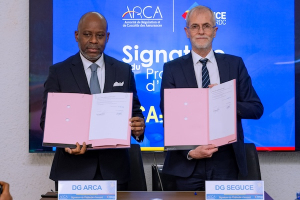
DR Congo’s insurance regulator and the operator of the country’s single-window trade platform signed an agreement on March 6 aimed at closing one of the biggest gaps in the Congolese insurance market: the widespread failure to insure imported goods.
The agreement between the Autorité de régulation et de contrôle des assurances (ARCA) and the Société d’exploitation du Guichet unique intégral du commerce extérieur (SEGUCE RDC) establishes a formal and secure data-sharing framework, strengthens coordination between relevant departments and integrates the insurance certificate into the digital documentation system for foreign trade, according to SEGUCE. The aim is twofold: to improve the traceability of import operations and to enforce insurance obligations under Congolese law.
For ARCA, the priority is ensuring that imported goods are covered by insurers licensed in the Democratic Republic of Congo, as required by the insurance code. Alain Kanyinda, director general of the regulatory authority, tied the move to the fight against premium evasion and to oversight of mandatory insurance, particularly coverage for import cargo. The objective, he indicated, is not merely to verify certificates but also to keep a portion of those premiums within the domestic insurance market.
The agreement builds on earlier work. In March 2023, ARCA and the DGDA customs authority had already formalized the interconnection between the national insurance certificate issuance system, known as SYNECA, and the Sydonia customs platform. That initiative was designed to tighten controls on mandatory insurance and prevent irregular certificates from being used in import operations. The deal with SEGUCE adds another layer to that architecture.
More than $60 million in annual premiums
Behind the regulatory logic lies a market ambition. The Congolese insurance sector, effectively liberalized since 2019, has grown from roughly $70 million to more than $350 million in 2024, according to ARCA. The regulator estimates it could surpass $1 billion within the next decade. But that trajectory depends largely on the ability to capture segments that remain poorly controlled, chief among them insurance on imports.
The ARCA-SEGUCE agreement is, in that context, an attempt to retain premiums within the domestic market. By fully embedding insurance within the digital documentation chain for foreign trade, the authorities are making it harder to use coverage purchased outside the licensed market in the DRC. For insurers operating in the Congolese market, the stakes are significant: import cargo flows represent a growth opportunity in a country where insurance penetration remains below 1% of GDP, despite what the regulator describes as substantial potential.
Using the $26.7 billion in goods imports recorded by the Banque centrale du Congo in 2024 as a baseline, insurance on import cargo potentially represents more than $60 million in annual premiums, and possibly above $100 million depending on the categories of goods and the rates applied by licensed insurers.
Whether the agreement delivers on that potential will depend on execution. The ARCA-DGDA experience shows that signing a protocol does not always produce immediate effects on the ground. The success of the SEGUCE deal will hinge on whether both institutions can make the data exchanges genuinely operational, ensure the validity of insurance certificates and integrate the requirement into importers’ procedures without friction.
Pierre Mukoko & Ronsard Luabeya
Assurance : derrière l’accord ARCA–SEGUCE, l’enjeu de plus de 60 millions $ de primes
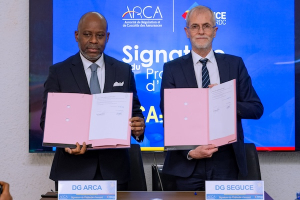
L’accord signé le 6 mars entre l’Autorité de régulation et de contrôle des assurances (ARCA) et la Société d’exploitation du Guichet unique intégral du commerce extérieur (SEGUCE RDC) dépasse le simple registre technique. En organisant l’échange de données sur l’assurance des marchandises importées, les deux institutions cherchent surtout à refermer l’une des principales brèches du marché congolais de l’assurance : l’évasion des primes liées aux importations.
Selon la communication de la SEGUCE, le protocole prévoit un dispositif formel et sécurisé d’échange d’informations, une coordination renforcée entre services techniques et l’intégration du certificat d’assurance dans la liasse documentaire dématérialisée du commerce extérieur. L’objectif affiché est double : améliorer la traçabilité des opérations d’importation et faire respecter les obligations d’assurance prévues par le cadre légal congolais.
Pour l’ARCA, l’enjeu est clair : s’assurer que les marchandises importées soient couvertes par des compagnies agréées en RDC, comme l’exige le Code des assurances. Alain Kanyinda, directeur général de l’autorité de régulation, lie cette démarche à la lutte contre l’évasion des primes et au contrôle des assurances obligatoires, notamment celle couvrant les facultés à l’importation. Autrement dit, il ne s’agit pas seulement de vérifier des certificats, mais aussi de retenir localement une partie des flux financiers qui échappaient encore au marché formel.
Cette stratégie s’inscrit dans un chantier plus ancien. En mars 2023, l’ARCA et la DGDA avaient déjà officialisé l’interconnexion entre le Système national d’émission de certificat d’assurance (SYNECA) et la plateforme douanière Sydonia. L’objectif était déjà de mieux contrôler les assurances obligatoires et d’empêcher l’usage de certificats irréguliers dans les opérations d’importation. L’accord avec la SEGUCE ajoute ainsi une brique supplémentaire à cette architecture.
Plus de 60 millions de dollars de primes par an
Derrière cette logique de contrôle, il y a une ambition de marché. D’après l’ARCA, le secteur congolais de l’assurance, libéralisé de fait depuis 2019, est passé d’environ 70 millions de dollars à plus de 350 millions de dollars en 2024. Le régulateur estime qu’il pourrait dépasser le milliard de dollars dans les dix prochaines années. Mais cette trajectoire dépend largement de la capacité à capter des segments encore mal maîtrisés, au premier rang desquels figure l’assurance des importations.
L’accord ARCA–SEGUCE apparaît, dans cette perspective, comme une opération de rétention locale des primes. En obligeant l’assurance à entrer pleinement dans la chaîne documentaire numérique du commerce extérieur, les autorités rendent plus difficile le recours à des couvertures souscrites hors du circuit agréé en RDC. Pour les assureurs établis sur le marché congolais, l’enjeu est important : les flux liés aux facultés à l’importation représentent un gisement de croissance dans un pays où le taux de pénétration de l’assurance reste encore inférieur à 1 % du PIB, malgré un potentiel jugé important par le régulateur.
En prenant comme base les 26,7 milliards de dollars d’importations de biens enregistrés par la Banque centrale du Congo en 2024, l’assurance des facultés à l’importation représente potentiellement plus de 60 millions de dollars de primes par an, voire au-delà de 100 millions de dollars selon les catégories de marchandises et les taux appliqués par les assureurs agréés.
L’issue de cette bataille reste toutefois conditionnée par l’exécution effective des interconnexions annoncées. L’expérience ARCA–DGDA montre que la signature d’un protocole ne suffit pas toujours à produire immédiatement des effets sur le terrain. La réussite de l’accord avec la SEGUCE dépendra donc de la capacité des deux institutions à rendre les échanges de données réellement opérationnels, à fiabiliser les certificats et à intégrer, sans friction, cette exigence dans les procédures des importateurs.
Pierre Mukoko et Ronsard Luabeya
Lire aussi :
Investissements : l’ANAPI et l’ARCA veulent faire de l’assurance un levier d’attractivité
Réforme des assurances : la RDC fait marche arrière, après l’adoption d’un projet de loi
RDC-Chine : une coopération se met en place contre l’évasion des primes d’assurance
DRC Tightens Oversight of Booming Gambling Sector Ahead of Reform
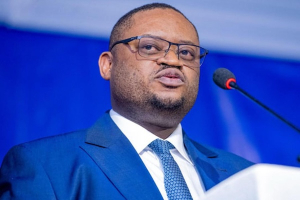
The Democratic Republic of Congo's Finance Ministry has given companies operating gambling businesses, including sports betting, lotteries, casinos and prediction games, until March 31, 2026 to bring their operations into compliance.
In a communique published on March 5, the ministry asked operators without a license to register with the Directorate of Financial Regulation or provincial finance divisions to obtain an official operating permit.
Operators who fail to comply face sanctions under current legislation. These include administrative penalties such as fines, tax adjustments, suspension of activity or forced closure, as well as criminal prosecution for unauthorized commercial activity or tax fraud.
The Finance Ministry also reminded operators of their obligation to pay the operating license tax and the ad valorem tax on players' winnings. The ministry derives this authority from Article 46 of the Dec. 10, 2023 finance law for fiscal year 2024, which transferred the collection of these taxes to the ministry. The taxes were originally established under a March 13, 2018 ordinance-law defining duties, taxes and levies collected by the central government.
$1.6 billion in revenue
The move highlights the challenge of capturing revenue from a fast-growing but still largely informal sector.
"The sector's contribution to the public treasury remains relatively low, even though studies indicate that the total revenue of companies operating in this field exceeded $1.6 billion in the last fiscal year," Finance Minister Doudou Fwamba said during a broadcast on Top Congo on Sept. 29, 2025.
The situation stems partly from the large number of informal operators. In 2023, during a Cabinet meeting, Fwamba's predecessor Nicolas Kazadi said 139 illegal operators had been active in 2022, with no data available on their revenues.
Tax receipts from the sector that year reached only one billion Congolese francs, a level considered very low relative to its actual potential.
Despite the deadline, the Finance Ministry's ability to act remains constrained by a fragmented regulatory framework.
"Although the sector already has a regulatory framework, it remains insufficiently modernized and inadequately digitized," Fwamba said in the radio interview.
A government diagnostic also identified the absence of a clear and unified regulatory framework and weak oversight, creating conditions that facilitate money laundering and other illicit financial activities.
Push for digitization
To address these weaknesses, the government has launched a reform of the sector. A bill laying out the fundamental principles for gambling was adopted in Cabinet on April 11, 2025 and transmitted to Parliament in June 2025.
The bill proposes an overhaul of the sector's governance and regulatory framework. Measures under consideration include the creation of a monitoring system to track operators' transactions in real time.
The reform would also expand digitization by requiring players to create accounts before participating in games. This measure would strengthen transaction traceability.
In parallel, the Ministry of Sports and Leisure signed a partnership in June with Burundian company East African General Trade Company to establish a centralized digital system to track bets and lotteries.
The system is designed to connect operator platforms and transmit real-time data on wagers and winnings to the state. The reform also includes plans for a sector-specific tax regime aimed at increasing public revenue collection.
Under current rules, winnings are taxed at 10% and the operating license tax is capped at $100,000 under a ministerial order dating from November 2019. Authorities also say the reform aims to strengthen efforts against money laundering and terrorist financing, risks regularly associated with gambling activities.
While the government's bill is under review in Parliament, National Assembly member Willy Mishiki Buhini introduced a separate bill in February 2026 also aimed at regulating gambling in the DRC. The lawmaker argued that the sector's rapid growth requires a stricter legal framework to protect players and ensure a greater fiscal contribution.
Pierre Mukoko & Boaz Kabeya