





Equipe Publication
Reprise des exportations de cobalt : la RDC débloque la dernière étape administrative
Les exportations de cobalt de la République démocratique du Congo (RDC) peuvent désormais reprendre. La note circulaire interministériel Mines/Finances fixant les dispositions pratiques relatives à l’exportation du cobalt a été rendu public ce 2 décembre 2025. Dans l’attente de ce document, les exportations n’avaient toujours pas redémarré, malgré la fin de l’embargo intervenue le 15 octobre.
Les compagnies minières s’impatientaient. « Je viens d’une réunion avec la Gécamines. On nous fait aujourd’hui comprendre que nous devons attendre un arrêté interministériel Mines/Finances. Quand est-ce que cet arrêté sera disponible ? Et c’est quoi le sous-bassement de cet arrêté ? », interrogeait, le 25 novembre, le directeur général adjoint de Tenke Fungurume Mining (TFM), John Woto, lors de la session mines du Forum Makutano.
En réponse, le ministre des Mines, Louis Watum Kabamba, avait indiqué qu’à sa connaissance, les exportations auraient dû reprendre lors de la semaine du 24 au 30 novembre. Selon lui, la seule raison qui retardait la reprise tenait à la mise à jour du manuel de procédures pour intégrer les nouvelles directives introduites par l’Autorité de régulation et de contrôle des marchés des substances minérales stratégiques (Arecoms), notamment le paiement anticipatif de certaines redevances.
« Il a fallu qu’on mette nos services ensemble (Mines, Finances…) pour intégrer toute cette nouvelle donne que l’ARECOMS a amenée… C’est cela qui a pris ce temps. La semaine dernière [lundi ou mardi], on a fait un test grandeur nature avec tous les services d’une exportation. Et à ma connaissance, les exportations devraient reprendre cette semaine », avait-il expliqué, promettant de veiller à la signature du texte codifiant la nouvelle procédure.
La note circulaire publiée ce jour a été signée le 26 novembre par le ministre des Mines. Selon un membre de la Chambre des mines de la Fédération des entreprises du Congo (FEC), c’est la signature du ministre des Finances qui était attendue.
Avec la publication du texte, les exportations de cobalt peuvent désormais reprendre. Toutefois, la première tonne ne devrait quitter le territoire que vers la fin du mois, la procédure d’exportation s’étendant sur plusieurs dizaines de jours.
Pierre Mukoko
Lire aussi :
Cobalt : la RDC attribue les quotas, CMOC capte la plus grosse part mais…
Cobalt : le système de quotas toujours incomplet à l’approche de son entrée en vigueur
Cobalt : la RDC fixe ses quotas d’exportation, le chinois CMOC sous pression
DR Congo Senate Advances First Major Land Reform in 50 Years
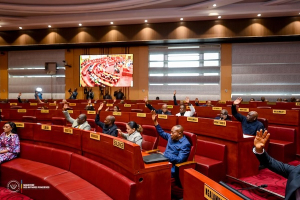
The Senate of the Democratic Republic of Congo on Nov. 28 accepted for consideration a land reform bill presented by the minister of land affairs, O’Neige N’Sele. The bill, adopted in a first government reading on Nov. 7, is the country’s first major reform in more than fifty years and seeks to secure land rights, modernize administration and end irregularities such as overlapping plots and unauthorized settlements.
The draft law introduces several significant changes. These include full digitization of the land registry, the abolition of acquisitive prescription, stronger protection of border areas, an end to payments in kind, the creation of a land price index, a reduction in no-cost land concessions and a national audit of unused land. It also requires mandatory mediation before legal disputes and strengthens civil and criminal liability for public officials.
Separately, DRC launched a pilot project for blockchain-based land management in June 2025 in partnership with local experts and the company Duna RWA. The system, built on the Solana blockchain, converts land titles into secure, traceable digital tokens to ensure document authenticity and protect sensitive citizen data. Property transfers are validated through official channels such as notaries or government authorities to prevent fraud and duplication.
Land management issues have also emerged in the Rocades de Kinshasa project, launched in June 2024 to ease congestion in the city center and support urban development. President Felix-Antoine Tshisekedi and the government had flagged risks of land disputes related to informal settlements and expropriations. They established a framework based on transparency, local consultation, compensation and mediation to guide implementation.
Boaz Kabeya
Bridge Collapse in Ituri Cuts Supply Route, Drives Up Prices
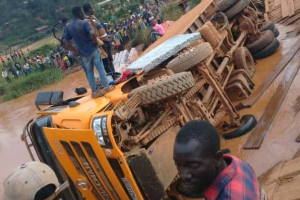
The Nizi bridge in Ituri province collapsed on Nov. 29, cutting a key supply route, local civil society groups said. The bridge deck gave way under a truck, which overturned, though the drivers were not injured.
Traffic on the Iga-Barrière-Mongwalu road in Djugu territory has been completely halted since the collapse. Dhino Gédéon, president of the Bahema Baguru civil society group, told local media that the blocked road now prevents access to an area that supplies surrounding villages. “People can no longer easily get basic necessities,” he said.
The impact is already visible. Provincial lawmaker Jean-Pierre Bikilisende said the severed link has pushed up prices for goods such as rice and fuel. Other staples are becoming more expensive, and some products are starting to disappear from markets.
Civil society groups also warned of security risks. Radio Okapi reported that the road closure is making it harder for the Congolese army (FARDC) to move through the area and could slow its response to incidents in an already unstable region.
They said the situation makes reopening the route urgent to restore supply lines and improve protection for civilians.
Boaz Kabeya
Mohamed Chérif Takes Over AfDB DRC Office With Mandate to Speed Up Projects
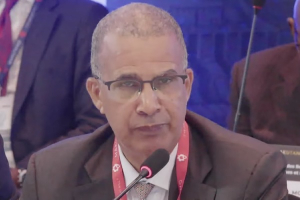
Mohamed Chérif is the new African Development Bank (AfDB) country manager for the Democratic Republic of Congo. Although the Bank has not yet formally announced his appointment, Chérif presented himself in the role at the Makutano Forum held in Kinshasa on Nov. 25-26.
Chérif said he arrived in the country in November 2025, taking over from Mohamed Coulibaly, who had been serving as interim manager.
The appointment comes as the AfDB seeks to speed up the execution of its project portfolio in the DRC. The Bank has previously described Chérif as an official who has “proven himself in managing and monitoring large and complex country portfolios.”
From Nov. 17-20, the AfDB and the Congolese government held a portfolio review in Kinshasa, which led to a joint plan to improve the performance of AfDB-funded projects. Chérif took part in the meetings in his prior role as the Bank’s deputy director general for Central Africa.
He said the AfDB’s commitments in DRC total $1.6 billion, with a disbursement rate of only 28 percent and an average project age of 5.6 years. According to media reports, the new country manager said all projects with a disbursement rate below 20 percent must reach 50 percent by June 2026.
The AfDB said the performance plan will focus on stronger project ownership by line ministries, digitizing implementation and reporting processes, and strengthening the capacity of project teams.
The Bank had previously organized a training workshop on disbursement procedures for the financial staff of all its project implementation units in DRC on May 26-27, 2025.
The Congolese government also stressed the need for better performance. Vice Minister of Finance Yamba Kazadi Gracia underlined the stakes, saying: “Every unused dollar represents a school not built, a road not rehabilitated, a health center not equipped. We have a moral and political duty to transform this financing into tangible results for our country’s development.”
Before coming to Kinshasa, Chérif held the same post in Senegal beginning Jan. 1, 2021. He holds postgraduate degrees in agricultural engineering from Morocco’s National School of Agriculture in Meknes, rural economics from Laval University in Quebec, and an MBA from the University of Ottawa.
Timothée Manoke
Foncier : un nouveau projet de loi pour sécuriser les terres et numériser le cadastre en RDC
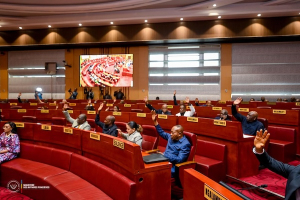
Le 28 novembre 2025, le Sénat de la République démocratique du Congo a déclaré recevable le projet de loi présenté par la ministre des Affaires foncières, O’Neige N’Sele, visant à modifier et compléter la loi n° 73-021 du 20 juillet 1973. Adopté en première lecture par le gouvernement le 7 novembre 2025, ce texte constitue la première réforme majeure en plus de cinquante ans et ambitionne de sécuriser les droits fonciers, moderniser l’administration et mettre fin aux irrégularités telles que les chevauchements de parcelles et les lotissements illicites.
Le projet introduit plusieurs mesures innovantes, notamment la numérisation intégrale du cadastre, la suppression de la prescription foncière, la protection des terres frontalières, la fin des paiements en nature, la mise en place d’une mercuriale foncière, la réduction des concessions gratuites et un audit national des terres non mises en valeur. Il prévoit également une conciliation préalable obligatoire avant tout litige, ainsi qu’un renforcement de la responsabilité civile et pénale des agents publics.
Parallèlement, la RDC a lancé en juin 2025 un projet pilote de gestion foncière basé sur la blockchain Solana, en collaboration avec des experts locaux et l’entreprise Duna RWA. Ce dispositif convertit les titres fonciers en jetons numériques sécurisés et traçables, garantissant l’authenticité des documents et la protection des données sensibles des citoyens. Les transferts de propriété sont validés via les mécanismes officiels — notaires ou administration — afin d’éviter les fraudes et les doublons.
Les défis de la gestion foncière apparaissent également dans le projet des Rocades de Kinshasa, lancé en juin 2024 pour désengorger le centre-ville et stimuler le développement urbain. Le Président de la République, Félix-Antoine Tshisekedi, et le Gouvernement avaient identifié les risques de conflits fonciers liés aux occupations informelles et aux expropriations, et avaient ainsi instauré un dispositif associant transparence, concertation locale, indemnisation et médiation pour encadrer sa mise en œuvre.
Boaz Kabeya
Lire aussi :
Un projet blockchain pour moderniser la gestion foncière en RDC
Foncier : de nouvelles règles rendent l’accès plus coûteux en zone urbaine en RDC
Cadastre foncier : après un PPP avec eProseed, l’État discute désormais avec Oxinus
Kinshasa : des mesures pour contenir les litiges fonciers autour des rocades
BAD : Mohamed Chérif nommé en RDC pour accélérer l’exécution des projets
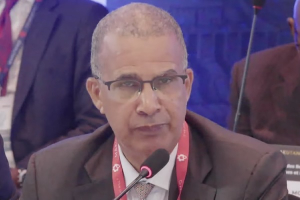
La Banque africaine de développement (BAD) n’a pas encore communiqué officiellement l’information. Mais lors du Forum Makutano, tenu du 25 au 26 novembre 2025 à Kinshasa, le Mauritanien Mohamed Chérif s’est présenté comme le nouveau directeur pays de la BAD en République démocratique du Congo (RDC). Il a indiqué être arrivé dans le pays au cours du mois de novembre 2025. Il remplace Mohamed Coulibaly, qui assurait l’intérim.
Cette arrivée intervient alors que la BAD cherche à accélérer l’exécution de son portefeuille en RDC. Présenté par la banque comme quelqu’un qui a « fait ses preuves dans la gestion et le suivi de portefeuilles de pays importants et complexes », la nomination de Mohamed Chérif s’inscrit clairement dans cette dynamique.
Du 17 au 20 novembre 2025, la BAD et le gouvernement congolais ont tenu à Kinshasa une revue de portefeuille au terme de laquelle un plan commun d’amélioration de la performance des projets financés par l’institution a été adopté. Mohamed Chérif y a participé en tant que directeur général adjoint du groupe de la BAD pour l’Afrique centrale.
Selon lui, les engagements actuels de la BAD en RDC atteignent 1,6 milliard de dollars, avec un taux de décaissement de seulement 28 % pour un âge moyen de 5,6 ans. D’après les médias ayant couvert les assises, le nouveau directeur pays a annoncé que tous les projets affichant un taux de décaissement inférieur à 20 % devront atteindre 50 % d’ici juin 2026.
Plan d’accélération
Pour corriger les retards, la communication officielle de la BAD indique que le plan mettra l’accent sur une appropriation renforcée des projets par les ministères sectoriels, la digitalisation des processus de mise en œuvre et de rapportage, ainsi que le renforcement des capacités des équipes chargées de l’exécution.
Dans la même logique, la BAD avait déjà organisé, les 26 et 27 mai 2025 à Kinshasa, un atelier de renforcement des capacités sur les procédures de décaissement destiné au personnel financier des cellules d’exécution de l’ensemble de ses projets en RDC. L’objectif était de réduire significativement les délais de traitement des factures, de faire chuter le taux de rejet des demandes de paiement et d’améliorer la qualité des dossiers transmis à la Banque.
Le gouvernement congolais a également insisté sur l’importance d’une meilleure performance. La vice-ministre des Finances, Yamba Kazadi Gracia, a rappelé l’enjeu national : « Chaque dollar non utilisé représente une école non construite, une route non réhabilitée, un centre de santé non équipé. Nous avons le devoir moral et politique de transformer ces financements en résultats tangibles pour le développement de notre pays. »
Avant son arrivée à Kinshasa, Mohamed Chérif occupait le même poste au Sénégal depuis le 1ᵉʳ janvier 2021. Il est titulaire de trois diplômes postuniversitaires : un diplôme d’ingénieur en agriculture de l’École nationale d’agriculture de Meknès (Maroc), un master en économie rurale de l’Université Laval au Québec et un MBA de l’Université d’Ottawa, au Canada.
Timothée Manoke.
Ituri : l’effondrement du pont Nizi paralyse le trafic et l’approvisionnement
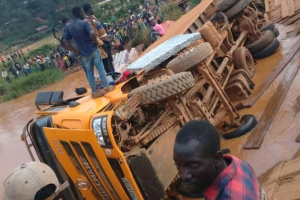
Le 29 novembre 2025, le pont Nizi, reliant l’axe Iga-Barrière–Mongwalu dans le territoire de Djugu (Ituri), s’est effondré. L’annonce a été faite par des acteurs de la société civile locale : le tablier aurait cédé sous le passage d’un camion. Le véhicule s’est renversé, mais les chauffeurs en sont sortis indemnes. Depuis, la circulation sur cet axe est totalement interrompue.
« La route coupée empêche désormais l’accès à une zone essentielle pour l’alimentation des villages environnants. Les habitants ne peuvent plus se ravitailler facilement en denrées de première nécessité », a déclaré le président de la société civile des Bahema Baguru, Dhino Gédéon, cité par la presse.
Les effets se font déjà sentir. Selon Jean-Pierre Bikilisende, député provincial, la rupture de l’axe Iga-Barrière–Mongbwalu provoque une flambée des prix de certains biens. Le riz, le carburant et d’autres denrées de base deviennent plus chers, tandis que certains produits se raréfient sur les marchés. Pour les populations riveraines, cela se traduit par un coût de la vie plus élevé et des difficultés d’accès aux biens essentiels.
La société civile alerte également sur les implications sécuritaires. Comme le rapporte Radio Okapi, la coupure de l’axe complique désormais la mobilité des FARDC et pourrait ralentir leurs interventions en cas d’incident dans cette zone déjà instable. Cette contrainte renforce l’urgence de rétablir la route afin d’assurer à la fois l’approvisionnement et la protection des populations.
Boaz Kabeya
Gécamines Looks to Replicate Morocco’s OCP Model to Enter Battery-Chemical Sector
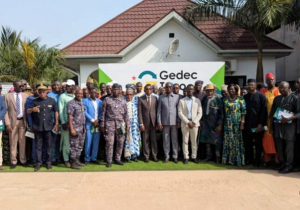
Guy-Robert Lukama, who has chaired the board of Gécamines since February 2023, is advancing an ambitious strategy for the state-owned mining company. He presented the plan at the African Investment Forum in Rabat, Morocco, held from November 26 to 28, where he discussed issues related to critical minerals.
Lukama said the company no longer intends to depend solely on its mineral reserves. His goal is to guide Gécamines through a major strategic shift, moving from simple extraction to chemical processing. He said the group is learning from past missteps and looking at successful models, particularly Morocco’s phosphate industry.
“That is why we are studying other models and examining how they transformed their business, moving from producing phosphates to producing fertilizers. That is the model we want to follow,” he said.
Lukama, who began working with Gécamines in 2018 as an independent consultant, wants to draw lessons from the example of Morocco’s OCP Group to reposition Congo’s cobalt industry. The strategy, which is already being put into practice, aims to produce battery precursor materials instead of exporting cobalt hydroxide.
Projects in the Pipeline
Lukama’s strategy aligns with government priorities. According to Minister of Mines Louis Watum Kabamba, the current extractive model captures less than seven percent of the value in the value chain that runs from the mine to the finished electric vehicle. “This model does not work,” Watum said during a roundtable discussion at the Makutano forum on November 25.
In line with this goal of moving up the value chain, Lukama announced three projects in preparation with a combined capacity of roughly 40,000 tons. He did not provide additional details. The current focus is identifying partners willing to invest in the new transformation approach. Watum noted that Gécamines still holds important assets, including significant mineral reserves and deep knowledge of local geology.
The Democratic Republic of Congo also intends to use Special Economic Zones to attract investors for local mineral processing. These zones provide fiscal, administrative, infrastructure and logistical incentives. A zone dedicated to battery precursor materials, batteries and eventually electric vehicle assembly using local raw materials was launched in March. In late 2024, Morocco, which is already present in the Congolese mining sector through Managem’s Pumpi copper and cobalt mine, was invited to join the project during a meeting organized by the UN Economic Commission for Africa.
Industrial Decline Poses Challenges
Watum said Gécamines is meant to operate as a mining company rather than simply as a holding entity. However, this ambition conflicts with the company’s current industrial condition. According to its 2024 activity report, Gécamines is in decline. It produced no cobalt of its own in either 2023 or 2024 and only 8,065 tons of copper. Its plants are idle, and the company relies heavily on toll processing, private partners and slag retreatment. It does not yet have the infrastructure, technical expertise or workforce needed to run a chemical-processing industry on an international scale.
Lukama acknowledged these constraints. “When we talk about batteries, it is becoming less a matter of mining or metallurgical engineering and more a matter of chemical engineering,” he said.
To address the skills gap, the former banker supports an approach that combines expertise from the Congolese diaspora with that of long-serving local teams. He also emphasized the need to strike the right balance so that employees who remained in the country do not feel left behind compared with returning professionals.
George Auréole Bamba & Pierre Mukoko
Gécamines : Lukama vise une intégration à la marocaine, de l’extraction à la chimie
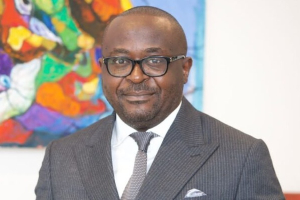
À la tête du conseil d’administration de la Générale des carrières et des mines (Gécamines) depuis février 2023, Guy-Robert Lukama porte une vision ambitieuse pour l’entreprise publique. Il l’a présentée lors de l’African Investment Forum (AIF), organisé à Rabat, au Maroc, du 26 au 28 novembre 2025 par la Banque africaine de développement (BAD), où il était invité à débattre des enjeux liés aux minerais critiques.
Selon le président du conseil d’administration (PCA), le géant congolais ne souhaite plus se contenter de ses rentes géologiques. Il entend opérer un pivot stratégique majeur : passer de l’extraction à la chimie, en tirant les leçons du passé et en s’inspirant de la réussite de la filière phosphate marocaine. « C'est la raison pour laquelle on regarde les modèles des autres : comment ils ont transformé leur activité, passant de producteur de phosphates à producteur d'engrais. C'est ce cheminement que nous essayons de copier », explique Guy-Robert Lukama.
Celui qui a commencé à travailler avec la Gécamines en 2018 comme consultant indépendant en transformation veut notamment s’appuyer sur la trajectoire du groupe marocain OCP pour réorienter la filière cobalt congolaise. La stratégie, « en cours de mise en place », vise à produire non plus de l’hydroxyde de cobalt, mais des précurseurs de batteries.
Projets dans le pipe
La vision du PCA s’inscrit dans la ligne des autorités du pays. « Quand nous regardons le continuum de création de valeur, de la mine jusqu’à la voiture électrique, nous ne captons que moins de 7 % de cette valeur dans le modèle actuel (industrie extractive). C’est un modèle qui ne marche pas », a déclaré le ministre des Mines, Louis Watum Kabamba. Il intervenait lors de la table ronde « De la richesse du sous-sol à la souveraineté industrielle », organisée le 25 novembre au forum Makutano.
Dans cette perspective, le PCA a annoncé l’existence de « trois projets dans le pipe », représentant à eux trois une capacité d’environ 40 000 tonnes, sans davantage de précisions. Il s’agit désormais d’identifier des partenaires prêts à s’engager dans cette nouvelle logique de transformation. Pour Louis Watum, la Gécamines conserve des atouts majeurs : un patrimoine minéral important, une connaissance fine de l’environnement et du sous-sol.
La RDC mise également sur les Zones économiques spéciales (ZES) pour attirer les investisseurs dans la transformation locale. Ces espaces offrent des facilités fiscales, administratives, infrastructurelles et logistiques. L’aménagement d’une ZES dédiée aux précurseurs de batteries, aux batteries et potentiellement à l’assemblage de véhicules électriques à partir des matières premières locales a été lancé en mars dernier. Fin 2024, le Maroc — déjà présent dans le secteur via Managem, qui exploite la mine de Pumpi (cuivre et cobalt) dans le Lualaba — avait été invité à rejoindre ce projet lors d’une réunion organisée par la Commission économique pour l’Afrique (CEA).
Entreprise en déclin industriel
Pour le ministre, la Gécamines a d’ailleurs vocation à être un opérateur minier plutôt qu’une simple entreprise de participation. Mais les ambitions se heurtent à la réalité industrielle. Le rapport d’activité 2024 de la Gécamines décrit une entreprise en déclin : zéro tonne de cobalt produite en propre en 2023 et 2024, seulement 8 065 tonnes de cuivre, des usines à l’arrêt, une dépendance massive au traitement à façon, aux partenaires et aux scories. L’entreprise ne dispose donc pas, à ce stade, des infrastructures, des compétences ni du capital humain nécessaires pour opérer une industrie chimique de niveau international.
Guy-Robert Lukama en a conscience : « Quand on parle de batterie… c'est de moins en moins des ingénieurs miniers ou métallurgistes, c'est de plus en plus des ingénieurs chimistes ». Pour combler ce déficit, l’ancien banquier se montre favorable à une articulation entre l’expertise de la diaspora et celle des équipes locales historiques. Il reconnaît toutefois la nécessité de « gérer les équilibres » afin d’éviter que les collaborateurs restés au pays ne se sentent « sacrifiés » face au retour de talents venus de l’étranger.
George Auréole Bamba et Pierre Mukoko
Lire aussi :
Mine de Kalukundi : la Gécamines porte sa participation à 49 % grâce à l’accord avec ERG
Minerais stratégiques : comment la Gécamines reprend progressivement la main
Véhicules électriques : la RDC lance l’aménagement de sa zone économique spéciale
Véhicules électriques : le Maroc invité à rejoindre l’initiative RDC-Zambie
DRC Water Utility Plans 15MW Solar Plant to Ease Mbuji-Mayi Water Shortages
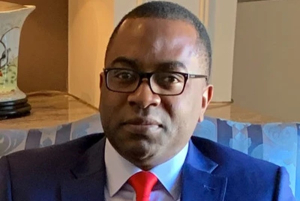
REGIDESO will build a 15 MW solar plant to ease Mbuji-Mayi’s water shortages, its director general said at the Makutano forum on November 26, adding that work begins in January 2026.
He was responding to a resident who said she receives water only once a week. He explained that the project aims to fix power supply shortfalls that regularly disrupt the city’s water distribution.
REGIDESO currently depends on electricity from the national utility SNEL, which itself relies on power from the Tubi-Tubidi hydroelectric plant owned by the mining company SACIM. Frequent failures at the plant cause repeated outages that prevent uninterrupted drinking water supply. This persists even though Mbuji-Mayi’s 500 km pipeline network, considered one of the most modern in the country, is in good condition.
The utility says it has generators, but current tariffs do not cover their sustained operation. “The tariff is lower than production costs. We have raised this with the government for more than three years. We cannot produce water at $1.15 per cubic meter and sell it to households for 0.25 cents,” Tshilumba said.
He added that technical assessments for the photovoltaic plant are complete and that the project will be financed by German cooperation. Radio Okapi earlier reported that Germany had announced an initial 8 MW solar project for REGIDESO in 2022 to reduce its dependence on SNEL. The increase to 15 MW may reflect updated demand estimates, with Tshilumba saying the city now needs between 12 and 13 MW for normal service.
REGIDESO also plans to replicate this self-generation model in other provinces through its subsidiary RégiEnergies, created between 2023 and 2024. Its mission is to supply electricity in areas where SNEL’s service is insufficient or absent, particularly in remote regions. The move revives part of REGIDESO’s historical mandate. When the utility was created in 1939, it handled both water and electricity distribution until the government transferred the electricity portfolio to SNEL in 1978.
Timothée Manoke