





Equipe Publication
Gécamines : Baraka Kabemba à l’épreuve du partenariat RDC–États-Unis

Près de trois semaines après la première réunion du Comité de pilotage conjoint (CPC) du partenariat stratégique entre la République démocratique du Congo (RDC) et les États-Unis, tenue à Washington le 5 février dernier, le président Félix Tshisekedi a nommé Baraka Kabemba directeur général de la Générale des carrières et des mines (Gécamines). Cette nomination place l’expert-comptable au centre des enjeux liés à la mise en œuvre de ce partenariat, signé le 4 décembre 2025. Un accord auquel il a contribué en tant que membre de la cellule de coordination stratégique chargée du suivi des négociations et de la mise en œuvre, mise en place en mai 2025.
Baraka Kabemba, qui promet « un engagement total », le sait : détenteur de plusieurs permis miniers et actionnaire de plusieurs coentreprises minières en production, la Gécamines est appelée à jouer un rôle clé dans la matérialisation de cet accord, axé notamment sur les minerais critiques. Le texte prévoit notamment que « la RDC et ses entreprises publiques utiliseront leurs droits de commercialisation (fondés sur leurs participations et accords) afin de donner accès à des contrats d’enlèvement (offtake) et d’approvisionner le marché américain », en offrant aux acteurs américains ou à leurs alliés « un droit de première offre ».
Selon les calculs du cabinet Innogence Consulting, les participations de la Gécamines lui donneraient potentiellement la capacité d’orienter vers les États-Unis, dès cette année, 250 000 tonnes de cuivre, 12 000 tonnes de cobalt et 100 000 tonnes de zinc. Un chantier sur lequel l’entreprise est engagée depuis plusieurs mois et que devra poursuivre la nouvelle direction.
Gouvernance
La société a déjà conclu plusieurs accords lui garantissant la commercialisation d’une partie de la production de ses coentreprises. Elle travaille, en partenariat avec le négociant de matières premières Mercuria, à la mise en place d’une filiale dédiée au trading de minerais. Une initiative qui a suscité l’intérêt de l’agence publique américaine de financement du développement, la U.S. International Development Finance Corporation (DFC).
L’accord attend aussi des entreprises publiques un effort de lisibilité accru en matière de gouvernance et de participations. Il prévoit par exemple un examen de la « propriété effective et de la structure de direction » des entreprises publiques minières et demande que la RDC s’efforce de fournir des informations générales sur les participations des entreprises publiques dans les projets miniers.
En clair, au-delà des volumes, la Gécamines est attendue sur un second chantier : rendre ses structures et ses positions au capital plus transparentes et plus attractives pour les investisseurs liés au partenariat stratégique. Les entreprises américaines intéressées à investir dans le secteur minier congolais pourraient, en effet, être amenées à constituer des coentreprises avec la Gécamines.
Dans la liste initiale de 25 actifs présentés à ces investisseurs, la Gécamines compte plusieurs mines, dont celle de Mutoshi, exploitée par Chemaf. Endetté, ce producteur de cuivre et de cobalt est en vente depuis 2023, mais le processus peine à aboutir. L’ex-président du conseil d’administration de la Gécamines, Guy Robert Lukama, n’a pas caché son intérêt pour cette compagnie. Selon Bloomberg, son idée aurait été de la revendre en ne conservant qu’une participation maximale de 25 %.
Produit du big 4
Une autre entreprise congolaise, Buenassa, propose plutôt d’en faire un levier « d’accélérer l’intégration verticale : de l’extraction au raffinage, au négoce et au stockage stratégique », en intégrant cet actif à son projet de construction d’une raffinerie. Une proposition à laquelle Guy Robert Lukama aurait accordé peu d’attention. Avec le changement de direction, la position de la Gécamines sur ce dossier est scrutée.
Une chose est cependant certaine : le profil de Baraka Kabemba est de nature à rassurer les investisseurs. Ingénieur commercial, option gestion financière, diplômé de l’ICHEC à Bruxelles, il est également expert-comptable agréé et cumule plus de 22 ans d’expérience en audit et conseil, acquise au sein de grands cabinets internationaux. Il a commencé sa carrière chez PricewaterhouseCoopers (PwC) en Belgique en septembre 2001, avant de rejoindre Ernst & Young (EY) en octobre 2012, où il a gravi les échelons jusqu’à devenir, en septembre 2021, associé en charge des activités de conseil en Afrique centrale (CEMAC + RDC). EY a par ailleurs conseillé la Gécamines à plusieurs reprises.
Mais, hier comme aujourd’hui, la gestion de la plus grande entreprise minière du pays ne requiert pas seulement des compétences techniques. Elle appelle aussi un doigté politique. Pour plusieurs observateurs, cet aspect devrait davantage relever de Deogratias Ngele Masudi, nommé le même jour président du conseil d’administration de la Gécamines. Ancien secrétaire général de l’entreprise jusqu’en 2021 et ex-ministre de la Justice, il connaît bien la maison.
Pour donner un nouveau souffle à la Gécamines — que le ministre des Mines, Louis Watum Kabamba, dit vouloir voir évoluer vers un opérateur minier plutôt qu’une simple société de participations — le défi sera de trouver le bon équilibre entre enjeux techniques et politiques, notamment en matière de gouvernance.
Pierre Mukoko et Ronsard Luabeya
Lire aussi :
Trading des minerais : deux accords avec Glencore renforcent la position de Gécamines
Minerais critiques : Project Vault, une opportunité en milliards $ pour Gécamines Trading
Cuivre de TFM : Gécamines veut orienter 100 000 tonnes vers les États-Unis en 2026
Ventes des minerais critiques : vers une coentreprise Gécamines-Mercuria-DFC
U.S. imposes sanctions on Rwandan military, officials over eastern DRC conflict
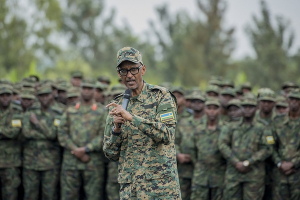
The U.S. Department of the Treasury on Monday imposed sanctions on the Rwanda Defence Force (RDF) and four senior military officials, accusing them of supporting the March 23 Movement (M23) rebel group in eastern Democratic Republic of Congo.
The sanctions were announced by the Treasury’s Office of Foreign Assets Control (OFAC) as part of U.S. measures targeting those Washington says are undermining peace and stability in eastern Congo.
The Treasury said the Rwandan army provides direct military, logistical and technological support to M23, a rebel group under U.S. sanctions since 2013 and also subject to United Nations sanctions. It said the support had enabled M23 offensives and helped the group consolidate control in several parts of eastern Congo, including Goma and Bukavu, as well as Rubaya, a strategic mining hub.
U.S. authorities cited the deployment of advanced military equipment, including GPS jamming systems, air defence equipment and drones, and said Rwandan troops were present on the ground.
The Treasury said the operations were linked to serious human rights abuses committed by M23, including summary executions and violence against civilians.
The sanctions come after the Dec. 4, 2025 signing in Washington of the Washington Accords for Peace and Prosperity between Congo and Rwanda under U.S. mediation. The United States views continued offensives as inconsistent with commitments made under that agreement, according to the Associated Press.
In addition to the RDF, the Treasury designated four senior officers: Vincent Nyakarundi, identified as army chief of staff; Ruki Karusisi, a major general; Mubarakh Muganga, chief of defence staff; and Stanislas Gashugi, described as a special forces commander.
Under the sanctions, all property and interests in property of the designated individuals and entities in the United States or in the possession or control of U.S. persons are blocked. U.S. persons are generally prohibited from engaging in transactions with them, and entities owned 50% or more by designated persons are also subject to the measures.
The Treasury said financial institutions and other businesses, including non-U.S. entities, could face sanctions if they engage in or facilitate transactions that violate or evade the restrictions. It said the measures are intended to change behaviour and that removal from the sanctions list is possible if conditions are met.
Rwanda’s government condemned the sanctions as “unjust” and accused Washington of taking a biased view of the conflict.
Boaz Kabeya
Conflit à l’est de la RDC : Washington sanctionne l’armée rwandaise pour son soutien au M23
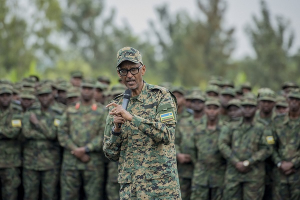
Le département du Trésor des États-Unis a annoncé, le 2 mars 2026, une nouvelle série de sanctions visant les Rwanda Defence Force (RDF) et quatre hauts responsables militaires. La décision, prise par l’Office of Foreign Assets Control (OFAC), s’inscrit dans le cadre des mesures américaines contre les acteurs accusés de menacer la paix et la stabilité dans l’est de la République démocratique du Congo (RDC).
Selon le Trésor américain, l’armée rwandaise apporterait un appui direct au Mouvement du 23 mars (M23), un groupe armé déjà sanctionné par les États-Unis depuis 2013 et également visé par des sanctions onusiennes. Washington affirme que ce soutien — militaire, logistique et technologique — a contribué aux offensives du M23 et à sa consolidation sur plusieurs zones de l’est congolais, dont Goma, Bukavu et Rubaya, présenté par le Trésor comme un hub minier stratégique.
Les autorités américaines évoquent le déploiement d’équipements militaires avancés — dont des capacités de brouillage GPS, des moyens de défense aérienne et des drones — ainsi que la présence de soldats rwandais sur le terrain.
Le Trésor américain estime que ces opérations ont été associées à de graves violations des droits humains attribuées au M23, notamment des exécutions sommaires et des violences contre des civils.
Ces sanctions interviennent après la signature, le 4 décembre 2025, des Washington Accords for Peace and Prosperity entre la RDC et le Rwanda, sous médiation américaine. Selon l’Associated Press, les États-Unis considèrent que la poursuite des offensives constitue une remise en cause des engagements pris dans ce cadre.
Outre l’institution militaire, quatre officiers supérieurs sont sanctionnés individuellement : Vincent Nyakarundi (chef d’état-major de l’armée), Ruki Karusisi (major général), Mubarakh Muganga (chef d’état-major des forces de défense) et Stanislas Gashugi (commandant des forces spéciales).
Concrètement, tous les biens et intérêts détenus par les personnes et entités sanctionnées aux États-Unis — ou sous contrôle de ressortissants américains — sont gelés. Toute transaction impliquant ces acteurs est interdite, sauf dérogation accordée par l’OFAC. Les entités détenues à 50 % ou plus par des personnes désignées sont également concernées.
Le Trésor rappelle que les institutions financières et les entreprises, y compris non américaines, s’exposent à des sanctions en cas de violation ou de contournement des mesures. Washington précise toutefois que l’objectif n’est pas punitif mais vise un changement de comportement, une radiation demeurant possible sous conditions. Kigali a dénoncé des sanctions qu’il juge « injustes » et accusant une lecture biaisée du conflit.
Boaz Kabeya
Lire aussi :
Conflit à l’est : après Uvira, le risque d’un glissement vers le sud minier se précise
Sanctions américaines : le minier congolais CDMC dénonce un complot
Conflit à l’est de la RDC : Washington sanctionne des responsables rwandais et du M23
Trafic de coltan en RDC : un rapport de l’ONU met en cause le Rwanda
DRC Creates Joint Panel to Reinforce Environmental Monitoring in Mining Sector
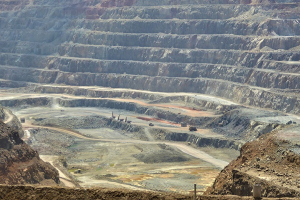
The Democratic Republic of Congo (DRC) has announced tighter environmental oversight of its mining sector. Minutes from the Feb. 27, 2026 Council of Ministers meeting show that the environment and mines ministers have been instructed to set up a joint expert task force. The body will propose measures to improve coordination and ensure consistent enforcement across oversight agencies.
The initiative aims to address deficiencies identified during recent inspections and strengthen environmental monitoring. Teams deployed to Lualaba and Haut-Katanga reported serious compliance failures at several companies, as well as systemic weaknesses in oversight structures, including shortcomings within technical departments responsible for supervision.
The move forms part of commitments made by the DRC to the International Monetary Fund (IMF) under the Resilience and Sustainability Facility (RSF) of its three-year programme launched in 2025. An IMF report published in January 2026 said the government must reinforce environmental and social safeguards in the mining sector to better manage its impact on forests and vulnerable communities. Planned reforms include strengthening the legal framework, publishing environmental and social impact assessments, and conducting ex-post environmental audits of mining projects.
On Jan. 30, the Ministry of Mines asked companies to submit proof of financial guarantees covering environmental rehabilitation by Feb. 16, 2026. That deadline has now passed, and it remains unclear whether all affected companies have complied.
Boaz Kabeya
Mines : une commission mixte pour renforcer le contrôle environnemental
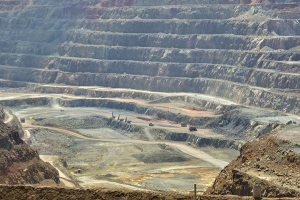
En République démocratique du Congo (RDC), un dispositif renforcé de contrôle des normes environnementales est annoncé dans le secteur minier. Selon le compte rendu du Conseil des ministres du 27 février 2026, les ministres de l’Environnement et des Mines ont été chargés de constituer « une commission mixte composée de leurs experts afin de proposer dans les meilleurs délais un dispositif plus efficace susceptible de renforcer la synergie et d’assurer la cohérence des actions menées par les différents mécanismes de contrôle ».
Le compte rendu précise que cette initiative vise à corriger les manquements constatés sur le terrain et à améliorer la surveillance environnementale. Des équipes dépêchées récemment dans le Lualaba et le Haut-Katanga ont relevé des « manquements graves » au sein de plusieurs entreprises, ainsi que des dysfonctionnements « structurels » dans les dispositifs de contrôle, engageant la responsabilité des services techniques impliqués dans la chaîne de supervision.
Cette démarche s’inscrit dans le cadre des engagements pris par la RDC auprès du Fonds monétaire international (FMI), au titre de la Facilité pour la résilience et la durabilité (FRD) de son programme triennal débuté en 2025. Le rapport du FMI publié en janvier 2026 indique que le gouvernement doit « renforcer les garanties environnementales et sociales dans le secteur minier afin de gérer activement son impact sur les forêts et les populations les plus vulnérables ». Parmi les mesures prévues figurent le renforcement du cadre juridique, la publication des études d’impact environnemental et social, ainsi que la réalisation d’audits environnementaux ex post des projets miniers.
Le 30 janvier dernier, le ministère des Mines avait demandé aux sociétés minières de transmettre, au plus tard le 16 février 2026, les preuves de constitution des garanties financières destinées à la réhabilitation environnementale de leurs projets. Cette échéance est désormais expirée, sans que l’on sache à ce stade si l’ensemble des entreprises concernées s’est conformé à cette obligation.
Boaz Kabeya
Lire aussi :
Réhabilitation des sites miniers : Kinshasa exige les preuves des garanties financières
AfDB allocates $49.6 mln to DRC under $257 mln Ubangi basin program
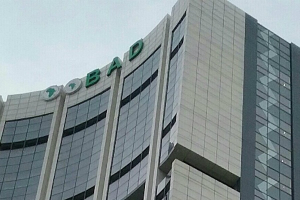
The Congolese government has approved the launch of the Regional Program to Support Infrastructure Development and Transboundary Water Resources Management (PREDIRE) with the Central African Republic.
Rural Development Minister Grégoire Mutshail Mutomb announced the decision at the Council of Ministers on Feb. 27. The program was officially launched on Feb. 17 at a ceremony chaired by Prime Minister Judith Suminwa Tuluka.
Funded by the African Development Bank (AfDB), the project allocates $49.6 million to the Democratic Republic of Congo out of a total budget of $257 million for both countries. It will run for five years.
The program targets Nord-Ubangi, Sud-Ubangi and Mongala provinces in northwestern DRC. It aims to upgrade socio-economic infrastructure, strengthen community resilience and promote integrated water resource management in the Ubangi transboundary basin. About 500,000 rural households are expected to benefit. The minister urged local stakeholders to take ownership of the program during implementation.
The project includes construction of a water treatment plant in Gbadolite with a capacity of 2,000 cubic meters per hour, along with a supply and distribution network and related facilities to support REGIDESO. Solar-powered drinking water systems will be installed in several localities in Nord-Ubangi, including Mobaye Mbongo, Bige Nord, Fiwa, Kota-Koli, Yakoma, Abuzi and Wapinda. Additional infrastructure is planned in Mongala province.
The program also includes technical studies for transferring water from the Ubangi River to develop irrigated agricultural areas in the targeted provinces.
The AfDB began procurement procedures in February 2026 for works, equipment and consulting services required to implement the project’s components.
Ronsard Luabeya
BAD : 49,6 millions $ pour les infrastructures dans les Ubangi et la Mongala
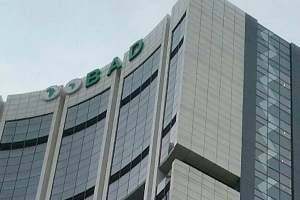
Le gouvernement congolais a acté le démarrage du Programme régional d’appui au développement des infrastructures et de valorisation des ressources en eau transfrontalière (PREDIRE) entre la République démocratique du Congo (RDC) et la République centrafricaine (RCA). L’annonce a été faite lors du Conseil des ministres du 27 février 2026 par le ministre du Développement rural, Grégoire Mutshail Mutomb.
Le lancement officiel du programme est intervenu le 17 février dernier, au cours d’une cérémonie présidée par la Première ministre Judith Suminwa Tuluka. Financé par la Banque africaine de développement (BAD), le projet bénéficie d’une enveloppe de 49,6 millions de dollars pour la RDC, sur un coût total estimé à 257 millions de dollars pour les deux pays partenaires. La durée d’exécution est prévue sur cinq ans.
Le lancement officiel du programme est intervenu le 17 février dernier, au cours d’une cérémonie présidée par la Première ministre Judith Suminwa Tuluka. Financé par la Banque africaine de développement (BAD), le projet bénéficie d’une enveloppe de 49,6 millions de dollars pour la RDC, sur un coût total estimé à 257 millions de dollars pour les deux pays partenaires. La durée d’exécution est prévue sur cinq ans.
Le programme couvre les provinces du Nord-Ubangi, du Sud-Ubangi et de la Mongala, dans le nord-ouest du pays. Il vise à améliorer les infrastructures socio-économiques, à renforcer la résilience des populations et à promouvoir une gestion intégrée des ressources en eau dans le bassin transfrontalier de l’Oubangui. Selon le ministre, environ 500 000 ménages ruraux sont concernés par les interventions prévues. Il a appelé à « l’appropriation des actions liées à la mise en œuvre du programme ».
Sur le plan opérationnel, le projet prévoit la construction d’une station de traitement d’eau à Gbadolite, d’une capacité de 2 000 m³ par heure, assortie d’un réseau d’adduction et de distribution ainsi que d’infrastructures connexes au profit de la REGIDESO. Des systèmes d’approvisionnement en eau potable alimentés à l’énergie solaire seront installés dans plusieurs localités du Nord-Ubangi, notamment Mobaye Mbongo, Bige Nord, Fiwa, Kota-Koli, Yakoma, Abuzi et Wapinda. D’autres infrastructures sont également prévues dans la province de la Mongala.
Le projet inclut en outre des études techniques pour le transfert d’eau du fleuve Oubangui en vue du développement de périmètres hydroagricoles dans les provinces concernées. Dans le cadre de la mise en œuvre, la BAD a engagé depuis février 2026 les procédures de passation des marchés portant sur les travaux, les fournitures d’équipements et les services de consultants nécessaires à l’exécution des différentes composantes du programme.
Ronsard Luabeya
Lire aussi :
Eau potable : fontaines et réseaux annoncés dans la Mongala et les Ubangi
DRC, CEMAC central bank deepen cooperation on payments, oversight
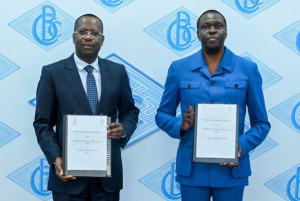
The Central Bank of the Congo (BCC) and the Bank of Central African States (BEAC) signed a cooperation agreement on Feb. 28, 2026, in Kinshasa. The signing took place on the sidelines of the Central Africa sub-regional committee meetings of the Association of African Central Banks (AACB).
The agreement aims to “strengthen cooperation in banking regulation, payment systems, anti-money laundering and counter-terrorist financing, cybersecurity, financial inclusion and monetary stability,” BEAC Governor Yvon Sana Bangui said.
BEAC is the common central bank for the six CEMAC countries: Cameroon, Congo, Gabon, Equatorial Guinea, the Central African Republic and Chad. These countries share the Central African CFA franc. The Democratic Republic of the Congo (DRC) uses its own currency, the Congolese franc, and is not a member of this monetary union, but maintains significant trade and financial ties with several countries in the bloc.
“This protocol marks a further step toward deeper monetary and financial integration in the sub-region,” the BCC said, without providing details. Bilateral agreements of this kind typically shift cooperation from a continental coordination framework to more operational arrangements, such as designated contact points, structured information-sharing and technical projects that can be implemented more quickly.
On the prudential front, the text opens the door to greater information-sharing between supervisors and closer alignment of risk management practices. As international compliance standards tighten and correspondent banks increase scrutiny, such coordination could reduce the risk of regulatory fragmentation.
The payment systems component has strategic implications. In recent years, BEAC has been modernizing payment infrastructure within CEMAC. Closer cooperation with the BCC could eventually facilitate cross-border payment interoperability, as many transactions are still routed through correspondents outside the sub-region, often at high cost and with delays. For commercial banks exposed to DRC–CEMAC flows, more efficient regional clearing would improve cost and processing efficiency.
Common practice
Anti-money laundering and counter-terrorist financing are another key area. The DRC is among jurisdictions under increased monitoring by the Financial Action Task Force (FATF), as is Cameroon in the Feb. 13, 2026 update. In this context, stronger information-sharing and alignment of practices could help reassure correspondent banks and investors, reducing the risk that transactions are delayed, rejected or made more expensive due to compliance concerns.
In cybersecurity, the cooperation comes as digital threats targeting financial infrastructure intensify. Harmonized standards, shared alerts and coordinated incident response are becoming core elements of financial stability.
Finally, the protocol refers to financial inclusion and monetary stability. In the DRC, where dollarization remains high and authorities are seeking to strengthen the use of the Congolese franc, exchanges with BEAC could help shape thinking on policy tools to modernize financial services and reinforce macro-financial stability.
Such memorandums of understanding are common across Africa. Central banks regularly use them to set out terms for technical cooperation and capacity-building. For now, the BCC-BEAC agreement remains a broad framework. Its impact will depend on how it is implemented, including the timeline, priority projects, monitoring mechanisms and measurable outcomes.
Pierre Mukoko
Paiements et conformité : ce que le protocole d’accord BCC–BEAC peut changer
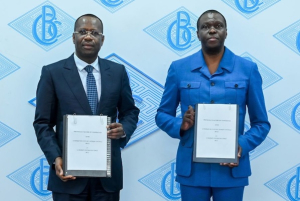
La Banque centrale du Congo (BCC) et la Banque des États de l’Afrique centrale (BEAC) ont signé, le 28 février 2026 à Kinshasa, un protocole d’accord de coopération, en marge des travaux du Comité sous-régional Afrique centrale de l’Association des banques centrales africaines (ABCA). L’objectif affiché est de « renforcer la coopération en matière de régulation bancaire, systèmes de paiement, lutte contre le blanchiment des capitaux et le financement du terrorisme, cybersécurité, inclusion financière et stabilité monétaire », indique le gouverneur de la BEAC, Yvon Sana Bangui.
La BEAC est l’institution d’émission commune aux six pays de la CEMAC (Cameroun, Congo, Gabon, Guinée équatoriale, République centrafricaine et Tchad), un espace monétaire partageant le franc CFA d’Afrique centrale. La RDC, qui dispose de sa propre monnaie — le franc congolais — n’appartient pas à cette union monétaire, mais entretient d’importants flux commerciaux et financiers avec plusieurs pays de la zone.
« Ce protocole marque une étape supplémentaire vers une intégration monétaire et financière plus approfondie au sein de la sous-région », soutient la BCC, sans en préciser les modalités. Un accord bilatéral de ce type permet généralement de passer d’un cadre continental de coordination à des dispositifs plus opérationnels (points focaux, échanges d’informations, chantiers techniques), plus rapidement activables.
Sur le volet prudentiel, le texte ouvre la voie à un renforcement des échanges entre superviseurs et à un rapprochement des pratiques en matière de gestion des risques. Dans un contexte de durcissement des exigences internationales de conformité et de vigilance accrue des banques correspondantes, cette coordination peut contribuer à limiter les risques de fragmentation réglementaire.
Le volet « systèmes de paiement » revêt une dimension stratégique. La BEAC a engagé ces dernières années une modernisation de ses infrastructures de paiement au sein de la CEMAC. Une coopération accrue avec la BCC pourrait, à terme, faciliter l’interopérabilité des paiements transfrontaliers, aujourd’hui souvent routés via des correspondants hors de la sous-région, avec des coûts et des délais élevés. Pour les banques commerciales exposées aux flux RDC–CEMAC, toute amélioration de la compensation régionale représenterait un levier d’efficacité.
Pratique courante
La lutte contre le blanchiment des capitaux et le financement du terrorisme constitue un autre enjeu clé. La RDC figure parmi les juridictions « sous surveillance » du GAFI, tout comme le Cameroun dans la mise à jour du 13 février 2026. Dans ce contexte, un renforcement des échanges d’informations et des pratiques peut contribuer à rassurer les banques correspondantes et les investisseurs, et à réduire le risque que certaines transactions soient retardées, refusées ou renchéries faute de confiance.
En matière de cybersécurité, la coopération annoncée intervient alors que les risques numériques visant les infrastructures financières se multiplient. L’harmonisation des standards, l’échange d’alertes et la coordination en cas d’incident deviennent des éléments centraux de la stabilité financière.
Enfin, le protocole mentionne l’inclusion financière et la stabilité monétaire. Pour la RDC, où la dollarisation demeure élevée et où les autorités monétaires cherchent à renforcer l’usage du franc congolais, l’échange d’expériences avec la BEAC peut nourrir la réflexion sur certains instruments de modernisation des services financiers et, plus largement, sur la stabilité.
De tels protocoles d’accord sont, au demeurant, une pratique courante sur le continent : plusieurs banques centrales africaines en signent régulièrement pour cadrer la coopération technique et le renforcement de capacités. En l’état, le document signé entre la BCC et la BEAC reste un cadre général. Son impact dépendra de sa déclinaison opérationnelle : calendrier d’actions, chantiers prioritaires, mécanismes de suivi et résultats mesurables.
Pierre Mukoko
Lire aussi :
Change : la BCC s’apprête à lancer Bloomberg FXGO pour structurer le marché interbancaire
Stabilisation du franc congolais : ce que peut apporter une réserve d’or
Banques : la BCC veut durcir les plans de prévention et gestion des crises d’ici juin 2026
BCC : nouvelle baisse des taux, un test de confiance pour le franc congolais
Rural electrification: U.S. firm Cybastion expands its footprint in the DRC
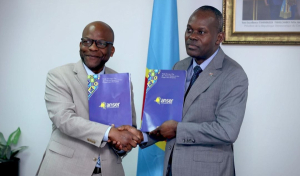
The National Rural and Peri-urban Electrification and Energy Services Agency (ANSER) announced on February 27, 2026, that it had signed a memorandum of understanding with U.S.-based Cybastion Institute LLC. The agreement falls under the energy pillar of the strategic partnership between the Democratic Republic of Congo and the United States.
Previously introduced in the DRC as a provider of digital and cybersecurity solutions, Cybastion is now taking on a different role. In a press release, the company is described as “an international firm specializing in the engineering and structuring of energy projects.” The agreement launches a strategic partnership to develop rural electrification projects in the DRC.
The memorandum sets out a framework for technical and operational cooperation covering project design, financial structuring, and implementation. The projects will focus on solar energy in rural and peri-urban areas. The agreement runs for an initial 24 months and may be renewed. Projects will be rolled out in successive phases, approved jointly by the two parties.
These phases will include technical, environmental and social studies, financing structuring, and preparation of execution contracts. The stated goal is to strengthen national power generation capacity and support socio-economic development in the targeted areas.
Under the partnership, Cybastion will conduct pre-feasibility and feasibility studies, develop fixed-price technical and commercial proposals, and help secure international financing. This may involve export credit agencies and leading international financial institutions.
ANSER will identify priority projects, coordinate with institutions, and facilitate the administrative procedures required to implement the investments.
The press release adds that the memorandum is a first step toward negotiating and concluding a financing agreement between a U.S. commercial bank and the DRC Ministry of Finance.
The move represents a significant shift for Cybastion in the DRC. The company is already active in the country through a five-year program with the Ministry of Youth to train 250,000 young people in digital skills, in partnership with Cisco. The program covers networking, cybersecurity, data science, programming, operating systems, technical English and entrepreneurship.
With the agreement signed with ANSER, Cybastion is broadening its footprint in the DRC to include energy infrastructure. It is positioning itself not as a power operator, but as a technical and financial structuring partner for rural electrification projects.
Ronsard Luabeya