






News (946)
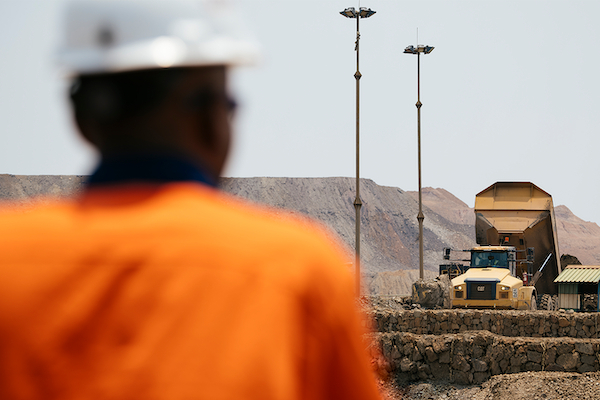
Glencore and the Orion Critical Mineral Consortium (Orion CMC) are signaling plans for closer coordination in the Democratic Republic of Congo (DRC) that go beyond the recently announced capital deal. Orion CMC was established in October 2025 to help supply critical minerals to the United States and its allies.
In a joint statement released Feb. 3, 2026, the two parties said they will also explore opportunities to expand and extend the life of the Mutanda Mining (Mumi) and Kamoto Copper Company (KCC) copper and cobalt mines. These assets are currently valued at about $9 billion, including debt.
Details have not been disclosed at this stage. Potential investments could aim to accelerate production or extend the mining concessions. In its 2025 resources and reserves report published Jan. 29, the Anglo-Swiss group put ore reserves at 107 million tonnes for MUMI and 137 million tonnes for KCC.
The mines are estimated to operate for 22 years in the case of MUMI, until 2047, and 18 years for KCC, until 2043. Current permits expire in 2037 and 2039, respectively. The review is reportedly being conducted alongside the Congolese government and the state-owned company Gécamines, a long-standing partner within KCC.
The statement also mentioned the study of potential acquisitions of additional mining projects and assets in the DRC and more broadly across the African Copperbelt. The wording suggests the possibility of a joint development platform, although no target assets, timelines, or investment budgets have been specified so far.
Proposed stake sale
The announcement follows a non-binding memorandum of understanding on Orion CMC’s proposed purchase of 40% of Glencore’s interests in MUMI and KCC. Glencore currently holds 95% of MUMI, with the state holding 5%, and 70% of KCC, with Gécamines holding 30%.
If completed, the transaction would bring in a third major shareholder. Orion CMC, a consortium led by Orion Resource Partners and backed by the U.S. International Development Finance Corporation (DFC), would hold 38% of MUMI and 28% of KCC. Glencore’s stakes would fall to 57% and 42%, respectively.
The statement said Glencore, as the majority shareholder of both mines, would retain operational control. Orion CMC would have limited governance rights, including the appointment of non-executive directors.
The consortium would also be responsible for marketing its share of output to designated buyers. This would take place within the framework of the strategic partnership on critical minerals signed between the United States and the DRC on Dec. 4 in Washington.
The arrangement reflects a clear division of roles. Glencore remains the industrial operator in the DRC, while Orion CMC provides capital, sales channels, and U.S. institutional backing, particularly through the DFC. On this basis, the two groups are discussing possible joint action, with each party operating on a distinct but coordinated segment of the value chain.
Institutional interest
According to Glencore’s 2025 production report, the Mutanda and KCC mines provided the group with 247.8 thousand tonnes of copper metal and 33.5 thousand tonnes of cobalt in 2025. Based on a 40% share of Glencore’s interests, the maximum portion likely to be marketed by Orion CMC would be about 100 thousand tonnes of copper and 13.4 thousand tonnes of cobalt. However, exports of cobalt remain constrained by quotas introduced by the Congolese government in October 2025.
In light of the strategic agreement between the DRC and the United States on critical minerals, the partnership also carries institutional value for Glencore. The group has operated in the DRC in an often tense environment marked by tax disputes and governance controversies. The entry of a U.S.-backed partner reshapes the dynamics.
On one hand, it brings American political and institutional support into strategic assets, which may help rebalance relations with the Congolese state. On the other, the presence of the DFC implies stricter requirements for compliance, transparency, and traceability. These factors could strengthen the credibility of the arrangement with tax and regulatory authorities.
Unknowns
The separation of roles, with Glencore handling operations and Orion CMC marketing its share, may also improve the clarity of sales flows. This is relevant in a context where transfer pricing and mining taxation remain sensitive issues in the DRC.
Despite these broad plans, the statement remains cautious. Terms such as “will examine” and “will consider” indicate that the parties are still at an early, exploratory stage. The transaction remains subject to audits, final contractual agreements, and regulatory approvals.
No public information yet details specific financial commitments regarding employment, local subcontracting, or an investment program. Similarly, any potential consequences of this cooperation for preliminary discussions between Glencore and Rio Tinto have not been documented at this stage.
Pierre Mukoko
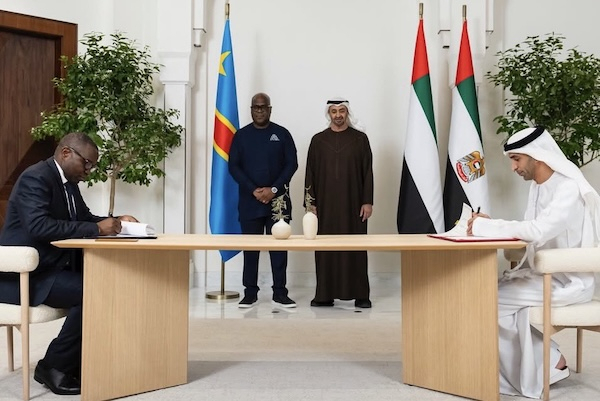
The Democratic Republic of Congo (DRC) and the United Arab Emirates (UAE) signed a Comprehensive Economic Partnership Agreement (CEPA) on Feb. 2 in Abu Dhabi, alongside three memorandums of understanding.
The signing ceremony was attended by Congolese President Felix Tshisekedi and UAE President Sheikh Mohamed bin Zayed Al Nahyan.
Congolese officials said the agreement aims to boost investment in key sectors and deepen economic cooperation. Through the partnership, Kinshasa and Abu Dhabi hope to double bilateral trade to $10 billion by 2030, up from $5 billion.
The target reflects strong growth in recent years. Data from the Congolese Ministry of Foreign Trade show trade between the two countries rose from $1.2 billion in 2020 to $4.5 billion in 2024.
The Congolese presidency said the CEPA will open the Emirati market to around 6,000 Congolese products, cut customs duties for Congolese businesses, secure commercial transactions and strengthen efforts to combat smuggling.
A free trade agreement had been under discussion for several months and appears to have been incorporated into the CEPA. Both sides also plan to establish joint monitoring committees to oversee implementation.
Memorandums of understanding
The signing was followed by three memorandums of understanding.
The first, signed with the National Transport Office (ONATRA), concerns the Banana deep-water port project in Moanda, in Kongo Central province. Details of the agreement were not disclosed.
The port, currently under construction, is already being developed in partnership with Emirati logistics group DP World. It is intended to provide the DRC with a strategic maritime hub. The facility is expected to include a 600-metre quay, a 30-hectare storage area and capacity for around 450,000 containers, enabling large vessels to dock directly.
The second memorandum focuses on mining. It aims to strengthen cooperation on the traceability and security of critical mineral supply chains, supported by coordinated investments.
The third agreement covers diplomatic cooperation. It provides for closer exchanges between the DRC Diplomatic Academy and the UAE’s Anwar Gargash Diplomatic Academy, including knowledge-sharing, joint training and research programmes, and the organisation of joint events.
The new framework builds on growing commercial ties between the two countries. In 2023, the DRC and the UAE signed a partnership aimed at ensuring a more transparent and responsible trade in Congolese gold.
That agreement led to the creation of Primera Gold DRC SA, later renamed DRC Gold Trading, which is tasked with collecting and exporting artisanal gold.
The Ministry of Foreign Trade said the company exported around five tonnes of gold in 2023, more than the DRC had officially recorded over the previous 15 years combined. Exports in 2024 are estimated at between seven and nine tonnes, according to the same source.
Ronsard Luabeya
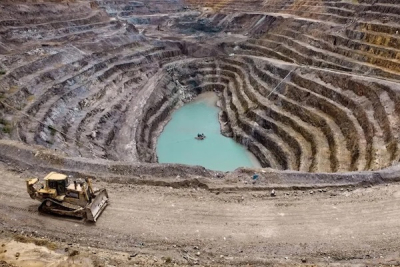
The Congolese government has instructed all mining companies operating in the Democratic Republic of Congo (DRC) to provide evidence of financial guarantees for environmental rehabilitation by Feb. 16, 2026.
The directive was set out in a Ministry of Mines letter dated Jan. 30 and applies to all active mining and quarrying projects licensed up to Dec. 31, 2025.
The ministry said affected companies must submit approved environmental management plans and documents confirming that the required financial guarantees have been put in place, in line with the Mining Code and its implementing regulations.
Under Congolese law, holders of mining or quarrying rights must establish a financial guarantee before operations begin. The security is intended to cover the costs of site rehabilitation and closure and is calculated based on the project’s environmental management plan as approved by authorities.
The guarantee must remain available for the state to draw on if an operator fails to meet its obligations.
Mining legislation allows the security to take the form of a bank guarantee, cash deposit, insurance policy or any other mechanism considered equivalent and accepted by regulators. It must be maintained throughout the life of the project and revised as work progresses and environmental impacts evolve.
Low compliance reported
The ministry’s move follows reports of weak compliance noted by government officials and development partners. During a workshop held in July 2025 in Lubumbashi on financial guarantees for environmental rehabilitation, participants highlighted a wide gap between legal requirements and their enforcement by operators.
Of 93 mining companies reviewed, only 10 had provided information on the establishment of such guarantees, pointing to limited compliance with a requirement central to the country’s environmental protection framework.
The Lubumbashi discussions also warned that the absence of effective financial guarantees leaves the environment and local communities exposed to long-term risks.
Jennyfer Imperator, deputy head of mission at the Netherlands embassy, who attended the workshop, said such guarantees ensure damage can still be repaired after operators leave, offering affected communities a safeguard.
Environmental rehabilitation is part of a broader pattern of shortcomings in mining companies’ social and financial obligations.
A report by the Court of Auditors published in June 2025 found that between 2018 and 2023, local communities missed out on nearly $198 million because of non-payment, partial payment or under-reporting of the mandatory minimum contribution of 0.3% of turnover intended to fund community projects.
The companies cited included Kamoa Copper (Ivanhoe Mines and Zijin Mining), Kamoto Copper Company (Glencore), Sicomines (Crec-Sinohydro-Zhejiang), and Tenke Fungurume Mining (CMOC). The Court of Auditors recommended corrective measures and sanctions that could include the suspension of operations, and noted a lack of effective action by oversight bodies during the period under review.
Boaz Kabeya
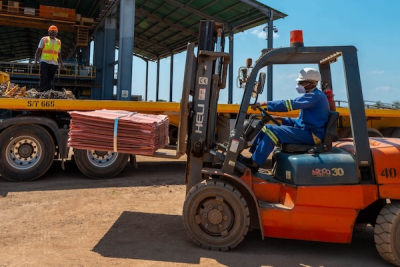
Buenassa has put forward a $1.5 billion offer to acquire Chemaf, a copper and cobalt producer in the Democratic Republic of Congo. The company presents the bid as the upstream component of a broader $3.5 billion industrial roadmap unveiled on January 29, just days ahead of the U.S.-organized Washington summit on critical minerals scheduled for February 4.
Buenassa said the $1.5 billion would be used to stabilize the asset and restructure its debt. The stated goal is to complete the Etoile II and Mutoshi industrial units to meet existing obligations and secure a reliable supply of ore for its planned refinery.
The second pillar of the roadmap centers on refinery construction. Buenassa has allocated $700 million to the first phase and now $1.3 billion to the second phase, revised down from an initial estimate of $2 billion. While the company did not explain the reasons for the revision, it maintained its production targets. Phase one is expected to deliver 30,000 tons of copper, in LME-grade cathodes, and 5,000 tons of cobalt, in sulfate and high-purity metal, per year. Phase two would lift output to 120,000 tons of copper and 20,000 tons of cobalt annually.
Buenassa Chief Executive Officer Eddy Kioni presented vertical integration as a response to market instability. He said it offers the most effective way to offset supply and price volatility that has historically discouraged Western investment. He added that the proposed structure is designed to ensure full transparency and prevent financial or risk-related conflicts between assets.
Employment, subcontracting
Buenassa Resources, the subsidiary leading the industrial project, said the plan would provide clarity for more than 3,000 direct Chemaf employees and thousands of subcontractors, according to its board chairman, former prime minister Samy Badibanga. He also said the refining complex could create around 5,000 jobs. By anchoring the project within the DRC’s industrial base, he said, the company aims to secure a sustainable future for workers and the surrounding region.
Buenassa highlighted a structure it says would improve the project’s bankability, supported by the Congolese state, which holds a 10% stake in Buenassa Resources, and by several partners. The company said it is working with consulting firm Roland Berger on an acquisition audit and debt rescheduling.
On the engineering side, Buenassa said a consortium made up of UK-based Bara Consulting and South Africa’s MET63 would act as owner’s engineer for the refinery, while also contributing to the management of upstream operations.
On financing and institutional engagement, the company cited intensified discussions with U.S. institutions, including the U.S. International Development Finance Corporation. It also named Rawbank and Nigeria’s United Bank for Africa as banking partners. Buenassa said it is seeking a partnership with a major industrial group from the Gulf and a large U.S. trading house to strengthen its commercial capacity.
Washington summit
Buenassa explicitly framed its announcement around the Washington critical minerals summit, which President Félix Tshisekedi and members of his government are expected to attend. The Financial Times, citing sources close to the matter, reported that the sale of Chemaf, described as an early test of the DRC–U.S. strategic partnership signed on December 4, could reach a turning point during the event.
Against this backdrop, rival bidders are intensifying their efforts. Africa Intelligence reported that Virtus Minerals recently signed a share purchase agreement with Zedra Skye Trustees, presented as representing nearly 95% of Chemaf shareholders. The U.S. company is said to have offered to take over Chemaf’s debts, estimated at more than $900 million. It is also considering outsourcing operations to India’s Lloyds Metals and Energy, described by the publication as having limited experience in copper-cobalt projects, particularly in Africa.
Securing financing remains a central issue. On this front, Virtus Minerals is said to have approached New York-based investment fund Orion Resource Partners and Anglo-Swiss trading group Glencore. As with Buenassa, however, Africa Intelligence reported that no binding agreement had been signed so far.
Even with a share purchase agreement in place, Virtus Minerals would still need approval from the Congolese government to complete the acquisition. International media reports say the company, founded by former U.S. security officials, benefits from support from the Trump administration. In Kinshasa, however, its offer has raised concerns. Beyond financing questions, it is seen as offering limited safeguards for local interests.
A delicate arbitration
Buenassa, for its part, says it is seeking to balance U.S. and Congolese interests. In addition to pledging to preserve jobs and subcontracting arrangements, the Congolese company presents its project as aligned with the government’s objective of processing minerals locally to capture more value.
Buenassa also positions itself as the operational arm of the DRC–U.S. critical minerals partnership. It has committed to reserving its production for the U.S. market in order to help build a secure supply chain outside Chinese influence. The company also said it is open to the formation of a DRC–U.S. consortium, involving players such as Gécamines and Buenassa, which it presents as the most realistic option given the financial, operational, and security challenges facing the sites.
The strategic agreement signed on December 4 grants U.S. companies a right of first offer on critical minerals deposits. It also states that if no U.S. bid is selected after nine months, projects may be opened to allied partners, including Congolese firms. Kinshasa must now arbitrate the Chemaf case without weakening its relationship with Washington, which it also sees as a key partner amid persistent security challenges in the east of the country.
Pierre Mukoko
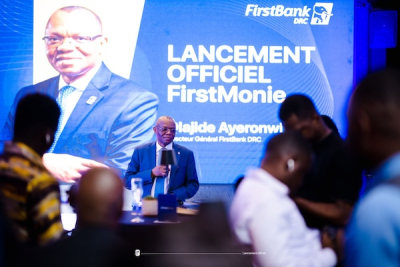
FirstBank DRC, a subsidiary of Nigeria’s First Bank of Nigeria (FBN Holdings), is stepping up its digital strategy with the launch of a new mobile application, FirstMonie, on Jan. 28, 2026.
The initiative follows the roadmap outlined in the bank’s 2024 annual report, which aims to expand its retail and digital banking services and raise the share of revenue generated by digital products to 30%. FirstBank DRC reported total revenue of 331.3 billion Congolese francs (about $120 million) in 2024.
The bank’s main new feature is the ability to open an account remotely, without visiting a branch. The process is expected to take less than five minutes, a move designed to widen access to banking services and attract new customers amid growing competition from digital finance providers.
Beyond remote onboarding, FirstMonie allows users to transfer funds to other mobile wallets, including M-Pesa, Orange Money and Airtel Money. It also supports transfers within the FirstBank ecosystem, covering bank accounts as well as FirstMonie wallets.
Speaking at the launch ceremony, FirstBank DRC’s E-Business Director Jérémie Lukusa said the app also enables bill payments, subscription services, airtime purchases and other digital financial transactions. The bank did not disclose details on the fees that will apply.
Agent network challenge
To fund a FirstMonie wallet, users must go through a FirstMonie agent, transfer money from a FirstBank account, or deposit directly at a branch. The platform’s expansion will therefore depend largely on how quickly the bank can scale up its agent network nationwide. FirstBank DRC has set a target of 100,000 agents by 2029.
FirstBank DRC Board Chairman Kandolo Kasongo said the application will continue to evolve as new features are rolled out. Local media quoted him as describing it as a major innovation in the market, adding that further upgrades are expected over the coming year.
In neighbouring countries such as Uganda, mobile wallets are already used for a wider range of services, including government tax payments. The comparison highlights how such platforms can become central tools in national financial ecosystems, extending well beyond basic money transfers.
Timothée Manoke
The Democratic Republic of Congo will benefit from a new technical assistance project funded by the African Development Bank (AfDB) to help implement its National Energy Compact. The plan aims to raise the country’s electricity access rate from 21.5% to 62.5% by 2030.
In a statement released on Jan. 30, 2026, the AfDB said its Board of Directors approved the $3.9 million project, which will run for two years. Known as “AESTAP Mission 300 - Phase II,” the initiative also covers several other African countries, including Chad, Gabon, Tanzania, Mauritania, Kenya, Nigeria, Madagascar, Ethiopia, Malawi, Lesotho, Namibia, and Uganda.
The project forms part of the second phase of Mission 300, a joint initiative with the World Bank that aims to connect 300 million Africans to electricity by 2030.
It will provide technical support to help turn national energy plans into real electricity connections for households, schools, hospitals, and businesses. The program also seeks to improve regulation, planning, and tariff-setting in the power sector, with the goal of unlocking investment and strengthening utility performance, including by reducing losses.
In addition, it includes capacity building in data, research, and knowledge-sharing through tools such as the Electricity Regulatory Index for Africa, as well as the organization of regional energy forums.
Technical advisors will also be assigned to the national units responsible for implementing and monitoring energy compacts, helping governments coordinate reforms and track progress. These units were established during the first phase of Mission 300.
Investments and Goals
In the DRC, the National Energy Compact targets an increase in electricity access from the current 21.5% to 62% by 2030, for a population of around 130 million. It also aims to expand access to clean cooking solutions to 30% by the same deadline.
To meet these objectives, the country will need to secure about $17 billion in public funding and $20 billion in private investment, bringing the total to nearly $37 billion. The financing is expected to support new generation, transmission, and distribution infrastructure, the rehabilitation of existing facilities, and the implementation of key sector reforms. A further $20 billion will be needed by 2040 to strengthen infrastructure over the longer term.
Ronsard Luabeya
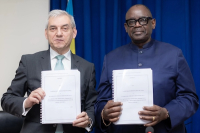
The Democratic Republic of Congo (DRC) Ministry of Mines and the Xcalibur group signed a second contract on Jan. 29 in Kinshasa for airborne geophysical and geological mapping of the national territory. Minister of Mines Louis Watum Kabamba and Xcalibur CEO Andres Blanco Grasa, who is based in Spain, signed the document after several months of anticipation.
The Ministry of Mines said last December that the selection was not a direct award but a continuation of the initial program, explaining the choice of the same provider. The ministry also said phase B takes into account the results of phase A. Officials added that they preferred signing a new contract rather than amending the existing one in order to comply with public procurement law and its implementing regulations.
The DRC signed a contract with Xcalibur in 2017 for national airborne geophysical and geological mapping. It was subsequently adjusted through amendments in 2019 and 2022. Documents published by the Ministry of Mines show the program is structured around two distinct components: a phase A described as a priority and a phase B described as optional.
According to Article 19 of the second amendment, the total cost of phase A, covered under the first contract, is set at $60,961,973. The cost of phase B is fixed at $297,873,516, bringing the overall budget to $358.8 million. This second phase, valued at nearly five times the first contract, was to be carried out later under a separate financing agreement and subject to a no-objection from the General Directorate for Control of Public Procurement (DGCMP). It is to be implemented taking into account results obtained during phase A.
The Minister of Mines said the first phase is finished. He said last November during the Makutano 2025 forum that they have submitted a report and collected data. He specified that the contract does not require Xcalibur to identify deposits. Instead, the company defines certain geological districts and formations, after which exploration work will begin.
According to the contract, phase A of the project was to cover mainly the Kasai, Equateur and Katanga blocks. It notably provided for remote sensing and interpretation of satellite images, and airborne geophysical surveys involving magnetic and radiometric data at resolutions allowing a regional-scale view of subsurface structures. It also included targeted gravity and electromagnetic surveys, initial geological and geochemical mapping of priority areas, the development of an open geological information system (GIS), and initial training for national technical staff.
Phase B provides for a densification of geophysical surveys in areas identified by phase A, as well as more detailed investigations of detected anomalies. It also includes magnetic and radiometric surveys across the rest of the country, standard gravity surveys in the central basin for gas and oil, and detailed geological and geochemical mapping at more actionable scales. The phase further includes advanced strengthening of national capacities and the full implementation of the GIS to support economic use and institutional management of the data. The program also includes the construction of a laboratory for chemical, petrographic and metallogenic analysis.
A boost for exploration
Many sector actors believe exploration in the DRC is stalled. Landry Djimpe, managing partner of Innogence Consulting, observed at Makutano 2025 that all current large mines without exception rely on geological clues identified during the colonial era.
The national airborne geophysical and geological mapping program is presented as an initial response to this problem. According to the Ministry of Mines, its objective is to provide the DRC with reliable and certified scientific data across the entire territory to better understand the country’s subsoil potential. It also aims to strengthen planning and transparency in the mining sector, attract responsible investment, and safeguard national economic sovereignty.
A central challenge remains ensuring rigorous monitoring of implementation so that this investment translates into better knowledge of the national subsoil and sustainable development of the country’s mineral resources. This challenge is further emphasized by the fact that Xcalibur holds no subsidiary in the DRC. The entities that signed the base contract and the various amendments are based in Mauritius, South Africa and Spain.
Pierre Mukoko
Glencore is reshaping its operating strategy in the Democratic Republic of Congo (DRC) as export restrictions on cobalt give way to a quota system expected to remain in place at least until the end of 2027. In its 2025 production report, published on January 29, 2026, the Anglo-Swiss mining group said it is prioritizing copper while adapting cobalt management to tighter commercial and logistical constraints.
Under this approach, “cobalt contained in mixed ores can be kept in solution (and not counted as production), rather than being processed into cobalt hydroxide, in order to minimize nearby processing costs,” the group said. Glencore operates the Kamoto Copper Company (KCC) and Mutanda Mining (MUMI) assets in the DRC.
In practice, this means the company is no longer systematically producing cobalt in a marketable form when export outlets are limited. The rationale is economic: avoiding processing, logistics, and storage costs for volumes that cannot be exported immediately.
2025 figures confirm the shift
Copper production in the DRC will be prioritized over cobalt when commercially appropriate, Glencore said; a stance supported by strong price dynamics for the red metal.
After approaching $13,000 per ton in 2025, up 44%, copper prices for three-month delivery hit a new record on January 29, 2026, reaching $14,268 per ton on the London Metal Exchange, Reuters reported.
This positioning is reflected in Glencore’s 2025 figures. Copper production from its own DRC operations, KCC and MUMI, reached 247,800 tons, up 10% from 2024.
By contrast, cobalt production declined. Glencore reported output of 36,100 tons in 2025, down from 38,200 tons in 2024, a 5% drop. The decrease “primarily reflects proactive planning to prioritize copper production over cobalt, given cobalt export restrictions in the DRC,” the group said.
Limited visibility for 2026
For 2026, Glencore provided a global copper production range of between 810,000 and 870,000 tons but declined to issue any forecast for cobalt.
“Given the dynamic context of cobalt export restrictions and the need for ongoing operational optimization, current uncertainty is too high to provide reliable cobalt production guidance for the 2026 financial year,” the company said.
Glencore added, however, that KCC and Mutanda hold sufficient cobalt inventories to meet short-term quota requirements. Expected quotas for the group are estimated at 22,765 tons in 2026, including carryover from 2025, and 18,840 tons in 2027.
Impact on the local value chain
The strategy is expected to have knock-on effects across the Congolese mining ecosystem. On the logistics side, Glencore said the DRC is “progressively putting in place its quota and control systems,” but delays affected exports initially planned for the fourth quarter of 2025. As a result, “KCC and Mutanda exported no cobalt in the fourth quarter of 2025.”
Storage has become a central issue. Excess cobalt is being held within the DRC, increasing the need for secure warehousing, traceability, and risk management, while tying up financial value.
The impact on employment and subcontracting is more mixed. Prioritizing copper helps maintain high activity levels at mines and processing plants. However, lower volumes of marketable cobalt and periods without exports weigh on cobalt-linked segments, including export logistics, packaging, specialized transport, and related services.
From an operational risk perspective, keeping cobalt “in solution” alters industrial processes and requires heightened attention to safety, environmental management, and maintenance.
Pierre Mukoko
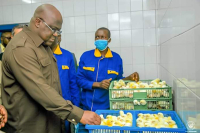
The executive branch plans to invest a total of 41.8 billion Congolese francs, or nearly $19 million, over three years in the N’Sele Presidential Agro-Industrial Domain (DAIPN). The funding is part of the government’s three-year public investment programme for the 2026-2028 period, according to a document seen by Bankable.
The document says 26.89 billion Congolese francs is earmarked for the purchase of specialised equipment to relaunch agricultural activities. The remaining funds are allocated to the renovation of the domain’s pig farm.
The farm has been idle since Jan. 1, 2026, due to a lack of funding to keep operations running, according to a statement that local media attributed to DAIPN staff.
A video attached to the statement shows empty chicken coops and an inactive slaughterhouse. Staff say in the video that workers in the poultry sector, including those in hatcheries, the slaughterhouse and chicken farming, have been sent on unpaid leave. In the same statement, they called on President Félix Antoine Tshisekedi to step in and support the project.
The president visited the site in 2022. Reports following the visit cited a capacity of more than 18,000 laying hens and two large chicken coops with space for more than 9,000 broilers, intended to supply the slaughterhouse every three weeks.
The N’Sele Presidential Agro-Industrial Domain was created in 1966 under the presidency of Marshal Mobutu. It was later relaunched in 2013 as part of a public-private partnership with the Israeli group LR Group Limited. The project aimed to supply Kinshasa and surrounding areas while creating direct and indirect jobs for local residents.
Timothée Manoke
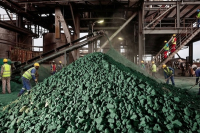
Artisanal mineral processing units in the copper-cobalt sector face an uncertain future after compliance inspections launched by the Ministry of Mines in late December 2025. The continuation of their activities, following a moratorium granted by the authorities, is now conditional on correcting the irregularities identified by an ad hoc Commission and communicated to each operator, as well as on the payment of the penalties imposed.
According to a Ministry of Mines statement dated Jan. 28, 2026, the Commission identified thirteen entities in Lualaba, including one that failed to appear. In Haut-Katanga, twenty-seven units were identified. Nineteen appeared before the Commission, four are no longer operational, three are undergoing administrative regularization before starting operations, and one did not attend the proceedings.
Several irregularities and cases of non-compliance were observed. The report cites breaches of shareholding requirements, with Congolese participation below 50%, as well as the unauthorized holding of multiple permits or approvals, notably mining exploitation licenses and processing authorizations. It also notes the absence of contracts with approved cooperatives, the lack of proof of training for Congolese employees, shortcomings in the submission of mandatory reports, and serious weaknesses in traceability and transparency.
This process is part of a decision to impose a general suspension of mining and commercial activities by processing entities, taken on Dec. 19, 2025, across the entire national territory. The measure aims to bring a sector already identified as largely non-compliant with the Mining Code and Regulations into line, notably based on the findings of the National Commission for the Fight Against Mining Fraud.
Internal checks announced
To assess the situation on the ground, an ad hoc Commission was established on Dec. 26, 2025, to carry out inspections of administrative, legal and technical compliance, as well as the traceability of processing units. It focused on the provinces of Lualaba and Haut-Katanga, where most of the activity takes place.
Following the inspection missions, Minister of Mines Louis Watum Kabamba announced, on Jan. 5 and Jan. 22, 2026, a partial and temporary lifting of the suspension for processing entities located in the provinces of Lualaba and Haut-Katanga respectively. This was subject to strict compliance with the administrative, technical and traceability requirements communicated to them. The measure was presented as transitional, allowing the operators concerned to regularize their situation.
Initially excluded from this partial and temporary lifting, Luilu Resources, operating in Lualaba province, was ultimately declared eligible after appearing before the Commission.
In its statement of Jan. 28, 2026, the ministry said the maintenance or definitive lifting of the suspension would remain strictly conditional on the effective regularization of each unit. Any continued violation of laws and regulations exposes operators to sanctions provided under current mining legislation.
The ministry also announced internal inspections within its services throughout the Republic. These are intended to establish responsibilities and, where applicable, identify any direct or indirect complicity linked to failure to comply with the moratorium and the repeated violations observed.
Boaz Kabeya
More...
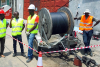
The provincial government of Kinshasa has given telecom operators 60 days to remove fiber optic cables laid in the city’s storm drains. The measure was announced in a statement from the provincial Ministry of Infrastructure, Public Works, Land Affairs, Urban Planning and Housing in late January.
Provincial authorities say the drains have repeatedly been used as conduits for fiber optic cables, in violation of regulations governing the use of public land. They argue the practice disrupts the sanitation system by obstructing rainwater flow and contributing to recurring floods, particularly along major roads such as Boulevard du 30 Juin.
The ministry instructed operators to remove the cables in full within the deadline. After that, the provincial government says it may dismantle the installations without further notice, at the expense of non-compliant operators, in addition to any penalties предусмотрed under current regulations.
Authorities also reiterated that any occupation of urban road space falls under the exclusive jurisdiction of the provincial ministry, adding that authorizations issued outside the legal framework are invalid.
The decision comes amid repeated internet disruptions in the Democratic Republic of Congo. In mid-January, the telecom regulator ARPTC said network problems were caused by a technical failure on the West Africa Cable System (WACS) submarine cable, one of the country’s main international links.
Boaz Kabeya

The Democratic Republic of Congo’s government approved a draft decree setting technical standards for new vehicle license plates at a Council of Ministers meeting on Jan. 23, 2026. The text amends a decree that has been in force since 2008.
According to the official meeting report, the changes are intended to support the rollout of regulations on automated traffic fines enforced through video surveillance. Those rules were adopted by the Council of Ministers in April 2025. The new decree provides the technical framework needed to implement the system effectively.
The report said the new plates will be made of plexiglass and will include a QR code as a security and tracking feature. The aim is to ensure more reliable vehicle identification, seen as essential for deploying automated camera enforcement systems.
A matter of public revenue
The video-based fine system could be launched as early as this year. The government’s investment plan includes the purchase of a road surveillance and license plate recognition system, at a total estimated cost of nearly $2 million, to be funded over 2026 and 2027.
The reform could also help boost public revenue from traffic fines, a sector that has underperformed so far. In 2024, official data showed a collection rate of only 8.6%, with 2.59 billion Congolese francs raised out of an expected 30.22 billion. For the 2026 fiscal year, the finance law targets 17 billion Congolese francs in revenue, nearly six times higher.
The Council of Ministers document also outlined other changes linked to the new plates, which will be supplied by Belgian company Castillo Valere. These include replacing the code “CGO” with “COD.” Until now, the DRC had used the “CGO” code, an abbreviation associated with Congo-Brazzaville.
The Observatory of Public Expenditure (ODEP) and the Ligue congolaise de lutte contre la corruption (LICOCO) had previously criticised the former license plate supplier for the confusion.
Timothée Manoke
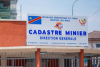
New applications for mining and research quarry rights in the Democratic Republic of Congo will be accepted again starting Feb. 2, 2026. The Mining Registry announced the information following periodic cleanup work on the cadastral database, which had led to the temporary suspension of application registrations.
This resumption ends a suspension in effect since Dec. 17, 2025. On that date, authorities decided to interrupt the receipt of new applications until further notice to conduct a cleanup of the mining cadastral database. The objective was to improve its reliability and management.
The suspension measure did not affect already existing rights. During this period, applications for the transformation and renewal of mining rights continued to be processed by the administration. The registration of transfers, leasing agreements, options, and other related acts also continued.
According to the report published in August 2025, similar work conducted previously allowed the Congolese state to recover 594 mining and quarry titles, representing 37,253 mining squares. It also allowed for the regularization of 210 mining rights placed in a prolonged state of force majeure. This resulted in their reclassification as active rights and the restoration of corresponding fiscal, social, and technical obligations.
Boaz Kabeya

Eiffage Génie Civil Marine has officially launched the expansion project at the container terminal of the port of Matadi in the Democratic Republic of Congo (DRC), a year after securing the contract. On Jan. 26, 2026, the French company announced on social media that the first pile had been installed, marking the start of construction.
On Jan. 20, 2025, the Eiffage group said it had won a design-build contract worth more than 100 million euros to renovate and extend the Matadi port container terminal. The contract was awarded by Matadi Corridor Terminaux à Conteneurs (MCTC). The company has not commented on the one-year gap between the contract award and the start of construction.
The project is expected to take 27 months and includes several key elements of the terminal upgrade. It involves the construction of a new 350-meter-long and 30-meter-wide pile-supported quay, located in front of existing quays 5, 6, and 7. These structures will be connected by three 20-meter-wide access bridges. In addition to these port facilities, the project includes the construction of an operations building and a workshop building, as well as the rehabilitation of seven hectares of logistics platform to significantly increase the terminal’s capacity and improve traffic flow.
The work is part of Phase 2 of the container terminal extension program, launched in 2019 under an investment plan to double the terminal’s annual container throughput. According to initial objectives, the extension should increase processing capacity from 200,000 TEUs to around 400,000 TEUs (twenty-foot equivalent units), strengthening the port of Matadi’s ability to handle trade volumes for the country and its region.
A broader push
This expansion is taking place in a context where the port has historically suffered from outdated infrastructure and limited handling capacity. Improving the container terminal could reduce ship waiting times, optimize loading and unloading operations, and strengthen the country’s logistical competitiveness.
However, some analysts stress that the impact of this extension program will also depend on other infrastructure measures, such as dredging and buoyage along the Congo River channel, which determine access for large vessels to the port. Without these complementary improvements, deep-draft ships could continue to bypass Matadi in favor of neighboring ports with better maritime access.
At the local level, the project also raises hopes of knock-on economic effects, including direct and indirect job creation, stronger logistics services, and an improved position for the DRC in regional supply chains.
The Matadi container terminal extension is part of a wider push to modernize Congolese port infrastructure. Alongside this expansion, the effort includes renovation work on existing quays, projects for adjacent logistics zones, and initiatives to strengthen the efficiency of national port operators.
Pierre Mukoko