






News (946)
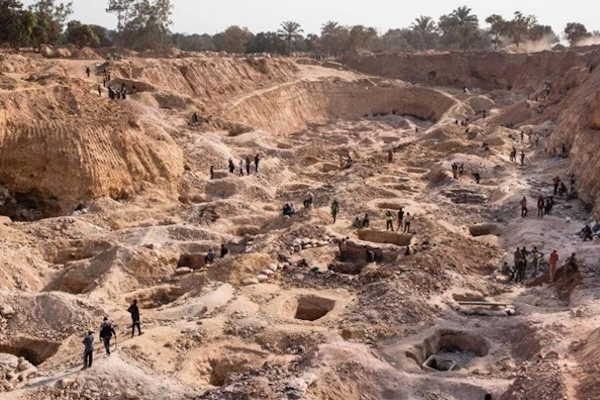
The 64 artisanal mining zones announced in November 2025 by Mines Minister Louis Watum Kabamba in response to a tragedy at the Kalando site in Lualaba province are not yet operational. Although the identification process has begun, implementation is expected to be phased in over time.
The Mining Cadastre, which manages the country’s mining titles, said it has started identifying the zones in coordination with the National Geological Service of Congo (SGNC). Its director general, Popol Mabolia, said about ten zones have been identified in an initial phase. These still need to be developed before being allocated to cooperatives and artisanal miners.
“It’s a process that is underway, and we will get there. But we cannot have 64 zones ready overnight,” Mabolia told reporters at the Mining Indaba conference, which ended on Feb. 12, 2026, in Cape Town. “We have already identified those that can be fast-tracked, so miners can be redirected from one site to another.”
Until the zones become operational, the shortage of designated areas continues to fuel tensions in mining regions. Several industrial concessions remain vulnerable to incursions by artisanal miners, even as the ministry’s reform aims to ease pressure on industrial sites and channel diggers toward legally regulated areas.
Some companies are moving ahead with their own formalization efforts. Eurasian Resources Group (ERG) has signed a memorandum of understanding with the General Cobalt Enterprise (EGC) to organize artisanal mining in Lualaba. According to the Federation of Congolese Enterprises, ERG has recorded nearly $3 billion in losses due to disruptions at its sites.
Ronsard Luabeya
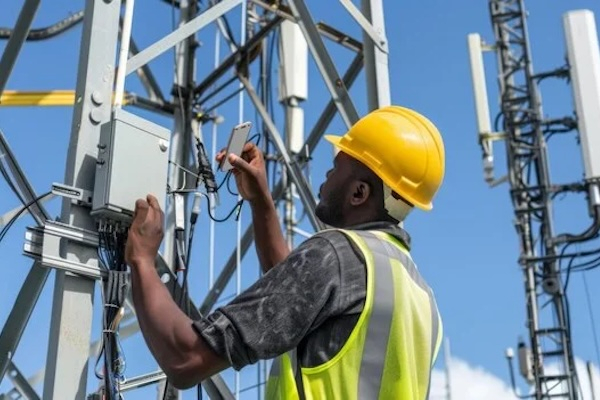
The Democratic Republic of Congo’s Universal Service Development Fund (FDSU) last week unveiled a 10-year strategy to narrow the digital divide. Covering 2026–2035, the plan is based on a shared infrastructure model aimed at extending network coverage to nearly 68 million people living in rural areas.
The strategy was presented on Thursday, Feb. 12, at the inaugural meeting of the sector coordination framework. The session brought together key public and private telecom stakeholders under the leadership of FDSU Director General Paterne Binene A Kadiat.
The roadmap outlines a shared infrastructure model dubbed “TowerCo Lead.” Under this framework, tower companies, known as TowerCos and acting as lead investors, finance and deploy passive infrastructure including towers, energy systems and backhaul on an open-access basis. Mobile network operators, or MNOs, then install active equipment at these sites to deliver services.
The Post and Telecommunications Regulatory Authority (ARPTC) is responsible for oversight, ensuring service quality and compliance with regulatory standards.
The FDSU plays a strategic and financial role, designing subsidy mechanisms and supervising their implementation. Subsidies are allocated by operating zone to consortia comprising TowerCos and MNOs. The country is divided into five operational zones.
Equalization
A cross-subsidization mechanism will allow revenue from profitable sites to offset losses in less viable zones, reducing dependence on public funding.
The initiative comes as infrastructure sharing gains momentum across Africa as a tool to reduce the digital divide. In the DRC, Orange and Vodacom plan to invest $179 million over four years through their joint venture Esengo Towers to deploy 1,000 telecom towers nationwide to expand mobile coverage. In August 2025, Vodacom Group and Airtel Africa also announced an agreement to share telecom infrastructure in several key markets, including the DRC.
According to the International Telecommunication Union (ITU), sharing mobile infrastructure can lower network deployment costs, particularly in rural or underserved markets. It can also support the rollout of new technologies and mobile broadband while strengthening competition when appropriate safeguards are in place.
In 2024, 2G, 3G and 4G networks covered 75%, 55% and 45% of the population, respectively, according to ITU data. The agency estimated mobile penetration at 44.3%, compared with 19.7% for internet use.
By the end of September 2025, the Congolese regulator reported mobile penetration of 65.3% and mobile internet penetration of 32.2% among a population of 112.2 million. Meanwhile, the GSMA estimated that 40 million people in the DRC were not connected to mobile internet in 2023.
Isaac K. Kassouwi, with Ecofin Agency
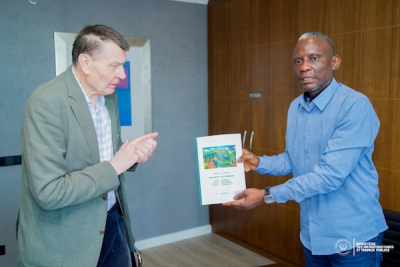
Kinshasa’s first subway line could begin operations on Nov. 27, 2027, according to information released on Feb. 14, 2026, following a meeting in Rotterdam between Infrastructure and Public Works Minister John Banza and Jean-Pierre Van Erps, coordinator of the Tramways de Kinshasa consortium.
At the meeting, Banza handed over the original preliminary agreement signed on Oct. 8, 2025, officially sealed by the ministry.
Several steps remain before the project can move forward. The ministry said authorities must finalize a consolidated timeline with legal safeguards, align technical studies, arrange financing and conclude the public-private partnership (PPP) agreement.
The project aims to improve mobility in the Congolese capital through the construction of seven modern rail lines using prefabricated hybrid track technology under an exclusive license. It also includes tailored energy systems and upgrades to major urban corridors and utility networks.
The consortium — comprising Prume Tramway RDC, Frateur-De Pourcq and PowerChina — has deployed more than 60 engineers for technical missions in Kinshasa, the ministry said. Studies drawing on the city’s historical plans identified the need for 173 bridges between downtown Kinshasa and N’djili International Airport.
Flood control
The design incorporates drainage, rainwater collection and treatment systems, as well as the distribution of treated water to improve access to drinking water.
The Congolese Agency for Major Works (ACGT) is overseeing the project. During the Rotterdam meeting, Banza reiterated the government’s intention to quickly finalize the PPP structure and sign the contract.
Separately, Congolese firm Congo Trans S.A.R.L. is developing a three-line rail project in the capital. According to a document reviewed by Bankable, total investment is estimated at about $205 million.
In June 2025, Congo Trans signed a memorandum of understanding with Moroccan firm Balkan Ingénierie S.A.R.L. for engineering and construction supervision services. The contract is valued at 4% of the total project cost, or roughly $8.5 million.
Ronsard Luabeya
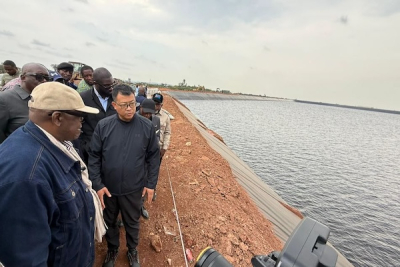
Chinese mining company Congo Dongfang Mining (CDM), which operates in Lubumbashi in Haut-Katanga province, faces strict conditions before resuming operations following an environmental incident on Nov. 4, 2025. The company was suspended for three months beginning Nov. 6, 2025.
In a Feb. 13, 2026 statement, the Congolese Ministry of Mines outlined requirements for CDM's Joli-Site facility to restart operations, including full compliance of all installations, validation of updated environmental and social impact studies, complete structural certification by independent experts, and implementation of strengthened environmental monitoring. The ministry also mandated fulfillment of social obligations to neighboring communities and establishment of sustainable control, prevention and alert mechanisms to prevent future incidents.
These conditions stem from findings by a special interministerial commission established after the incident. According to the ministry, "concrete, measurable and verifiable" actions have been implemented across health, humanitarian and environmental areas.
On health, 670 people received treatment at Jason Sendwe General Reference Hospital. For humanitarian relief, 350 affected households received direct assistance, while 30,000 liters of drinking water are distributed daily to affected populations. To ensure sustainable water access, 15 boreholes were planned, with seven completed by end-December 2025.
Environmental remediation included decontamination, pumping and effluent neutralization operations, alongside construction of an emergency retention basin. The formal compensation process for victims has also begun in accordance with legal and regulatory procedures.
During a November 2025 site visit, Mines Minister Louis Watum Kabamba required the company to continue paying all affected personnel during the suspension, cover full repair costs for environmental damage, compensate affected populations and pay penalties under the Mining Code and applicable regulations.
Ronsard Luabeya
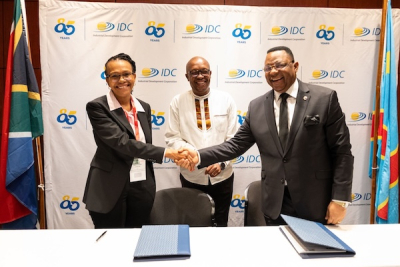
DRC, South Africa Sign Industrial Co-Financing Agreement Targeting Green Hydrogen, Critical Minerals
DRC’s Fonds de Promotion de l'Industrie (FPI) and South Africa's Industrial Development Corporation (IDC) signed a memorandum of understanding on Feb. 12, 2026, to support industrialization in the Democratic Republic of Congo, focusing on capital mobilization and project co-financing.
The agreement was signed in the presence of South Africa’s Minister of Trade, Industry and Competition, Parks Tau. Under the deal, the IDC will deploy investment capital to support FPI initiatives and facilitate co-investments across a portfolio of projects, particularly in infrastructure.
The two institutions also plan to work together on a long-term sustainable growth strategy in selected industrial sectors. The FPI has set a fundraising target of at least $100 million as a baseline to strengthen its role in industrial and economic development. The broader agreement aims to establish co-financing mechanisms between the two development finance institutions.
FPI Director General Hervé Claude Ntumba Batukonke said closer cooperation between national development finance institutions could improve risk-sharing and help finance large-scale structural projects.
IDC Chief Executive Mmakgoshi Lekhethe said the partnership could increase co-investments in strategic sectors, including green hydrogen, critical minerals, the electric vehicle value chain, advanced manufacturing, and high-value agriculture and agro-processing.
Founded in 1940, the IDC is a South African public development finance institution that supports industrialization by providing funding and technical support to companies and projects.
Ronsard Luabeya
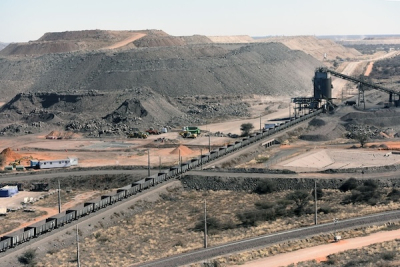
Power requirements for Asia Minerals Limited’s manganese project in Luozi, Kongo Central province, are projected to exceed 300 megawatts (MW), company officials said on November 26 at the Makutano Forum.
Fely Samuna, managing director of Kerith Resources, the Congolese partner of the Japanese multinational, said the total demand would comprise around 120 MW for mining operations and nearly 200 MW for in-country processing, in line with the government’s push to boost value addition and local employment.
Demand is not expected before just over three years. “Exploration will take three years, and mine development will start after that,” Samuna said, asking whether the country would be able to meet the project’s power needs.
Aimé Molendo Sakombi, Minister of Hydraulic Resources and Electricity, said the project area includes hydroelectric sites capable of supplying the operations, notably the Mpioka site on the Inkisi River. Jean-Pierre Mukadi Kalombo, coordinator of the Energy Ministry’s Project Coordination and Management Unit, said Mpioka has an estimated capacity of about 6,000 MW.
He said the site could help supply Kinshasa, including as the city expands, as well as meet rising demand from the mining sector. Feasibility studies are scheduled to begin next year to provide the government with the technical data required for the next phase of the project.
Samuna also questioned the competitiveness of electricity tariffs in the Democratic Republic of Congo. He noted that the group’s Malaysian smelter, Pertama Ferroalloys, commissioned in 2016, operates under a power purchase agreement at roughly $0.04 per kilowatt-hour. He asked whether lower tariffs could be offered in the DRC to ensure the competitiveness of local operations and encourage on-site processing.
Bob Mabiala Mvumbi, managing director of the Agency for the Development and Promotion of the Grand Inga Project (ADPI), said discussions on a future PPA were possible. “You will set a price and we will discuss it,” he said, adding that ADPI is working to secure firm demand for Inga 3, whose installed capacity is projected at between 3,000 MW and 11,000 MW.
However, the economics remain challenging. The National Electricity Company (SNEL) says the average tariff of $0.17 per kilowatt-hour is below cost and is seeking an increase. By comparison, mini-grid operators charge between $0.25 and $0.70 per kilowatt-hour.
Timothée Manoke
The Manono lithium project will require nearly $1 billion in investment, according to Alpha Monga Mwidia, chief executive of state-owned Congolaise d'exploitation minière (Cominière), in a Reuters interview at the Mining Indaba conference in Cape Town, South Africa, which concluded on February 12, 2026.
Cominière partnered with Chinese group Zijin Mining to form the Manono Lithium joint venture, which is developing the northeastern section of the Manono lithium deposit in Tanganyika province, southeastern Democratic Republic of Congo. The project holds an estimated 6.47 million tonnes of lithium carbonate equivalent, with an average grade of 1.5% lithium oxide, making it one of the world's largest lithium deposits.
Zijin Mining is financing the entire investment, according to Alpha Monga Mwidia. However, updated figures show the Chinese group now holds 54.9% of the project, down from its initial 61% stake. The reasons for this ownership change remain unexplained.
Production timeline revised
While the investment breakdown has not been disclosed, Zijin describes the project as encompassing mine construction, a concentration unit, a conversion plant with calcination kiln, and logistics facilities. The operation is designed to extract and process 5 million tonnes of ore annually and convert 500,000 tonnes of spodumene concentrate into 95,170 tonnes of crude lithium sulfate per year.
"The mining, processing and conversion projects, as well as the logistics facilities and river diversion works are progressing on schedule, with commissioning planned for June 30, 2026," Zijin stated, noting that the accommodation camp and Phase I solar plant are already operational. This represents a three-month delay from the company's early 2025 projection of first-quarter production, though no explanation was provided.
The Mpiana-Mwanga hydroelectric plant rehabilitation was completed in 2024 by Katamba Mining (70% owned by Zijin and 30% by Cominière), boosting capacity to 40 MW. A planned expansion will add another 108 MW.
Export logistics
Lithium sulfate will be transported along the 440-kilometer Manono-Kalemie road to the industrial port of Kalemie, then shipped via Kigoma to Dar es Salaam, Tanzania.
Road construction began in October 2024 under a public-private partnership with Chinese company Phaepon Construction and is scheduled for completion in five years. The first phase will create a passable dirt road before paving begins.
This phase "is almost complete and we hope to have lithium production by June 2026," Tanganyika Governor Christian Kitungwa Muteba said in a promotional video for Expobeton's 11th edition, a trade fair focused on urban development and special economic zones, scheduled for May 27-30, 2026, in Kalemie.
Market headwinds
The Kalemie industrial port is also under construction through a partnership with Jintai Mining PTE Ltd and Tembo Majengo Company SARL, with the first phase (requiring an estimated $70 million) expected to be operational by late 2026.
Given its investment, Zijin will market all production and share revenues proportionally with its stake in the joint venture after deducting production costs, according to the Cominière chief executive.
The project appears undeterred by the oversupplied global lithium market, driven largely by Chinese production, which has depressed prices significantly. Spodumene prices have plummeted more than 80% from their 2022 peak, dropping from over $80,000 per tonne to around $10,000 in 2025.
Pierre Mukoko
CrossBoundary Energy DRC received regulatory approval from the Electricity Sector Regulatory Authority (ARE) on Feb. 11, 2026, for its solar power project at the Kamoa-Kakula copper complex in Lualaba province. The clearance follows a similar approval granted to Green World Énergie in January.
ARE issued two rulings covering independent power generation and electricity sales, clearing the way for the Energy Minister to issue generation and sales licences.
The project involves installing 233.8 MWp of solar capacity across more than 400,000 photovoltaic panels. Combined with battery storage, the plant will supply 30 MW of baseload power to Kamoa Copper under a power purchase agreement signed in 2025. Construction was 42% complete as of late October 2025, with commercial operations expected in the second quarter of 2026.
ARE said the project will create about 900 temporary construction jobs and 22 permanent positions. The plant is expected to cut carbon emissions by 78,750 tonnes annually by reducing reliance on diesel generation.
The project mirrors a similar development by Green World Énergie, approved on Jan. 27, 2026. Together, the two plants are set to provide 60 MW of continuous power to Kamoa-Kakula, reinforcing the site’s supply of reliable renewable energy as part of efforts to decarbonise the DRC’s mining sector.
Boaz Kabeya
The Democratic Republic of Congo's postal and telecommunications regulator has accused South African telecoms group MTN of illegally providing mobile phone and internet services in the country, including in rebel-held areas such as Goma and Rutshuru, without holding an operating license.
In a statement dated Feb. 11, 2026, the regulator known as ARPTC said it had "well-documented" evidence and had referred the matter to unspecified national and international bodies, vowing to use "all legal means" to uphold the law and protect digital sovereignty.
The statement followed a meeting convened the previous day by Prime Minister Judith Suminwa Tuluka on "digital intrusion and the illegal use of Congolese frequencies by a foreign operator." At the meeting, ARPTC was instructed to immediately take over the technical handling of the case and to refer it to relevant international bodies, under a zero-tolerance policy toward any violation of digital sovereignty.
MTN operates in several countries on the DRC's eastern border. The Rutshuru territory, for example, shares borders with both Uganda and Rwanda, where the South African multinational is present. But after the meeting with the prime minister, Posts and Telecommunications Minister José Mpanda singled out MTN Rwanda specifically, making the issue even more sensitive given that relations between Kinshasa and Kigali are at a low point due to the security crisis in the country's east.
Border Interference or Equipment Installation?
Based on the ARPTC statement, several industry players favor the hypothesis of cross-border spillover, which is common in border areas. It is "difficult to prevent networks from crossing the border," and in such cases "the two regulators must sit down with operators from both countries to find a technical solution," one source said. This interpretation draws on regional precedents where technical solutions were reportedly found without media exposure.
But accounts reported by the Congolese press and corroborated by several local sources point to a potentially more sensitive scenario. In central Rutshuru, equipment attributed to MTN Rwanda has reportedly been installed on antennas in the Murambi neighborhood, allowing the Rwandan network to cover part of Congolese territory and effectively provide services there. In the same accounts, residents indicate that MTN SIM cards are now being sold in central Rutshuru and in Kiwanja, and are being used to maintain internet connectivity that has become unstable.
If confirmed, the characterization changes. This would no longer be simply a case of "interference" or a signal picked up from across the border, but rather a possible technical and commercial presence on Congolese soil, which would strengthen ARPTC's argument about the absence of an operating license.
Internet Disruptions as Context
The technical context also plays a role. On Jan. 26, 2026, Vodacom Congo (DRC) said in a statement that it had suffered an intrusion at its technical center in Goma (North Kivu), resulting in a loss of network supervision and control "in that area."
For several months, Congolese authorities have also been warning about the deteriorating quality of telecommunications services. According to several accounts, cities in the east of the country under the control of the AFC/M23 rebels or affected by insecurity have been particularly impacted. Authorities have blamed the disruptions on outages of the WACS undersea cable, pushing users to seek alternative solutions, including foreign networks, particularly in border territories such as Rutshuru.
At this stage, the challenge is to distinguish between scenarios that do not carry the same regulatory consequences: simple cross-border coverage spillover, roaming or technical agreements, or the installation of equipment and sale of SIM cards in the DRC. ARPTC's statement does not detail the technical mechanism or evidence, and MTN has not yet officially responded.
Between assertions of digital sovereignty and the technical realities of border networks, the case will likely hinge on concrete technical evidence: verification of equipment, frequency tracing, clarification of any technical agreements and, above all, establishing whether there is actual operation on Congolese territory.
Pierre Mukoko

DRC Gold Trading S.A., a state-owned company specializing in the purchase, trading and export of artisanal gold, announced on Feb. 10, 2026 that it has opened a branch in Lubumbashi, marking its entry into Haut-Katanga province.
The move aims to bring artisanal gold production from the province into official channels. A few days after opening the Lubumbashi office, the company collected and exported its first batch of more than 20 kilograms of artisanal gold from Haut-Katanga through formal traceability procedures. At the 2025 average gold price, the shipment is worth more than $2 million.
Haut-Katanga, long dominated by copper and cobalt production, has also seen artisanal gold mining activity in the town of Kilolo, in Kipushi territory. However, this output has not been reflected in official export statistics, with most production reportedly leaving the country through illicit channels.
A 2024 United Nations report described artisanal gold mining in the area as extensive, pointing to significant production circulating outside formal supply chains. The opening of a purchasing office is intended to integrate this output into a regulated traceability and export framework.
In the same statement, DRC Gold Trading said it had also opened a second purchasing office in Haut-Uele province, in the mining town of Durba, after initially establishing operations there in 2025. During the first half of 2025, the company exported 12,511 kilograms of gold from that branch.
The Durba office has strong supply potential. According to a Dec. 8, 2025 report by the International Peace Information Service (IPIS), researchers identified nearly 5,500 artisanal miners operating across 18 gold sites around Durba.
The expansion into Haut-Katanga and Haut-Uele forms part of the company’s plan to operate ten sites nationwide, targeting annual volumes of 15 to 18 tonnes of artisanal gold and more than $2.6 billion in export revenue. Two additional branches are planned for 2026 in Kinshasa and Mbuji-Mayi.
According to the World Gold Council, the average annual gold price rose 44% to $110,280 per kilogram in 2025, driven by strong demand and a geopolitical and financial environment supportive of the precious metal. The upward trend is expected to continue in 2026. Gold traded above $160,000 per kilogram in January, while Deutsche Bank, UBS and JP Morgan project prices could exceed $190,000 per kilogram by year-end.
Timothée Manoke
More...

Eurasian Resources Group (ERG) has signed a memorandum of understanding with the state-owned cobalt company Entreprise générale du cobalt (EGC) to formalise and better manage artisanal mining in Lualaba province, where its concessions have repeatedly been entered by informal miners.
The agreement was signed on February 10, 2026, on the sidelines of the Mining Indaba, a major African industry event held in Cape Town. Mines Minister Louis Watum Kabamba presided over the ceremony.
The deal launches a pilot project aimed at structuring artisanal mining within a defined framework. It provides for the creation of a regulated artisanal mining zone on an ERG concession, measures to improve safety and working conditions, and the introduction of traceability systems aligned with OECD due diligence standards. The initiative also seeks to ease tensions between industrial operators and artisanal miners, safeguard the rights and investments of both parties, and bring artisanal mining into a recognised legal framework benefiting local communities.
ERG said the initiative is not intended to feed its industrial output and that none of its production will come from artisanal sources. Instead, the company presented the move as support for formalisation efforts amid mounting pressure from informal mining on its concessions.
The agreement comes as industry players have warned about the scale of incursions onto mining sites. According to the Federation of Businesses of the Congo(FEC), such intrusions have caused losses estimated at nearly $3 billion for ERG. Since 2024, site invasions have been reported on concessions operated by several of the group’s subsidiaries, including Congolaise des mines et de développement (COMIDE) and Boss Mining. In a 2025 statement, Boss Mining said more than 200 trucks were entering its sites daily, carrying copper and cobalt shipments valued at around $1.8 million.
The Ministry of Mines described the agreement as a joint effort to balance the economic, social and environmental challenges facing the Congolese mining sector.
Under pressure from growing artisanal activity within industrial concessions, the mines minister announced in November 2025 the designation of 64 artisanal mining zones (ZEA). He said the decrees establishing the zones had been signed and that implementation would proceed in coordination with EGC. Since then, however, little detail has been provided on progress.
Ronsard Luabeya
Premium Visa cardholders in the Democratic Republic of Congo saw a sharp increase in international travel spending and high-end retail purchases in December 2025, according to a Feb. 10, 2026 statement from Visa.
Data from the Visa Consulting & Analytics Retail Spend Monitor, based on a subset of VisaNet transactions and supplemented by estimates for other payment methods, showed that international travel spending by premium Visa cardholders rose more than 45% year-on-year during the holiday period from Dec. 1 to Dec. 31, 2025.
Spending in the DRC by international Visa cardholders, both premium and non-premium, also increased. Visitors from the United Arab Emirates, Zambia, the Czech Republic and Portugal were among the fastest-growing segments, with spending rising more than 75%.
Among Congolese premium Visa cardholders, international travel spending rose 45%. Spending on travel to destinations including France, China, Morocco and the United States increased by about 85%.
Luxury retail also recorded strong growth. Spending on clothing and jewelry abroad by premium Visa cardholders rose more than 55% during the holiday period.
Sophie Kafuti, Visa Cluster Head DRC, said the results reflect changing consumer behavior during the holidays. She said the company aims to support these trends by offering “secure, seamless and innovative payment solutions for consumers and businesses.”
In the DRC, Visa has expanded its local presence through partnerships with commercial banks and fintechs. In September 2025, it launched VisaPay, an application designed to facilitate digital payments for consumers and improve everyday payment transactions.
Ronsard Luabeya
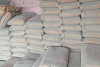
The price of gray cement has risen sharply in Mbuji-Mayi, the capital of DRC's Kasai Oriental province. According to local sources, a 50-kilogram bag has been selling for between $30 and $32 since last weekend, nearly double the price in Kinshasa and Haut-Katanga. The range represents an increase of 20% to 28% from the $25 seen a week earlier.
According to the same sources, the increase stems from tight supply on the local market following disruptions, particularly after the collapse of the Katongoka bridge in Haut-Lomami province on a route used to transport cement to Kasai Oriental. Reduced deliveries have led several warehouses in the city to run out of stock.
The cement market had faced supply pressures before. In June 2025, the price per bag rose from $24 to $27 in Mbuji-Mayi, linked to warehouse shortages and sustained demand from construction companies operating in the province.
At that time, the Federation of Congolese Enterprises (FEC) cited logistical constraints, including disruptions to freight shipments from Greater Katanga due to limited availability of wagons from the National Railway Company of Congo (SNCC).
Under construction since August 2024, the Katanda cement plant is expected to help stabilize prices in the province. With an annual capacity of 300,000 tons, expandable to 1.2 million tons, the plant was scheduled to begin production in February 2026. But according to information gathered locally, that has not yet happened.
Boaz Kabey
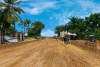
Work to rehabilitate a 65-km section of National Highway 18 (RN18) in Kwilu province began on February 9, 2026, covering the stretch between Petit-Kasaï and Bulungu, as well as a secondary road serving the Vanga Catholic mission.
The project is part of the Sino-Congolese cooperation programme implemented by the Société d’Infrastructures Sino-Congolaise (SISC) and financed by Sino-Congolaise des Mines (Sicomines). It includes strengthening the road surface, installing drainage ditches and systems, and repairing and reinforcing structures such as bridges and culverts to ensure year-round trafficability and improve safety.
Sinohydro 14, a subcontractor to SISC, is carrying out the works under the supervision of the Congolese Agency for Major Works (ACGT). The start of construction follows a site assessment conducted in June 2025 by ACGT engineers to gather technical data.
The rehabilitation comes amid concerns over the deteriorating state of the road and erosion risks around Bulungu, which threatened to render sections impassable, isolate villages and hinder access to essential services, particularly healthcare and education.
In April 2025, elected officials from Bulungu had already alerted the Office of Roads to the degradation of several segments, notably the 5-km Kimbulu stretch leading to the Vanga referral hospital in Kilunda sector. In a letter signed by Serge Maseka Ndombe, vice-president of the Kwilu Provincial Assembly, provincial deputies requested financial and logistical support to maintain or rehabilitate the section, citing the need to facilitate patient access and support local socio-economic activity.
The letter underscored the strategic importance of the road for evacuating agricultural produce and maintaining access to basic services in Bulungu territory. RN18 connects National Highway 1 (RN1) to remote rural communities, serving as a key corridor for the movement of people, goods and farm output to regional markets.
Boaz Kabeya