






News (946)
Vodacom Congo (DRC) said in a statement that it suffered an intrusion at a technical facility in Goma, North Kivu, on Jan. 26, 2026, resulting in a loss of control over its network in the affected area. The operator said the disruption affected voice, SMS, internet and M-Pesa services.
The company said its teams were working to restore services as soon as possible and apologized for the disruption, which it said was beyond its control.
Residents and information shared on social media suggest the outage extends beyond Goma’s urban area. According to these accounts, connectivity problems have also been reported in other parts of North Kivu, including Rutshuru, Masisi and Sake. Vodacom has not publicly detailed the full geographic scope of the disruption.
The incident comes amid a fragile security situation. Goma has been under the control of the AFC/M23 since late January 2025, with banks closed since that time. A prolonged outage of telephone and mobile payment services could further complicate daily life, including for government employees in the area, whose salaries are paid via mobile wallets.
One resident said the M-Pesa mobile application remains functional despite the broader service disruption. Vodacom has not confirmed this.
Timothée Manoke
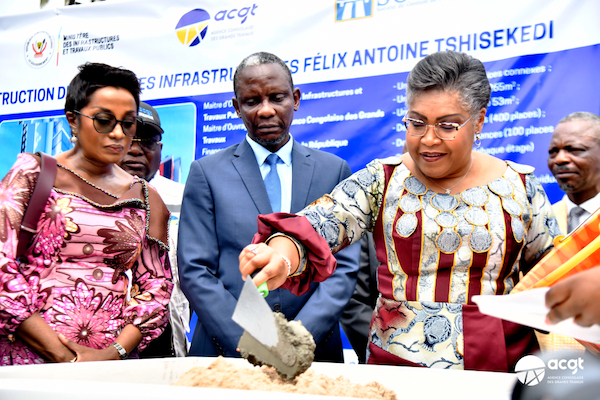
Infrastructure and Public Works Minister John Banza Lunda has announced the launch of an “infrastructure crusade,” a wide-ranging program aimed at developing new office complexes to bring together government agencies.
The announcement comes after the launch of the first project, the Félix-Antoine Tshisekedi Tshilombo Infrastructure Center (CIFATT), which broke ground on Jan. 22, 2026. According to the Congolese Agency for Large Works (ACGT), the building is intended to host key public bodies overseeing the Democratic Republic of Congo’s infrastructure sector.
The project is estimated to cost $25 million. The 14-storey building will span approximately 20,000 square meters and is expected to accommodate between 1,200 and 1,400 people. Located in the Gombe commune, construction is scheduled to take 24 months.
Representatives of the Société des péages du Congo (SOPECO) and the Société de gestion routière (SGR) said the project is financed exclusively through savings generated from the management of road concession contracts, with no funding from the state budget. SOPECO and SGR hold three concession agreements with the Congolese government covering the Kinshasa-Matadi, Lubumbashi-Kasumbalesa, and Lubumbashi-Likasi-Kolwezi corridors. These contracts include road paving, bridge construction, rehabilitation of strategic routes, and toll operations.
Alongside CIFATT, the minister announced three additional large-scale projects, including a new Ministry of Foreign Affairs building and a parliamentary complex comprising a debating chamber, a convention center, housing for lawmakers, and a five-star hotel. He also unveiled plans for an administrative city featuring a government building rising more than 50 floors.
The two latter complexes will be built near the Kinshasa ring road. According to the minister, the location was chosen to ease congestion in central Kinshasa by relocating part of the administrative apparatus away from the Gombe commune, currently the city’s main administrative hub. The heavy concentration of government offices and economic activity in the area contributes to chronic traffic congestion, as residents and workers converge daily on the district.
Banza Lunda said the projects would be partially financed through the public budget. “Nearly 40% of our budget is allocated to the infrastructure sector. This shows that the initiative is not just rhetoric,” he told RFI. He said further details would be presented at the first national infrastructure conference, scheduled for Jan. 29-31, 2026, in Kinshasa.
Timothée Manoke
The Electricity Regulatory Authority (ARE) has approved two applications submitted by Beijing-based Green World Energie for a solar photovoltaic project in the Mutshatsha area of Lualaba province.
The project will have an installed capacity of 200 megawatt-peak (MWp) and include a battery storage system with a capacity of 581 megawatt-hours (MWh). It is designed to supply a steady 30 megawatts of power to the Kamoa-Kakula copper complex.
Kamoa Copper, the operator of the complex, signed a power purchase agreement with Green World Energie in early April 2025.
One of the approvals concerns an independent power producer licence, while the second covers the sale of electricity within the province. The authorisations were issued to Trésor Maneno, legal counsel for Green World Energie, clearing the way for the Minister of Energy to formally grant the production and sales licences.
Construction of the project has already begun ahead of the issuance of the licences. According to a project status report published in late October, construction was 46% complete at that time. Commercial commissioning is scheduled for the second quarter of 2026.
The project runs in parallel with another solar-plus-storage development led by Nairobi-based CrossBoundary Energy DRC. Together, the two projects are expected to provide the Kamoa-Kakula complex with 60 MW of continuous power. CrossBoundary Energy DRC signed a power purchase agreement and launched construction at roughly the same time as Green World Energie. As of late October, construction on its project was 42% complete, with commercial commissioning also planned for the second quarter of 2026. The status of its regulatory approvals remains unclear.
Electricity demand at the Kamoa-Kakula copper complex is expected to rise sharply in the coming years. According to projections published by developer Ivanhoe Mines, total demand is forecast to reach 347 MW by December 2028, up from 208 MW in December 2025. Under the company’s procurement plan, all of that power is expected to come from renewable sources.
Boaz Kabeya
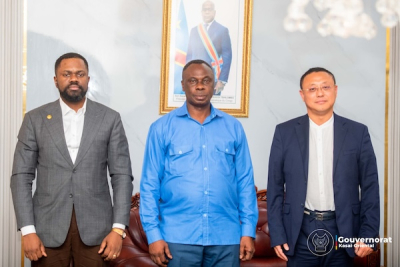
A project to modernise public transportation through the introduction of electric buses is under review in Kasai-Oriental province, according to the provincial governor’s office after an official meeting in Mbujimayi.
On Jan. 23, 2026, Governor Jean-Paul Mbwebwa Kapo received a delegation from StarCharge at his official residence. The delegation was led by Andrew Tan, the company’s regional head for Africa and the Pacific. According to the governor’s office, the initiative follows discussions launched during the governor’s official visit to China in November 2024, which explored the possibility of technical and financial partnerships to address urban mobility challenges in the province.
During the Jan. 23 meeting, the two sides discussed assessing local conditions for the creation of a public transport company built around electric mobility. “At its core, the project is green electric mobility. It includes not only electric buses, but also energy production from renewable sources such as solar and wind, as well as the design of charging stations. It is an entire development chain that can also benefit schools, hospitals and other public infrastructure,” Tan said.
The governor’s office said a team of StarCharge engineers has already been deployed on the ground to carry out feasibility studies. The work includes assessing costs, implementation timelines and the different operational phases, in coordination with provincial technical services.
No amount or definitive schedule has been communicated at this stage. However, the provincial executive mentioned 2026 as the target year for completion, subject to the conclusions of the ongoing studies and the structuring of the partnership.
StarCharge is a Chinese company specialising in charging infrastructure for electric vehicles and related mobility solutions. It operates networks of charging stations and develops energy management platforms. Its operations are mainly concentrated in China, where it works with several automakers and companies in the new energy sector.
Boaz Kabeya
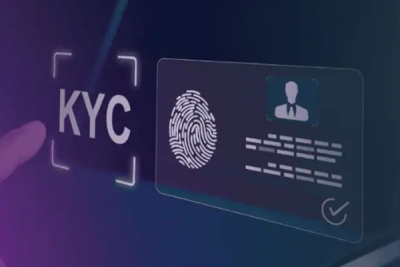
Developing DRCPass, the national digital identification system for the Democratic Republic of Congo, requires $97.1 million in capital expenditure. These costs cover only the equipment, systems, infrastructure, and facilities needed for deployment, according to a Ministry of Planning document.
The project is structured as a public-private partnership signed in June 2025 between the Ministry of Posts, Telecommunications and New Information and Communication Technologies and the Singaporean company Trident Digital Tech Holdings Ltd. This agreement followed the validation of the proposal by the PPP Management Consulting and Coordination Unit (UC-PPP) a little over a month earlier. The deal makes Trident the exclusive provider of the country's electronic identification services (e-KYC), based on Web 3.0 technologies. The Ministry of Planning document indicates the partnership runs for a 20-year term.
At this stage, no communication from the government or Trident
There has been no communication from the government or Trident so far specifying whether the company must raise the full amount of funding for the partnership. In a press release issued on Sept. 16, 2025, Trident Digital Tech Holdings Ltd announced it had raised $2.6 million. The company said the funds would mainly support the expansion and commercialization of DRCPass in the DRC. Separately, President Félix Tshisekedi announced on Sept. 26, 2025, a $1 billion public investment under the National Digital Development Plan for the 2026-2030 period. This plan includes the rollout of a digital identity for citizens and residents.
The DRCPass system is built around four priority use cases. It is intended to enable biometric authentication for SIM cards linked to a blockchain-verified identity to reduce fake registrations and fraud risks. It will also provide easier access to e-government platforms and online services through a single identifier for all digital public services. For financial services, the system will integrate a one-click e-KYC solution with automated risk assessment and immediate access to credit services to strengthen financial inclusion. Finally, it will serve as a secure digital identity document for public and private transactions, as a complement to physical documents.
Timothée Manoke
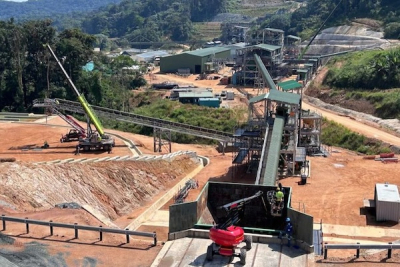
Alphamin Resources Corp said tin production at its Bisie mine in North Kivu rose 7% year on year to 18,576 tonnes in the fiscal year ended Dec. 31, 2025.
Output was broadly in line with the company’s revised guidance of 18,000 to 18,500 tonnes, after operations were temporarily suspended in March 2025 for security reasons.
EBITDA rose 25% to $341.4 million in 2025 from $274.0 million in 2024, Alphamin said, citing higher volumes, the impact of extensions at Mpama South and a higher average selling price.
The company said current tin prices and stable output should support cash flow and could allow for higher dividends. It said it paid $123 million in dividends in 2025, or C$0.11 per share, compared with C$0.09 in 2024. It expects to decide on its next dividend in April 2026 after publishing audited accounts.
Tin prices were expected to rise about 10% in 2025 to $33,000 per tonne from $30,066 in 2024, according to World Bank projections. Tin hit a record high of around $53,460 per tonne on Jan. 14, market data showed, amid supply concerns including in Indonesia and Myanmar.
Targets 20,000 tonnes in 2026
In Indonesia, authorities announced an operation to shut about 1,000 illegal mining sites in Bangka Belitung, a move likely to tighten supply from informal channels. Indonesia accounts for roughly one-sixth of global tin mine production, according to international statistics.
In Myanmar, the Man Maw mine remains central to regional supply. Authorities in the Wa region have signalled a possible restart, but administrative delays and operational uncertainty have kept the market volatile.
While demand from electronics, soldering, packaging and chemicals, as well as electrification-related uses, continues to support prices, some analysts have pointed to the growing influence of financial factors. The International Tin Association (ITA) has warned that the market can become vulnerable to corrections when fund positioning is elevated, even when supply is disrupted.
For 2026, Alphamin targets production of about 20,000 tonnes, in line with its targeted annualised rate. The company said achieving that goal depends on uninterrupted operations, and noted a resurgence of security incidents in North Kivu. The mine is located away from the worst-affected areas, but the risk remains high and a deterioration could disrupt activity.
PM, with Ecofin Agency
S&P Global Ratings on Jan. 23 raised its outlook on the Democratic Republic of Congo to positive from stable and affirmed the country’s long-term sovereign rating at B- and its short-term rating at B in both foreign and local currency.
A sovereign rating signals a government’s creditworthiness. The positive outlook indicates the rating could be upgraded if economic and fiscal trends continue to improve. S&P said the revision reflects expectations that the DRC will sustain strong growth, build foreign exchange reserves and improve tax collection through ongoing fiscal reforms, citing progress on both the fiscal and external fronts.
S&P and the International Monetary Fund expect growth to remain above 5% between 2026 and 2028. Government revenue is expected to rise slightly faster than nominal GDP. S&P also pointed to a rebound in foreign exchange reserves, which reached about $7.9 billion at end-December 2025 (around three months of import cover), up from less than one month in 2021.
The agency highlighted tax reforms, including a standardised invoicing system launched in December 2025 to support VAT collection, as well as steps to curb exemptions and subsidies. These measures aim to keep revenue at 14% to 15% of GDP, up from an average of about 11% over the past decade. They are also intended to reduce the state’s reliance on mining, which accounts for more than 40% of government revenue and has driven recent gains in receipts.
Structural vulnerabilities
The outlook change comes as the DRC prepares to tap international debt markets this year, with plans to raise $750 million in its first Eurobond issue. Finance Minister Doudou Fwamba Likunde said the outlook revision and rating affirmation would bolster investor confidence ahead of the planned sale.
However, the positive outlook is unlikely to remove the premium investors typically demand from first-time speculative-grade issuers. Bloomberg said yields could approach double digits depending on the bond’s maturity, citing the 13.7% yield paid by neighbouring Republic of Congo last year.
S&P said the DRC still faces structural vulnerabilities, including dependence on mining, weak institutions and persistent insecurity in the east, which adds to public spending and weighs on investment.
S&P said it could raise the rating if net reserves increase further and fiscal deficits narrow. It added that an upgrade would also require clearer signs of economic diversification and a broader government revenue base.
Pierre Mukoko
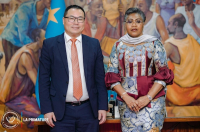
Democratic Republic of Congo Prime Minister Judith Suminwa Tuluka met a delegation from Chinese construction equipment maker LiuGong at her office, according to a statement dated Jan. 22, 2026, published by the prime minister’s office. The statement described LiuGong as a global leader in construction machinery and said the talks were in line with the government’s push to improve the investment climate and attract industrial projects.
The prime minister’s office said discussions focused on a phased plan that could include setting up sales, assembly and maintenance facilities, alongside technology transfer and training for local workers. It also mentioned the possibility of local “Made in DRC” production, job creation and support for infrastructure development. The statement did not provide a timeline, locations, the size of the investment or the legal structure of the project, such as a subsidiary, partnership or joint venture.
Founded in 1958, LiuGong manufactures construction equipment including loaders, excavators, bulldozers and graders, as well as machinery used for roadworks and construction sites. On its website, the company says it operates internationally through a network of dealers.
Public information remains limited to the announcement of talks and broad areas of cooperation, including sales, assembly, maintenance, training and local production. Concrete details would require formal agreements, a timeline and quantified commitments.
Boaz Kabeya
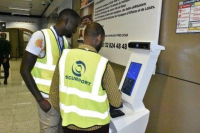
A public-private partnership (PPP) project led by US company Securiport in the Democratic Republic of Congo (DRC) is listed among the PPP projects validated by the PPP Management Coordination and Advisory Unit (UC-PPP) between March 2024 and July 2025.
According to the document, the UC-PPP issued a conditional favorable opinion on July 10, 2025, subject to observations and recommendations being addressed. The project is valued at $292 million over a 20-year period. The table does not specify the content of the UC-PPP’s observations or the project’s exact implementation terms.
In PPPs, “total cost” can refer to the overall value of the project over the full period, rather than only the upfront investment. The table includes a separate “investment cost” column, which typically covers capital expenditures (CAPEX) such as equipment, systems, installation, and infrastructure. For Securiport, that column is left blank.
Overall, the document confirms an aggregate project value of $292 million over 20 years, but it does not specify the amount of initial investment to be mobilised by the company. Nor does it provide a breakdown between investment, operations and maintenance costs. It also gives no indication of the implementation timeline or key financial terms, such as the remuneration mechanism, royalty level, risk-sharing arrangements, or the exact scope of services.
So far, public information on the partnership has mainly come from excerpts of the contract posted online in early November 2025. These excerpts provide for a $30 security fee to compensate the private partner, to be charged to each air passenger on arrival and departure at all international airports in the country. In the absence of passenger traffic data, it is difficult to estimate the revenues the concession could generate over 20 years.
Timothée Manoke
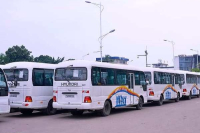
The government-backed Esprit de Vie program, which aims to modernize urban transport by providing buses and minibuses to private operators through credit, is expected to gain renewed momentum. Preparations are underway to deploy nearly 500 new buses in Kinshasa. The announcement was made during a business lunch organized in November 2025 by the Building and Public Works (BTP) Club and the Chamber of Trades and Crafts of the Forum Expo Beton, according to the program’s new coordinator, Kasumbu Mbaya Borrey.
A vehicle repossession operation involving buses allocated during previous phases of the program began in December 2025 and must take place before the arrival of the new fleet. According to Borrey, 649 buses were delivered to private operators under a credit scheme at a unit price of $57,000, to be repaid in monthly installments. As of 2026, marking the end of the seven-year contract period, only one buyer has fully repaid the loan. The other 648 vehicles must be recovered because they remain state-owned. Several Congolese media outlets reported that the operation involves more than $22 million in unpaid financial obligations.
According to the new coordinator, 294 vehicles due to be deployed had already arrived in the capital in November, while around 200 others were still at the port of Matadi. The buses are believed to be part of a batch of 500 Hyundai vehicles with 27 seats each, imported from South Korea and ordered by the central government from dealer Central Motors. According to the former program coordination, part of the batch has been stuck at Matadi port since 2023 due to financial difficulties linked to customs clearance.
Borrey said abuses observed during previous phases stemmed in particular from the allocation of buses to politicians, military personnel, or beneficiaries who never made a single payment.
To prevent a repeat, he said the program will now rely on the digitalization of management. Each bus will be equipped with a GPS system to ensure real-time tracking. A digital management system similar to the one used by Transco, and developed with the company Sycamore, will also be deployed to improve traceability and financial discipline. Access to the program will be subject to stricter eligibility criteria, aiming to ensure that only buyers capable of meeting their financial commitments can join the scheme.
The Esprit de Vie program was launched to improve mobility by gradually replacing old minibuses that are often involved in accidents. It was named to distinguish it from the Mercedes 207 minibuses nicknamed “esprit de mort,” which are known for being in poor condition and frequently involved in accidents. For its implementation, the Congolese state signed a partnership agreement with the Association of Owners of Vehicles Assigned to Public Transport (APVECO).
Timothée Manoke
More...
The Democratic Republic of Congo (DRC) plans to raise $750 million in its first foray into the international bond market, Bloomberg News reported after interviewing Finance Minister Doudou Fwamba Likunde on Jan. 22, 2026.
The figure is a 50% reduction from the country’s original target. Last August, the minister secured authorization from the Council of Ministers to prepare a debut Eurobond issuance of $1.5 billion.
Analysts say the country is not abandoning the $1.5 billion goal. Instead, the objective is expected to be achieved through several operations. Doudou Fwamba said the intention is to issue a first Eurobond, followed by a second, third and fourth, and so on, according to Bloomberg. He did not provide a specific timetable.
Bloomberg did not explain what appears to be a change in strategy. However, the International Monetary Fund (IMF) noted in its latest mid-January report on the country that authorities could scale back their initial plans. The IMF said the issuance would depend on market conditions and the identification of high-yield projects. The fund is overseeing the implementation of a three-year economic and financial program in the DRC, launched in 2025 after a previous program.
Several analysts believe current market conditions are favorable. Yield spreads for African sovereign debt in dollars have narrowed to their lowest levels in several years. However, for the DRC, a first-time issuer with a speculative rating, investors are expected to demand double-digit interest rates. These rates would depend on the maturity of the securities, which remains unknown.
Preparations at a “preliminary stage”
This outlook could explain the government’s caution, as it says it is seeking conditions that guarantee fiscal sustainability. This is particularly significant as the IMF estimates that any issuance will require a recalibration of the program to preserve debt sustainability and ensure the transparent and efficient use of the raised funds. A source familiar with the matter said the Eurobond is possible, but only under conditions of fiscal discipline and governance.
For now, the IMF says the work is at a preliminary stage. An issuance before mid-2026 is unlikely due to due diligence requirements, discussions with investors, and parliamentary approval constraints. Authorities have committed to the IMF to seek prior approval from Parliament before any issuance. The government has set a deadline of June 30 to complete the operation. Bloomberg, for its part, mentions April.
According to the finance minister, the government is still working on the maturity of the bonds. It has held only preliminary meetings with institutional investors, including BlackRock Inc., Finisterre Capital, Amundi Group, and JP Morgan. Nevertheless, the institutions expected to lead the operation have reportedly been identified.
According to Bloomberg, Citigroup would lead the operation with the support of Rawbank SA. Rothschild & Co. and White & Case LLP would handle the structuring as financial and legal advisors. Based on publicly available information, Rawbank’s exact role is not clear. It is not specified whether it will serve as a co-arranger, a local reference bank for payments and escrow accounts, provide investor marketing support, or offer technical support in document preparation.
Pierre Mukoko
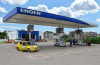
A reform of tax breaks on imports of refined petroleum products boosted Democratic Republic of Congo revenue in 2025, the finance ministry said.
In a Jan. 20 statement, the ministry said oil-related receipts jumped nearly 1,700% after the government scrapped exemptions for mining companies and their subcontractors in late July.
It said monthly revenue rose from an average 4.43 billion Congolese francs ($2 million) between January and July 2025 to 78.5 billion francs ($36 million) between August and December 2025. Total receipts for the year reached 423.6 billion francs ($194 million).
“Thanks to this coordinated reform, the DGDA significantly increased revenue collection, reaching 6,848 billion Congolese francs ($3.13 billion) at the end of December 2025, compared with 6,280 billion Congolese francs ($2.87 billion) budgeted in the 2025 Treasury Plan (PTR),” the ministry said, exceeding the target by 9%.
The ministry said fuel tax breaks totalled $1.6 billion in 2022 and $1.1 billion in 2023, equivalent to an average 15% of state revenue over the two fiscal years. It said the scale of subsidies, exemptions and preferential tax treatment had significantly reduced public resources, prompting the government to overhaul tax breaks on petroleum product imports.
Under Article 22 of the 2025 finance law, the government removed subsidies and exemptions from import duties and taxes, including customs duties and VAT, for fuels used in mining operations or sold to mining companies and their subcontractors. The measure covered products including gasoline, kerosene, diesel, fuel oil, lamp oil and LPG.
The decision was implemented through an inter-ministerial decree signed on May 2, 2025, by the ministries of National Economy, Finance and Hydrocarbons.
The reform took effect in late July 2025 with the publication of a new pricing schedule for fuels sold to the mining sector, mainly in the country’s southern and eastern regions. At the same time, the finance ministry suspended certain import exemptions, while the hydrocarbons ministry stepped up inspections and fuel tracking operations.
Boaz Kabeya

Lualaba Governor Fifi Masuka Saini announced on Jan. 19, 2026, the signing of 16 agreements between the provincial government and Emirati companies at the Kolwezi Congress Village. These documents cover several sectors, including agriculture, mining, health, infrastructure, and tourism.
According to the governor, these partnerships aim to create mutually beneficial collaborations. They are part of President Félix Tshisekedi’s vision for tangible development for the benefit of local communities. At this stage, further details on the content of the documents and the identity of the companies involved are not yet available.
Since 2025, the United Arab Emirates has shown a growing interest in the DRC, particularly in the port, mining, and energy sectors. Abu Dhabi Ports announced its intention to invest in the ports of Matadi and Boma. The company also plans to invest in the development of the Lobito corridor, dry ports, and roads linking Lualaba to Zambia and Angola.
The mining sector is also in focus, with investments in the Bisie tin mine by the conglomerate IRH/IHC. Other projects concern the development of renewable energy. These are led by the companies Lone Star Ltd and Business Gate in the Tshopo province.
These initiatives are part of a broader context of cooperation between the DRC and Gulf countries. During the official visit of the Emir of Qatar, Sheikh Tamim Ben Hamad Al Thani, to Kinshasa on Nov. 21, 2025, an agreement on visa exemptions for holders of diplomatic and special passports was signed. This was accompanied by five memorandums of understanding in the economic, legal, diplomatic, social, and sports fields. Among these initiatives are port projects, cooperation between ministries, and social programs in South Kivu.
Boaz Kabeya

The launch of an interbank electronic payments group in the Democratic Republic of Congo (DRC) is expected by the end of March 2026. The IMF mentions this in its January country report on the DRC.
An interbank electronic payments group is a shared arrangement set up by banks, and sometimes the central bank, to jointly organize and manage electronic payments at the national level. It allows institutions to use common standards so that transactions move more smoothly from one bank to another. In its report, the IMF describes this launch as a key step in the modernization of the payments system.
In many countries, this type of interbank arrangement ensures interoperability, meaning that a customer of bank A can send money to a customer of bank B without friction. It manages shared infrastructure such as the national switch, clearing, and transaction routing. It can also deploy common services, including instant transfers, card or QR-code payments, and transfers across banks, microfinance institutions, and mobile money operators. In addition, it sets technical and security standards on cybersecurity and fraud prevention, while harmonizing certain fees and procedures.
To ensure “an orderly rollout consistent with technical and institutional requirements,” the establishment of the interbank electronic payments group in the DRC is being carried out with support from the International Finance Corporation (IFC), the World Bank Group’s private-sector arm.
In the DRC, financial inclusion rose from 38.5% in 2022 to 50% currently, mainly due to the expansion of mobile payment solutions. This progress is part of the National Financial Inclusion Strategy 2023-2028, adopted by the government in July 2023, which relies on strengthening payment infrastructure and tools. The report specifically cites the commissioning of the national electronic payment switch and the gradual interconnection of banks, microfinance institutions, and electronic money issuers.
The report adds that the launch of a platform called Visa Pay in September 2025, alongside the promotion of the Mosolo national card denominated in local currency, is part of these efforts aimed at “improving the range of digital financial services.”
Boaz Kabeya