






News (946)

Congo Airways has begun a recruitment drive two weeks after taking delivery of an aircraft, the first of three acquired by the National Social Security Fund (CNSS), which holds a 31% stake in the airline.
Since Jan. 7, 2025, the carrier has posted three job ads seeking nine captains, nine first officers and four maintenance technicians. The pilots will be on probation for six months, while technicians will serve a three-month probation period, according to the notices.
The hires appear set to form the core crew to operate the new fleet now being assembled, and may also point to staff turnover. After suspending flights for around 10 months, Congo Airways has accumulated more than 10 months of unpaid wages, staff representatives said.
Meanwhile, the airline is also working to return an Airbus A320 to service after it was grounded by engine problems. In February 2025, it received approval from the Public Procurement Regulatory Authority (ARMP) to award a contract directly to FAI Aviation to buy two CFM56-5B5/3 engines, plus spare parts, for $12.33 million, according to an ARMP document.
So far, Congo Airways has not announced when it will restart flights or which destinations it will serve, though media reports say operations could resume in early 2026.
Timothée Manoke
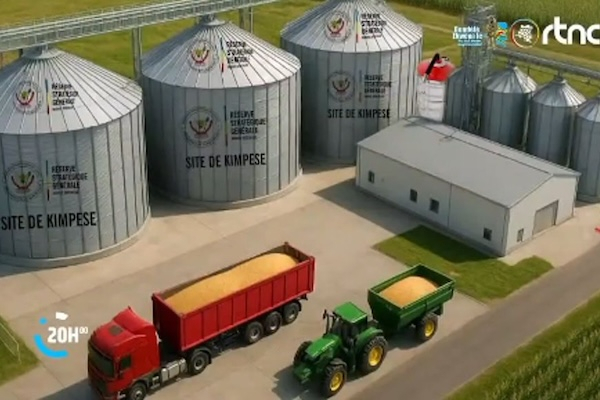
The Democratic Republic of Congo (DRC) plans to develop a nationwide network of grain silos through its General Strategic Reserve (RSG). Under the 2026-2028 Public Investment Plan, the government intends to allocate 14.5 billion Congolese francs, equivalent to about $6.6 million at the average exchange rate, for the construction of these facilities.
Serge Mulumba Katchy, the coordinator of the presidency-linked institution, announced that a pilot project will be set up in Kimpese, in Kongo Central province. In November 2025, he travelled to Italy to meet with the supplier producing the equipment for this first site. He said the Kimpese project would have a minimum capacity of 5,000 tonnes of grain and that the same model would later be rolled out in the country’s other provinces.
This preparatory work followed a working session held in October 2025 with experts from U.S. consulting firm International Reliable Consulting (IRC). According to the RSG, the discussions explored potential cooperation on the implementation of the silos and the establishment of a seed bank.
Created by presidential decree, the General Strategic Reserve is tasked with preventing and managing crises by building strategic stocks of essential goods. It aims to support food security, stabilise prices and assist local producers by building and renewing reserves that can be mobilised in the event of a crisis, shortage or natural disaster.
In September 2025, the institution intervened in the maize market in Kinshasa, offering 25-kg bags of maize flour for sale at 35,000 Congolese francs. This was significantly lower than prices in the capital at the time, which ranged between 40,000 and 63,000 francs depending on quality. The operation, carried out in several markets across the city, aimed to ease pressure on households and stabilise prices during a period of market strain.
Timothée Manoke

Buenassa is seeking financial backing to acquire a strategic domestic mining asset that is up for sale in the Katanga region, Chairman and Chief Executive Eddy Kioni said on Monday.
The announcement followed a meeting with Michael Kayembe, the new chief executive of United Bank for Africa (UBA) in the Democratic Republic of Congo. A source close to the Congolese company said the asset in question is mining firm Chemaf.
Bloomberg reported that Buenassa formally expressed interest in the copper and cobalt producer last November. The company’s future is being closely watched because of its assets and its role in the competition for critical minerals in the DRC.
Kioni said the acquisition would allow Buenassa to speed up its move toward vertical integration, from extraction to refining, trading and strategic stockpiling. He said it would secure feedstock for the refinery for more than 20 years.
He added that the plan would reduce operational risk and transform Buenassa from a greenfield industrial project into a major mining operator. The goal is to move from a planned project to a company producing mining assets capable of supplying a refinery and building an integrated value-chain model.
That approach sets Buenassa apart from several rival bids that are structured more around financial and commercial control of Chemaf. By comparison, state miner Gecamines, another Congolese contender, has proposed acquiring the company with a view to reselling it while retaining a maximum stake of 25%, Bloomberg reported.
Through its subsidiary Gecamines Trading, the state miner would market production corresponding to its stake to the United States, in line with a commitment the DRC made under a strategic agreement signed with Washington last December.
Industrial Goals
Buenassa says its bid is driven by industrial objectives, aimed at securing raw material for a refining project in the DRC rather than capturing output for export. That would align the project with the Congolese government’s push for local mineral processing.
Details of Buenassa’s offer remain unknown. Gecamines is reportedly considering an initial outlay of just under $1 million, an audit of the company and a plan to settle its liabilities, which media reports estimate at $900 million. Part of that debt is held by Trafigura, which arranged a $600 million loan in 2022 to finance development of the Mutoshi mine in Kolwezi.
Securing an extraction asset appears crucial for Buenassa. It would make the project easier to finance by providing collateral that could underpin borrowing for the refinery’s construction.
So far, the company has secured a $3.5 million public grant from the Industry Promotion Fund (FPI), though only part of it has reportedly been disbursed. The funding enabled completion of a scoping study.
The study puts the cost of the project’s first phase at $700 million, according to a document seen by Bankable. At that stage, the plant is expected to produce 30,000 tonnes of copper cathodes and 5,000 tonnes of cobalt sulphate a year.
The second phase is estimated to cost $2 billion. At that stage, output would rise to 120,000 tonnes of copper and 20,000 tonnes of cobalt a year. Those figures have yet to be refined.
Challenging Outlook
The revised timeline now forecasts a pre-feasibility study in early 2026 and a feasibility study in the second quarter of 2027. Financial close is projected for the third quarter of 2027, and production is not expected before 2029, compared with 2027 previously.
To finance the strategy, Buenassa is pitching a multi-layered approach combining African commercial banks, regional development finance institutions, local financial institutions, international strategic partners led by the United States, and the Congolese state. Since June 2025, the state has held a 10% stake in the Buenassa Ressources project company.
The meeting with UBA focused on building a financing structure capable of supporting both the refinery’s construction and the acquisition of an extraction asset.
Winning control of Chemaf may prove difficult. Guy-Robert Lukama, chairman of the Gecamines board, told Reuters in late 2024 that the state miner would not let it go to a rival bidder. Gecamines is in a strong position because it holds the permit on which Chemaf is developing the Mutoshi project.
The state is the sole shareholder of Gecamines and holds a 10% stake in Buenassa and 5% in Chemaf. It must decide while weighing its mining policy priorities.
Pierre Mukoko
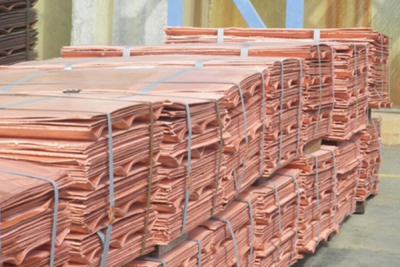
The Democratic Republic of Congo plans to tighten controls on mining exports to boost revenue collection. In a report published in January 2026, the International Monetary Fund said authorities want a more reliable assessment of export volumes, mineral content and moisture levels, which are critical for valuation and tax calculations.
The report highlights the revenue impact of inadequate oversight. “Studies show that our country loses nearly half of its potential mining revenue due to insufficient controls on volumes and the content of valuable metals,” authorities cited in the report said. To address these weaknesses, authorities said they want to increase mining revenue collection by limiting direct contact in the control process.
One measure involves deploying technical tools by March 2026 to strengthen physical inspections of export shipments, including truck weighing scales and computerized, non-intrusive quality control systems.
The reform also includes stronger analytical capacity. The IMF said authorities aim to secure approval from the Ministry of Mines by January 2026 to bring into operation a mineral analysis laboratory contracted by the tax authority (DGI).
The goal is to build technical capacity to support inspections and strengthen compliance more broadly. The report also points to efforts to improve the assessment of export characteristics, including moisture and mineral content, which affect declared values and tax obligations.
Beyond mining, the IMF report highlights the broader challenge of modernizing financial administrations and controls. It notes that tax audits currently deliver less than 15 percent of their potential revenue, as authorities seek to improve data cross-checking through automation and digitization.
Overall, the IMF said the approach combines stronger physical and analytical controls on mining exports with a shift toward more automated systems, with the aim of improving enforcement and securing revenue.
Boaz Kabeya
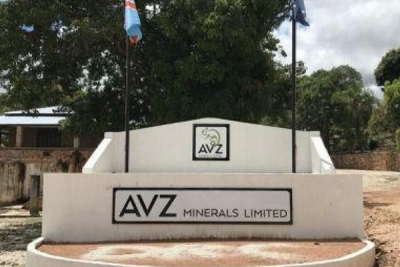
Australian miner AVZ Minerals said on Jan. 15, 2026 it had received the full amount of funding pledged last year by its partner Suzhou CATH Energy Technologies.
The Chinese firm provided a $20 million facility to AVZ, which says it holds rights to the Manono lithium project in Tanganyika province in the Democratic Republic of Congo.
AVZ said when the facility was announced in January 2025 that the funds would cover working capital needs and activities over the following 12 months, including costs linked to its dispute with the Congolese state over the project. The disbursement signals CATH is continuing to back AVZ.
Under the January 2025 agreement, CATH would gain several rights if AVZ succeeds in its claim to the Manono deposit. These include the option to buy 100% of the project’s lithium output for five years, or until AVZ recovers expenses financed under the deal. CATH would also have the right to acquire a 30.5% indirect stake in the project. The outcome remains uncertain.
Manono is the largest lithium deposit identified so far in the DRC. AVZ carried out exploration there for several years through a joint venture with state-owned Cominiere. Cominiere later ended the partnership and in 2023 teamed up with China’s Zijin Mining to develop the same project.
AVZ has launched multiple international legal actions to challenge the loss of its stake, but no final ruling has been issued.
A new player has also emerged: KoBold Metals. As ties between Kinshasa and Washington have warmed amid plans for new U.S. investment in the Congolese mining sector, the California-based startup signed an agreement in principle with the Congolese government last July for mineral exploration in the country.
KoBold has since obtained seven exploration licences, four of them in the Manono area.
Under the agreement in principle, KoBold is expected to help resolve the dispute between AVZ and the Congolese state. Two months earlier, KoBold and AVZ said they had reached a framework agreement under which AVZ would sell its commercial interests in Manono at what the companies described as a fair value.
AVZ, which had paused arbitration proceedings against the DRC to create what it called a “climate conducive to discussions” aimed at an amicable settlement, has since resumed the case.
Zijin Mining, which obtained an operating permit in September 2024 for the area claimed by AVZ, has said it expects to start production in 2026. It has provided few updates on the mine’s construction.
PM, with Ecofin Agency
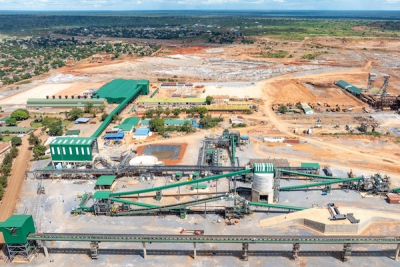
The Kipushi zinc mine in the Democratic Republic of Congo nearly quadrupled output in 2025, producing 203,168 tonnes of concentrate, up from 50,307 tonnes in 2024, Ivanhoe Mines said in its annual operating results published on Jan. 15, 2026. The mine is co-owned by Ivanhoe Mines (62%) and state miner Gécamines (38%).
The result was in line with Ivanhoe’s target of 180,000 to 240,000 tonnes.
The rise was driven by engineering work launched in September 2024 to boost throughput at the Kipushi concentrator by 20%. The optimisation programme was completed in early August 2025, helping lift output sharply in the second half of the year.
The mine delivered 57,200 tonnes in the third quarter and 61,444 tonnes in the fourth quarter, well above the 42,736 tonnes and 41,788 tonnes produced in the first and second quarters of 2025, respectively. Ivanhoe said recent output levels would rank Kipushi as the world’s fifth-largest zinc mine.
For 2026, Ivanhoe targets output of 240,000 to 290,000 tonnes. A key challenge will be maintaining stable operations, as the site faces an unreliable power supply from the Congolese grid. To mitigate the risk, the company said it expanded backup generator capacity in the fourth quarter of 2025.
Emiliano Tossou, with Ecofin Agency
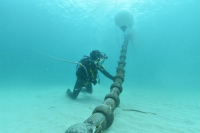
Telecommunications networks in the Democratic Republic of Congo (DRC) have been disrupted for several days, according to the sector regulator.
In a statement on Wednesday, Jan. 14, the Regulatory Authority of the Post and Telecommunications of Congo (ARPTC) said the problems were caused by a major technical fault on the West Africa Cable System (WACS). The international undersea fibre-optic cable system links Europe to Africa and is affecting internet services in the country.
ARPTC said repair work was under way and that operators were working to restore services as quickly as possible. It added that it was coordinating with telecom operators to put in place measures to support subscribers, in line with the applicable provisions governing force majeure situations.
The incident has revived concerns about the robustness of the DRC’s digital infrastructure, even as authorities seek to use ICT as a driver of socio-economic development. WACS is one of the main international undersea systems used to provide access to the global internet and international connectivity.
The DRC also has access to the 2Africa cable. Its landing in Muanda was reported in September 2023, with commercial service expected to begin in late 2025.
The country also relies on regional terrestrial interconnections, including a fibre link reported via Lake Albert toward Uganda, according to industry media. It is therefore possible that the DRC is also experiencing knock-on effects from the internet shutdown in Uganda, imposed on the eve of the presidential and parliamentary elections being held on Jan. 15.
Infrastructure investment
On the investment front, authorities recently announced the signing of a $150 million partnership with the investment firm United Investment LMT (UIL), based in Mauritius. The deal was presented as a way to strengthen digital infrastructure.
Publicly available information highlights investments in connectivity and infrastructure. However, accessible sources do not yet provide consistent, detailed documentation confirming the effective installation of a new international undersea cable as part of the initiative.
The episode also recalls vulnerabilities exposed during major outages affecting several undersea cables in March 2024, which caused significant disruptions across multiple African countries. At the time, analysts and industry players regularly pointed to diversification of cable routes and the use of satellite solutions among the options to improve resilience.
Satellite resilience
Satellite connectivity is one of the options frequently cited in this context. The Global System for Mobile Communications Association (GSMA), for example, has highlighted satellite services as a complement to terrestrial networks and a potential lever to strengthen resilience.
Zimbabwe, a landlocked country with no direct access to a cable landing point, has said it is exploring partnerships with Low Earth Orbit (LEO) connectivity providers, according to public announcements relayed by local and international media. The DRC is also pursuing a telecommunications satellite project, which authorities have framed as part of a broader push for sovereignty and improved connectivity.
ARPTC’s statement follows instructions from President Felix Tshisekedi, who asked the relevant authorities to take measures to end recurring disruptions affecting telecommunications networks and systems nationwide. This included the possibility of sanctions against operators deemed to be failing to meet their obligations.
Isaac K. Kassouwi, with Ecofin Agency
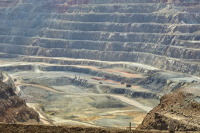
Democratic Republic of Congo Mining Minister Louis Watum Kabamba has unveiled details of a major iron ore project, after a pledge made at the Makutano 2025 forum last November.
He presented the project at the Council of Ministers meeting on Jan. 9. The minutes refer to the initiative as Mines de fer de la grande Orientale (Mifor), describing it as a major strategic shift in the country’s mining strategy, long dominated by copper and cobalt.
The project is based on deposits in the former Orientale province, now divided into Ituri, Haut-Uele, Bas-Uele and Tshopo. The document estimates reserves of between 15 billion and 20 billion tonnes, with an average grade above 60%. It does not say how the estimates were calculated.
According to the minister’s presentation, Mifor would be developed in several phases. The first phase targets output of 50 million tonnes a year, with capacity rising gradually to 300 million tonnes a year. The plan goes beyond extraction, including local processing units and a multimodal logistics corridor combining a heavy-haul railway, river transport and a connection to the deep-water port of Banana.
The initial investment for the first stage is estimated at $28.9 billion. Over 25 years, the minister cited cumulative revenue of $679.3 billion and net cash flow of $308.2 billion, based on conservative market assumptions. For the state, the document refers to significant and wide-ranging benefits, without providing figures.
Iron ore currently trades at around $105 a tonne. However, the start of production at Guinea’s Simandou mine, announced last November, could put downward pressure on prices in the medium term. If the project stays on schedule, Simandou could produce up to 120 million tonnes as early as 2028 and add supply to the market.
At this stage, Mifor has not yet moved into formal negotiations. Without naming specific entities, the report cites interest from international institutional investors with a track record in structuring and financing large-scale projects. The government says this is a positive sign for the project’s bankability and international credibility, while stressing that no binding commitments have been made. The financing structure, partners and implementation timeline have not been announced.
In the near term, the executive has decided to set up a dedicated governance structure. The Council of Ministers approved the creation of an expanded inter-ministerial commission to oversee strategic direction, coordination and the project’s phased development.
Boaz Kabeya
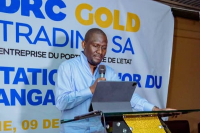
State-owned enterprise DRC Gold Trading said it will continue its nationwide expansion after an annual performance review held on Jan. 9, 2025. The company plans to open a branch in Mbujimayi shortly and another in Kinshasa by the end of March 2026.
The strategy targets the establishment of 10 operational sites nationwide, with the aim of reaching annual artisanal gold volumes of 15 to 18 tonnes and generating more than $2 billion in export revenues.
DRC Gold Trading currently operates five branches, including one in Bukavu that has been inactive since AFC/M23 rebels seized the city in March 2025. Hitting the upper target of 18 tonnes will be challenging, given that the company has exported about 10 tonnes of artisanal gold since beginning operations in early 2023.
Another challenge is uncertainty over the contribution of the Bukavu branch this year. That branch alone accounted for more than 90% of legal artisanal gold exports between 2023 and 2024, with a monthly average of over 420 kg sourced from South Kivu in 2023.
The state-owned company has, however, opened a branch in Kindu, in Maniema province, partially offsetting the loss of revenue from South Kivu. With a monthly average of around 114 kg of artisanal gold exported, Maniema has become the country’s leading artisanal gold exporting province. By the end of the third quarter of 2025, it accounted for 34% of national artisanal gold exports, totaling 683.67 kg, according to data from the Mining Technical Coordination and Planning Unit.
Timothée Manoke
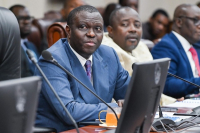
The Monetary Policy Committee of the Central Bank of Congo (BCC) decided on Jan. 8 to extend the easing cycle launched in late 2025.
The central bank’s main policy rate, which had already been cut to 17.5% from 25% at the previous meeting, was lowered again to 15%. The marginal lending facility rate was reduced to 19% from 21.5%, a 250-basis-point cut following an earlier drop from 30%.
"These decisions reflect our commitment to a rigorous, forward-looking and credible monetary policy aimed at maintaining price stability, reinforcing the Congolese franc’s recent gains and bolstering confidence in the national financial system," Governor André Wameso said.
Wameso has set a goal of reducing the economy’s reliance on the U.S. dollar and restoring confidence in the Congolese franc (FC).
At the end of December 2025, inflation fell to 2.27% from 11.69% a year earlier. On the interbank and parallel markets, the Congolese franc appreciated by 30.44% and 24.09% respectively compared with the end of 2024. It stood at 2,181.39 FC to the U.S. dollar on the interbank market and 2,309.38 FC on the parallel market.
The central bank also reported a rise in international reserves. These reached $7.886 billion at the end of December 2025, equivalent to about three months of imports of goods and services.
With the latest cut, the BCC is seeking to build on 2025’s gains and move into a more favorable cycle in which the Congolese franc gradually regains a more central role. The easing should reduce borrowing costs and facilitate financing in FC, encouraging wider use of the national currency in the real economy.
However, the success of this dedollarization policy will depend on maintaining exchange rate stability, low inflation and solid reserves, which are key indicators of lasting confidence in the Congolese franc. The latest cut will test confidence in the currency. It will show whether the franc can remain stable in a context of higher liquidity without reigniting pressure on the foreign exchange market or increasing dollarisation.
Prudent Easing
For 2026, the committee projects a contained inflation outlook, exchange rate stability and continued solid growth.
"The economy should benefit from the effects of the favorable trend in metal prices and an easing of conflict in the eastern part of the country, following commitments made by the various parties," the committee said. These factors should support demand for the local currency, according to the BCC.
However, two days after the easing decision, the central bank flagged signs of tension in the parallel market. It attributed this to speculation linked to negative expectations among some market participants. It intervened in the foreign exchange market by selling $50 million at a rate of 2,040 FC per U.S. dollar and planned another foreign-currency sale on Jan. 12, 2026.
Overall, the BCC remains cautious. It kept required reserve ratios unchanged at 10.5% and 0% for demand and time deposits in FC, and 11.5% and 10.5% for demand and time deposits in foreign currencies.
The committee said it maintains close monitoring of economic conditions and liquidity and stands ready to adjust its policy tools if needed.
On Dec. 19, 2025, following the latest reviews of its program with the DRC, the International Monetary Fund (IMF) called for a prudent and data-driven monetary policy.
"High uncertainties underscore the importance of carefully monitoring liquidity conditions and standing ready to adjust monetary policy as needed," the Fund said.
The IMF asked the country to continue accumulating reserves, preserve exchange rate flexibility, avoid multiple exchange rates, and strengthen the governance, transparency and independence of the central bank.
Pierre Mukoko
More...

Gécamines plans to sell part of the copper output from Tenke Fungurume Mining (TFM) to the United States through its new trading subsidiary, Gécamines Trading. TFM is 80% controlled by China’s CMOC.
The Congolese state miner said it has decided, for the first time, to exercise its contractual right to buy the share of production linked to its 20% stake in the mine and resell it to U.S. buyers. It put the volume at 100,000 tonnes for 2026.
“This first marketing operation represents an expansion of the competitive bidding system for output from Gécamines’ partnerships, a system introduced in 2023 and successfully implemented since then,” Guy-Robert Lukama, chairman of Gécamines’ board, said in a statement.
Gécamines said the decision to market the production share from its joint ventures is intended to address transfer-pricing practices used by some operators. Under such practices, output is sold at below-market prices to related entities, reducing dividends paid to Gécamines and mining revenues for the state.
The company said the strategy should lead to better pricing of Congolese minerals, higher tax revenues and a broader base of buyers, strengthening the country’s commercial independence.
“We welcome this first operation, which follows more than a year of work to strengthen the Democratic Republic of Congo’s position in global raw materials markets and to assert the state’s sovereignty over its mineral resources,” said Placide Nkala Basadilua, Gécamines’ chief executive, in the statement.
In the longer term, the state-owned company aims to secure sales rights of up to 500,000 tonnes of copper and 40,000 tonnes of cobalt, underlining its ambition to re-establish itself as a global player in critical minerals.
Strategic agreement
Before exercising its purchase right, Gécamines said it carried out a market consultation in late 2025. Several U.S. buyers agreed to purchase the 100,000 tonnes of copper at the end of the process under terms the company described as favourable.
Copper prices surged in 2025, rising 44% to a record $12,960 per tonne on the London Metal Exchange. Analysts expect momentum to remain strong in 2026.
The transaction also allows the DRC to implement commitments under a strategic agreement signed with the United States in Washington on Dec. 4, 2025. Under the agreement, “the DRC and its public enterprises will use their marketing rights linked to participation and contracts to provide offtake access to American and allied persons.”
The mechanism requires Gécamines, or any other state-owned company, to offer its marketable volumes to U.S. companies before other buyers, provided commercial terms are comparable and aligned with international prices.
The deal is being carried out by Gécamines Trading, a joint venture with Geneva-based Mercuria Energy Trading. The venture markets copper, cobalt and other critical minerals, including germanium and gallium, produced in the DRC.
The project is backed by the U.S. International Development Finance Corp (DFC). The agency said it has issued a letter of intent for an equity investment in the joint venture, aimed at securing U.S. supply chains for strategic minerals.
Pierre Mukoko
The Regulatory Authority for Subcontracting in the Private Sector (ARSP) has issued a decision that directly affects mining supply chains in the Democratic Republic of Congo.
In a decision published on Jan. 7, 2026, the regulator ruled that the supply of sulfuric acid, chemical reagents and similar inputs will be restricted exclusively to licensed subcontracting companies, in line with Law No. 17/001 governing private-sector subcontracting.
According to the decision, the supply of sulfuric acid, lime, flotation reagents, extractants and other chemicals used in ore processing is classified as a subcontracting activity in its own right. As a result, these supplies may no longer be provided directly by mining companies or by firms that are not listed in the ARSP’s official register.
The ARSP said the move was prompted by ongoing attempts to bypass subcontracting rules, which have allowed ineligible operators to dominate a strategic segment of the mining industry. Such practices, the regulator said, run counter to the law’s objective of ensuring meaningful participation by Congolese companies in markets generated by mining activity.
Under the new rules, mining companies must source acid and processing reagents exclusively from ARSP-approved subcontractors or face administrative sanctions under existing regulations.
The authority said it focused on the acid and reagents market because of the central role these products play in ore processing, particularly in copper and cobalt production. They are essential to leaching techniques used to extract metals from ore.
Until now, these inputs were largely supplied by foreign firms or entities integrated into major mining groups, limiting access for local suppliers. This, the regulator said, justified targeting the segment for stricter enforcement of subcontracting rules.
The decision forms part of the government’s broader strategy to promote local content and strengthen Congolese small and medium-sized enterprises. It aims to deepen the integration of national companies into the mining value chain and support job creation.
Boaz Kabeya
Hydrocarbons Minister Acacia Bandubola Mbongo has announced a series of projects to improve the supply of petroleum products in the provinces of Grand Equateur, Kasai and Sankuru. The projects were presented to executives from petroleum logistics and distribution companies during a meeting held on Jan. 8, 2026.
During the meeting, the minister outlined priorities for 2026, including the construction of new pipelines, the installation of additional storage facilities, and the rehabilitation of existing infrastructure to improve supply in underserved provinces of the Democratic Republic of Congo.
According to Olivier Okunda, deputy director general of Cobil, the meeting aimed to identify projects that could improve fuel supply in Grand Equateur, Kasai and Sankuru. He said technical and quantitative data would be submitted to the minister for government approval.
A 2022 roundtable involving the government and oil operators recommended the development of a dedicated roadmap to improve supply in Grand Equateur and Grand Kasai. Proposed measures included waterway dredging and marking, maintenance and rehabilitation of national roads, and the construction of fuel stations in each territory. Other recommendations included expanding the fuel molecular-marking programme and strengthening logistics capacity, notably through the provision of firefighting equipment to the provinces.
Oil operators also called for subsidies for the national railway operator SNCC to increase transport volumes and the number of tank wagons. They further urged the government to ensure regular fuel supply to the provinces and to enforce the existing price structure.
Ronsard Luabeya
Mobile operators in the Democratic Republic of Congo (DRC) face possible sanctions for failing to meet service-quality standards, authorities said.
At a cabinet meeting on Jan. 9, 2026, President Felix Tshisekedi instructed telecommunications regulators to take action to curb recurring disruptions affecting networks and systems nationwide.
The president ordered the strict enforcement of penalties предусмотрed by law against any operator found in breach of obligations relating to service quality, continuity, coverage, or consumer protection. He also called for stronger regulatory oversight, enhanced controls, and continuous monitoring of network and service performance, alongside improved coordination between line ministries, regulators, and technical agencies. A detailed report is due within 30 days.
The disruptions affect mobile and fixed telephony, internet access, data transmission, digital services, network interconnection, and radio and digital television broadcasting.
“These persistent failures seriously disrupt citizens’ daily lives, government operations, and the functioning of the national economy, leading to communication breakdowns, interruptions in banking and commercial transactions, and a marked deterioration in radio and digital television services,” the cabinet statement said.
In late December, Posts, Telecommunications and Digital Affairs Minister Jose Mpanda Kabangu called out operators Orange, Airtel, and Vodacom following user complaints over unstable networks, dropped calls, and limited internet access in Sankuru province.
Earlier, in September, shortly after taking office, the minister highlighted nationwide malfunctions, including frequent outages, network congestion, unjustified airtime deductions, and failed mobile money transactions that were nonetheless billed. Consumers regularly raise these issues on social media.
Pressure on telecom operators comes as Congolese authorities seek to position the digital sector as a key driver of socio-economic development. Officials say reliable, high-performance, resilient, and continuous networks are essential in a competitive environment that ensures fair territorial coverage and strong consumer protection.
Such infrastructure is also critical to support access to digital public services rolled out by the government.
The sanctions under consideration have not yet been specified. However, the 2020 telecommunications and ICT law provides that any breach of license conditions or associated specifications not warranting suspension or withdrawal may be punished by a fine of up to one-quarter of the license value.
Isaac K. Kassouwi