






News (946)
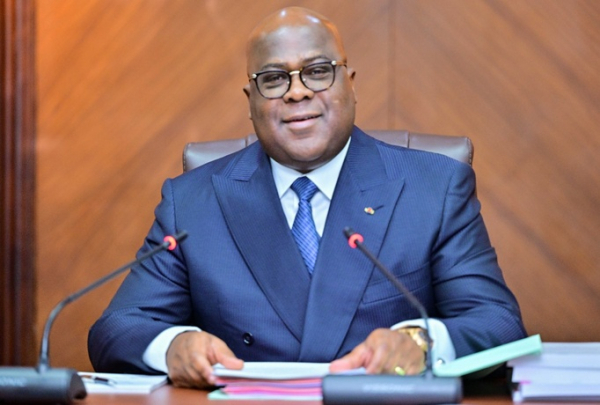
DR Congo’s President Felix Tshisekedi has instructed the government to tighten regulation of social media platforms to curb abuses, according to a statement issued after a cabinet meeting.
The directive was announced at the 80th ordinary meeting of the Council of Ministers held on Feb. 27 in Kinshasa.
Tshisekedi tasked the justice minister and the minister of digital economy with proposing and implementing measures to promote responsible and ethical use of social media, in consultation with relevant agencies.
The measures could include, if necessary, “proportionate restrictive measures in accordance with the law, while respecting fundamental freedoms,” according to cabinet minutes read by Digital Economy Minister Augustin Kibassa Maliba.
The move comes as internet and social media use continues to expand in the Democratic Republic of Congo. According to DataReportal, the number of internet users rose from 21.14 million in 2021 to 34.7 million at the start of 2026, an increase of 64.1%, bringing penetration to an estimated 30.5%. Over the same period, social media users increased from 4 million to 10.4 million.
Authorities say that, rather than serving exclusively positive purposes, social media platforms are increasingly being used to spread disinformation, fuel public disorder, promote hate speech, manipulate opinion and incite division, undermining national cohesion and social stability.
The decision also comes amid persistent security challenges in several provinces, with security issues among the most debated topics online.
Raise awareness and enforce the Digital Code
Central to the president’s message is the need to strengthen awareness and enforcement of the Digital Code, adopted to regulate the use of digital platforms in the country. Tshisekedi said the law already provides mechanisms to prevent, regulate and punish online abuses, but is not widely known or consistently enforced.
The communication and media minister has been tasked, in coordination with public and private operators, with running ongoing public awareness campaigns. Magistrates will also be targeted under the supervision of the Superior Council of the Judiciary to ensure consistent and deterrent enforcement.
Beyond regulation, the government is turning to education. The ministries of national and higher education have been instructed to gradually introduce modules on digital responsibility into school curricula. Training programs are also expected to address issues related to social media and artificial intelligence.
Relevant ministers must submit a detailed report every 15 days outlining actions taken, results achieved and any challenges encountered to allow for monitoring and evaluation. Details of how the measures will be implemented remain unclear.
Isaac K. Kassouwi, with Ecofin Agency
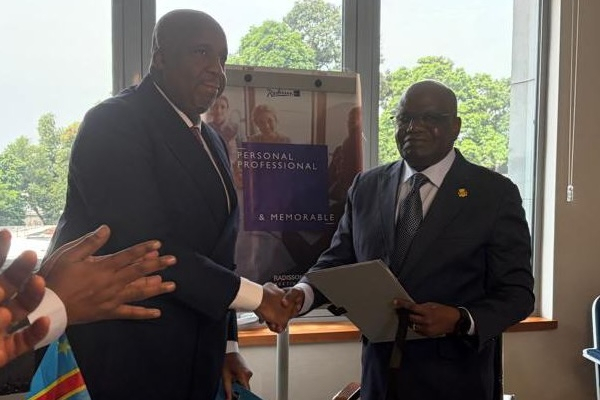
The Democratic Republic of Congo and the Republic of Congo plan to develop the Pioka-Tombe cross-border hydropower project, with a planned capacity of 6,450 megawatts.
DRC Minister of Hydraulic Resources and Electricity Aimé Sakombi Molendo and his Congolese counterpart, Émile Ousso, signed a memorandum of understanding on Feb. 26, 2026, covering the development of the site in the Cataractes district of Kongo Central province.
On the DRC side, the project has backing at the highest level of government and has been designated a national priority. Authorities say it aims to harness the Congo River’s potential under a framework of balanced cost and benefit sharing, supporting the two countries’ energy, industrial and social development.
Implementation and preparatory studies
The project was discussed at a Council of Ministers meeting on Jan. 9, 2026. At the time, Sakombi said implementation would require updating existing studies, conducting topographic surveys, and carrying out pre-feasibility and feasibility assessments. The process will also include preparing a detailed preliminary design and establishing the institutional and financing framework.
The minister requested government approval to formally commit to the project’s development and secure the necessary authorizations. These include hiring a firm to update feasibility studies and mobilizing funding for the studies and the structuring of public-private partnerships.
According to Sakombi, the project could help secure electricity supply in Kinshasa, where the deficit exceeds 1,000 MW. It could also support industrial development in Kongo Central and in industrial zones connected to the Inga power network.
The initiative forms part of efforts to optimize the overall development plan for the Congo River and to prepare technically and strategically for the future development of Grand Inga, which could reach an installed capacity of 40 gigawatts.
Ronsard Luabeya
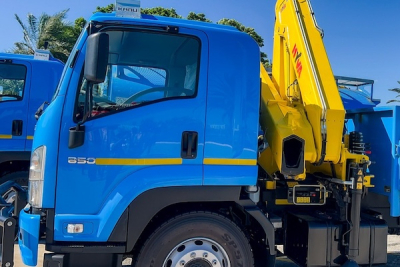
Democratic Republic of Congo Infrastructure and Public Works Minister John Banza Lunda is set to deploy about 1,000 units of equipment to support road construction and sanitation projects, his ministry said. The equipment was procured from China, Mauritius and South Africa.
The delivery forms part of a broader order of 5,600 units under a partnership agreement signed with South Africa’s Guma Group, aimed at modernising the country’s public works capacity.
During a visit to South Africa, Banza Lunda toured the port of Port Elizabeth and the Isuzu manufacturing plant to expedite shipments to the DRC. According to a ministry statement, the consignment includes 500 trucks and 500 civil engineering machines, such as dump trucks, towing vehicles, recovery trucks and mobile workshops.
The minister said the equipment has reached the port and shipments to Kinshasa are underway. Once operational, the machines are expected to accelerate infrastructure works across several provinces, particularly road rehabilitation, erosion control, drainage and sanitation projects.
Blue-painted equipment will be allocated to the Office of Roads and Drainage (OVD), while yellow units will go to the Office of Roads (OR). Both agencies are responsible for executing urban and peri-urban public works across the country.
The deployment follows an earlier shipment of 200 civil engineering machines ordered from China. In November 2025, Banza Lunda oversaw the delivery of that first batch to the DRC.
Ronsard Luabeya
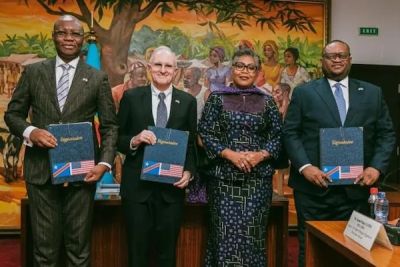
The Democratic Republic of Congo (DRC) and the United States signed a framework agreement on health cooperation on Feb. 26 in Kinshasa, laying the groundwork for a strengthened strategic partnership in public health for 2026-2030.
The programme is backed by $1.2 billion, including $900 million from the United States and $300 million to be phased in by the Congolese government. According to a government statement issued on Feb. 26, 2026, the goal is to strengthen the national health system sustainably and improve access to care.
The agreement includes expanded support for the fight against HIV/AIDS, tuberculosis and malaria, as well as maternal and child health. It also includes strengthening epidemiological surveillance, improving preparedness and response to health emergencies, and bolstering the health system at national and local levels. Authorities said the partnership would focus on skills transfer, technical cooperation and institutional capacity building, in line with President Félix Tshisekedi’s emphasis on human capital development.
The deal comes amid major shifts and disruptions in U.S. funding, which has historically financed a large share of humanitarian and health programmes in the DRC. An analysis cited by the scientific journal The Lancet Oncology found that more than 70% of humanitarian activities in the DRC were funded by the United States in 2024, leaving the country highly exposed to funding cuts or freezes.
In the humanitarian sector, the United Nations Office for the Coordination of Humanitarian Affairs (OCHA) said around 1.5 million people lost access to primary healthcare following reductions in operational capacity. These cuts led to the closure of health facilities, shortages of essential medicines and reduced capacity to prevent and respond to epidemics. The same source reported the closure of more than 1,000 nutrition centres, depriving over 390,000 children suffering from severe acute malnutrition of treatment.
Authorities have not yet detailed provisions related to data-sharing, regulatory requirements or phased national commitments under the partnership. Several African countries involved in similar agreements have recently raised concerns about such frameworks, citing what they describe as intrusive data-sharing provisions and stricter financial conditions.
Boaz Kabeya
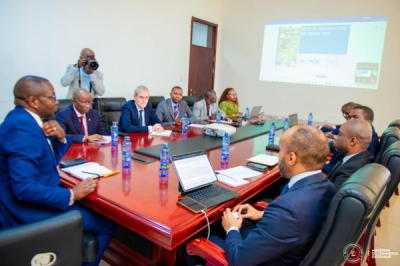
A technical meeting was held on Feb. 24, 2026, in Kinshasa between the Ministry of Foreign Trade, Société d’Exploitation du Guichet Unique Intégral (SEGUCE-RDC), and the Senegalese company Gaindé 2000. According to a ministry statement, discussions focused on supporting the rollout of digitalized import, export and transit procedures launched on Dec. 29, 2025.
The reform is based on interconnecting the Single Window for Foreign Trade system (S-One) with the Sydonia customs system. It makes electronic transmission of supporting documents between SEGUCE and Customs mandatory. Required commercial documents for import and export operations are centralized within the Single Window system and automatically transferred to Customs for declaration processing. Authorities say the measure will reduce delays, strengthen traceability, curb documentary fraud and boost public revenue collection.
The ministry said the Feb. 24 meeting focused on establishing experience-sharing arrangements between SEGUCE-RDC and Gaindé 2000. The Senegalese firm developed the ORBUS system, a digital single window used notably at the port of Dakar.
According to information available on the ORBUS platform, the system and its Orbus Infinity version offer expanded functionalities by interconnecting stakeholders across the logistics and port chain, including freight forwarders, shipping companies, terminal operators, carriers and customs authorities. The platform also integrates value-added services that go beyond document transmission.
These include electronic signature functionality designed to ensure the authenticity and validation of documents issued for import and export procedures. The ministry said this solution is of particular interest to the Congolese authorities and was central to the Feb. 24 technical meeting in Kinshasa.
Gaindé 2000 has also been implemented in several African countries, including Burkina Faso, Kenya, Côte d’Ivoire, Guinea-Conakry and Guinea-Bissau, according to the ministry.
Timothée Manoke

Congo’s national carrier Air Congo said on Wednesday it would launch its first five regional routes from March 2026, marking its expansion beyond domestic operations.
The announcement comes nearly a week after the delivery of a Boeing 737-800, bringing its fleet to three aircraft of the same type. The transport ministry had previously said the aircraft was part of a strategy to open new regional destinations.
Flights to Entebbe and Johannesburg will begin on March 22. Services to Cotonou and Douala will start on March 28, followed by Dar es Salaam on April 4, 2026. Air Congo is 51% owned by the Congolese state and 49% by Ethiopian Airlines. The expansion extends its network across Central, East and Southern Africa.
Competition on the Kinshasa-Entebbe route
By launching flights to Entebbe, Air Congo enters a route already served by Uganda Airlines. The Ugandan carrier operates six weekly flights on the route.
However, Uganda Airlines has faced operational difficulties in recent months, including flight cancellations and baggage delays. In addition, two Airbus A330-800neo aircraft have been grounded since Feb. 20 for maintenance issues, temporarily reducing long-haul capacity and complicating scheduling at a time of strong regional demand.
In a letter dated Feb. 13, 2026, Ugandan President Yoweri Museveni instructed the transport minister to appoint Girma Wake, former chief executive of Ethiopian Airlines, as acting general manager of Uganda Airlines. The move aims to address management weaknesses identified within the state-owned carrier.
On the Kinshasa-Dar es Salaam route, Air Congo will compete with Air Tanzania, which has operated four weekly flights since April 2025. The Tanzanian carrier first launched services to Lubumbashi before expanding to Kinshasa.
Limited competition on Kinshasa-Douala
Currently, travellers heading to Douala or Cotonou from Kinshasa must connect via Addis Ababa, Lomé or Abidjan. Direct flights would significantly reduce travel times.
That exclusive position on the Kinshasa-Douala route may be short-lived. Cameroon’s state-owned Camair-Co has said it plans to launch services to Kinshasa, initially announced for late 2025.
Founded in 2024, Air Congo has so far operated only domestic routes, serving Kinshasa, Lubumbashi, Kisangani, Mbuji-Mayi, Kananga, Kindu and Kolwezi with two Boeing 737-800s. Speaking at the Makutano forum last year, Transport Minister Jean-Pierre Bemba said the airline had recorded load factors of between 80% and 100%, encouraging management to expand regionally.
The airline also said it expects to receive an ATR 72-600 next month to strengthen its domestic network. The aircraft will be used to serve Beni, Bunia, Isiro, Gbadolite, Mbandaka and Kalemie.
Timothée Manoke
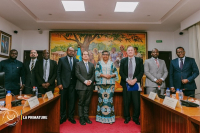
Prime Minister Judith Suminwa Tuluka received officials from the Congolese Battery Council (CCB) and the International Trade Centre (ITC) on Feb. 24, 2026. The meeting focused on a strategic partnership to develop local value chains for battery minerals, according to an official statement issued afterward.
The initiative seeks technical support from the ITC and access to its international network to advance local processing by identifying public-private partnerships and target markets. Officials describe the project as cross-cutting, mobilizing the energy, mining, industry, infrastructure and trade sectors.
Against that backdrop, Kinshasa is seeking to narrow the gap between its mineral resources and end markets. The involvement of the ITC, a U.N. agency specializing in trade support and the integration of developing countries into global value chains, suggests an approach focused on market access, standards and international partnerships, at a time when the battery strategy has yet to translate into finalized industrial investments.
Interministerial Coordination Challenges
In March 2025, then-Industry and SME Development Minister Louis Watum Kabamba launched construction at the Musompo Special Economic Zone (SEZ) in Lualaba province. The zone is intended to host activities ranging from precursor materials to battery production, with a possible extension into assembly. It covers more than 900 hectares. Construction costs are estimated at over $200 million, and roughly $2 billion in private investment has been targeted, with projections of 25,000 direct jobs and 60,000 indirect jobs.
Progress has been slow. In November 2025, at the Makutano forum, the chief executive of Arise IIP, a developer involved in several SEZs in the Democratic Republic of Congo including Musompo, expressed concern about a slowdown in the project. “The project seems to have slowed following the minister’s departure from the Industry Ministry in August,” said Romain Deniel.
Deniel noted that establishing a special economic zone “requires the involvement of four, five, sometimes six ministries” and therefore demands “significant coordination.” He added that beyond the administrative framework, the battery value chain is a “very strategic” segment that also requires the buy-in of existing operators, given the project’s potential to affect the structure of the value chain.
The ITC Lever
Taken together, these developments highlight a central issue: local processing depends not only on political will or technical studies, but on the state’s ability to sustain stable interministerial coordination across mining, energy, industry, finance and infrastructure, while navigating a mining sector already structured around export chains and dominant players. The trade-offs extend beyond tax incentives to energy and infrastructure access, local content requirements, supply conditions and the role of incumbent operators in the future industrial model.
In that context, the announced cooperation with the ITC represents a complementary lever. While industrial projects are still building momentum, Kinshasa is seeking to secure another critical link, namely market access and partnerships. The ITC could help clarify export channels, standards and traceability requirements, identify industrial or financial partners, and structure value chains aligned with international market expectations. The challenge for the DRC is to prevent the battery strategy from remaining limited to industrial zone announcements and to translate it into concrete commercial and industrial projects.
One major question remains unanswered: the operational substance of the partnership. The official statement refers to technical support and access to the ITC’s international network, but provides no timeline, deliverables, volumes or target industrial segments, whether refining, precursors, components or assembly.
Pierre Mukoko & Boaz Kabeya
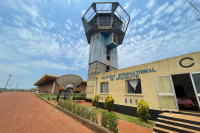
The Democratic Republic of Congo's Ministry of Rural Development has announced a drinking water project targeting the provinces of Mongala, Nord-Ubangi and Sud-Ubangi.
State Minister Grégoire Mutshail Mutomb said the program includes the construction of modern water supply networks and public standpipes designed to serve communities within a five- to 10-kilometer radius, according to the Congolese Press Agency (ACP).
The ACP reported that the minister also identified infrastructure gaps in Gbadolite and announced plans to extend water systems to nearby areas. Additional studies will be conducted, while the national water utility Regideso is expected to undergo modernization to support sustainable service delivery.
Regional context: PREDIRE program and PDL-145
The announcement comes as authorities promote the regional PREDIRE program, which supports infrastructure development and transboundary water resource management in the Ubangi River basin. The African Development Bank (AfDB) says the program covers Nord-Ubangi, Sud-Ubangi and Mongala in the DRC, as well as the Greater Bangui area in the Central African Republic, targeting direct beneficiaries across the region. The ACP said both initiatives fall under the PDL-145 Territories program, which aims to expand access to basic services.
Neither the ACP nor official communications specify the project’s budget, financing sources or implementation timeline, including its start date, duration or phases. Authorities have not disclosed the list of targeted communities by province or the number of planned facilities, such as standpipes, network length, pumping stations or reservoirs.
Operational details also remain unclear, including Regideso’s role in ownership, maintenance and tariff setting, as well as expected service standards and oversight mechanisms. The relationship between the announced project and PREDIRE, including their respective geographic scopes, coordination framework and whether financing is shared or separate, has not been explained.
Boaz Kabeya

Xcalibur Multiphysics Group is preparing to roll out the second phase of an airborne geophysical and geological mapping program in the Democratic Republic of Congo (DRC), one month after signing a second contract worth $297.8 million with the Ministry of Mines.
Mines Minister Louis Watum Kabamba chaired the first steering committee meeting on February 23, 2025, attended by company representatives. Discussions covered technical guidelines, the implementation timeline and operational requirements, including equipment mobilization and administrative compliance. No further details were disclosed.
The steering committee will oversee the program’s implementation, ensure compliance with financial procedures and recruit an independent consultant to supervise quality control. Authorities also announced a public awareness campaign.
According to the ministry, Phase B aims to modernize the country’s geological mapping, strengthen governance of geoscientific data, reduce exploration risk and build local technical capacity.
The three-year program will cover the provinces of Kasai, Kwango, Kongo Central and Katanga, spanning more than 700,000 square kilometers. It will increase survey density in areas identified during Phase A and conduct detailed investigations of detected anomalies. Magnetic and radiometric surveys will be carried out across the remaining territory, while gravity surveys will focus on the Central Basin to assess oil and gas potential. Detailed geological and geochemical mapping is also planned.
Six to eight aircraft planned
The project includes a capacity-building component, the full implementation of a Geographic Information System (GIS) to manage and analyze data, and the construction of a laboratory for chemical, petrographic and metallogenic analysis.
Operationally, Xcalibur plans to fly more than 2.7 million linear kilometers. Flight lines will be spaced 250 meters apart to generate high-resolution data across geologically diverse zones. The company intends to progressively deploy six to eight aircraft for the program.
During the dry season, one aircraft equipped with the Tempest electromagnetic system will operate full-time to collect more than 300,000 linear kilometers of data, with lines spaced 2.5 kilometers apart.
All airborne and ground data will be integrated into XENAI, Xcalibur Smart Mapping’s artificial intelligence platform. The company says the system provides secure access to multilayered geoscientific datasets and enables advanced analysis using machine learning.
The data processing is expected to produce integrated interpretation and prospectivity reports, identify priority geological targets and provide a factual basis for national planning and investment promotion. The Geological Service and the Congolese government will retain ownership of the data and determine how it is used and shared.
Ronsard Luabeya
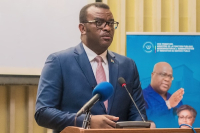
Democratic Republic of Congo Deputy Prime Minister for the Civil Service Jean-Pierre Lihau has signed an accountability agreement with secretaries-general, inspectors-general and directors-general as part of a public administration reform drive.
The agreement formally places responsibility for workforce management on the heads of public administrations. Effective immediately, they are required to ensure that staffing levels align with approved budget positions. The move aims to prevent a repeat of large numbers of unregistered but salaried employees.
Speaking on Top Congo on Feb. 19, 2026, Lihau said the initiative follows the identification of more than 87,000 “new units” (NU) since control procedures were launched in 2022.
The term “new units” refers to public employees who were not recorded in the state’s official administrative files but were already receiving salaries or bonuses. According to the minister, their high number has added pressure to the public payroll in recent years.
He said 87,956 such cases had been identified across all public administrations. He warned that similar situations could now result in sanctions against responsible officials, including dismissal.
The measure forms part of a broader regularization and payroll integration process. In July 2025, the Civil Service said it had identified more than 500,000 employees not yet integrated into the payroll system, of whom 180,000 had been regularized. A new integration phase for the third quarter of 2025 was announced, with lists published on the Civil Service’s official website.
The reform also relies on Administrative Circular No. 006 of Sept. 10, 2025, which sets out procedures for certifying “new units.” It establishes a review process led by a working group tasked with verifying appointment documents and the availability of funded positions.
The initiative is part of President Felix-Antoine Tshisekedi Tshilombo’s broader government reform effort aimed at strengthening transparency and control over the public payroll.
Boaz Kabeya
More...
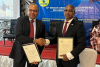
The Democratic Republic of Congo and Gabon have signed an agreement to develop mobile roaming services between the two countries.
The memorandum of understanding was signed on Feb. 19, 2026, on the sidelines of the 10th ordinary session of the regulators’ conference held in Kinshasa, according to the Congolese Press Agency (ACP).
The agreement aims to allow users to make calls, send text messages and use mobile data in the other country through a partner network without changing their phone numbers.
Christian Katende, head of Congo’s Postal and Telecommunications Regulatory Authority (ARPTC), said the cooperation is intended to improve user mobility and lower the cost of cross-border communications, with the goal of strengthening connectivity between the two countries, ACP reported.
The protocol was initialed by the heads of the two regulatory bodies, ARPTC for Congo and ARCEP for Gabon, according to Congolese media reports.
No timeline has been announced for implementation. Lower-cost roaming typically requires technical coordination and pricing agreements between operators, including reduced roaming fees or harmonized tariffs, depending on the terms negotiated.
The initiative comes amid a broader regional push. In Central Africa, the Economic and Monetary Community of Central Africa (CEMAC) relaunched efforts in March 2025 to introduce free roaming, meaning services without extra charges, and called for obstacles to its implementation to be removed, though timelines and modalities vary by country and operator.
Ronsard Luabeya

The Democratic Republic of Congo's central bank has moved to add gold to its official reserves, signing an agreement on Feb. 20 with DRC Gold Trading, the state-owned company responsible for collecting and exporting artisanal gold.
Under the deal, the Central Bank of the Congo (BCC) will serve as the primary buyer of gold produced by the country's artisanal miners through DRC Gold Trading, Governor André Wameso said at the signing ceremony.
The project is designed to “correct a major historical anomaly”: the fact that a leading gold producer holds no physical gold in its vaults. For the BCC, the initiative also aims to reinforce the stability of the Congolese franc and strengthen the country's financial sovereignty, against a backdrop of rising gold prices and a broader push to diversify reserve assets.
The move is consistent with the priorities Wameso has pursued since his appointment as central bank governor in July 2025: reducing the country's structural dependence on the dollar and restoring confidence in the Congolese franc. Since September 2025, the national currency has appreciated 19%.
The financial terms of the BCC-DRC Gold Trading partnership, including the payment currency, purchase price, volumes, timeline, delivery arrangements, storage, auditing and transparency mechanisms, have not been publicly disclosed. Those details are critical to assessing Wameso’s strategy.
Challenges
The BCC said that holding monetary gold will protect its reserves against inflation and geopolitical shocks. Described as a safe-haven asset with no counterparty risk, gold would help reduce the reserves’ exposure to fiat currency depreciation and bolster confidence in the national currency. The extent of that effect will depend, in part, on gold’s eventual share of total reserves.
According to several monetarists, the project’s impact on franc stability will also hinge on the purchasing framework, particularly the payment currency. If gold is purchased in Congolese francs, the operation could support use of the national currency, but it would strengthen the franc only if the BCC prevents those purchases from generating uncontrolled monetary expansion. If the liquidity injected into the economy is not subsequently absorbed or offset, the operation could stoke inflation and increase demand for dollars. Conversely, if gold is purchased in dollars, the arrangement could enhance the appeal of the official channel in a heavily dollarized sector, but it could also strain foreign currency liquidity if payments draw down foreign exchange reserves.
Wameso must also contend with competition from informal supply networks. To draw gold away from those channels, the official buyer must offer sufficiently attractive pricing and payment terms while guarding against the re-labeling of smuggled gold. For several players in the sector, payments in Congolese francs are widely seen as a drawback.
In 2025, the DRC channeled 2.3 metric tons of artisanal gold through official channels, according to official statistics described as preliminary and incomplete. For 2026, DRC Gold Trading is targeting 15 to 18 metric tons of artisanal gold per year and more than $2 billion in export revenues. To establish itself as the primary buyer, the BCC must also address a liquidity challenge: balancing foreign exchange interventions, which involve selling dollars, buying francs and meeting priority public import needs, with gold purchases.
Pierre Mukoko & Ronsard Luabeya
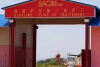
Anhui Foreign Economic Construction Ltd Congo Corp (SACIM) has completed its first public sale of 288,000 carats of industrial diamonds in Antwerp, Belgium, the Consulate General of the Democratic Republic of Congo in the city said.
The sale was held from Feb. 16 to Feb. 20, 2026, with technical support from Belgian firm Samir Gems, active in the diamond and jewelry trade, and the Antwerp World Diamond Centre (AWDC). A total of 67 international companies took part, with leading buyers from China, India, the United States and Italy.
The transaction marks the return of Congolese industrial diamonds to the Antwerp market after more than a decade, the Consulate said. However, the interruption did not affect all exports. Official statistics show Belgium among the importers of Congolese industrial diamonds in 2024 and 2025, with 3.96 million and 1.7 million carats respectively.
Following the sale, Sacim, Samir Gems and the AWDC agreed on an annual schedule of public sales and a framework for technical and institutional support aimed at strengthening the long-term presence of Congolese diamonds in Antwerp.
The sale comes eight months after the liberalization of diamond trading by Congolese producers. In June 2025, then-Minister of Mines Kizito Pakabomba repealed a 2022 decree that regulated mineral sales through the Center for Expertise, Evaluation and Certification of Precious and Semi-Precious Mineral Substances (CEEC). The framework limited producers to a restricted list of buyers, a system that could influence prices. As a major player in the sector, Sacim was among the companies most affected.
The terms of the Antwerp sale were not disclosed. Official 2025 mining statistics nonetheless show an improvement in Sacim’s average sales price. In 2024, when the sector’s average price stood at $9.63 per carat, Sacim recorded $11.38. In 2025, the company maintained an average price of $11 while the sector average fell to $7.4 per carat. Natural diamond prices have been declining for several years.
According to official data, exports by Sacim, jointly owned by China’s Anhui Foreign Economic Construction Corporation (AFECC) and the Congolese state, were halved, falling from 2,887,100.25 carats in 2024 to 1,151,865.58 carats in 2025. The company accounted for 13.5% of national output, producing just over 1.1 million carats.
Ronsard Luabeya

Tshopo province, in north-central Democratic Republic of Congo, has recorded its first official exports of artisanal gold, according to 2025 mining statistics released on Feb. 3.
The data, described as “provisional and partial,” show that Tshopo exported 125.26 kilograms of gold over five months. The figures may reflect the launch of DRC Gold Trading’s operations in the province. The state-owned company, which channels and exports Congolese artisanal gold, now lists Kisangani, the provincial capital, among its operational locations, though it has not disclosed when the branch opened.
Governor Paulin Lendongolia Lebabonga announced plans for the office as early as June 2025, saying it would help tighten oversight of gold trading, curb fraud and secure revenue for the province. Provincial authorities said transactions should go through licensed trading houses and be integrated into the formal banking system.
Mining Data
The move comes amid wider regulatory problems in the province’s mining sector. In January 2025, the provincial government suspended mining activities to compel companies to register with the authorities. Of 142 companies identified as operating in the province, the provincial mines minister said only one was compliant at the time, with the others accused of operating outside legal requirements.
Actualité.cd reported in February 2025 that civil society groups across several territories had flagged the presence of foreign nationals operating illegally and partnering with local cooperatives.
According to the Ministry of Mines, Tshopo has four active artisanal gold cooperatives, two of which are officially listed as “in production.” Despite being listed as active, the province had not appeared in national mining statistics before 2025.
Some buying houses reported monthly volumes of around 10 grams, figures considered too low to cover their operating costs. Provincial authorities suspect that part of the gold output is bypassing formal channels and being smuggled to Uganda, a country frequently cited as a transit hub in regional gold trafficking networks.
Timothée Manoke