




The Congolese Agency for Major Works (ACGT) says it remains on track to complete the 3,300-kilometer Sakania-Banana road corridor by the end of 2027.
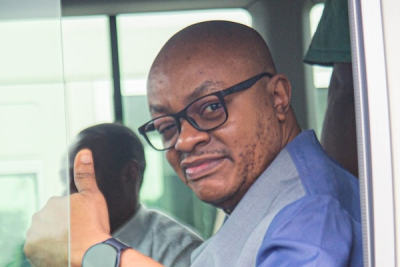
The project will fully pave National Road No. 1, linking the Democratic Republic of Congo’s eastern border to its Atlantic coast. According to ACGT Director General Nico Nzau Nzau, 850 kilometers still need to be paved.
Nzau Nzau told state-owned Radio Okapi on November 4 that the route is already laid out and passable, but the remaining 850-kilometer stretch between Mbuji-Mayi and Nguba requires final paving, which is now underway.
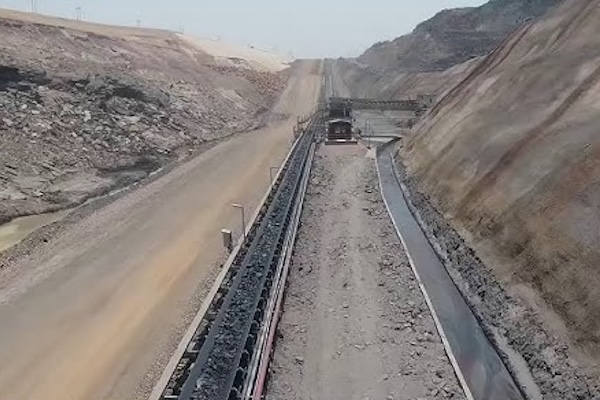
He said current works focus on clearing and opening the roadbed to allow traffic between Mbuji-Mayi and Nguba. Asphalt laying has begun on the Mbuji-Mayi-Mediito and Nguba-Lobudi segments. About 20% of the overall work was completed during the first year, a phase largely dedicated to site mobilization and setup.
The total cost of the project is estimated at $900 million to $1 billion, financed under the Sino-Congolese cooperation program. It is being carried out in partnership with Chinese contractors and supervised by several national and international inspection firms to ensure technical compliance and transparency.
Nzau Nzau cited logistical challenges as the main obstacle. The landlocked central region, particularly the Kasaï area, makes the delivery of heavy equipment difficult. Companies operating at the corridor’s ends benefit from easier access: through Matadi in the west and via Mombasa and Dar es Salaam in the east. This explains why central sections are progressing more slowly. He nonetheless affirmed that the entire corridor will be completed within the next two years.
Once fully paved, the Sakania-to-Banana journey, spanning the length of the DRC, will take roughly four days without crossing foreign territory. The corridor is expected to cut logistics costs, lower transport prices, and boost economic activity, contributing to long-term regional development. Maintenance of completed sections will be handled by the Road Office and the National Road Maintenance Fund.
Boaz Kabeya