




The Moroccan Confederation of Exporters (ASMEX), which represents over 600 companies, recently concluded a high-level trade mission to Kinshasa from December 15 to 17, 2025. This mission aimed to revitalize economic exchange between the Democratic Republic of Congo (DRC) and Morocco. This is a strategic priority because bilateral trade has remained sluggish and volatile, fluctuating between $37 million and $60 million in recent years.
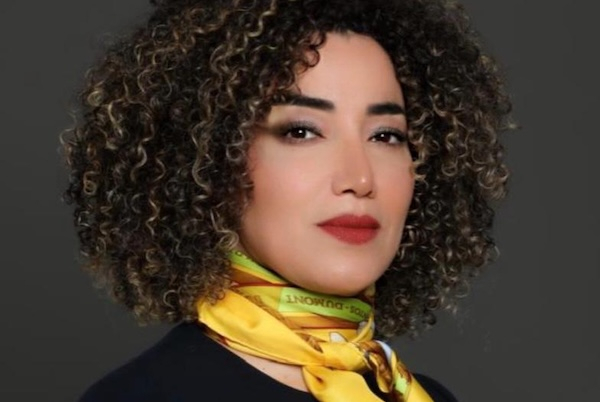
In this exclusive interview, Kawtar Raji, Secretary General of ASMEX, outlines the mission’s core priorities. As a Moroccan attorney and co-founder of the law firm Gauvin & Raji, which has operated in the DRC since 2023, Raji also discusses the essential frameworks needed to turn "South-South" ambitions into tangible and long-term business ventures.
Bankable: From December 15 to 17, you led a diverse ASMEX delegation representing sectors such as engineering, agribusiness, and digital technology on a mission to the DRC. What were the specific objectives behind this initiative?
Kawtar Raji: I led this mission on behalf of the Moroccan Confederation of Exporters (ASMEX) as a first step in implementing the Memorandum of Understanding signed with the DRC’s National Investment Promotion Agency (ANAPI) in July 2023. The agreement sets out a framework to strengthen ties between Moroccan and Congolese business leaders by identifying opportunities, supporting companies, and organizing economic events.
The mission we carried out last December also underscores Morocco’s commitment to strengthening South-South cooperation, in line with the vision of His Majesty King Mohammed VI. Ultimately, we want to raise our economic partnership to match the long-standing friendship between Morocco and the DRC.
Despite the tight timetable ahead of the Africa Cup of Nations, we decided to proceed with the mission because we wanted to send a clear message to business communities in both countries. The message was clear. Both sides are determined to move forward together, expanding the presence of Moroccan companies in the DRC while welcoming Congolese businesses to Morocco in return.
This progress was made possible thanks to ANAPI’s strong support at every stage, from planning and logistics to arranging meetings with public authorities and key economic partners.
In that regard, this mission officially launched our partnership with ANAPI. Further missions will follow, with the aim of organizing a flagship event such as a major economic forum in 2026. We focused on sectors aligned with the DRC’s priorities and where ASMEX members are keen to explore the Congolese market. Going forward, we are working with ANAPI to identify additional strategic sectors beyond infrastructure and construction to include in upcoming missions.
After this first mission, what concrete indicators, whether contractual, relational, or institutional, show that the initiative was successful?
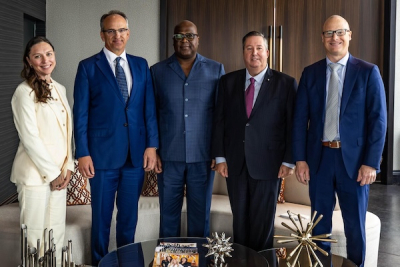
Several indicators point to encouraging early results from this mission. First, we received strong institutional support. We met with two ministers: His Excellency Julien Paluku Kahongya, Minister of Foreign Trade, and His Excellency Guylain Nyembo Mbwizya, Minister of Planning. Both reaffirmed the DRC’s commitment to supporting economic cooperation and to making trade between our two countries easier. For Moroccan business leaders, that message matters because it provides reassurance that the institutional environment is supportive and open to dialogue.
The Moroccan private sector is looking for long-term, sustainable partnerships that create value on both sides.
Second, the B2B meetings were well attended and highly productive. Many Congolese companies came to meet our exporters and showed strong interest. I am confident these discussions will translate into concrete outcomes.
Third, our cooperation with ANAPI continues to gain momentum. We plan to deepen this partnership through sector-focused B2B missions and by building a pipeline of investment and co-investment projects in the DRC. ASMEX can then help mobilize Moroccan investors around these opportunities. In addition, the Congolese Agency for Large Works (ACGT) presented several promising projects, particularly in infrastructure.
Ultimately, our goal is to build a strong and lasting partnership between Morocco and the DRC.
After the mission, do Congolese buyers see “Made in Morocco” as premium, or more as a competitively priced alternative for the local market?
That is a great question. We are still at an early stage, and both sides are in a market discovery phase. This will help us identify the most promising segments and clarify where Moroccan products fit in terms of price and quality.
Some exporters in our delegation are already active in the DRC and are looking to strengthen and expand their presence. However, most were visiting the market for the first time to build new business relationships. As these partnerships develop, we will be able to assess more clearly how our products and services align with local purchasing power and expectations.
From what you’ve said, you’re not just looking for short-term deals. Is the long-term objective to position Morocco as an industrial and technology partner for the DRC?
Exactly. The Moroccan private sector is looking for long-term, sustainable partnerships that create value on both sides. The vision set out by His Majesty King Mohammed VI is clear: Morocco must help build win-win cooperation across the African continent.
Intra-African trade is still relatively low, at around 15 percent. That is sharply different from regions such as Europe and Asia, where most trade happens within the region. The challenge for African businesses is to unlock this potential by building stronger commercial and industrial partnerships across borders.
I believe Morocco and the DRC can play a leading role in that effort, given their shared history, strategic position, and economic weight. This is also fully in line with the objectives of the African Continental Free Trade Area (AfCFTA).
What is the current legal framework for trade between Morocco and the DRC? And what needs to happen for trade to move under AfCFTA preferences?
In principle, trade between our two countries can qualify under the African Continental Free Trade Area (AfCFTA), provided both Morocco and the DRC have ratified the agreement and put in place their tariff concession schedules. The key issue is ensuring Moroccan and Congolese exporters can effectively benefit from these preferences while complying with rules of origin and the agreed tariff reduction timelines.
Just a few days before our arrival in the DRC, Morocco hosted a business forum on the AfCFTA. Several African ministers attended, including the Congolese Minister of Foreign Trade. Those discussions confirmed a shared commitment to accelerating regional integration through the AfCFTA framework.
There is sometimes a misunderstanding about the situation in the DRC, often linked to confusion about insecurity in the eastern part of the country. We need to reassure partners and clarify that while there is conflict, it is limited to one region, and most of the country continues to function normally.
That said, we cannot wait for every AfCFTA mechanism to be fully in place before expanding trade. We also discussed the option of a bilateral trade agreement with the Congolese Minister of Foreign Trade. A dedicated bilateral framework would send a strong signal and could deliver clearer and faster outcomes for businesses in both countries.
Since the ANAPI agreement was signed, several Moroccan companies, including major banks, have carried out exploratory visits. Yet concrete deals have been slow to follow. What is holding things back?
Unfortunately, there is sometimes a misunderstanding about the situation in the DRC, often linked to confusion about insecurity in the eastern part of the country. We need to reassure partners and clarify that while there is conflict, it is limited to one region, and most of the country continues to function normally.
Another factor is the absence of key bilateral agreements, particularly on double taxation and investment protection. These instruments would improve legal certainty for investors by complementing the existing Congolese legal framework, including the Investment Code. They would also send a strong signal and help accelerate decision-making. I am confident that trade and investment will increase once these frameworks are in place.
That said, ASMEX has not waited for these agreements to be finalized before taking action. We are on the ground to show Moroccan investors and exporters that real opportunities exist in the DRC, and that the market should be approached with a strategic, long-term perspective.
Do you know what is delaying the signing of these bilateral agreements?
Finalizing these agreements requires a meeting of the Morocco-DRC joint commission to finalize the terms. To our knowledge, the commission is expected to meet soon. That should allow both sides to complete a package of bilateral agreements, which would then be ready for signature by both heads of state.
The DRC has a population of more than 100 million, with growing food demand. How do you approach agribusiness, and do you see scope for joint ventures to produce locally?
Our approach is based on co-development. The DRC has enormous agricultural potential, particularly because of the scale of its arable land. By combining that with Moroccan expertise, agricultural inputs, and investment capacity, we can develop high-impact projects that strengthen food security and also supply regional markets.
This potential will be even stronger as legal and regulatory reforms move forward and the business climate continues to improve. That will create real opportunities for Moroccan investors, including joint ventures for local production.
Beyond mining, where do you see the biggest opportunities? Which sectors should Moroccan companies focus on?
Yes, opportunities go well beyond mining. I would highlight infrastructure and construction, including major urban development projects such as Kinshasa’s expansion. Moroccan companies have recognized expertise in these areas and can compete effectively alongside Chinese and Turkish firms.
Energy is another strategic sector. Morocco has long been committed to the energy transition and has strong experience in renewables. That expertise can be leveraged to support the DRC’s needs.
The healthcare and pharmaceutical sectors also offer significant potential, from improving access to care to building local capacity for medicine production and distribution, as well as upgrading hospital infrastructure.
Morocco also has extensive experience in banking and finance across Africa. Bank of Africa is already present in the DRC, and other institutions could follow to further strengthen the country’s financial sector.
The DRC is a demanding market that takes time to build, and it rewards those who are prepared to move forward cautiously.
Finally, Morocco has major industrial players and a strategic geographic position linking Europe, Africa, and the Americas, supported by an attractive network of free trade agreements. The objective is to develop Moroccan-Congolese joint ventures while also attracting international investors who can use Morocco as a base and then expand into the DRC.
Your firm, Gauvin & Raji, has been established in Kinshasa since 2023. What legal or strategic advice would you give to Moroccan companies looking to establish a long-term presence in the DRC?
First, identify a trusted local partner. While there is generally no legal requirement to partner with a local entity, except in certain areas such as subcontracting, understanding the local business environment, practices, and decision-making dynamics is essential to launching successfully.
Second, protect your partnership and your operations from day one. That means working with a law firm that can safeguard the investor’s interests. In a joint venture, for example, the articles of association and shareholders’ agreement must be carefully drafted. Each party’s rights should be clearly defined, and governance must be designed to avoid deadlock. Strong legal structuring is critical to reducing risk and ensuring long-term stability.
Our approach is to get involved early by connecting companies, identifying opportunities, and structuring joint ventures. We then provide ongoing legal support to help prevent disputes and secure investments over the long term.
The DRC is often described as a challenging business environment. As a legal professional based there since 2023, how do you assess the business climate today?
I follow developments closely, including the reforms already underway, those planned next, and the clear commitment to improving the business environment. A lawyer’s role is not only to identify legal risks, but also to manage them through the right contractual protections and governance structures.
For investors, the question is not only what still needs to improve, but how to take a long-term view and be part of the market’s transformation. There is real momentum, and it is reflected in improving economic indicators and sustained interest from international partners. The IMF, the African Development Bank, the World Bank, and other institutions have signaled continued confidence in the country. There is also a strategic agreement between the DRC and the United States that is currently being finalized.
The DRC is a demanding market that takes time to build, and it rewards those who are prepared to move forward cautiously.
Interview by Aboudi Ottou