





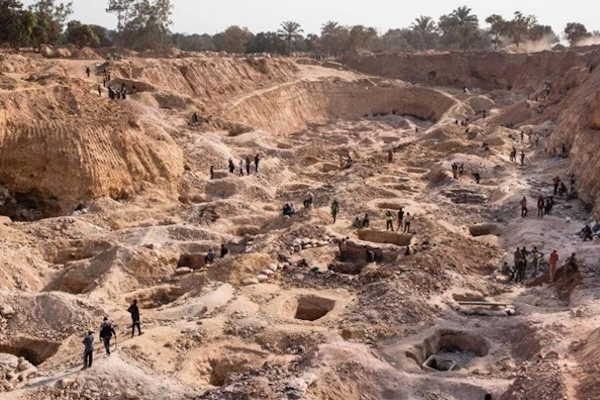
The 64 artisanal mining zones announced in November 2025 by Mines Minister Louis Watum Kabamba in response to a tragedy at the Kalando site in Lualaba province are not yet operational. Although the identification process has begun, implementation is expected to be phased in over time.
The Mining Cadastre, which manages the country’s mining titles, said it has started identifying the zones in coordination with the National Geological Service of Congo (SGNC). Its director general, Popol Mabolia, said about ten zones have been identified in an initial phase. These still need to be developed before being allocated to cooperatives and artisanal miners.
“It’s a process that is underway, and we will get there. But we cannot have 64 zones ready overnight,” Mabolia told reporters at the Mining Indaba conference, which ended on Feb. 12, 2026, in Cape Town. “We have already identified those that can be fast-tracked, so miners can be redirected from one site to another.”
Until the zones become operational, the shortage of designated areas continues to fuel tensions in mining regions. Several industrial concessions remain vulnerable to incursions by artisanal miners, even as the ministry’s reform aims to ease pressure on industrial sites and channel diggers toward legally regulated areas.
Some companies are moving ahead with their own formalization efforts. Eurasian Resources Group (ERG) has signed a memorandum of understanding with the General Cobalt Enterprise (EGC) to organize artisanal mining in Lualaba. According to the Federation of Congolese Enterprises, ERG has recorded nearly $3 billion in losses due to disruptions at its sites.
Ronsard Luabeya