




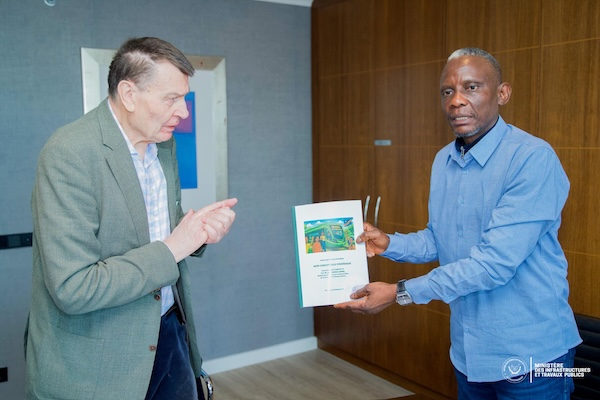
Kinshasa’s first subway line could begin operations on Nov. 27, 2027, according to information released on Feb. 14, 2026, following a meeting in Rotterdam between Infrastructure and Public Works Minister John Banza and Jean-Pierre Van Erps, coordinator of the Tramways de Kinshasa consortium.
At the meeting, Banza handed over the original preliminary agreement signed on Oct. 8, 2025, officially sealed by the ministry.
Several steps remain before the project can move forward. The ministry said authorities must finalize a consolidated timeline with legal safeguards, align technical studies, arrange financing and conclude the public-private partnership (PPP) agreement.
The project aims to improve mobility in the Congolese capital through the construction of seven modern rail lines using prefabricated hybrid track technology under an exclusive license. It also includes tailored energy systems and upgrades to major urban corridors and utility networks.
The consortium — comprising Prume Tramway RDC, Frateur-De Pourcq and PowerChina — has deployed more than 60 engineers for technical missions in Kinshasa, the ministry said. Studies drawing on the city’s historical plans identified the need for 173 bridges between downtown Kinshasa and N’djili International Airport.
Flood control
The design incorporates drainage, rainwater collection and treatment systems, as well as the distribution of treated water to improve access to drinking water.
The Congolese Agency for Major Works (ACGT) is overseeing the project. During the Rotterdam meeting, Banza reiterated the government’s intention to quickly finalize the PPP structure and sign the contract.
Separately, Congolese firm Congo Trans S.A.R.L. is developing a three-line rail project in the capital. According to a document reviewed by Bankable, total investment is estimated at about $205 million.
In June 2025, Congo Trans signed a memorandum of understanding with Moroccan firm Balkan Ingénierie S.A.R.L. for engineering and construction supervision services. The contract is valued at 4% of the total project cost, or roughly $8.5 million.
Ronsard Luabeya