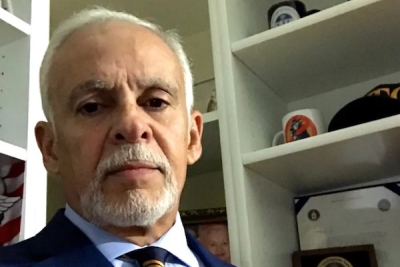





The Manono lithium project will require nearly $1 billion in investment, according to Alpha Monga Mwidia, chief executive of state-owned Congolaise d'exploitation minière (Cominière), in a Reuters interview at the Mining Indaba conference in Cape Town, South Africa, which concluded on February 12, 2026.
Cominière partnered with Chinese group Zijin Mining to form the Manono Lithium joint venture, which is developing the northeastern section of the Manono lithium deposit in Tanganyika province, southeastern Democratic Republic of Congo. The project holds an estimated 6.47 million tonnes of lithium carbonate equivalent, with an average grade of 1.5% lithium oxide, making it one of the world's largest lithium deposits.
Zijin Mining is financing the entire investment, according to Alpha Monga Mwidia. However, updated figures show the Chinese group now holds 54.9% of the project, down from its initial 61% stake. The reasons for this ownership change remain unexplained.
Production timeline revised
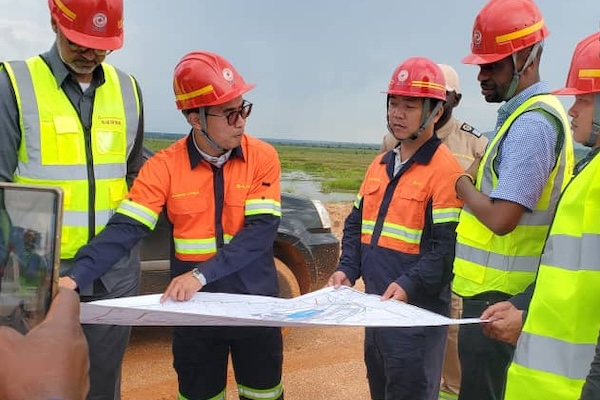
While the investment breakdown has not been disclosed, Zijin describes the project as encompassing mine construction, a concentration unit, a conversion plant with calcination kiln, and logistics facilities. The operation is designed to extract and process 5 million tonnes of ore annually and convert 500,000 tonnes of spodumene concentrate into 95,170 tonnes of crude lithium sulfate per year.
"The mining, processing and conversion projects, as well as the logistics facilities and river diversion works are progressing on schedule, with commissioning planned for June 30, 2026," Zijin stated, noting that the accommodation camp and Phase I solar plant are already operational. This represents a three-month delay from the company's early 2025 projection of first-quarter production, though no explanation was provided.
The Mpiana-Mwanga hydroelectric plant rehabilitation was completed in 2024 by Katamba Mining (70% owned by Zijin and 30% by Cominière), boosting capacity to 40 MW. A planned expansion will add another 108 MW.
Export logistics
Lithium sulfate will be transported along the 440-kilometer Manono-Kalemie road to the industrial port of Kalemie, then shipped via Kigoma to Dar es Salaam, Tanzania.
Road construction began in October 2024 under a public-private partnership with Chinese company Phaepon Construction and is scheduled for completion in five years. The first phase will create a passable dirt road before paving begins.
This phase "is almost complete and we hope to have lithium production by June 2026," Tanganyika Governor Christian Kitungwa Muteba said in a promotional video for Expobeton's 11th edition, a trade fair focused on urban development and special economic zones, scheduled for May 27-30, 2026, in Kalemie.
Market headwinds
The Kalemie industrial port is also under construction through a partnership with Jintai Mining PTE Ltd and Tembo Majengo Company SARL, with the first phase (requiring an estimated $70 million) expected to be operational by late 2026.
Given its investment, Zijin will market all production and share revenues proportionally with its stake in the joint venture after deducting production costs, according to the Cominière chief executive.
The project appears undeterred by the oversupplied global lithium market, driven largely by Chinese production, which has depressed prices significantly. Spodumene prices have plummeted more than 80% from their 2022 peak, dropping from over $80,000 per tonne to around $10,000 in 2025.
Pierre Mukoko