





Glencore and the Orion Critical Mineral Consortium (Orion CMC) are signaling plans for closer coordination in the Democratic Republic of Congo (DRC) that go beyond the recently announced capital deal. Orion CMC was established in October 2025 to help supply critical minerals to the United States and its allies.
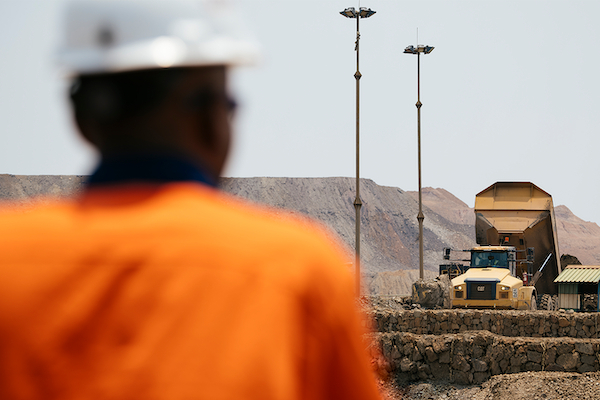
In a joint statement released Feb. 3, 2026, the two parties said they will also explore opportunities to expand and extend the life of the Mutanda Mining (Mumi) and Kamoto Copper Company (KCC) copper and cobalt mines. These assets are currently valued at about $9 billion, including debt.
Details have not been disclosed at this stage. Potential investments could aim to accelerate production or extend the mining concessions. In its 2025 resources and reserves report published Jan. 29, the Anglo-Swiss group put ore reserves at 107 million tonnes for MUMI and 137 million tonnes for KCC.
The mines are estimated to operate for 22 years in the case of MUMI, until 2047, and 18 years for KCC, until 2043. Current permits expire in 2037 and 2039, respectively. The review is reportedly being conducted alongside the Congolese government and the state-owned company Gécamines, a long-standing partner within KCC.
The statement also mentioned the study of potential acquisitions of additional mining projects and assets in the DRC and more broadly across the African Copperbelt. The wording suggests the possibility of a joint development platform, although no target assets, timelines, or investment budgets have been specified so far.
Proposed stake sale
The announcement follows a non-binding memorandum of understanding on Orion CMC’s proposed purchase of 40% of Glencore’s interests in MUMI and KCC. Glencore currently holds 95% of MUMI, with the state holding 5%, and 70% of KCC, with Gécamines holding 30%.
If completed, the transaction would bring in a third major shareholder. Orion CMC, a consortium led by Orion Resource Partners and backed by the U.S. International Development Finance Corporation (DFC), would hold 38% of MUMI and 28% of KCC. Glencore’s stakes would fall to 57% and 42%, respectively.
The statement said Glencore, as the majority shareholder of both mines, would retain operational control. Orion CMC would have limited governance rights, including the appointment of non-executive directors.
The consortium would also be responsible for marketing its share of output to designated buyers. This would take place within the framework of the strategic partnership on critical minerals signed between the United States and the DRC on Dec. 4 in Washington.
The arrangement reflects a clear division of roles. Glencore remains the industrial operator in the DRC, while Orion CMC provides capital, sales channels, and U.S. institutional backing, particularly through the DFC. On this basis, the two groups are discussing possible joint action, with each party operating on a distinct but coordinated segment of the value chain.
Institutional interest
According to Glencore’s 2025 production report, the Mutanda and KCC mines provided the group with 247.8 thousand tonnes of copper metal and 33.5 thousand tonnes of cobalt in 2025. Based on a 40% share of Glencore’s interests, the maximum portion likely to be marketed by Orion CMC would be about 100 thousand tonnes of copper and 13.4 thousand tonnes of cobalt. However, exports of cobalt remain constrained by quotas introduced by the Congolese government in October 2025.
In light of the strategic agreement between the DRC and the United States on critical minerals, the partnership also carries institutional value for Glencore. The group has operated in the DRC in an often tense environment marked by tax disputes and governance controversies. The entry of a U.S.-backed partner reshapes the dynamics.
On one hand, it brings American political and institutional support into strategic assets, which may help rebalance relations with the Congolese state. On the other, the presence of the DFC implies stricter requirements for compliance, transparency, and traceability. These factors could strengthen the credibility of the arrangement with tax and regulatory authorities.
Unknowns
The separation of roles, with Glencore handling operations and Orion CMC marketing its share, may also improve the clarity of sales flows. This is relevant in a context where transfer pricing and mining taxation remain sensitive issues in the DRC.
Despite these broad plans, the statement remains cautious. Terms such as “will examine” and “will consider” indicate that the parties are still at an early, exploratory stage. The transaction remains subject to audits, final contractual agreements, and regulatory approvals.
No public information yet details specific financial commitments regarding employment, local subcontracting, or an investment program. Similarly, any potential consequences of this cooperation for preliminary discussions between Glencore and Rio Tinto have not been documented at this stage.
Pierre Mukoko