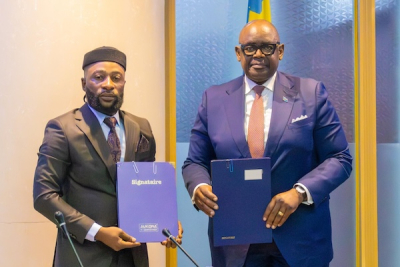






- A strategic minerals partnership signed on December 4, 2025, moves into its operational phase.
- Alain Lubamba says the deal could help the DRC convert mineral rents into industrial power.
- The agreement links investment to governance, transparency, and fiscal reforms.
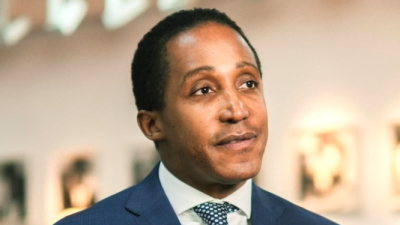
As the strategic partnership signed in Washington on December 4, 2025, between the Democratic Republic of Congo (DRC) and the United States enters its operational phase, former Congolese minister Alain Lubamba has commented publicly on the agreement. In an opinion piece titled “DRC–USA Deal: Transforming Mineral Rents into Industrial Power or Losing History Once Again,” published in the press at the end of last year, the former vice-minister of foreign affairs under President Joseph Kabila (2007–2008) described the deal as a “civilizational opportunity” for the country.
The former vice-chair of the National Assembly’s foreign relations committee said the partnership, centered on critical minerals, could allow the DRC for the first time to convert its mineral wealth into industrial power while cleaning up governance. He argued that the agreement could help the country avoid repeating a historical cycle in which it enriches the world without developing itself. Alain Lubamba described the deal as “a potential instrument of structural transformation” capable of “reconfiguring an economic model too long based on the raw export of natural resources.”
To support his analysis, the former vice-minister of the budget (2008–2010) highlighted the agreement’s commitment to local processing. The text provides for U.S. support for domestic mineral processing, including refining, transformation facilities, and participation in downstream projects abroad. “Not processing at home means remaining dependent; processing at home means asserting our sovereignty,” Alain Lubamba said.
“Cleaning Up Toxic Practices”
The former chairman of the board of the Center for Expertise, Evaluation and Certification of Precious and Semi-Precious Mineral Substances (CEEC) identified the profile of U.S. investors as another key differentiator. He said American standards—“compliance, permanent audits, and transparency obligations”—clash with the opaque practices that have characterized parts of the extractive sector.
“This configuration represents a unique lever to clean up toxic economic practices, restore state credibility with international markets and institutions, and send a strong signal: the era of opacity is coming to an end,” he said. He argued that the partnership could act as an external constraint that promotes better internal governance. “It is therefore both an economic partnership and a tool for the moral reconstruction of public governance,” he added.
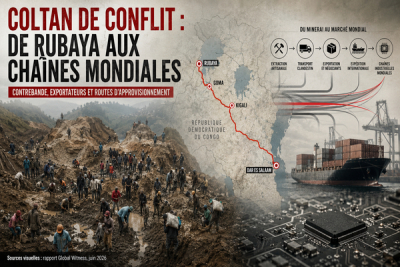
Under the agreement, the DRC must strengthen governance, transparency, and the rule of law to consolidate its status as a “reliable strategic partner of the United States.” The text requires a reform of the fiscal framework within twelve months, including a ten-year tax stabilization regime, VAT refunds within 90 days, a one-stop investment window, and the creation of a centralized tax authority responsible for all interactions with mining investors. In the mining sector, Kinshasa must also strengthen regulation, improve transparency at state-owned companies, enhance customs capacity, and intensify efforts against smuggling, with support from Washington.
Risks to Avoid
While the text emphasizes opportunities, it also implicitly warns against several risks. The first risk remains institutional. The partnership will generate results only if the DRC succeeds in building a coherent economic and regulatory environment. The former lawmaker stressed the need to establish industrial conditions, including specialized zones, reliable energy supply, and modernized logistics, while ensuring governance based on transparency and traceability.
He warned that the opportunity could be lost without collective “discipline.” “The real question is no longer whether the DRC can succeed, but whether it will have the discipline, collective vision, and audacity to seize this historic opportunity,” he said.
Finally, the public policy performance expert raised the risk of political and social backlash, referring to criticism from some religious leaders that he said rests on a misreading of the deal. “Some religious leaders have presented it as a sell-off, but that is a mistaken interpretation,” he said.
For the former minister, national buy-in now represents a strategic issue. He said the agreement must be understood as “a decision of state to clean up governance, secure the national interest, and build prosperity for the Congolese people.”
This article was initially published in French by Pierre Mukoko and Ronsard Luabeya
Adapted in English by Ange Jason Quenum