




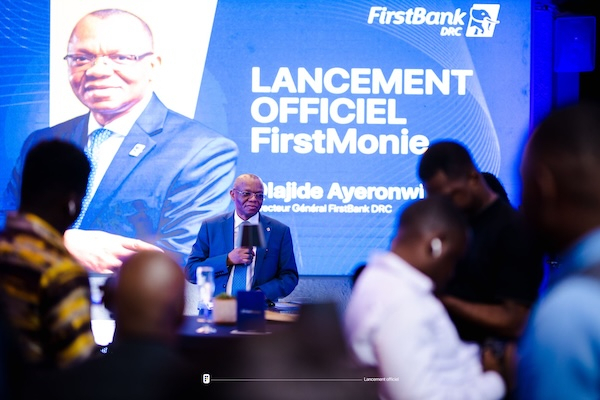
FirstBank DRC, a subsidiary of Nigeria’s First Bank of Nigeria (FBN Holdings), is stepping up its digital strategy with the launch of a new mobile application, FirstMonie, on Jan. 28, 2026.
The initiative follows the roadmap outlined in the bank’s 2024 annual report, which aims to expand its retail and digital banking services and raise the share of revenue generated by digital products to 30%. FirstBank DRC reported total revenue of 331.3 billion Congolese francs (about $120 million) in 2024.
The bank’s main new feature is the ability to open an account remotely, without visiting a branch. The process is expected to take less than five minutes, a move designed to widen access to banking services and attract new customers amid growing competition from digital finance providers.
Beyond remote onboarding, FirstMonie allows users to transfer funds to other mobile wallets, including M-Pesa, Orange Money and Airtel Money. It also supports transfers within the FirstBank ecosystem, covering bank accounts as well as FirstMonie wallets.
Speaking at the launch ceremony, FirstBank DRC’s E-Business Director Jérémie Lukusa said the app also enables bill payments, subscription services, airtime purchases and other digital financial transactions. The bank did not disclose details on the fees that will apply.
Agent network challenge
To fund a FirstMonie wallet, users must go through a FirstMonie agent, transfer money from a FirstBank account, or deposit directly at a branch. The platform’s expansion will therefore depend largely on how quickly the bank can scale up its agent network nationwide. FirstBank DRC has set a target of 100,000 agents by 2029.
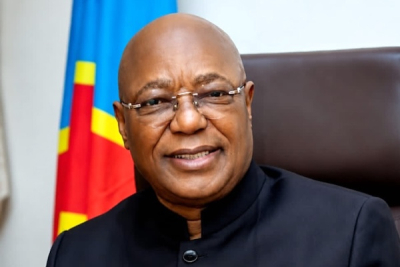
FirstBank DRC Board Chairman Kandolo Kasongo said the application will continue to evolve as new features are rolled out. Local media quoted him as describing it as a major innovation in the market, adding that further upgrades are expected over the coming year.
In neighbouring countries such as Uganda, mobile wallets are already used for a wider range of services, including government tax payments. The comparison highlights how such platforms can become central tools in national financial ecosystems, extending well beyond basic money transfers.
Timothée Manoke