






News (946)
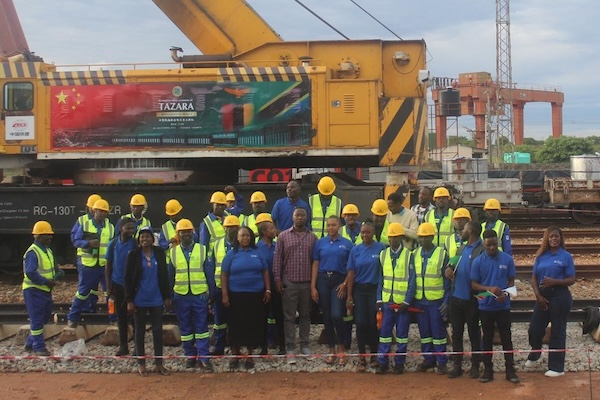
Two Chinese mining groups that account for a large share of copper and cobalt output in the Democratic Republic of Congo (DRC) are set to help finance the modernization of the TAZARA railway corridor. Backed by Beijing, the project is emerging as a competing export route to the Lobito Corridor, which the United States and the European Union are developing in parallel.
The TAZARA upgrade is valued at more than $1.4 billion, including about $1 billion for rail rehabilitation and $400 million for locomotives and rolling stock. Under the newly disclosed structure, China Civil Engineering Construction Corporation will hold an 80% stake, while CMOC, a Zijin Mining-linked entity, Jiayou International Logistics and COSCO Shipping Holdings will each take 5%, subject to regulatory approval in China.
The participation of mining firms underscores efforts to secure export routes for African minerals as competition between regional corridors intensifies. By backing TAZARA, CMOC and Zijin are reinforcing China’s position along key mineral export routes in southern and central Africa, where major powers are competing for control over copper, cobalt and zinc supply chains.
Through its subsidiaries Tenke Fungurume Mining and Kisanfu, CMOC exported 747,468 metric tons of copper in 2025, according to official Congolese data, accounting for nearly 22% of national exports. Zijin Mining holds an indirect 39.6% stake in Kamoa-Kakula, alongside Ivanhoe Mines at 39.6%, the Congolese state at 20% and Crystal River at 0.8%. The Kamoa complex exported 400,185.59 metric tons of copper in 2025, or about 12% of total exports.
TAZARA as an alternative
Meanwhile, the United States and the European Union are stepping up support for the Lobito Corridor. The project aims to link mining areas in the DRC and Zambia to Angola’s Atlantic port of Lobito through upgraded rail and logistics infrastructure. It is intended to provide a faster, more competitive route for Copperbelt minerals.
According to a November 2025 presentation by Germany’s Federal Institute for Geosciences and Natural Resources, prepared with the Congolese Ministry of Mines, the 1,740-kilometre Lobito Corridor, including 450 km in the DRC and 1,290 km in Angola, is currently the fastest route among major export options. Transit times range from five to eight days, compared with 30 to 32 days to Dar es Salaam, 28 to 34 days to Beira, 29 days to Walvis Bay and 30 to 36 days to Durban.
That advantage could erode as TAZARA is upgraded. The 1,800-kilometre line is widely seen as a viable alternative. The same presentation noted that Lobito is being developed in a competitive regional environment, with several rail extensions and interconnections under consideration, including links with TAZARA.
Limited support for Lobito
For Washington, the project has strategic significance beyond logistics. A December 2025 agreement between the United States and the DRC identifies the Sakania-Lobito route as a key channel for exporting copper, cobalt, zinc and other critical minerals. It requires that, over the next five years, at least 50% of copper, 30% of cobalt and 90% of zinc sold by state-owned mining companies transit through the corridor’s Congolese section.
Despite these advantages, questions remain over the corridor’s long-term viability. The European Centre for Development Policy Management said its success will depend on attracting sufficient volumes beyond geopolitical backing, while the French Institute for International and Strategic Affairs pointed to risks linked to governance, regional coordination and limited commitment from some operators.
So far, Kamoa Copper, which operates the Kamoa-Kakula complex, is among the few major producers to formally commit to the route. A memorandum of understanding signed in February 2024 with Lobito Atlantic Railway covers part of its copper exports. The company shipped its first copper anodes via Lobito in the first quarter of 2026.
“Lobito is still ramping up. This year, we plan to ship between 50,000 and 70,000 metric tons through the corridor, depending on its progress and competitiveness against other routes,” said Olivier Binyingo, chairman of Kamoa Copper, in February.
Pierre Mukoko
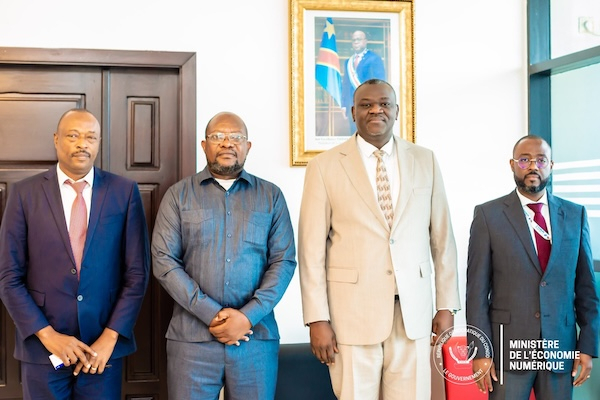
Angola’s Infrasat plans to enter the telecommunications market in the Democratic Republic of Congo, the company said after its chairman, Diego de Carvalho, met Digital Economy Minister Augustin Kibassa Maliba in Kinshasa on April 2, 2026.
De Carvalho said Infrasat aims to begin technical operations this year, targeting infrastructure and connectivity services, particularly in underserved areas.
A subsidiary of Angola Telecom specializing in satellite services, Infrasat provides data transmission, high-speed internet and connectivity solutions for remote regions. Founded in 2008, the company relies mainly on satellite technology to expand network coverage in rural and landlocked areas — a largely underserved segment in the DRC.
During the meeting, the company also presented projects to support the country’s digital transformation. “We submitted proposals to support the country as it advances its digital transformation,” de Carvalho said, adding that Congolese authorities showed interest.
Infrasat will enter a competitive market. According to the DRC’s postal and telecommunications regulator (ARPTC), the country had 37 internet service providers in H2 2023, some of which hold multiple licenses. Of these, 33 offered fixed internet services via fiber optic or wireless technologies such as WiMAX and VSAT, while four operators dominated the mobile internet segment.
Underexploited market
According to ARPTC data, mobile internet generated $594 million by end-June 2025, accounting for 52.7% of total sector revenue. During the same period, the number of active users reached 34.5 million, with a penetration rate of 30.79%, while data usage rose 26.91% compared with the first quarter of 2025.
By revenue, Airtel led the market with 41.6%, ahead of Orange (29.5%), Vodacom (24.7%) and Africell (4.1%). By subscribers, Vodacom ranked first with 36.4% of the market, followed by Airtel (30.8%), Orange (29.8%) and Africell (3%).
GSMA projects the DRC will add 15 million new mobile internet subscribers between 2025 and 2030. Since May 2025, Starlink has also been authorized to operate in the country, increasing competition, particularly in satellite internet.
In this context, Infrasat’s move highlights the growing attractiveness of the Congolese market, driven by rising demand, expected network expansion and the increasing importance of connectivity in underserved areas.
Ronsard Luabeya
The Democratic Republic of Congo’s rural electrification agency has increased the planned capacity of a hydropower project near Kananga.
The Agence nationale de l’électrification et des services énergétiques en milieux rural et périurbain (ANSER) now says the Mbombo plant will have a capacity of 20.08 MW, up from 10 MW announced at its official launch in February 2025.
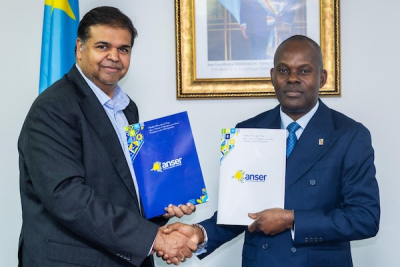
The revision was formalized on April 3, 2026, when ANSER Director General Cyprien Musimar and Angelique International Limited (AIL) Chairman Ajay Krishna Goyal signed a commercial contract.
The agreement marks a new phase for the project, located on the outskirts of Kananga on the Lulua River. When provincial authorities launched construction on Feb. 15, 2025, capacity was still set at 10 MW, with costs estimated at around $35 million. ANSER is acting as the delegated project owner.
According to ANSER, the revised design calls for a plant with four generating units of about 5.02 MW each. The project also includes worker housing, access roads, and transmission infrastructure to deliver electricity to Kananga.
ANSER said the contract paves the way for negotiations on a financing agreement between the Congolese government and a commercial bank. The deal is expected to cover 70% of costs related to equipment supply, construction, installation and commissioning.
The Mbombo project comes amid renewed energy activity in the province. Construction of the Katende hydropower project, in which Angelique International Limited is also involved, resumed in August 2025.
Boaz Kabeya
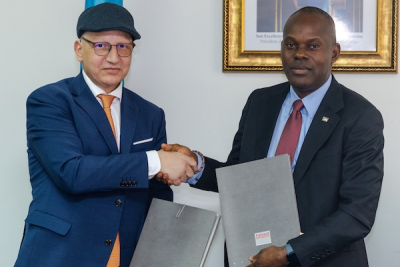
The Democratic Republic of Congo’s national rural and peri-urban electrification agency, ANSER, said on April 2, 2026 it had signed a contract with German firm Gauff Engineering to carry out an electrification project across 36 territories.
The agency said the agreement follows the finalisation of the project’s financing and the completion of required preliminary steps, including approval of the contract by relevant authorities.
In March 2025, ANSER and Gauff Engineering signed a 150 million euro ($172.8 million) commercial contract in Berlin to build photovoltaic solar plants and mini hydroelectric stations to improve access to electricity in rural and peri-urban areas. At the time, the agency said a financing agreement still needed to be concluded before the project could move forward.
In its latest statement, ANSER said the project’s financing had been approved by Commerzbank’s board, ahead of a financing agreement with the Congolese Ministry of Finance.
The project involves building 230 photovoltaic and mini hydroelectric plants over four years at a total cost of 150 million euros.
Boaz Kabeya
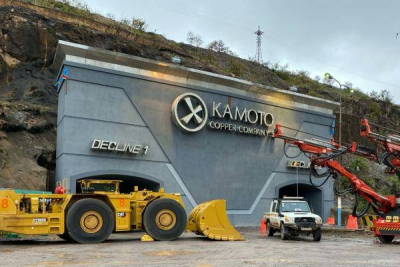
The United States has made the proposed transaction between Glencore and the Orion Critical Mineral Consortium a top priority in the Democratic Republic of Congo.
On March 19, 2026, Nick Checker, a senior official at the State Department’s Bureau of African Affairs, said completing the deal was one of three “foundational” projects for implementing the strategic partnership between Washington and Kinshasa.
On Feb. 3, 2026, Glencore said it had signed a non-binding memorandum of understanding with Orion Critical Mineral Consortium (Orion CMC) for the potential acquisition of a 40% stake in Mutanda Mining (MUMI) and Kamoto Copper Company (KCC), two major assets in Lualaba province. Glencore said both companies would remain operated by the group if the transaction is completed.
The two sites account for a significant share of Congo’s copper and cobalt output. According to Glencore, MUMI and KCC together produced about 247,800 metric tons of copper and 33,500 metric tons of contained cobalt in 2025.
Washington sees the deal as a way to strengthen the security of its critical mineral supply chains. The move is part of the strategic partnership signed on Dec. 4, 2025, between the United States and the DRC, focused on copper, cobalt and other minerals deemed essential for industry, batteries and defense.
Launched in October 2025, Orion CMC is led by Orion Resource Partners in partnership with the U.S. International Development Finance Corporation (DFC). The consortium has $1.8 billion in initial investment capacity, backed by Orion, the DFC and ADQ, Abu Dhabi’s sovereign wealth fund.
U.S. officials say completing the deal would both help secure supply chains and signal to private investors the appeal of Congo’s mining sector.
Ronsard Luabeya
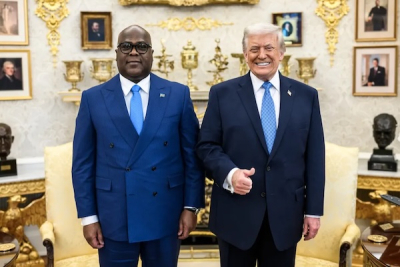
The United States has identified the award of the concession for the Congolese segment of the Lobito corridor to Mota-Engil as a priority project under its strategic partnership with the Democratic Republic of Congo (DRC), signed on Dec. 4, 2025.
Speaking at the Powering Africa Summit in Washington on March 19, 2026, Nick Checker, a senior official at the State Department’s Bureau of African Affairs, cited the award as one of three projects he described as “fundamental to the successful implementation of this partnership.”
The other two projects cited by Washington are the acquisition of Chemaf assets by a Virtus-led consortium, approved by the Congolese Ministry of Mines on March 13, 2026, and a proposed transaction between Orion Critical Mineral Consortium and Glencore involving mining assets in the DRC, still at the memorandum-of-understanding stage.
The agreement designates the Sakania-Lobito corridor as a strategic infrastructure project and a cornerstone of Congo’s industrial and commercial strategy. It sets specific transit targets: over the next five years, 50% of copper, 30% of cobalt and 90% of zinc produced or exported by state-owned companies must pass through the corridor.
Washington has openly stated its geoeconomic objectives. In the same address, Checker said the U.S. goal is to ensure African critical minerals “start flowing westward toward the United States,” citing the Lobito corridor as a model. He added that the projects would strengthen U.S. supply chains and signal to private investors that the DRC is open for business. “With the sustained commitment and leadership of President Tshisekedi, we are optimistic about the rapid completion of these initial projects,” he said.
Tender process
U.S. support for Mota-Engil is not new. On Dec. 5, 2025, the U.S. International Development Finance Corporation (DFC) announced a letter of intent with the Portuguese group to support the rehabilitation, operation and transfer of the Dilolo-Sakania line in the DRC. According to the DFC, that support could reach $1 billion, subject to full project review.
Congolese authorities have maintained that the process remains open. At the first corridor coordination meeting, held in Luanda in February 2026, Deputy Prime Minister and Transport Minister Jean-Pierre Bemba said the DRC was preparing an international tender for the rehabilitation of the Tenke-Kolwezi-Dilolo section, with a public-private partnership as the preferred model and construction expected to begin in the fourth quarter of 2026.
While the project is still being structured, state-owned SNCC remains active on the section, where emergency works are already underway. The work targets about 80 km of critical track sections to ensure traffic continuity. Authorities say $100 million has already been invested to rehabilitate 60–70 km of track.
Official projections indicate that the corridor will make the port of Lobito more competitive than Durban in South Africa, Dar es Salaam in Tanzania, Beira in Mozambique and Walvis Bay in Namibia for exports from southern DRC. Freight from mining hubs such as Tenke and Kolwezi would take between five and eight days to reach Lobito, compared with roughly 25 days to Durban. The transport minister said the reduction in transit times would cut logistics costs by up to 30%. In the first year of operation, exports of 1 million tonnes and imports of 500,000 tonnes are projected.
On the Angolan segment, Mota-Engil, Trafigura and Vecturis already operate via the Lobito Atlantic Railway (LAR) consortium, which holds a 30-year concession for the Lobito-Luau line. That section has been operational since 2023.
Ronsard Luabeya
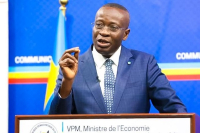
The Democratic Republic of Congo is considering changes to domestic fuel prices as the war in the Middle East continues to disrupt global oil markets.
The move follows a meeting on Thursday, April 2, between Prime Minister Judith Suminwa Tuluka, Minister of State for Hydrocarbons Acacia Bandubola and National Economy Minister Daniel Mukoko Samba.
After the meeting, Mukoko Samba said the government was closely monitoring fuel supply conditions amid severe global disruption.
“We must take all necessary steps to ensure continued access to the petroleum products we need and maintain supply,” he said. “That may require adjusting fuel prices to align with global trends.”
He added that the government also aims to preserve domestic market stability. “Across the region, fuel prices are rising,” he said.
The statement comes as authorities try to balance supply security with protecting consumers. As early as March, the prime minister ordered temporary measures to cushion the impact of external shocks.
These include cuts to certain taxes, the suspension of some border levies and steps to ensure steady imports. The aim is to limit the impact of rising global prices at the pump while maintaining fuel deliveries to the domestic market.
Mining firms already paying market rates
Some adjustments have already been implemented. On March 17, 2026, the Fuel Price Monitoring Committee approved a new pricing structure in the southern zone for mining companies and their subcontractors, which do not benefit from subsidies.
In that zone, diesel prices rose from $1.70 to $2.43 per litre, an increase of nearly 43%, while gasoline prices increased from $1.60 to $2.08, up 30%.
These operators now buy fuel at market rates, as international benchmarks have surged. Brent crude has hovered around $100 per barrel since the start of the year, compared with $60 to $70 before the conflict.
Across the region, several countries are facing similar pressures. In Zambia, authorities declared a fuel supply emergency and temporarily suspended some import taxes on petroleum products to limit price increases.
In Kenya, another key supply route for eastern DRC, officials have reported low fuel stocks. Nairobi is considering using its stabilization fund to absorb expected price increases, though any intervention is likely to be temporary.
In South Africa, rising global prices and higher transport costs are also adding pressure to the fuel market, reflecting broader regional volatility.
Against this backdrop, Kinshasa appears to be taking a cautious approach to price adjustments to avoid supply disruptions without triggering a sharp shock to the domestic market.
For now, the government has not announced an immediate, across-the-board increase in pump prices. But the signal is clear: if international tensions persist, fuel price increases in the DRC are increasingly likely.
Timothée Manoke

The Democratic Republic of Congo exported more than 28.2 metric tons of gold in 2025, little changed from 27.93 tons in 2024, according to data from the Cellule technique de coordination et de planification minière (CTCPM).
Flat export volumes contrasted with a sharp rise in revenue. The value of gold exports reached $2.84 billion in 2025, up from $1.53 billion in 2024, an increase of about 85.6%, driven by higher international gold prices.
The average annual gold price rose 44% to $110,280 per kilogram in 2025, according to the World Gold Council, which cited strong demand and a geopolitical and financial environment supportive of the metal.
Artisanal gold exports rose to 2,834.72 kilograms in 2025 from 1,755.82 kilograms in 2024, an increase of around 61.4%. This came despite the fall of Bukavu to M23 rebels, previously the country’s main artisanal gold export hub.
To compensate, the state-owned gold marketing company set up offices across the country in 2025, helping sustain export flows.
The Kibali Gold Mine, operated by Barrick Mining, also reflects the effect of higher prices. The industrial mine generated an estimated $2.3 billion in revenue in 2025, up 40% year on year, even as production fell 2% to about 673,000 ounces, below its annual target of at least 688,000 ounces.
Barrick attributed the shortfall to lower ore grades and reduced output from its richest underground zones. A fatal incident in the fourth quarter also led to a temporary suspension of some operations, weighing on year-end output.
There is a discrepancy of more than four metric tons between two sets of figures. The CTCPM reported Kibali’s 2025 output at more than 25 metric tons, while Barrick reported 673,333 ounces, or about 21 metric tons.
The CTCPM has acknowledged limits in its data collection. Its figures are based on company declarations and administrative reconciliations, while Barrick’s data are reported under international financial reporting standards, which may partly explain the gap.
Timothée Manoke

The Democratic Republic of Congo is targeting foreign exchange reserves equivalent to at least three months of import cover by 2027 under its program with the International Monetary Fund. A memorandum by the authorities, included in a report published in January 2026, says reaching this goal requires accumulating about $1.5 billion per year.
The World Bank said in a March 2026 report that reserves rose from $6.2 billion at end-2024 to $7.9 billion at end-2025, equivalent to just over 2.5 months of import cover. The IMF said reserves “continued to increase [...] but remain below the recommended adequacy level.”
This trend reflects a broader improvement in the country’s external position. The IMF said higher copper export volumes and favourable prices helped improve the current account in 2025, despite a temporary suspension of cobalt exports. The current account deficit narrowed to around 3.6% of GDP in 2025, from 4.2% in 2024.
The IMF expects this trend to continue. Reserves are forecast to reach about 12.8 weeks of import cover in 2026 and nearly 13 weeks in 2027, bringing them closer to the three-month threshold.
Middle East war
The outlook remains dependent on global conditions. The IMF warned that it is still exposed to commodity price volatility and external shocks. In an analysis published in March 2026, the Fund said tensions in the Middle East are starting to affect global markets, particularly through “rising energy prices and transportation costs.”
Since the start of the year, gas prices have nearly doubled to around $60, while Brent crude has traded at about $100 per barrel, compared with an average of $60 to $70 before the conflict.
These developments could weigh on net fuel-importing countries. For DR Congo, this is a significant vulnerability. The country relies entirely on imports for petroleum products. A sustained rise in oil prices could increase the import bill and slow reserve accumulation by offsetting gains from the improved current account.
Beyond their accounting role, foreign exchange reserves play a central role in DR Congo: they finance imports, help absorb external shocks and support the stability of the Congolese franc in an economy heavily dependent on mining exports.
Pierre Mukoko & Boaz Kabeya
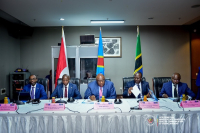
The Democratic Republic of Congo, Tanzania and Burundi are advancing a proposed electrified standard-gauge railway linking Uvinza, Musongati, Gitega, Bujumbura, Uvira and Kindu.
On March 31, 2026, the three countries’ transport ministers met in Kinshasa to review progress on feasibility work for the corridor, which spans more than 800 km, according to the Congolese Ministry of Transport. The meeting was chaired by Deputy Prime Minister and Transport Minister Jean-Pierre Bemba.
The project is being developed under the Central Corridor framework by the Central Corridor Transit Transport Facilitation Agency (CCTTFA), which has coordinated studies and the institutional framework of the regional rail corridor for several years. In March 2023, the agency announced the signing of a feasibility study and preliminary design contract for the Gitega-Bujumbura-Uvira-Kindu segment, awarded to a consortium of CPCS and Zutari on behalf of Burundi and the DRC.
The corridor is expected to reduce transport costs, facilitate the movement of people and goods, and better integrate landlocked countries in the Great Lakes region with the port of Dar es Salaam. It is also seen as supporting the energy transition, as electrified rail produces fewer greenhouse gas emissions than road transport.
Technical progress on the Burundi-DRC segment
On the Burundi-DRC segment, technical studies reached a milestone in November 2025 in Kindu, where six reports were presented to the steering committee. The documents covered traffic demand, railway operations, signalling, telecommunications and energy systems. The studies also defined a preliminary alignment for the Congolese section, running from Nyamoma through Sange, Luberizi, Nyangezi, Walungu, Mwenga, Kamituga, Kalole and Pangi before reaching Kindu. Extensions toward Uvira, Bukavu and Shabunda are also under consideration.
The final cost of the Congolese and Burundian segments has yet to be determined and will depend on ongoing studies. The Uvinza-Musongati section, on the Tanzanian and Burundian side, is further advanced, with several sources estimating costs at around $2.15 billion and pointing to expected support from the African Development Bank. Estimates nonetheless vary on key technical parameters, including the exact length of the segment and the construction timeline.
The project is progressing in phases. The Tanzania-Burundi segment is further advanced, while the Burundi-DRC section remains at the feasibility stage. The Kinshasa meeting reaffirmed the three countries’ commitment to move the project forward, which they see as a key regional connectivity project.
Ronsard Luabeya
More...
Telecom tower operator Helios Towers on Tuesday announced a $100 million expansion program to extend its network coverage in the Democratic Republic of Congo (DRC), aiming to improve access to telecommunications services, particularly in underserved areas.
The National Investment Promotion Agency (ANAPI) is backing the program under an agreement signed with Helios Towers DRC. The agency said it supports investment through an integrated framework covering all stages of a project, from design to implementation.
According to ANAPI, the expansion will span 23 provinces, including Kinshasa, Haut-Katanga, Kongo Central, Maniema, Ituri, Kasai Central, Kasai Oriental, Nord-Kivu, Sud-Kivu, Lualaba, Tanganyika, Equateur, Haut-Uele and Kasai.
Improving coverage and service adoption
The move comes as authorities seek to expand network coverage and boost telecom service adoption as part of their digital transformation agenda. In 2024, 2G, 3G and 4G networks covered 75%, 55% and 45% of the population respectively, according to the International Telecommunication Union (ITU). Mobile penetration stood at 44.3%, compared with 19.7% for internet use.
The company did not disclose detailed figures for the investment. Helios Towers operates by building, acquiring and managing shared telecom towers that host multiple operators. It provides passive infrastructure and energy services, including site acquisition, construction, maintenance, security and power management.
“Our infrastructure-sharing model helps MNOs expand and densify networks more quickly and at lower cost, while reducing emissions - accelerating digital inclusion for millions of people,” the company says on its website.
Expanding network coverage can drive adoption by improving both access and service quality. Extending infrastructure into rural and underserved areas enables first-time access to voice and internet services, while densifying networks in existing areas reduces congestion and improves reliability.
A model at the core of public strategy
The model is also supported by Congolese authorities and sits at the centre of the Universal Service Development Fund’s (FDSU) 2026-2035 strategy. Known as “TowerCo Lead,” the approach promotes tower companies that finance and deploy passive infrastructure — including towers, energy and backhaul — on an open-access basis. Mobile operators then install active equipment to deliver services. The goal is to connect nearly 68 million people, mainly in rural areas.
Authorities favour this approach for its economic efficiency, given the scale of the digital divide. According to the GSMA, the DRC has one of the world’s largest coverage gaps: 46% of the population lacks mobile broadband access, while 25% have no mobile coverage at all, including 2G.
The GSMA notes that expanding into so-called “white zones” requires sharply higher investment. Increasing coverage from 75% to 80% of the population requires about 150 new sites. Reaching 95% would require nearly 5,700 sites, while moving from 98% to 99% would need more than 2,000 additional sites. This makes extending coverage to remote areas particularly costly due to low population density.
Ivanhoe Mines has cut production forecasts again for the Kamoa-Kakula copper complex in southern Democratic Republic of Congo, citing updated results from an independent study.
The company said on March 31, 2026, it now expects output of 290,000 to 330,000 tonnes of copper in 2026, down from a previous target of 380,000 to 420,000 tonnes.
For 2027, forecasts have been lowered to 380,000 to 420,000 tonnes from 500,000 to 540,000 tonnes. The 500,000-tonne annual threshold, initially targeted for 2027, has been pushed back to 2028.
The revision follows a downgrade announced after a seismic event in May 2025. In its full-year results published on Feb. 18, 2026, Ivanhoe had maintained guidance of 380,000 to 420,000 tonnes for 2026 and 500,000 to 540,000 tonnes for 2027, while noting a new mine life plan would incorporate technical parameters adopted since the seismic event and the subsequent recovery plan.
The company attributed the latest cut to a more cautious operating approach. A March 31 report said new mining layouts at Kamoa and Kakula require a longer period of preparatory work to support a more sustainable extraction rate. Development over the next two years will focus primarily on Kakula before new extraction zones are brought online.
Ivanhoe also said underground development has fallen short of expectations due to unfavorable geotechnical and hydrological conditions, prompting the company to cut development targets by about 15%.
“Although conservative base-case assumptions are impacting production levels in 2026 and 2027, we are positioning Kamoa-Kakula to achieve new records from 2028 onwards,” said Marna Cloete, Ivanhoe Mines’ president and chief executive officer.
Higher Costs Expected
The revised outlook also affects cost projections. In February, Ivanhoe forecast direct cash costs of about $4,850 to $5,510 per tonne in 2026 and $4,190 to $5,070 per tonne in 2027. It now expects costs of about $5,730 to $6,610 per tonne in 2026, easing to $4,630 to $5,510 per tonne in 2027. The long-term target is set at about $4,410 per tonne from 2028.
In the near term, lower volumes and higher costs could weigh on revenue. In 2025, Kamoa-Kakula generated $3.28 billion in revenue and $1.45 billion in EBITDA, with a 44% margin, despite production disruptions since May. The site sold 351,674 tonnes of copper at an average price of about $9,700 per tonne.
Direct cash costs rose to about $4,760 per tonne from about $3,640 per tonne in 2024. Ivanhoe attributed the increase to the processing of lower-grade surface stockpiles, lower-quality ore and higher logistics costs per pound transported.
The delay has implications for the global copper market. Kamoa-Kakula had been expected to be one of the main drivers of growth in global supply, with output of more than half a million tonnes previously expected as early as 2027. The delay to 2028 postpones the arrival of significant volumes of high-grade copper on a market already under pressure from electrification and the energy transition.
Ivanhoe highlighted several mitigating factors. The Kamoa-Kakula smelter, commissioned at the end of 2025, is now producing copper anodes at 99.7% purity. The company said the ramp-up of the facility should halve logistics costs, as shipments shift from concentrate grading 35% to 45% to near-pure anodes.
Sulfuric acid sales, a byproduct of the refinery, provide an additional buffer, with the average realized price exceeding $450 per tonne since start-up. The Kamoa-Kakula complex is owned 39.6% by Ivanhoe Mines, 39.6% by Zijin Mining, 20% by the Congolese state and 0.8% by Crystal River, within the Kamoa Copper joint venture.
Pierre Mukoko

Kamoto Copper Company (KCC), a subsidiary of Glencore, is facing a radiological emergency at its T17 tailings site in Kolwezi, in Lualaba province. The alert was triggered by the discovery of radioactive materials in an area affected by artisanal mining.
The issue was discussed at the Council of Ministers on March 27, 2026. In its communiqué, the government cited an urgent health alert linked to risks of irradiation and radioactive contamination at KCC’s Kolwezi site.
President Félix Tshisekedi stressed the need for a swift, coordinated response to the potential consequences, including risks to workers and nearby residents from radiation exposure, as well as contamination of soil, waterways and the food chain, and local socioeconomic disruption. He asked Prime Minister Judith Suminwa to urgently establish an ad hoc commission to oversee the response and support the necessary health, environmental, technical and scientific measures.
The alert comes as Glencore announced in February 2026 that it had finalized an agreement with Gécamines on land access for KCC. The company said the deal aims to expand certain storage capacities, improve resource recovery within existing permits, including in the KOV and T17 areas, and support a long-term copper production target of around 300,000 tonnes per year. It added that the agreement could extend the mine’s operational life into the mid-2040s.
KCC operates a major copper and cobalt complex in Kolwezi, comprising the KOV and Mashamba East open-pit mines, the KTO underground mine, the Kamoto concentrator and the Luilu refinery. However, the term T17 is used inconsistently in company materials, referring both to an area within the mining portfolio and to a distinct site linked to the complex’s operations.
Boaz Kabeya
SMICO Microfinance is accelerating its expansion into insurance as security conditions worsen in eastern Democratic Republic of Congo and banking operations remain shut in several rebel-held areas.
After launching its bancassurance activities in July 2025, the institution introduced a new range of products in March 2026, including auto insurance (SMICO Auto), travel insurance (SMICO Safari), business multi-risk coverage with fire protection, and health insurance. These add to its existing life insurance offering.
“More than a product launch, this marks a strategic shift in the Congolese financial sector,” SMICO said. “As risks linked to business activity and travel increase, insurance solutions have become essential.”
The move comes as SMICO’s financial performance has deteriorated amid the conflict in eastern DRC. At end-June 2025, the institution reported a loss of 1.29 billion Congolese francs. Net financial income fell 57% to 12.47 billion francs, while its 30-day portfolio at risk rose to 13.65%.
Operations have been disrupted by the conflict. Two major branches have been closed since AFC/M23 rebels seized Goma and Bukavu, while the Uvira branch is only partially operational. The downturn also reflects tighter financial conditions, as the central bank has kept banks closed in affected areas and blocked franc transfers to occupied zones, limiting access to liquidity.
In response, SMICO is seeking to diversify its sources of growth beyond lending. It formalized a bancassurance partnership with Rawsur Assurance in July 2025, with approval from the central bank (BCC) and insurance regulator ARCA. The agreement initially covered life, auto, residential fire and travel insurance. The institution now plans to integrate risk management more fully into its services, with products aimed at protecting clients’ business activities, travel and investments.
Rising Interest in Bancassurance
SMICO’s move into insurance builds on earlier initiatives. In 2021, it partnered with Rawsur Life to offer two life insurance products, Protection Crédit and Kimia Famille et Individuelle, designed to protect borrowers against death or disability. The objective was to reduce loan defaults linked to such events while providing basic protection for families.
The institution has also reshaped its geographic presence. It expanded its agent network in North Kivu to Beni and Butembo, where several public institutions relocated after the fall of Goma, allowing it to stay close to its client base as economic activity shifts.
Other financial groups are also targeting the insurance sector. The Rawji Group, which owns Rawbank and Rawsur, already illustrates increasing integration between banking and insurance. Equity Group, through Equity BCDC, has also signaled interest in the Congolese insurance market, which it views as one of the most promising in sub-Saharan Africa.
According to ARCA, the market grew from $66.75 million in 2018 to $352.15 million in 2024, a 428% increase since liberalization. The regulator is targeting a market exceeding $1 billion in the medium term. In this context, bancassurance is emerging as both a diversification tool for financial institutions and a way to manage rising risks in an increasingly uncertain economic and security environment.
Timothée Manoke