





Equipe Publication
Raffinerie cuivre-cobalt : la RDC entre au capital de Buenassa, un pas vers la levée de fonds
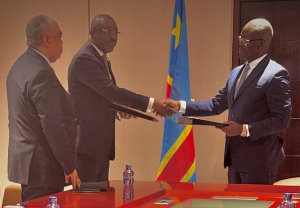
L’État congolais détient désormais 10 % du capital de Buenassa Resources SA, la filiale de Buenassa chargée du développement de la première raffinerie de cuivre et de cobalt en République démocratique du Congo (RDC). Le protocole d’accord a été signé le 25 juin 2025 entre le ministre du Portefeuille, Jean-Lucien Bussa, et le directeur général de Buenassa Resources, Eddy Kioni.
Selon Buenassa, cette prise de participation correspond à une golden share : bien que minoritaire, elle accorde à l’État un droit de veto sur les décisions stratégiques susceptibles d’affecter les intérêts nationaux, notamment en matière d’emploi, de fiscalité, de contenu local, d’environnement ou d’orientation stratégique. Dans ce cadre, Buenassa Resources est passée du statut de SARL à celui de société anonyme avec conseil d’administration, intégrant des représentants de l’État.
Présentée comme un « signal fort pour les partenaires et investisseurs », cette étape ouvre la voie à la mobilisation de financements. Selon des sources internes, il s’agit, dans un premier temps, de réunir entre 7 et 8 millions de dollars pour financer l’étude de faisabilité du projet. Une subvention de 3,5 millions de dollars, octroyée par le gouvernement congolais via le Fonds de promotion de l’industrie (FPI), a déjà permis de réaliser une étude de cadrage (scoping study).
Cette dernière évalue le coût de la première phase du projet à 600 millions de dollars. À ce stade, l’usine dont la mise en service est prévue d’ici fin 2027 devrait produire annuellement 30 000 tonnes de cathodes de cuivre et 5 000 tonnes de sulfate de cobalt. À terme, l’objectif est de porter ces volumes à 120 000 tonnes de cuivre et 20 000 tonnes de cobalt par an.
L’étude de faisabilité, qui doit s’étendre sur 12 mois, visera à affiner les paramètres techniques et économiques du projet, notamment le modèle d’approvisionnement de l’usine. Deux options sont actuellement à l’étude : utiliser la part de la production minière revenant à l’État, ou s’appuyer sur des quotas de cobalt réservés à la transformation locale. Le gouvernement a d’ailleurs réaffirmé, lors du Conseil des ministres du 14 mars 2025, sa volonté de mieux encadrer les flux de cobalt exportés afin de favoriser une transformation sur le territoire national.
La direction de Buenassa espère lancer l’étude de faisabilité en septembre prochain. Pour cela, il reste aussi à finaliser le choix du site. Un terrain a été identifié dans la province du Lualaba, mais n’a pas encore été sécurisé.
Pierre Mukoko Ronsard Luabeya, stagiaire
Lire aussi :
Projet de raffinerie de cobalt de Lualaba : des investisseurs américains « fortement intéressés »
Batteries pour véhicules électriques : le soutien américain à la RDC incertain avec Trump
Véhicules électriques : la RDC lance l’aménagement de sa zone économique spéciale
Cobalt : la RDC instaure des quotas après avoir suspendu les exportations
Rawbank Drives Growth, Digital Innovation, and Inclusion in 2024
• Rawbank’s revenue rose 6.2% to $514 million, with net profit up 11.4%
• Loan portfolio expanded by 34%, and a $400 million mining syndication was completed
• Strong growth in digital services, SME financing, and green initiatives across the DRC
Rawbank, the leading financial institution in the Democratic Republic of Congo (DRC), demonstrated its ability to combine performance, digital innovation, and social commitment in 2024, despite a challenging economic environment.
According to its annual report released on June 18, 2024, Rawbank recorded steady growth in both revenue and profitability, driven by a strategy centered on diversification, digitalization, and sustainable finance. The bank also successfully rolled out several innovative and inclusive financing solutions to support the national economy.
Net banking income, equivalent to revenue, reached $514 million, marking a 6.2% increase from 2023, supported by dynamic commercial activity and effective margin management. Net profit totaled $212.7 million, an 11.4% rise. These results reflect a return on equity (ROE) of 32.99% and a return on assets (ROA) of 3.43%. The bank’s capital adequacy ratio, aligned with international standards, stood at 20.44%, confirming its strong financial position and ability to meet growing financing needs while maintaining strict risk management.
International Syndicated Loan for Mining Sector
Total gross loans grew by 34% to $2.08 billion, driven by strong demand and a balanced credit policy. Deposits rose by nearly 20%, reaching $4.74 billion, reflecting renewed trust from both individuals and businesses. The loan-to-deposit ratio improved to 43.85%, showing healthy balance sheet management. Operating expenses accounted for 52.36% of income, while the cost of risk, based on net non-performing loans, remained low at 0.47%, highlighting effective risk control.
In 2024, Rawbank achieved a strategic milestone by completing a $400 million syndicated loan to finance the third development phase of the Kamoa-Kakula copper mine in Lualaba province. Organized with Africa Finance Corporation, Absa, and FBN Bank, the deal underscores Rawbank’s ability to structure large-scale international financing. It strengthens the mining sector, a key pillar of the Congolese economy, and positions Rawbank as a major player in high-impact infrastructure financing.
The report also highlighted the success of the “20,000 SMEs” program, launched with the Financial Inclusion Fund (FPM). In 2024, loans to small and medium-sized enterprises (SMEs) increased by 46.3%, reaching $225 million. The program targets sectors such as mining subcontracting, telecommunications, and agribusiness, promoting financial inclusion and access to credit for Congolese entrepreneurs.
Digital Transformation Gains Momentum
Rawbank’s Illicocash app, central to its digital strategy, recorded 1.5 million monthly visits in 2024, with transactions up 75% compared to 2023. The bank’s network of banking agents expanded to over 1,000 active service points nationwide. New features were added to meet the needs of connected customers, including receiving international transfers via Remitly, Xoom, and PayPal.
The bank also advanced its sustainable finance initiatives, mobilizing $22 million between 2023 and 2024 to support the green transition. Notable projects include a $2 million investment in improved cookstoves to reduce six million tons of CO₂ over ten years and a reforestation program in Idiofa, Kwilu province. Rawbank also integrated a carbon footprint calculator into the Illicocash app, enabling clients to track their environmental impact in real time.
Financial inclusion and equal opportunity remain central to Rawbank’s mission. The Lady’s First program now supports over 2,000 women entrepreneurs, while the She Leads initiative enabled nine female employees to reach management positions in 2024. Additionally, the Rawtalents program welcomed more than 25 young graduates to develop the next generation of leaders in the DRC’s banking sector.
“The dedication of our teams since 2002 continues to deliver results, with a renewed ambition to make Rawbank more than just a bank, but a driver of sustainable transformation for the DRC,” said Isabelle Lessedjina, Chair of the Board. CEO Mustafa Rawji added, “The 2024 results confirm the strength of our model built on efficiency, diversification, and innovation. They reflect renewed client trust and our commitment to actively supporting Congo’s economic transformation.”
Mining Firms Withheld $198M from Local Funds, Audit Reveals
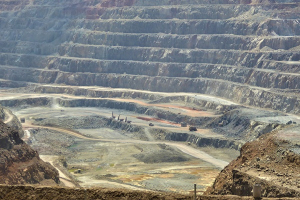
Local communities in the Democratic Republic of Congo (DRC) were deprived of $198 million between 2018 and 2023. This shortfall resulted from underreporting, partial payment, or non-payment of the mandatory minimum allocation of 0.3% of turnover by mining companies. A report from the Court of Auditors revealed these findings, highlighting issues in the management of funds intended for community development projects in mining areas.
Published in June 2025, the audit specifically found discrepancies between revenues mining companies reported to the DOTS, the entities managing the allocation, and figures declared to the Directorate General of Taxes (DGI). This deliberate underreporting led to a $154.7 million deficit over the audited period.
Additionally, some companies made only partial payments, accumulating an outstanding balance of over $40.4 million. Others made no payments at all, creating an additional shortfall of $2.8 million.
Major companies implicated in the report include Kamoa Copper (Ivanhoe Mines and Zijin Mining), Kamoto Copper Company (Glencore), Sicomines (Crec-Sinohydro-Zhejiang), and Tenke Fungurume Mining (CMOC).
The Court of Auditors recommends that the Supervisory Committee order the affected companies to regularize their payments or face sanctions, potentially including the suspension of operations for gross misconduct. However, the report expressed regret over the lack of action by successive Ministers of Mines. It also called for establishing a systematic verification mechanism for turnover figures between the DGI and the DOTS.
This article was written in French by Boaz Kabeya (intern),
Edited in English by Mouka Mezonlin
Développement local : 198 millions $ non versés par les sociétés minières en RDC
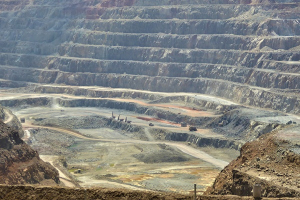
Entre 2018 et 2023, les communautés locales en République démocratique du Congo (RDC) ont été privées de 198 millions de dollars en raison de la sous-déclaration, du paiement partiel ou du non-paiement de la dotation minimum obligatoire de 0,3 % du chiffre d’affaires par les entreprises minières. C’est ce qui ressort d’un rapport de la Cour des comptes sur la gestion de cette dotation, censée financer des projets de développement communautaire dans les zones d’exploitation.
Publié en juin 2025, l’audit pointe notamment les écarts entre les chiffres d’affaires déclarés par les compagnies minières aux DOTS — les structures chargées de gérer la dotation — et ceux communiqués à la Direction générale des impôts (DGI). Cette sous-déclaration volontaire a entraîné un manque à gagner de 154,7 millions de dollars sur la période auditée.
Par ailleurs, certaines entreprises ont partiellement payé leur contribution, accumulant un solde impayé de plus de 40,4 millions de dollars. D’autres ne s’en sont pas acquittées du tout, générant un manque à gagner supplémentaire de 2,8 millions de dollars.
Parmi les entreprises mises en cause figurent des majors comme Kamoa Copper (Ivanhoe Mines et Zijin Mining), Kamoto Copper Company (Glencore), Sicomines (Crec-Sinohydro-Zhejiang) et Tenke Fungurume Mining (CMOC).
La Cour des comptes recommande au Comité de supervision d’ordonner aux entreprises concernées de régulariser leurs paiements sous peine de sanctions, allant jusqu’à la suspension des travaux pour faute grave. Elle déplore cependant l’absence de mesures prises par les ministres des Mines successifs, et appelle à la mise en place d’un mécanisme de vérification systématique des chiffres d’affaires entre la DGI et les DOTS.
Boaz Kabeya, stagiaire
Lire aussi :
Importations : Glencore, CMOC, Ivanhoe, Sicomines… accusés de violer les restrictions
En 2024, Rawbank conjugue croissance, transformation digitale et impact social
En 2024, Rawbank, première institution financière de la République démocratique du Congo (RDC), a confirmé sa capacité à allier performance, innovation technologique et engagement sociétal, malgré un contexte économique difficile.
Selon son rapport annuel publié le 18 juin 2024, la banque a enregistré une croissance soutenue de ses revenus et de sa rentabilité, portée par une stratégie fondée sur la diversification, la digitalisation et la finance durable. Elle a également expérimenté avec succès plusieurs solutions innovantes et inclusives de financement au service de l’économie nationale.
Le produit net bancaire (équivalent du chiffre d’affaires) a atteint 514 millions de dollars, en hausse de 6,2 % par rapport à 2023, grâce à une activité commerciale dynamique et une bonne gestion des marges. Le résultat net s’élève à 212,7 millions de dollars, soit une progression de 11,4 %. Ces performances se traduisent par un retour sur fonds propres (ROE) de 32,99 % et un retour sur actifs (ROA) de 3,43 %. Le ratio de solvabilité, conforme aux normes internationales, atteint 20,44 %, ce qui reflète une solidité financière permettant à Rawbank de répondre aux besoins croissants de financement, tout en maintenant une gestion rigoureuse des risques.
Une syndication de référence à l’international
L’encours brut de crédits s’est élevé à 2,08 milliards de dollars, en hausse de 34 % sur un an, tiré par une forte demande et une politique de crédit équilibrée. Les dépôts ont progressé de près de 20 % pour atteindre 4,74 milliards de dollars, illustrant la confiance renouvelée des particuliers comme des entreprises. Le ratio crédits/dépôts, en amélioration à 43,85 %, témoigne d’un bon équilibre. Le coefficient d’exploitation s’établit à 52,36 %, tandis que le coût du risque, basé sur le volume net des créances douteuses, reste maîtrisé à 0,47 %, signalant un portefeuille sain et un pilotage efficace des risques.
En 2024, Rawbank a marqué un tournant stratégique en finalisant une syndication bancaire de 400 millions de dollars pour financer la troisième phase du développement de la mine de cuivre Kamoa-Kakula, dans le Lualaba. Réalisée en partenariat avec Africa Finance Corporation, Absa et FBN Bank, cette opération témoigne de la capacité de Rawbank à structurer des financements internationaux de grande ampleur. Elle contribue à renforcer le secteur minier, pilier de l’économie congolaise, tout en positionnant la banque comme un acteur clé du financement d’infrastructures à fort impact.
Le rapport met aussi en avant les résultats du programme 20 000 PME, mis en œuvre avec le Fonds pour l’inclusion financière (FPM). En 2024, les encours de crédits accordés aux petites et moyennes entreprises ont progressé de 46,3 %, atteignant 225 millions de dollars. Ce programme cible des secteurs variés, tels que la sous-traitance minière, les télécoms ou encore l’agro-industrie, et contribue directement à la bancarisation et à l’accès au financement pour les entrepreneurs congolais.
Accélération de la digitalisation
L’application Illicocash, au cœur de la stratégie numérique de Rawbank, a enregistré 1,5 million de visites mensuelles en 2024, avec une hausse de 75 % des transactions par rapport à 2023. Le réseau d’agents bancaires s’est étoffé, dépassant 1 000 points de service actifs à travers le pays. De nouvelles fonctionnalités, comme la réception de transferts internationaux via Remitly, Xoom ou PayPal, ont été intégrées pour mieux répondre aux besoins d’une clientèle connectée.
Rawbank s’est également distinguée dans le domaine de la finance durable, mobilisant 22 millions de dollars entre 2023 et 2024 pour soutenir la transition écologique. Parmi les initiatives phares : un investissement de 2 millions de dollars dans des foyers de cuisson améliorés, visant à réduire 6 millions de tonnes de CO₂ sur dix ans, et un programme de reforestation à Idiofa (province du Kwilu). La banque a aussi intégré un calculateur carbone dans Illicocash, permettant aux clients de mesurer leur empreinte environnementale en temps réel.
L’inclusion financière et l’égalité des chances demeurent au cœur de la mission de Rawbank. Le programme Lady’s First accompagne plus de 2 000 femmes entrepreneures, tandis que l’initiative interne She Leads a permis à neuf collaboratrices d’accéder à des postes de direction en 2024. De son côté, le programme Rawtalents, dédié à la jeunesse, a intégré plus de 25 jeunes diplômés pour préparer la relève du secteur bancaire congolais.
« L’engagement constant des équipes depuis 2002 continue de porter ses fruits, avec une ambition renouvelée : faire de Rawbank bien plus qu’une banque, un moteur de transformation durable pour la RDC », a déclaré Isabelle Lessedjina, présidente du Conseil d’administration. De son côté, Mustafa Rawji, directeur général, a souligné que « les résultats 2024 confirment la solidité de notre modèle, fondé sur l’efficacité, la diversification et l’innovation. Ils traduisent la confiance renouvelée de nos clients et notre volonté de contribuer activement à la transformation de l’économie congolaise ».
Georges Auréole Bamba
Lire aussi :
En 2024, Rawbank augmente ses crédits sains aux PME et ménages de 166 millions $
Crédit-bail : Rawbank lance une offre « rapide, fiscalement optimisée et sans garanties »
Rawbank change d’identité visuelle pour marquer « un cap stratégique »
RDC-Ouganda : 25 millions € pour consolider la paix et l’intégration régionale
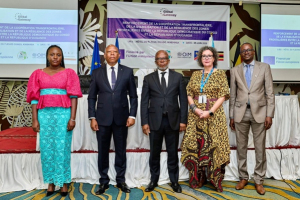
Deux projets transfrontaliers entre la République démocratique du Congo (RDC) et l’Ouganda ont officiellement été lancés le 5 juin 2025 à Kinshasa, selon un communiqué publié le lendemain par TradeMark Africa. D’un coût global de 25 millions d’euros (près de 30 millions de dollars au cours actuel), ces projets sont financés par l’Union européenne (UE).
Le premier programme, intitulé « Renforcer la coopération transfrontalière, la stabilisation et la résilience des zones frontalières », est mis en œuvre par l’Organisation internationale pour les migrations (OIM) avec un financement de 15 millions d’euros. Il vise notamment à faciliter la circulation sécurisée des personnes, à améliorer la gestion des flux migratoires, à réduire les tensions communautaires et à soutenir des initiatives locales favorisant la cohésion sociale, en accordant une attention particulière aux femmes et aux jeunes.
Le second projet, « Frontières pacifiques et résilientes II », doté de 10 millions d’euros et coordonné par TradeMark Africa, cible l’amélioration des infrastructures et l’harmonisation des procédures douanières selon les normes de la Communauté de l’Afrique de l’Est (CAE). Il prévoit notamment la modernisation de la route et du pont de Mahagi, ainsi que du port du lac Ntoroko. Ce projet comprend aussi la mise en place de laboratoires mobiles pour garantir la qualité des produits échangés, ainsi que des formations professionnelles destinées aux jeunes.
Prévus sur une durée de trois ans, ces projets s’inscrivent dans le cadre de la stratégie de l’Union européenne pour la stabilité régionale et le développement économique durable dans la région des Grands Lacs. Ils visent à transformer les zones frontalières des deux pays en espaces de paix, de stabilité et de croissance socio-économique inclusive. Ils cherchent également à promouvoir le commerce formel et à renforcer l’implication active des communautés locales dans les dynamiques économiques régionales.
La mise en œuvre de ces projets intervient dans un contexte où la RDC et l’Ouganda se sont engagés à réhabiliter ensemble 1 182 kilomètres de routes pour dynamiser les échanges économiques bilatéraux. Cet engagement fait suite aux accords signés en novembre 2019 entre le président congolais Félix Tshisekedi et son homologue ougandais Yoweri Museveni. La première route relie Goli, ville frontalière de l’Ouganda, à Bunia dans le nord-est de la RDC, en passant par Mahagi. Le second axe part de Mpondwe, à l’ouest de l’Ouganda, pour rejoindre Beni, au nord-est de la RDC. Le troisième corridor relie Bunagana (à la frontière ougandaise) à Goma, en passant par Rutshuru.
Ronsard Luabeya, stagiaire
Lire aussi :
Fraude douanière : Kinshasa saisit l’OMC contre l’Ouganda, le Rwanda, le Kenya et l’Angola
Nord-Kivu : le cacao congolais échappe aux circuits officiels via l’Ouganda
Commerce transfrontalier : des trajets plus longs entre Goma, Bukavu et l’Ouganda
CAE : vers des paiements plus rapides et moins coûteux entre la RDC et sept pays d’ici 2030
Hydro-Link’s $1.5B Angola–DRC Power Line Set to Energize Mining Boom
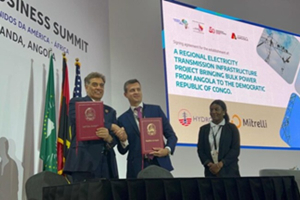
U.S. based Hydro-Link is leading a $1.5 billion project to build a 1,150 kilometer electricity transmission line connecting Angola and the Democratic Republic of Congo (DRC). The company announced the project at the 17th U.S. Africa Business Summit, hosted by the Corporate Council on Africa, currently underway in Luanda, Angola.
While Hydro-Link remains relatively unknown, its Chief Executive Officer, Paul Hinks, has more than four decades of global experience in developing, financing, and operating power infrastructure. To advance the project, the company is partnering with the Swiss-headquartered Mitrelli Group.
In a joint statement released on June 23, the two firms announced they had signed a memorandum of understanding (MoU), the first of three agreements considered crucial for bringing the project to fruition. A second MoU with the Angolan government was expected to be signed on June 24. Talks are also ongoing with Congolese authorities, according to the Financial Post.
Strong U.S. Footprint
Mitrelli, which has operated in Angola for decades, will serve as both an investor and a strategic partner. The group will provide "end-to-end expertise, from project development and financing to on-the-ground execution," the statement said.
To cover approximately 70% of the project’s cost, Hydro-Link is seeking funding from the U.S. International Development Finance Corporation (DFC). The firm is also seeking support from the U.S. Trade and Development Agency for feasibility studies, and additional backing from the U.S. Export-Import Bank.
This extensive American involvement underpins what Hydro-Link describes as the project’s "strong U.S. footprint." The company plans to source major components from U.S. manufacturers. This is a departure from the industry norm of procuring equipment elsewhere for African infrastructure projects. To that end, it has already signed an MoU with sister company Sargent & Lundy, an energy engineering firm that will serve as owner’s engineer and independent consultant.
Powering the Mining Sector
The line is expected to be operational by 2029, delivering up to 1.2 gigawatts of electricity from Angola’s Lauca hydropower plant and other sources. The energy will supply the Kolwezi mining region in the DRC, targeting companies such as Glencore and Ivanhoe Mines, and potentially new U.S. entrants under a "minerals-for-security" agreement currently under negotiation between Kinshasa and Washington.
Hydro-Link’s initiative marks the third Angola-DRC interconnection project, alongside ventures led by Moroccan group Somagec and a Trafigura-ProMarks consortium. All aim to export Angola’s surplus power to the DRC.
According to the African Development Bank, Angola currently has 1.5 gigawatts of unused clean hydropower capacity, a figure expected to rise to 3.5 gigawatts by 2027. Meanwhile, the DRC’s persistent energy shortages continue to stall the development of key mining projects.
This article was initially published in French by Pierre Mukoko & Ronsard Luabeya
Edited in English by Mouka Mezonlin
Equity BCDC Unions Denounce ‘Disguised Layoffs’ Targeting 460 Employees
The Equity BCDC inter-union has accused the bank of preparing a large-scale, disguised layoff, set to affect nearly 460 employees, which is about 27% of its total workforce at the end of 2023. This accusation appears in a letter dated June 17, 2025, addressed to the Minister of Labor, Ephraim Akwakwa Nametu.
The dispute began after an internal communication on June 6 stated that the parent company, Kenya-based Equity Group Holdings (EGH), suspects these employees of fraud following an internal investigation.
The bank’s management plans to launch a "rigorous and exemplary" disciplinary process, citing a zero-tolerance policy on fraud. However, the unions claim the bank ignored repeated requests for key information—such as the code of conduct, the full list of accused employees, the investigation period, and the alleged fraud amount—before taking action.
Despite receiving no clear answers, the bank reportedly sent explanation requests to the targeted employees starting June 10. In a June 12 letter to Equity BCDC, the inter-union condemned the bank’s "hasty" and "war-like" tactics. This is why the unions are appealing to the Minister of Labor to prevent what they consider to be a purge operation.
Rising Social Tensions
Since January 30, 2025, Equity BCDC and its staff have been in conciliation talks led by the General Labor Inspectorate. This mediation follows the bank’s failure to implement a protocol agreement signed on November 20, 2024, which included retroactive salary alignment from November 1 and the finalization of job classifications.
Unions argue the ongoing disciplinary drive is a maneuver to dodge these social commitments. Equity BCDC’s leadership has not publicly responded in the Democratic Republic of Congo. Earlier in June, Equity Group CEO James Mwangi announced a broad internal probe across subsidiaries after losses of roughly 2 billion Kenyan shillings (about $15.4 million) over two years. The losses allegedly stem from internal fraud involving offshore accounts and M-Pesa wallets.
In May 2025, the group notified 1,200 employees in Kenya of their dismissal as part of similar "purges", giving them 48 hours to prove their innocence. Those who failed faced immediate termination with minimal severance—salary up to the last day, one month’s notice pay, and unused leave compensation minus any debts.
This article was initially published in French by Timothée Manoke
Edited in English by Ange Jason Quenum
Equity BCDC : les syndicats dénoncent un « licenciement déguisé » visant 460 agents
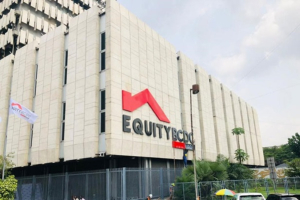
Selon une correspondance datée du 17 juin 2025 adressée au ministre du Travail, Ephraim Akwakwa Nametu, l’intersyndicale d’Equity BCDC accuse la banque de préparer un licenciement massif déguisé. En cause : une communication interne du 6 juin annonçant qu’environ 460 employés soit près de 27 % de l’effectif total à fin 2023 sont soupçonnés de fraude, à la suite d’une enquête menée par la maison mère, Equity Group Holdings (EGH), basée au Kenya.
La direction de la banque aurait prévu d’engager une procédure disciplinaire « rigoureuse et exemplaire » conformément à sa politique de tolérance zéro. Mais les syndicats affirment avoir demandé en vain la communication de plusieurs éléments essentiels avant toute action : code de conduite, liste complète des agents concernés, période couverte par l’enquête, et montant des fraudes alléguées. Faute de réponse, Equity BCDC aurait tout de même adressé, dès le 10 juin, des demandes d’explication aux salariés visés.
Dans un courrier adressé à Equity BCDC le 12 juin, l’intersyndicale fustige une approche « précipitée » et « va-t-en-guerre » de la banque. C’est pourquoi les syndicats en appellent au ministre du Travail pour empêcher ce qu’ils considèrent comme une opération de purge.
Tensions sociales
Depuis le 30 janvier 2025, Equity BCDC et son personnel sont engagés dans un processus de conciliation mené par l’Inspection générale du travail. Cette médiation fait suite à l’inexécution d’un protocole d’accord signé le 20 novembre 2024, prévoyant notamment un alignement salarial avec effet rétroactif au 1er novembre et la finalisation de la classification des emplois. Pour les syndicats, les procédures disciplinaires en cours constituent une manœuvre pour se soustraire à ces engagements sociaux.
En République démocratique du Congo, les dirigent de la banque n’ont pas encore réagi publiquement. Début juin, le PDG de Equity Group, James Mwangi, a annoncé le lancement d’une vaste enquête interne dans l’ensemble de ses filiales, après des pertes évaluées à 2 milliards de shillings kényans (environ 15,4 millions de dollars) sur deux ans, imputées à des fraudes internes, notamment via des comptes offshore et des portefeuilles M-Pesa.
En mai 2025, le groupe avait notifié un licenciement à 1 200 employés au Kenya, leur accordant 48 heures pour prouver leur innocence. À défaut, ils devaient quitter l’entreprise, avec un package minimal : paiement du salaire jusqu’au dernier jour travaillé, indemnité d’un mois de préavis, les jours de congés non pris, et après déduction d’éventuelles dettes envers la banque.
Timothée Manoke, stagiaire
Lire aussi :
Equity : la RDC dans le viseur après 1 200 licenciements pour fraude au Kenya
DR Congo and China Deepen Talks on New Agricultural Cooperation Deals
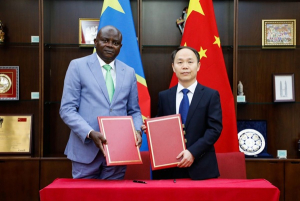
On June 11, 2025, the Democratic Republic of Congo (DRC) and China signed a memorandum of understanding to expand cooperation in agriculture. The agreement was concluded on the sidelines of the 4th China-Africa Economic and Trade Expo (CAETE) in Changsha, capital of China’s Hunan province. The deal was officially presented on June 20, 2025, during the DRC’s 48th Council of Ministers by Grégoire Mutshail Mutomb, Minister of State for Agriculture and Food Security.
This initial agreement lays the foundation for a future strategic partnership focused on strengthening the DRC’s food sovereignty. It outlines several areas of collaboration, including technical knowledge sharing, development of trade channels for exporting Congolese products, and support for agricultural research through partnerships with Chinese institutions.
The company Modern Agriculture Trading SARL will serve as the technical partner for engaging with China’s Hunan Renjian Woxiang Group to establish bilateral purchasing mechanisms.
Although no implementation timeline was provided, the Council of Ministers has approved the creation of a multisectoral committee to oversee the technical and operational follow-up of the proposed partnership.
This memorandum is part of a series of recent agriculture-related agreements between the DRC and China. In April 2025, a cooperation agreement was signed with Chinese firm Hunan Linshi Agricultural Service Ltd to improve crop and vegetable productivity in the DRC through various initiatives.
In September 2024, the DRC’s Minister of External Trade, Julien Paluku Kahongia, facilitated the signing of a memorandum aimed at exporting more than one million tons of agricultural products from the DRC to China by Congolese producers.
In March 2025, a Chinese delegation visited the DRC’s Ministry of Fisheries and Livestock to begin discussions on a partnership to enable the annual production of five million white-feathered chicks in the country.