






MINING (253)
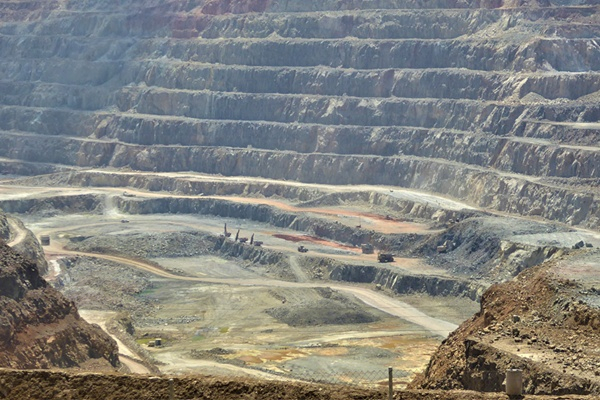
Local communities in the Democratic Republic of Congo (DRC) were deprived of $198 million between 2018 and 2023. This shortfall resulted from underreporting, partial payment, or non-payment of the mandatory minimum allocation of 0.3% of turnover by mining companies. A report from the Court of Auditors revealed these findings, highlighting issues in the management of funds intended for community development projects in mining areas.
Published in June 2025, the audit specifically found discrepancies between revenues mining companies reported to the DOTS, the entities managing the allocation, and figures declared to the Directorate General of Taxes (DGI). This deliberate underreporting led to a $154.7 million deficit over the audited period.
Additionally, some companies made only partial payments, accumulating an outstanding balance of over $40.4 million. Others made no payments at all, creating an additional shortfall of $2.8 million.
Major companies implicated in the report include Kamoa Copper (Ivanhoe Mines and Zijin Mining), Kamoto Copper Company (Glencore), Sicomines (Crec-Sinohydro-Zhejiang), and Tenke Fungurume Mining (CMOC).
The Court of Auditors recommends that the Supervisory Committee order the affected companies to regularize their payments or face sanctions, potentially including the suspension of operations for gross misconduct. However, the report expressed regret over the lack of action by successive Ministers of Mines. It also called for establishing a systematic verification mechanism for turnover figures between the DGI and the DOTS.
This article was written in French by Boaz Kabeya (intern),
Edited in English by Mouka Mezonlin
AVZ Minerals Limited has resumed its arbitration case against the Democratic Republic of Congo (DRC) over the prized Manono lithium deposit, the Australian mining company announced in a statement issued on Tuesday, June 24, 2025.
AVZ had announced on May 26 that it was temporarily suspending proceedings before the International Centre for Settlement of Investment Disputes (ICSID) until June 23. The company stated at the time that this pause aimed to foster "a climate conducive to discussions" in hopes of reaching an amicable resolution. However, that effort collapsed. AVZ now accuses the DRC of refusing to participate in any dialogue during the suspension window. "Despite AVZ’s best endeavors, the DRC did not engage with AVZ during the period of temporary suspension and that suspension has now lapsed,” the firm stated bluntly.
Congolese authorities have not commented on the situation as of yet. Their silence leaves open the question of why negotiations failed, especially since ICSID had confirmed the suspension was mutual and in line with both parties' agreement.
KoBold's Deal Loses Ground
This legal escalation directly threatens the January 21 offer made by American company KoBold Metals. Backed by investors including Bill Gates and Jeff Bezos, KoBold proposed to end the dispute by providing "appropriate compensation" to AVZ, in exchange for AVZ abandoning its claims on Manono in KoBold's favor. The offer initially appeared promising. On May 6, KoBold and AVZ signed a framework agreement, stating that AVZ would transfer its commercial interests in the Manono lithium deposit to KoBold at a fair market value.
However, the agreement carried a major condition: the DRC would need to either grant AVZ a mining permit or formally recognize its rights over the site. Kinshasa has refused to meet that condition, putting the entire KoBold offer on unstable ground. As a result, AVZ saw no alternative but to restart its legal offensive. The company initially brought the case to ICSID in June 2023, and the latest move signals its determination to press ahead.
At the heart of the conflict lies exploration permit PR 13359. AVZ claims legal rights over this portion of the lithium deposit. However, Congolese courts awarded 100% control of the permit to state-owned Cominière, reversing an earlier arrangement where AVZ had co-managed the license through a joint venture with the public enterprise.
American Sponsor's Influence and Geopolitical Stakes
Following that ruling, Cominière formed a new partnership with Chinese conglomerate Zijin Mining, creating Manono Lithium SAS. This joint venture, 61% owned by Zijin (via its subsidiary Jinxiang Lithium) and 39% by Cominière, has obtained an exploitation permit for the northeastern part of the deposit and plans to begin lithium production in the first quarter of 2026.
Parallel to its ICSID case, AVZ is also suing its former partner Cominière before the International Court of Arbitration of the International Chamber of Commerce. This legal battle has already yielded results, with the tribunal ruling in AVZ’s favor and ordering Cominière to pay 39.1 million euros in penalties for non-compliance with prior court orders.
According to AVZ, the temporary pause in arbitration followed a call from the U.S. government, which encouraged both parties to take steps to foster a climate conducive to discussions. This legal and corporate drama unfolds against a backdrop of complex geopolitics. Washington is concurrently negotiating a "minerals for security" agreement with the DRC. Under this proposed deal, the U.S. would offer military and strategic assistance to help stabilize Congo’s eastern provinces. In return, the DRC would grant preferential access to U.S. companies operating in the mining sector.
At the same time, American and Congolese officials are working on a broader peace accord involving the DRC and Rwanda. The signing of both agreements is announced for the end of the month. The DRC’s stance in the AVZ-KoBold case, and its continued silence, raises new questions.
This article was initially published in French by Pierre Mukoko
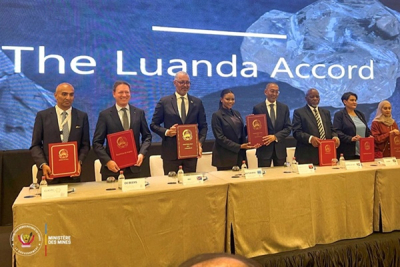
The Democratic Republic of Congo (DRC) has joined other African nations in a united effort to counter the growing market for synthetic diamonds. During the International Ministerial Roundtable on Natural Diamonds, held in Luanda, Angola, from June 17 to 19, 2025, Africa's leading diamond producers and global industry leaders pledged 1% of their revenues to promote and market natural diamonds. Along with the DRC, Botswana, Namibia, South Africa, and Angola are also signatories to this agreement.
The diamond sector has been significantly impacted by the rise of synthetic diamonds, often perceived as more affordable and environmentally friendly. This shift has intensified pressure on natural diamonds, leading to a sharp decline in prices. Prices fell from $12.50 per carat in 2022 to $9.60 in 2024, a 23.2% drop.
Promoting Natural Diamonds
The Natural Diamond Council, a nonprofit organization dedicated to promoting natural diamonds, is leading a global awareness campaign. According to Angola’s Ministry of Mineral Resources, as cited by Le Monde, this campaign aims to educate a new generation of consumers about the rarity, authenticity, and socioeconomic benefits that natural diamonds bring to local communities and producing countries.
At the roundtable, Kizito Pakabomba Kapinga Mulume, the DRC’s Minister of Mines, urged a coordinated effort to revitalize the natural diamond sector. He described the sector as a driver of development, a vehicle for peace, and a vital source of added value for local populations. He also emphasized the need to establish an ethical, traceable, transparent, and fair value chain for African natural diamonds.
Despite being among the world’s top diamond producers, the DRC faces significant challenges in its diamond sector. Official figures show that the country’s diamond exports have dropped from 17.9 million carats in 2017 to just 9.2 million in 2024. This decline is largely attributed to structural difficulties faced by the country's main producers, including Bakwanga Mining Company (MIBA) and Anhui-Congo Mining Investment Corporation (SACIM).
This article was initially published in French by Ronsard Luabeya (intern)
Edited in English by Mouka Mezonlin
Highlights:
• Twangiza Mining not listed among DRC gold producers since 2021
• Q1 2025 industrial gold output reached 5.9 tons, led by Kibali Gold
• Company’s claim of recent activity contrasts with official data and long absence
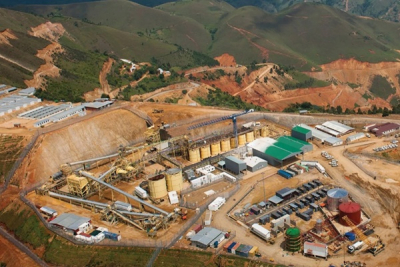
Twangiza Mining announced on May 8 that it was suspending operations. However, the move will have no impact on the Democratic Republic of Congo’s official gold production figures. Why? Because the company has been off the country’s official list of gold producers since 2021.
In the first quarter of 2025, official industrial gold output in the DRC reached 5.9 tons. That total came from Kibali Gold (5.86 tons), MCCR (18.6 kilograms), Kimia Mining Investment (4.9 kilograms), and Sokimo (4.6 kilograms). Twangiza Mining was not listed.
Official records show that Twangiza disappeared from the national gold producer registry in 2021. One year earlier, Banro—the Canadian company that had operated the Twangiza mine since 2012—sold its stake to minority shareholder Baiyin International Investments for a symbolic one Congolese franc.
By the time of the sale, Twangiza’s output had dropped sharply due to repeated attacks by armed groups. Production fell from nearly 5 tons in 2015 to 3.4 tons in 2018, then to 1.3 tons in 2019, and finally dropped to zero in 2020.
Yet when the company announced its recent suspension, CEO Chao Xianfeng stated that Twangiza had resumed operations in recent years. He said the company had halted activity again due to conflict with M23 rebels and their Rwandan allies, who have controlled the mine since May 2025. That would suggest the company was active at least during Q1 2025, but no output was reported.
The situation has drawn more scrutiny, especially following recent remarks by South Kivu Governor Jean-Jacques Purusi Sadiki. On April 2, speaking before the Foreign Affairs Committee of the French National Assembly, he alleged that at least 1,600 companies are illegally exploiting mineral resources in eastern Congo. Many of them, he added, are backed by Chinese capital and are allegedly smuggling gold to Middle Eastern countries, including Dubai, the United Arab Emirates, and Saudi Arabia.
Reported by Pierre Mukoko and Boaz Kabeya, intern
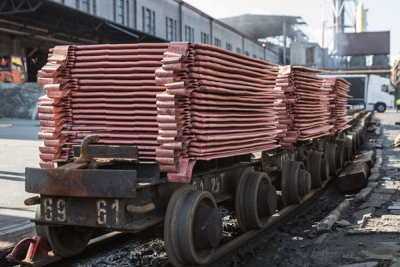
Ivanhoe Mines has lowered its 2025 copper production forecast for the Kamoa-Kakula project to between 370,000 and 420,000 tonnes, following a seismic incident in May that temporarily halted underground operations at the Kakula mine. The updated estimate was released in a company note dated June 11.
The new projection marks a nearly 30% reduction from the company’s initial guidance of 520,000 to 580,000 tonnes. Even the upper limit of the revised forecast falls short of 2024’s output of 437,061 tonnes—representing a 4% year-on-year decline.
While operations have resumed in the western wing of the Kakula mine, concentrators 1 and 2 are still running at just 50% of their combined processing capacity. Only the Kamoa mine and concentrator 3 remain fully operational.
The revised outlook undercuts Ivanhoe’s previous trajectory for the project, which had seen a 12% production increase in 2024. The company has also withdrawn its 2026 target of reaching 600,000 tonnes, citing the need for a broader operational reassessment.
Ivanhoe said restart efforts are underway in the eastern section of Kakula, but warned that the situation remains unstable. The company emphasized that it is still too early to "predict precisely the potential disruption caused by unexpected new seismic activity, the integrity of underground infrastructure, the ability to accelerate operations, the completion of dewatering work or the time required to access new mining areas".
The Kamoa-Kakula project is jointly owned by Ivanhoe Mines and Zijin Mining (each holding 39.6%), with the Congolese state retaining a 20% stake. The project remains one of the largest copper developments on the continent, but the recent incident has cast uncertainty over its near-term performance.
This article was initially published in French by Pierre Mukoko (Ecofin Agency)
Edited in English by Ola Schad Akinocho
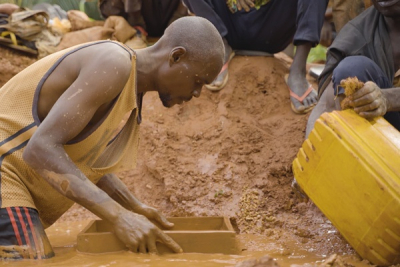
The Democratic Republic of Congo produced 1.74 million carats between January and March 2025—a 26% decline from the 2.35 million carats produced during the same period last year. The drop continues a multi-year downward trend driven by structural issues and global market pressures. It was determined by the Ministry of Mines' Technical Cell for Mining Coordination and Planning (CTCPM).
The source indicates that artisanal mining is still the country’s dominant source of diamond production, accounting for over 80% of total output in Q1 2025, or roughly 1.39 million carats. The Kasaï Oriental province alone contributed an overwhelming 93.7% of artisanal output, followed by Kasaï Central. Other regions, including Sankuru, Kwango, Ituri, and Nord-Ubangi, made only marginal contributions.
On the industrial side, production reached 344,049 carats—about 19.7% of the total. The sector is heavily reliant on SACIM (Société Anhui-Congo d’investissement minier), which produced 97% of the country’s industrial diamonds this quarter. The once-dominant state-owned MIBA contributed just 3%, hampered by outdated equipment and chronic operational difficulties. Monthly figures revealed a steep decline: only 52,305 carats were produced in March, compared to 155,241 in January.
Semi-industrial output remains negligible, with just 485 carats recorded, representing 0.03% of total national production.
Over the past five years, the DRC’s diamond industry has seen continued volatility. Since peaking at 3.15 million carats in Q1 2022, output has steadily declined—now nearly halved. Analysts attribute the drop to aging industrial infrastructure, limited investment, and growing reliance on artisanal extraction.
Exports are also falling. The DRC exported 1.91 million carats in Q1 2025, down 3% from the previous year. The United Arab Emirates remains the primary destination, receiving nearly 1.68 million carats (87.7%) worth around $8 million. Belgium and India followed with 11.7% and 0.6% of export volumes, respectively.
Globally, the diamond market faces a crisis of confidence. Natural diamonds are under pressure from the rapid rise of synthetic alternatives—seen as more affordable and environmentally friendly. Prices have dropped significantly, from $12.5 per carat in 2022 to $9.6 in 2024, a 23.2% decline that continues to weigh on producers across the value chain.
This article was initially published in French by Ronsard Luabeya (intern)
Edited in English by Ola Schad Akinocho
Diamond producers in the Democratic Republic of Congo (DRC) recently regained the freedom to sell their production without restrictions tied to a limited list of buyers. On June 2, 2025, Mines Minister Kizito Pakabomba officially rescinded the 2022 ministerial decree that had regulated sales of minerals under the supervision of the Centre d'expertise, d'évaluation et de certification des substances minérales précieuses et semi-précieuses (CEEC).
The minister declared that the 2022 decree was nullified as it conflicted with articles 85 and 108 of the Mining Code, which guarantee mining rights holders the freedom to market minerals extracted from their concessions. He emphasized that mining production regulation must strictly adhere to the Mining Code and its implementing regulations, rejecting any inappropriate supplementary rules.
The revoked decree had assigned CEEC the exclusive role of marketing precious and semi-precious minerals—including diamonds, gold, colored stones, and artisanal mining products—through appraisal, evaluation, and certification. The diamond sector, in particular, suffered under this regime due to the Kimberley Process’s strict certification requirements and the introduction of auctions.
Société Anhui Congo Investissement Minier (Sacim), a diamond producer jointly owned by the Congolese state and China’s Anhui Foreign Economic Construction Corporation Limited, welcomed the repeal. Sacim had actively lobbied for months against the decree, which it blamed for its ongoing financial difficulties.
Ronsard Luabeya (intern)
International Resources Holding (IRH), a subsidiary of the Emirati conglomerate International Holding Company (IHC), just sealed a deal to acquire almost 100% of Tremont Master Holdings. Valued at C$503 million–around US$367 million–the deal will give IRH indirect control of 56% of Alphamin Resources. The latter owns the Bisie tin mine, the largest tin mine in the Democratic Republic of Congo (DRC).
According to Bloomberg, an IRH delegation visited the DRC last November to conduct a due diligence mission. Although the offer is lower than Alphamin's current capitalization on the Toronto Stock Exchange, Denham Capital, Tremont's sole shareholder, stands to gain. The American fund previously held 57% of Alphamin.
Located in North Kivu, the Bisie project has developed in a difficult security environment. Alphamin has held an 80.75% stake since 2012, when the tin market was still uncertain. The remainder of the capital is divided between the South African state-owned company IDC (14.25%) and the Congolese state (5%). Between 2019 and the end of 2024, the mine generated cumulative sales of $2.3 billion for a gross margin of $689.5 million. The company paid $115 million in dividends in 2022-2023, and expects a payment of $70 million in October 2025 in respect of fiscal 2024.
The transaction is still subject to prior authorization by the Congolese authorities. Under article 178 bis of the revised Mining Code, any indirect transfer of mining rights must be approved by the State, on pain of nullity. A transfer fee, previously set at 1% of the transaction value, is also payable.
For IRH, this acquisition is part of a broader strategy to build up a portfolio of critical mining assets. According to Africa Intelligence, the group is also in discussions with Gécamines to obtain new permits in the DRC, although this information has not yet been confirmed. Alphamin is also studying other expansion projects in the country.
This operation illustrates the Emirates' growing interest in transitional minerals. Saudi Arabia has stepped up diplomatic exchanges with Kinshasa around a framework for sustainable supply chains. Dubai remains one of the major outlets for Congolese artisanal gold, as the Governor of South Kivu recently reminded us. By 2023, collaboration between the Emirati group Primera Gold and the Congolese government had led to a surge of over 12,000% in gold channeled through the Primera Gold DRC joint venture.
This article was initially published in French by Georges Auréole Bamba
Edited in English by Ola Schad Akinocho
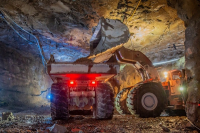
Ivanhoe Mines withdrew its copper production forecasts for the Kamoa-Kakula complex in the Democratic Republic of Congo (DRC). Previously, the firm expected the Congolese complex to deliver between 520,000 and 580,000 tonnes of copper this year, in 2025. Ivanhoe announced the withdrawal on May 26, attributing its decision “to persistent seismic activity in the Kakula mine.”
Initially, Ivanhoe Mines did not revise its production forecasts after the first reports of seismic activity. However, its partner, China's Zijin Mining, stated on May 23 that it expected a “negative impact” on the complex’s production targets for the year. In a corrective statement following Zijin’s announcement, Ivanhoe initially sought to downplay the incident. Now, the company has confirmed that a “revision” of the forecast will soon be made public.
“Seismic activity at the Kakula underground mine has continued intermittently over the past few days [...] Early indications are that seismic activity underground at Kakula could continue for weeks, impeding access to the mine and prolonging the temporary suspension of operations at Kakula,” Ivanhoe explained.
The market reacted sharply to this new information, with Ivanhoe’s share price dropping by 16%. The stock was trading at C$10.76 at 12:37 p.m. local time on the Toronto Stock Exchange.
Kamoa-Kakula is the largest copper mine in the DRC, with the Congolese government holding a 20% stake, and Zijin Mining and Ivanhoe Mines each owning 39.6%.
Emiliano Tossou (Ecofin Agency)
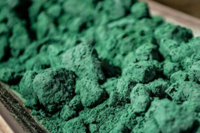
Indonesia could snatch the Democratic Republic of Congo’s (DRC) spot as the world’s leading cobalt producer in the 2040s. The International Energy Agency (IEA) made the forecast in its Global Critical Minerals Outlook 2025 report published on May 21.
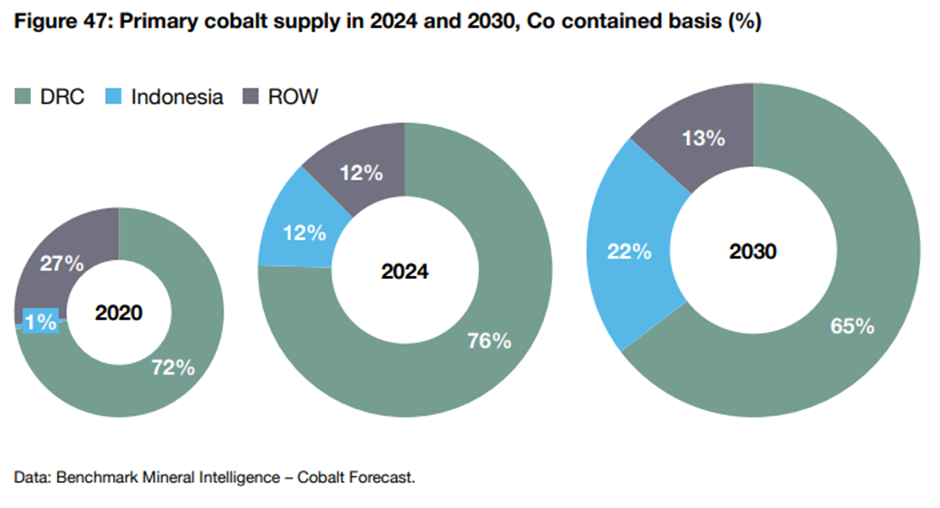
According to the Cobalt Institute, the DRC accounted for 76% of global primary cobalt supply in 2024, but the IEA forecasts a 45% decline in Congolese cobalt production during the 2030s “due to declining ore quality”.
In contrast, Indonesia—the world’s leading nickel producer, with cobalt as a by-product—is projected to increase its cobalt output by nearly 80% by 2040, surpassing the DRC. This outlook aligns with the Cobalt Institute’s Cobalt Market Report 2024, which predicts the DRC’s share of global cobalt supply will fall from 76% in 2024 to 65% by 2030, while Indonesia’s share rises from 12% to 22%.
While the projected plunge could reduce the DRC’s influence over the cobalt supply chain, its impact on mining revenues is uncertain. In 2022, cobalt accounted for about 21% of the DRC’s exports, according to the Central Bank of Congo. However, ongoing economic diversification and waning global demand for cobalt could lessen the metal’s importance to the Congolese economy even before it loses its production leadership.
The electric vehicle market—the primary driver of cobalt demand—is showing signs of slowdown. Additionally, energy storage projects increasingly favor lithium-iron-phosphate (LFP) batteries over traditional cobalt- or nickel-based batteries. Martin Jackson, a raw materials consultant at CRU, notes a “monumental drop in the intensity of nickel and cobalt use in battery demand.”
Kinshasa’s response to these shifts remains to be seen. The government is currently focusing on strengthening the country’s position in downstream segments of the value chain, such as refining and battery materials production, as potential buffers against the anticipated shocks.
This article was initially published in French by Aurel Sèdjro Houenou (Ecofin Agency)
Edited in English by Ola Schad Akinocho
More...

China’s CMOC and Switzerland’s Glencore hold divergent views on the next steps following the suspension of cobalt exports from the Democratic Republic of Congo (DRC), which accounted for 76% of the world’s primary supply in 2024. According to Reuters, CMOC is pushing for a swift lifting of the embargo, while traders affiliated with Glencore argue that the market must regain stability before Congolese volumes return.
The matter was discussed last week during the Cobalt Congress in Singapore, in a meeting attended by the Congolese Minister of Mines, Kizito Pakabomba. At the meeting, Kenny Ives, vice-president of CMOC, advocated lifting the ban to replenish dwindling cobalt stocks for Chinese customers. He warned that prolonged shortages could prompt some carmakers to switch to cobalt-free lithium-ion batteries.
Conversely, Glencore traders contend that producers like the DRC must exercise better supply control, as oversupply was the primary reason behind Kinshasa’s decision to impose the embargo.
The contrasting positions underscore the strategic tensions between the world’s two largest cobalt producers, CMOC and Glencore. However, they both kept producing despite the DRC ban. Regarding the latter, it should expire on June 22, 2025, but Congolese authorities have not decided if it will be extended.
President Félix Tshisekedi has suggested this possibility, and his government is also considering introducing export quotas—an option Glencore traders say they are prepared to accept.
Meanwhile, the market has responded favorably to the embargo, with cobalt prices rising over 50% since February. On the London Metal Exchange (LME), cobalt currently trades above $33,000 per tonne, up from $21,000 at the end of February.
This article was initially published in French by Aurel Sèdjro Houenou (Ecofin Agency)
Edited in English by Ola Schad Akinocho

Ivanhoe Mines has stopped activities at the Kakula underground mine, located at its Kamoa-Kakula copper complex in the Democratic Republic of Congo (DRC). The firm decided the halt on May 18 but officially announced it on May 20.
Operations were halted after seismic activity was recorded in the eastern section of the mine. There were no casualties, and all personnel were evacuated. The Phase 1 and 2 concentrators still run, at reduced capacity, processing ore from surface stockpiles. As of April 30, these stocks stood at 3.8 million tonnes, at an average grade of 3.2% copper. The Phase 3 concentrator and Kamoa underground mine continue to operate normally.
Geotechnical experts are inspecting the underground infrastructure. The western zone of Kakula has already been declared safe, while the eastern zone remains under evaluation.
Despite the disruption, Ivanhoe has not revised its production targets for the year; it still eyes an output of 520,000–580,000 tons of copper in 2025, for the whole complex. However, the impact of this suspension will depend on its duration. For now, it is unknown when operations will resume.
This article was initially published in French by Emiliano Tossou (Ecofin Agency)
Edited in English by Ola Schad Akinocho
Global demand for cobalt should grow faster than supply in the coming years, shifting the market from a surplus in 2024 to a deficit by the early 2030s. The Cobalt Institute disclosed the forecast in its annual report published on May 14, 2025.
The source, Cobalt Market Report 2024, forecasts an average annual growth in global demand of 7% by the decade’s end, reaching 400,000 tonnes by the early 2030s. This growth will be driven primarily by the rapid expansion of the electric battery sector.
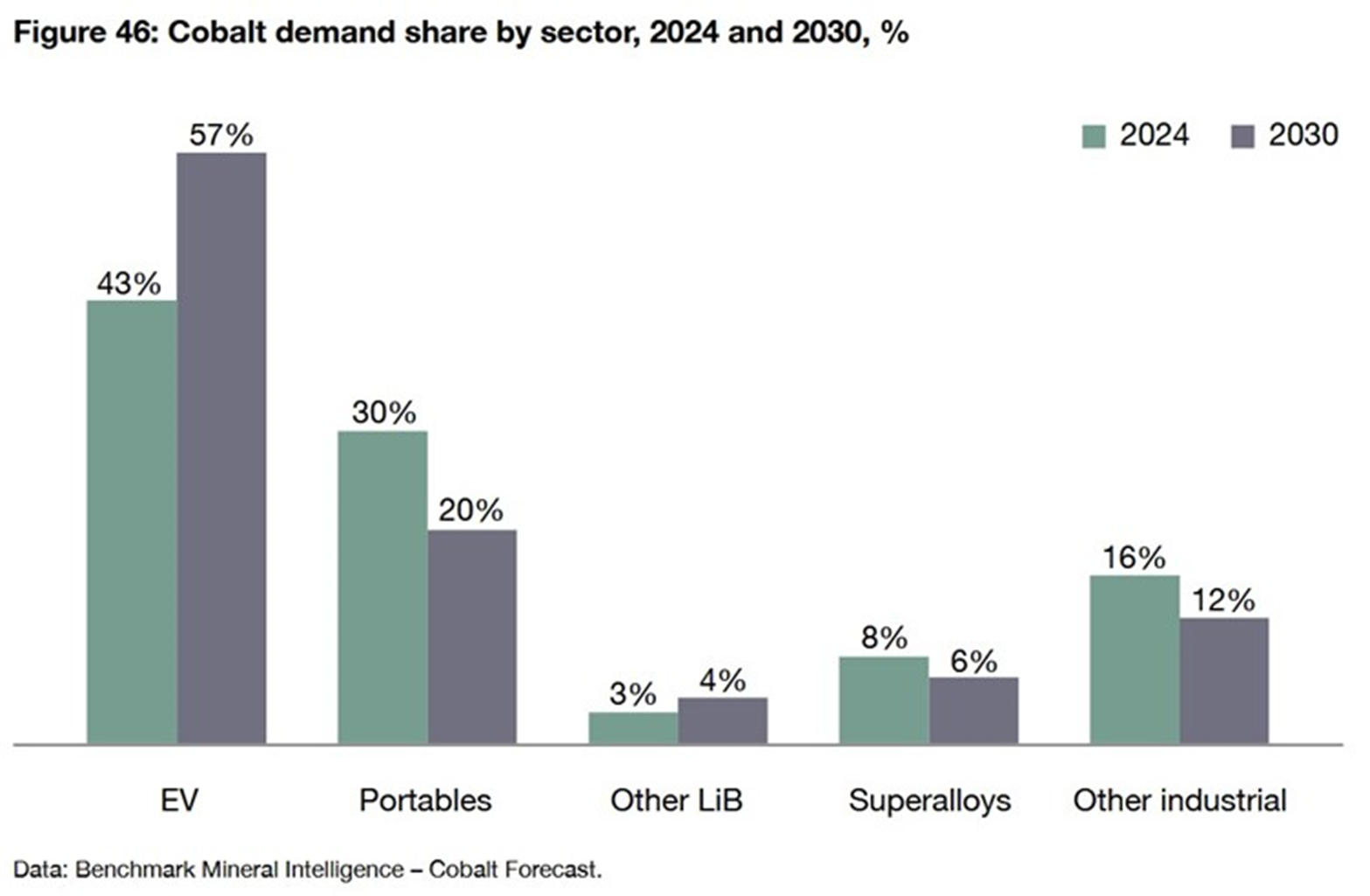
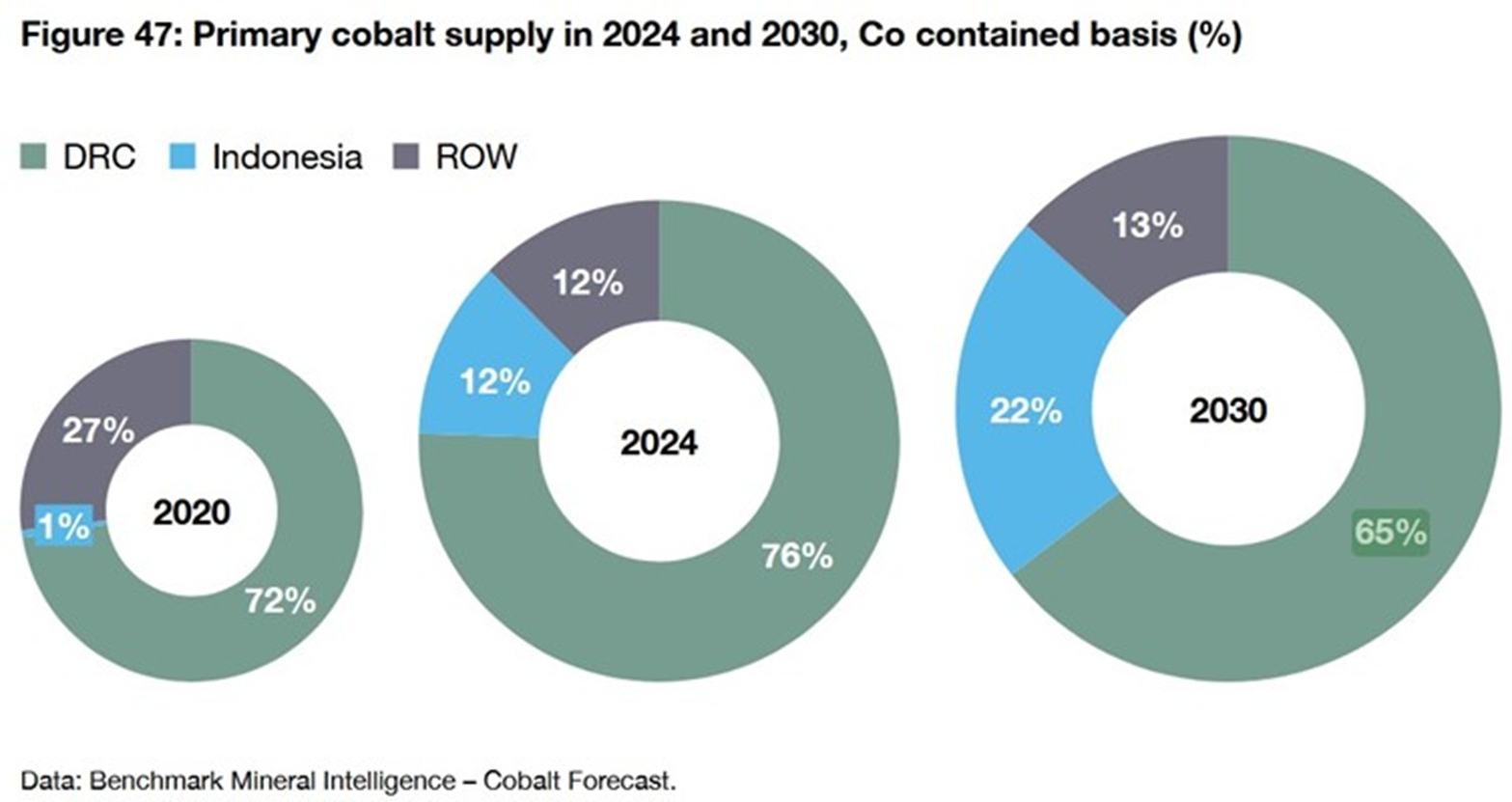
Meanwhile, global supply is expected to grow at an average annual rate of only 5% between now and 2030. The Democratic Republic of Congo (DRC), which accounted for 76% of primary supply in 2024, will see its share fall to 65%, while Indonesia’s share is expected to rise from 12% to 22% due to a rapid increase in production.
In the short term, market trends will largely depend on the strategy adopted by the DRC, particularly following the four-month ban on cobalt exports imposed in February 2025 to boost prices. This measure could be extended, but Kinshasa has not clarified its intentions. On March 14, the government announced plans to set export quotas and to cooperate with Indonesia to manage oversupply and better control prices. However, there is currently no information on how these decisions will be implemented.
Early this year, cobalt prices rebounded, spurred by the DRC’s export ban and an anticipated smaller surplus in the coming years. These conditions create a favorable backdrop for price recovery.
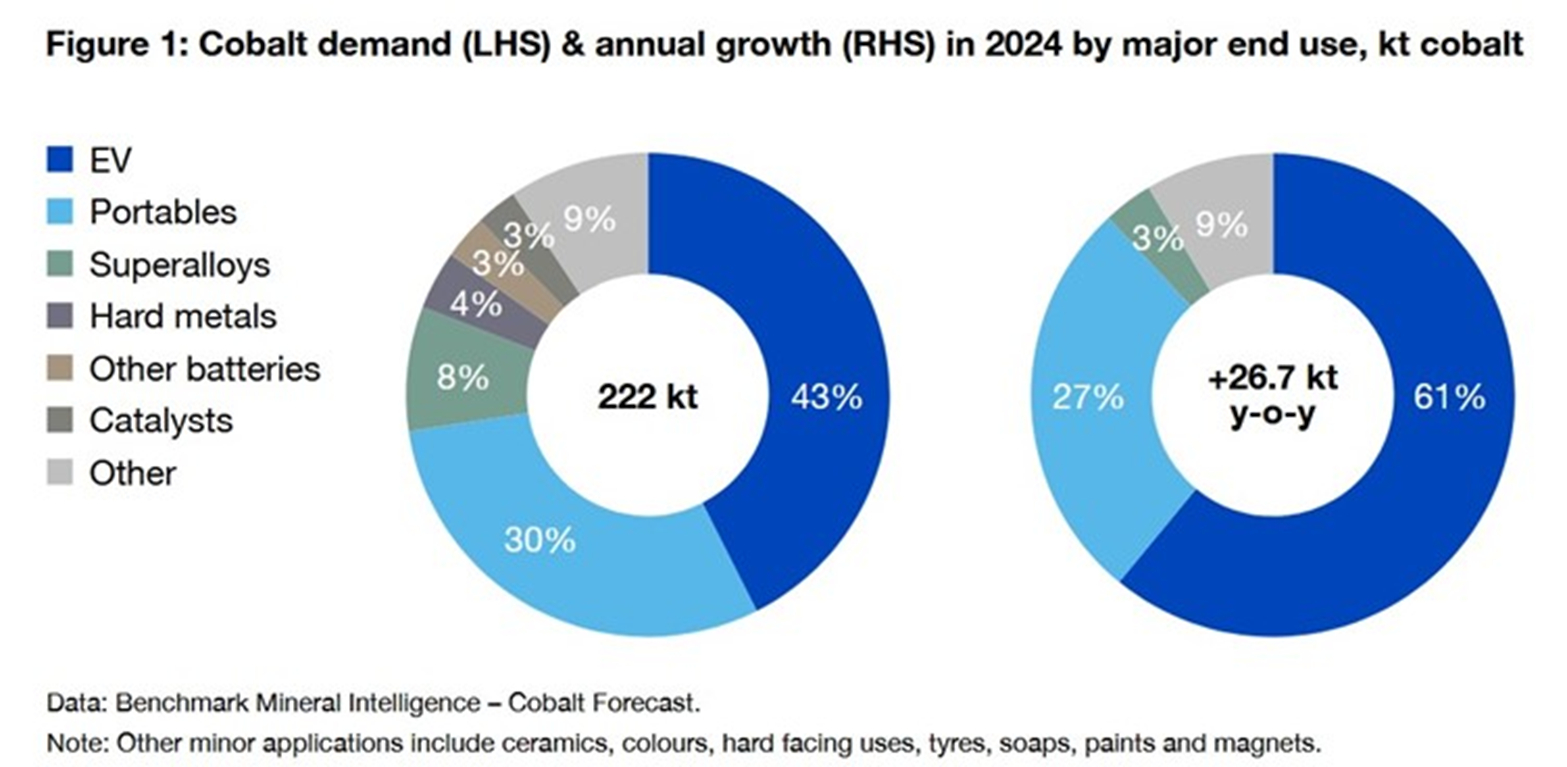
In 2024, global demand for cobalt rose by 14% to 222,000 tonnes. The electric battery segment was the main driver, accounting for 76% of total consumption and 94% of annual growth. Electric vehicles alone accounted for 43% of demand, with sales up 26%.
Demand for computers and mobile devices (phones, tablets, computers) also rose 12%. The rise of artificial intelligence, with its need for intensive computing, fueled an increase in battery capacity.
A surplus of 32,000 tonnes in 2024
Demand in the superalloys and military applications segments also grew, supported by rising defense spending.
But for the third consecutive year, supply growth outpaced demand. In 2024, global primary production reached 254,000 tonnes (+22% compared to 2023), driven by the ramp-up of Congolese mines operated by the Chinese group CMOC.
With 30,000 tonnes mined (+82% in one year), Indonesia established itself as the world’s second-largest producer. The market thus recorded a surplus of 32,000 tonnes in 2024—almost 15% of total demand—compared with 25,000 tonnes in 2023.
Founded in 1982, the Cobalt Institute brings together the main players in the cobalt value chain—including producers, users, recyclers, and traders—who represent around 80% of the global market.
This article was initially published in French by Walid Kéfi (Ecofin Agency)
Edited in English by Ola Schad Akinocho
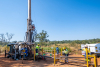
Ivanhoe Mines has announced updated resource estimates for its Western Forelands exploration project in the Democratic Republic of Congo (DRC). The company, which holds between 45% and 100% of the permits covering this area, reports that the Makoko, Makoko West, and Kitoko deposits now total 8.38 million tonnes of copper in so-called "inferred" resources, almost double the volumes estimated in 2023.
These new estimates are based on 86,000 meters of drilling conducted between November 2023 and February 2025. Ivanhoe groups these three deposits under the name "district of Makoko," a 13 km-long area where copper occurs at depth, in geological formations similar to those mined at the nearby Kamoa-Kakula mine.
Overall, 494 million tonnes of ore at an average grade of 1.70% copper have been classified as inferred resources. This classification designates volumes whose presence is deemed probable, but not yet certified due to insufficient data. These resources offer strong potential but require additional drilling campaigns to be confirmed.
The district also includes 27.7 million tonnes of "indicated resources" at 2.79% copper, or 773,000 tonnes of metal. This category offers a more reliable estimate than inferred resources.
This exploration work is part of Ivanhoe's strategy to develop a second copper production center in the DRC. Faced with growing global demand driven by the energy transition, the company has been conducting an extensive prospecting campaign for several years in the Western Forelands region, adjacent to the Kamoa-Kakula mining complex.
The 2025 drilling program, with a budget of $50 million, includes over 100,000 meters of additional drilling. The results will enable a new resource update expected in 2026.
However, the publication of these figures does not mean that Ivanhoe will be opening a new mine in the short term. At this stage, the Makoko district remains an exploration project, still far from the feasibility, environmental study, and financing phases. However, its proximity to the existing Kamoa-Kakula infrastructure could facilitate future production. The company also points out that the area remains open to exploration, meaning that the potential identified could be further expanded in future campaigns.
This article was initially published in French by Louis-Nino Kansoun
Edited in English by Ola Schad Akinocho