






News (946)

Chinese miner CMOC Group Ltd produced 87,974 tons of cobalt in the Democratic Republic of Congo (DRC) between January and September 2025, up 3% from the same period a year earlier, the company said in an operational report on Oct. 24.
The combined output from its Kisanfu and Tenke Fungurume mines keeps the company on track to meet its 2025 target of between 100,000 and 120,000 tons, compared with 114,200 tons in 2024.
Most of this year’s production, however, cannot be exported. The DRC , the world’s largest cobalt producer , imposed an export embargo on Feb. 21, 2025, later replaced on Oct. 16 by a quota system that limits CMOC to shipping 6,500 tons in the final quarter of the year.
For 2026, the company will be allowed to export 31,200 tons, based on December 2025’s authorized volume being maintained each month, unless regulations are breached. Over the two-year period, CMOC’s cumulative exports will be capped at 37,700 tons, less than half its output for the first nine months of 2025. Executives have described the situation as “barely tolerable.”
The quota regime is expected to remain in place until at least 2027. A total of 18,125 tons was approved for 2025, and the combined authorized export volume is projected to reach 96,600 tons for 2026 and 2027. The strategic minerals regulator ARECOMS may adjust these quotas depending on market conditions.
Kinshasa hopes the new rules will lift cobalt prices and encourage miners to invest in local refining and value-added production. Unofficial reports suggest the government is targeting a floor price of $60,000 per tonne, about triple the level recorded in February 2025, when the embargo took effect.
Cobalt currently trades at around $45,000 per tonne on the London Metal Exchange. Prices are expected to rise as the DRC, which accounted for nearly 75% of global supply in 2024, curbs exports. Global demand is forecast to increase by 4% in 2025 and 6% in 2026, according to the Cobalt Institute.
Pierre Mukoko
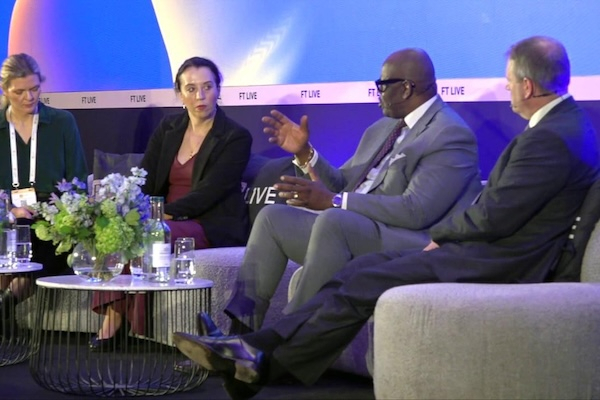
UK Export Finance (UKEF), the United Kingdom’s export credit agency, has announced a £500 million ($660 million) guarantee facility to support British businesses investing in the Democratic Republic of Congo (DRC).
The announcement came during the Financial Times Africa Summit 2025, held in London on Oct. 21–22 and attended by DRC Mines Minister Louis Kabamba Watum.
During the summit, Watum took part in a business meeting organized by the DRC–UK Chamber of Commerce, where discussions focused on boosting investment in the mining and energy sectors.
According to the DRC’s Ministry of Mines, UKEF’s guarantee facility aims to promote and protect British investment in the Congolese market. The ministry said the initiative forms part of the broader economic partnership between London and Kinshasa.
A delegation of British investors is expected to visit Kinshasa in January 2026 to explore specific investment opportunities.
RL
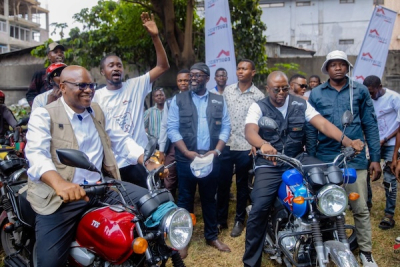
EquityBCDC has launched the Libanga account, a new banking service tailored to informal sector workers in the Democratic Republic of Congo (DRC), including motorcycle taxi drivers, farmers, small traders, domestic workers, refugees, and internally displaced persons. The product was unveiled on October 23, 2025.
Account opening conditions have been simplified: applicants must reside in the DRC, present valid identification (such as a voter card, passport, driver’s license, refugee card, or loss declaration), have a monthly income below $300, make an initial deposit of 2,300 Congolese francs (FC), and maintain a minimum monthly deposit of 700 FC.
To attract this largely unbanked segment, the bank made several services free of charge, including local debit cards and internal transfers and withdrawals.
The Libanga account also features a social protection component. In partnership with Activa Assurance RDC, account holders can access a health and funeral insurance plan for a $1 monthly contribution, covering primary medical care at Afia Health Center and a $100 funeral benefit. The bank describes the initiative as a response to the essential protection and income security needs of its new clientele.
EquityBCDC said the product aligns with its goal of bringing formal banking to nearly 30 million Congolese by 2030, reflecting its broader strategy to expand financial inclusion and support the gradual formalization of the national economy.
As of October 2024, EquityBCDC — 85.67% owned by Kenya’s Equity Holdings Group — had over 1.8 million clients and total assets of $4.4 billion.
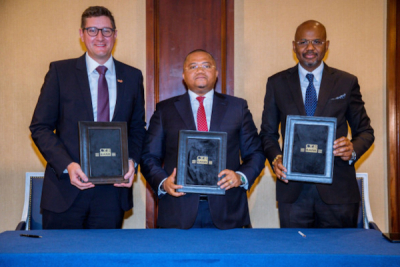
Shelter Afrique plans to open a $10 million credit facility for CRDB Bank to support affordable housing projects in the Democratic Republic of Congo (DRC). The pan-African housing finance institution formalized the plan by signing a memorandum of understanding with the Tanzanian commercial bank on the sidelines of the World Bank and IMF annual meetings held in Washington, D.C., from October 13 to 17, 2025.
The preliminary agreement also includes advisory support from Shelter Afrique to help CRDB Bank’s housing finance team better address the full housing value chain.
According to Shelter Afrique CEO Thierno-Habib Hann, the initiative reflects both institutions’ shared commitment to expanding access to affordable housing while promoting regional trade in building materials. It also aligns with a 2023 memorandum signed between Shelter Afrique and the DRC’s Ministry of Urban Planning and Housing, which aimed to co-finance housing projects, arrange additional funding, provide technical assistance, and help the government assess the national real estate market.
Initially, the collaboration will focus on CRDB Bank’s operations in the DRC, with potential future expansion to Tanzania and Burundi. The timeline for the final agreement and implementation of the facility has not yet been disclosed.
In 2023, UN-Habitat estimated the DRC’s housing deficit at 4 million units. With over 15 million residents, Kinshasa alone accounts for 54.4% of the housing need. Meeting this demand would require building 143,092 homes annually in the capital and 265,000 nationwide.
Funding for the housing sector remains scarce. A 2022 IFC study found that total mortgage credit in the DRC stood at only $30 million, representing less than 1% of all loans in the country. Through its partnership with Shelter Afrique, CRDB Bank aims to expand into this market.
Operating in the DRC since 2023, CRDB Bank is still in its establishment phase, with branches in Kinshasa and Lubumbashi. This investment phase has weighed on its results: according to its 2024 annual report, the bank posted a loss of 6.6 billion Tanzanian shillings ($2.5 million) during its second year of operations in the country.
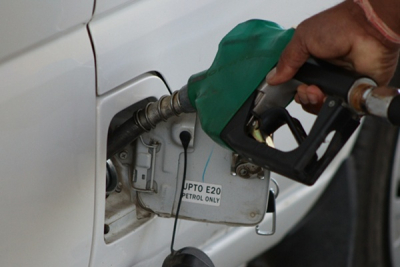
The government of the Democratic Republic of Congo (DRC) is pushing to ensure that the recent appreciation of the Congolese Franc (FC) translates into concrete benefits for households. Following an economic briefing on Oct. 22, 2025, led by President Félix Antoine Tshisekedi Tshilombo, Minister of National Economy Daniel Mukoko Samba announced an imminent drop in fuel prices.
The meeting at the Presidency was convened to examine the FC’s recent appreciation against other currencies and ensure that households experience an actual increase in purchasing power. Minister Mukoko stated that concrete measures would be taken to ensure price reductions reflect this monetary shift.
The announcement comes two weeks after a fuel price cut was implemented in the country’s western zone, which includes provinces like Kinshasa and Kongo-Central. Gasoline prices fell from 2,990 FC to 2,690 FC per liter, and diesel dropped from 2,980 FC to 2,680 FC. However, for Congolese whose income or savings are denominated in U.S. dollars, the prices effectively increased in dollar terms: 2,990 FC was equivalent to approximately $1.03, while 2,690 FC now represents at least $1.44.
The National Movement of Injured Consumers (MNCL) noted this trend, illustrating the shift in an Oct. 14 statement: the price of a beer remained at 4,000 FC, effectively rising from $1.37 to $2.10, while a carton of chicken dropped from 108,000 FC to 80,000 FC, which is an increase from $38.57 to $40.
The MNCL also highlighted that the situation is compounded by exchange rate speculation practiced by some currency traders and Mobile Money agents. The movement noted that while the Central Bank of Congo communicates an official rate of 2,300 FC per dollar, many traders are changing one dollar for 1,900 FC, 1,800 FC, or even 1,700 FC. This distortion further erodes the purchasing power of those receiving dollar-denominated income.
In response, the government intends to fight exchange rate speculation and compel merchants to lower prices to offset the dollar-denominated purchasing power loss caused by the FC's appreciation. For fuel, the Minister announced a meeting with oil companies on Oct. 31, 2025. The day before the presidential meeting, he had launched economic control missions aimed at stabilizing the domestic market, verifying regulatory compliance, ensuring price transparency, and assessing the actual impact of the franc's appreciation on basic necessities.
However, this push is generating concern among several economic operators who fear being forced to sell at a loss, citing the inventory effect. This mainly affects importers and producers who rely on dollar-denominated inputs and imported machinery.
Supermarkets, importers, and distributors do not replenish their stock daily. They often import large quantities financed in dollars. If they procured goods at an exchange rate of 2,800 FC per dollar, their costs and sales prices were set accordingly. If the rate then drops to 2,600 FC per dollar a few weeks later, their existing inventory remains valued at the old rate. Consequently, they cannot immediately pass on the appreciation of the Congolese Franc without reducing profit margins or selling at a loss.
Oil marketers are an exception to this dynamic, as the government compensates them for foreign exchange losses.
Timothée Manoke
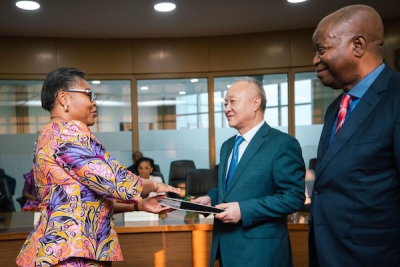
The planned China-Congo Industrial City is now estimated to cost $12 billion, up from previous projections. The new figure was announced on Oct. 23, 2025, during a ceremony in Kinshasa chaired by Prime Minister Judith Suminwa, which also saw the signing of a collaboration agreement between the Democratic Republic of Congo (DRC) and the Sino-Congo Special Economic Development Zone (SCSZ) consortium.
The industrial city is part of the broader Kinshasa Urban Expansion Project, a major $50 billion development plan to build a new city spanning 43,000 hectares in Maluku, about 60 kilometers east of central Kinshasa.
Originally expected to cover 7,500 hectares, the Industrial City—which could generate over 150,000 direct and indirect jobs—will now see that area apply only to phase one, according to the Prime Minister’s office and the Strategic Oversight Committee for the Kinshasa Urban Expansion Project (CSSPEVK). Details on a second phase have not yet been released.
Official information indicates that the first phase will include eight industrial parks covering the construction materials, agri-food, textiles, chemical and metallurgical, forest products, electronics and high-tech, mechanical and electrical manufacturing, and recycling sectors.
The parks will host about 1,200 factories over 5,000 hectares, along with a 2,000-hectare commercial district and a 500-hectare residential zone for workers. The cost of this first phase was initially estimated at $8 billion, according to the Belgian daily L’Écho. The terms of the agreement with SCSZ has not been made public, but officials describe it as “the second of its kind after the Sicomines deal.”
Signed in 2008, the Sicomines agreement linked the DRC with a Chinese consortium comprising Crec, Sinohydro, and Zhejiang Huayou in a minerals-for-infrastructure exchange, often dubbed the “contract of the century.” The new agreement involves a different Chinese consortium, led by China State Construction Engineering.
If the SCSZ deal follows the same model as Sicomines, analysts warn it could face similar governance and transparency issues. In July 2024, the International Monetary Fund (IMF) urged the DRC to strengthen transparency and accountability mechanisms in managing the Sicomines convention.
Whether the DRC has learned from that experience may become clearer in the coming weeks. The signing of the SCSZ convention nonetheless marks a decisive step toward implementing the China–Congo Industrial City project.
Pierre Mukoko
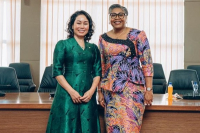
Democratic Republic of Congo Prime Minister Judith Suminwa Tuluka met with a delegation from the Vietnamese conglomerate Vingroup on Oct. 23, 2025, in Kinshasa. The meeting, led by Vingroup Vice Chair Lê Thị Thu Thủy, aimed to explore a public-private partnership to support key initiatives under the government’s action plan.
According to a statement from the Prime Minister’s office, the initial assessment of priority sectors has been completed. Vingroup expressed readiness to invest in five main areas: agriculture, health, education, real estate, and infrastructure.
Although no concrete details—such as project amounts, timelines, or locations—have been disclosed, both parties confirmed that the exploratory phase is over and that they are ready to enter contract negotiations.
Founded in 1993 in Ukraine as Technocom Corporation, Vingroup Joint Stock Company (Vingroup JSC) launched its activities in Vietnam in the early 2000s under two brands: Vincom (real estate and retail) and Vinpearl (tourism and hospitality).
These entities merged in January 2012 to form Vingroup JSC. Today, Vingroup is a diversified conglomerate operating across five main divisions: industry and technology, real estate and services, infrastructure, green energy, and social initiatives.
Boaz Kabeya
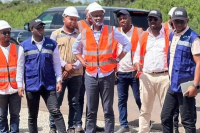
MSSZ, a subsidiary of Ivorian group SCHIBA, is expected to win a contract for the construction of a roughly 220-kilometer road segment connecting Kabinda in Lomami province to Ngandajika in Kasai Oriental province, the company said.
“Since the construction company MSSZ proposed to work with us, the Congolese population can now hope to see concrete achievements here, notably the construction of the road linking Kabinda to Ngandajika, as well as other work concerning the urban road network of Kinshasa,” Public Works and Infrastructure Minister John Banza said on Oct. 21, 2025, as quoted by the Agence Congolaise de Presse (ACP).
The state-owned news agency reported that the minister made the statement upon his return from Abidjan, Côte d’Ivoire where he met with the group's leaders and visited some of its active construction sites.
Prior to the visit, a SCHIBA delegation, led by Chairman and CEO Soro Nidjabedjan, was received in Kinshasa by Minister Banza. During that meeting, SCHIBA expressed interest in road and energy projects in the Democratic Republic of Congo, highlighting its experience having completed over 1,200 kilometers of roads in Côte d’Ivoire.
Efforts are escalating to boost economic exchange between Côte d’Ivoire and the DRC. The matter was central to an audience held on Oct. 15 between the National President of the Federation of Enterprises of Congo (FEC), Robert Malumba Kalombo, and the Ambassador of Côte d’Ivoire to the DRC, Xavier Zabvi.
During their talks, the two officials acknowledged that, despite strong cultural ties, economic exchanges between the two nations remain limited, even with numerous existing opportunities, particularly under the African Continental Free Trade Area (AfCFTA). Both parties agreed to organize a bilateral economic forum in 2026.
Boaz Kabeya
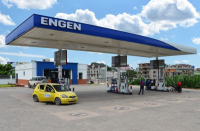
The supply of petroleum products in Kinshasa is expected to return to normal on Oct. 23, after two days of disruption caused by vandalism, the Hydrocarbons Ministry said in a statement on Oct. 22, 2025.
The disruption began after an act of sabotage during the night of Oct. 18-19 targeting pipeline 66, operated by Société des entreprises pétrolières du Congo (SEP Congo). Unidentified individuals drilled into the pipeline in the Masina district, near Ndjili CECOMAF, to illegally siphon fuel bound for the Kinshasa depot.
The sabotage led to a temporary shutdown of pumping operations, halting deliveries and causing long queues at several gas stations across the capital.
The ministry said technical teams from SEP Congo have since sealed the leaks and restored the pipeline to service. In an Oct. 21 letter to the Hydrocarbons Minister, the company confirmed that transport and distribution operations were gradually resuming.
SEP Congo called for stronger security measures for its pipelines, including public awareness campaigns and tighter surveillance. The Hydrocarbons Ministry urged residents to remain vigilant and help protect this critical infrastructure, which is essential to the capital’s fuel supply.
Ronsard Luabeya
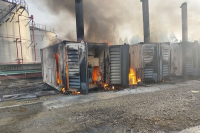
The DRC army's aviation carried out new strikes on the Twangiza Mining gold processing plant in Mwenga territory, South Kivu, during the night of Oct. 22-23, 2025, according to local media reports. The site, located about 40 kilometers southwest of Bukavu, has been occupied by the M23 rebel group since early May 2025, forcing the company to declare force majeure.
Twangiza Mining told Reuters that it has lost over 100 kilograms of gold per month since the takeover, in addition to equipment and material valued at an estimated $5 million. The company did not specify whether the damage was due to theft, destruction, or abandonment. The approximately 500 kilograms of gold lost to date represents about $70 million at current market prices, bringing the total estimated loss to around $75 million.
The strikes overnight into Oct. 23 were the third aerial operation against the facilities held by the rebels. Previous attacks a week earlier had already damaged the electrical infrastructure supplying the plant. Local sources indicate the latest shelling targeted fuel tanks and backup generators, including those already out of service, in a bid to hinder the M23's alleged illegal gold processing activities.
Sources familiar with the operation said the Twangiza Mining plant has a production capacity of over 300 kilograms of gold per month. However, the company has not appeared in official industrial production statistics since 2021. This prolonged absence raises questions now that the firm claims to have lost over 100 kilograms of gold monthly since the site fell under rebel control.
In 2020, Canadian company Banro, which had operated the Twangiza gold mine since 2012, announced it had sold its stake to minority shareholder Baiyin International Investments for a symbolic franc. Local media reported that Baiyin subsequently transferred the site to the Chinese company Ultrawell.
Timothée Manoke
More...

Democratic Republic of Congo (DRC) Finance Minister Doudou Fwamba met with a delegation from JPMorgan Chase & Co. on Oct. 17, 2025, during the IMF-World Bank Annual Meetings. According to the Ministry, the talks are part of efforts to strengthen the country’s international credibility and raise its profile in capital markets.
Fwamba is preparing the DRC’s first Eurobond issue, a deal expected before June 30, 2026, to raise $1.5 billion. JPMorgan, which has advised several African states including Kenya, Nigeria, Senegal, and Angola, specializes in structuring sovereign bond transactions.
At the meeting, Fwamba highlighted macroeconomic stability and ongoing reforms to improve transparency in public financial management. “We want investors to see the DRC as a reliable partner committed to sustainable development,” he said, citing efforts to fight corruption and strengthen public finances.
JPMorgan welcomed progress on the business climate and expressed interest in further engagement with Congolese authorities. The bank plans a working visit to Kinshasa in the coming weeks.
The DRC’s inflation has fallen to 7.8% from 15.1% a year earlier, while the Congolese franc has gained about 23% on the official market, trading near 2,200 per dollar. The country’s public debt stands at a modest 22.5% of GDP, with speculative ratings of B- (S&P) and B3 (Moody’s), both stable.
However, analysts say the DRC’s continued inclusion on the FATF gray list remains a key obstacle, keeping the country tagged as high-risk for money laundering and terrorist financing. Despite efforts to comply, the FATF said in June that “work remains to be done.”
Ronsard Luabeya
The Office of Multimodal Freight Management (OGEFREM) announced the start of preliminary construction for the Kalamba-Mbuji dry port in Luiza territory, Kasai-Central province.
Regional Director Matthieu Tshilumba Kalenga confirmed the news on Oct. 16, 2025, after a meeting with Governor Joseph-Moïse Kambulu Nkonko. He said the necessary funds are already in place. The first stage will involve building a security fence around the 70-hectare site.
The completed dry port will include a truck park, service stations, driver housing, and offices for border services, all centralized in a one-stop shop.
The project follows OGEFREM’s acquisition of land titles for the site in February. Located near the DRC-Angola border, the Kalamba-Mbuji dry port is designed to boost trade by linking Kasai-Central with Angolan seaports, particularly the Port of Lobito. It also complements the Kananga-Kalamba-Mbuji road project currently under construction.
In April, OGEFREM Director General William Kazumba Mayombo said the agency had secured advance funding from the African Development Bank (AfDB) to conduct feasibility studies for the Kalamba-Mbuji dry port and planned logistics hubs in Matamba, Bilomba, and Mbulungu. These studies will also assess traffic on the Kandiadi-Kamako-Tshikapa, Kandiadi-Tshikapa, and Tshikapa-Kananga corridors, key routes for cross-border trade.
Ronsard Luabeya
The Democratic Republic of Congo (DRC) signed an agreement on Oct. 20 with Mauritius-based investment firm United Investment LMT (UIL) to strengthen its national digital infrastructure, Congolese media reported. The partnership, first agreed in 2023, is estimated to be worth about $150 million.
The project covers feasibility studies, the rollout of 60,000-80,000 kilometers of fiber-optic cable nationwide, the installation of a new 192-terabit-per-second submarine cable, and the construction of three data centers, according to Scoop RDC. It will also include the establishment of a national telecom operator providing both fixed and wireless services. No implementation timeline was provided.
“The DRC needs at least 40,000 to 50,000 kilometers of fiber to achieve full connectivity. Internet access remains below 30%,” said José Mpanda Kabangu, Minister of Posts and Telecommunications, during the signing of supplementary documents with UIL. “The President wants all 145 territories of the country to be connected. I wish this project every success and will give it my full support.”
Expanding digital infrastructure and connectivity is one of four key goals of the 2026–2030 National Digital Plan (PNN2), which seeks to position the DRC as a regional digital hub. To support the strategy, the government plans to invest $1 billion over five years, alongside $500 million in external funding from international partners.
The country is also pursuing other public-private partnerships. Nigeria’s Fidelity Bank has expressed interest in financing a national telecom satellite project to improve connectivity.
The DRC scored 31/100 on the ITU’s 2024 ICT Development Index, ranking 41st out of 47 African countries. According to GSMA, about 32% of the population still lacked mobile internet coverage in 2024. The organization also noted that the DRC had around 9,631 kilometers of fiber installed, with another 29,000 kilometers planned by public and private operators. The country is connected to the WACS and 2Africa submarine cables, according to Submarine Cable Map.
Isaac K. Kassouwi, Ecofin Agency
Esengo Towers, a joint venture between Orange RDC and Vodacom Congo, plans to invest $179 million over four years to deploy 1,000 telecom towers across the Democratic Republic of Congo (DRC) to expand mobile coverage.
Esengo Towers CEO Jean-Philippe Léonard announced the plan on Oct. 22, 2025, after meeting with Minister of Posts and Telecommunications José Mpanda Kabangu.
The company, founded in January 2025 and equally owned by the two mobile operators, aims to expand rural connectivity by building solar-powered base stations equipped with 2G and 4G technology. It also targets the construction of 2,000 towers within six years.
The project has faced delays. The first station was expected to be operational by end-2025, but the firm still lacks an operating license. Léonard said obtaining the license is crucial before choosing suppliers and finalizing financing, and he now expects construction to begin in 2026.
He asked the minister to help secure authorization from the Regulatory Authority of Posts and Telecommunications (ARPTC). In a ministry statement, Kabangu expressed government support and noted that the DRC needs about 300,000 towers for full coverage, compared with 5,105 currently.
“The 2,000 towers planned by Esengo Towers, though not enough to meet national needs, represent a major contribution, especially for rural areas,” Kabangu said.
Orange RDC and Vodacom Congo will share the infrastructure as anchor tenants for 20 years and open it to other operators to share costs and broaden coverage, targeting 19 million new users and promoting digital inclusion and mobile financial access.
Ronsard Luabeya