






News (946)
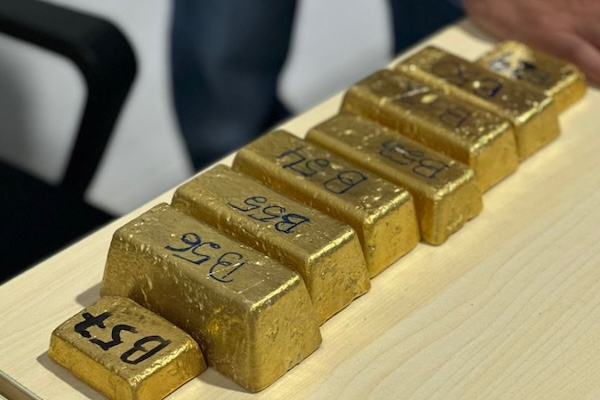
Maniema province has become the Democratic Republic of Congo’s leading center for legal artisanal gold exports. Since DRC Gold Trading SA opened its Kindu branch on March 25, 2025, the province has exported 447.028 kilograms of gold. That’s 42.3% of all the country’s official artisanal gold exports.
The shift follows DRC Gold Trading SA’s withdrawal from South Kivu. The region once accounted for over 90% of legal artisanal gold exports in 2023 and 2024. But worsening insecurity, including the advance of M23 rebels, forced the company to halt operations there in March. As a result, most South Kivu gold now avoids official channels and fuels informal cross-border trade.
This disruption undermines the company’s February pledge to export at least 5 tons of artisanal gold in 2025, worth about $1.3 billion.
To fill the gap left by South Kivu, DRC Gold Trading SA opened new branches this year in Buta (Bas-Uélé), Bunia (Ituri), and Isiro (Haut-Uélé). Yet early results show exports lag far behind expectations. Nationwide, the company shipped only 1,057.88 kilograms of gold in the first half of 2025, meeting just 21% of its annual target.
This article was initially published in French by Timothée Manoke, intern
Edited in English by Ange Jason Quenum
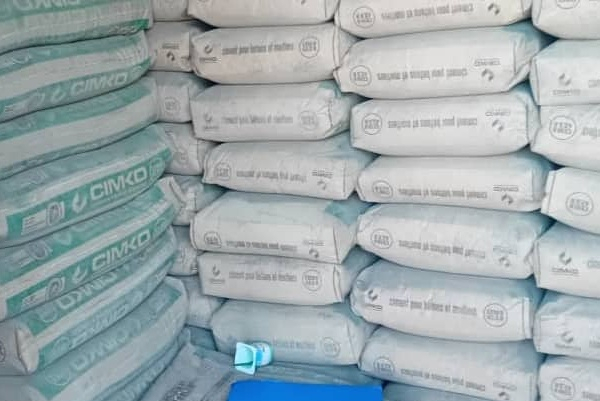
Cement prices in Kindu, capital of the Maniema province, have fallen sharply following the arrival of a new shipment from the Société nationale des chemins de fer du Congo (SNCC). The city had faced several weeks of cement shortages, but the delivery of 530 tons from Ubundu (Tshopo) has helped ease the crisis.
Before the shipment, a 50 kg bag of gray cement was selling for as much as $50 on the local market. Since the boat docked, prices have dropped to around $35 to $36 per bag, representing a nearly 30% decrease. The price reduction is bringing relief to the construction sector in Kindu, which had been under pressure due to high material costs.
According to the Congolese Employers Federation (FEC), this shipment signals positive momentum for economic activity in the city. Raymond Ngadi Tshikunga, director of the SNCC's river-rail operations for Kindu–Maniema, told Radio Okapi that more deliveries are expected in the coming weeks. The vessel will return to Ubundu to transport additional goods.
This logistical operation also marks the reopening of the vital river corridor connecting Kindu to Ubundu, a key supply route for the city. SNCC has announced plans to run cargo rotations every 30 to 40 days, which could help ensure a more stable flow of goods to the area.
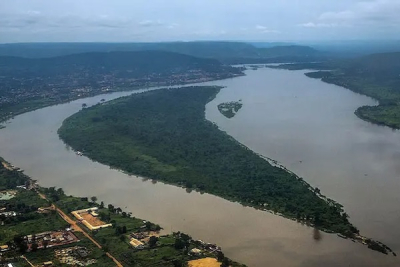
The African Development Bank (AfDB) is moving ahead with preparatory work for the construction of a bridge over the Oubangui River, aimed at linking Zongo in the Democratic Republic of Congo (DRC) with Bangui, the capital of the Central African Republic (CAR). During a site mission on July 3, 2025, alongside an AfDB delegation, Billy Tshibambe, head of the infrastructure unit, announced that while the project is still in its technical, legal, and institutional structuring phase, formal financing is expected in 2026.
The bridge is part of a broader multinational initiative coordinated by the AfDB. It also includes developing missing road links along the corridors from Bangui (CAR) to Kisangani (DRC) and Kampala (Uganda), and from Kisangani to Bujumbura (Burundi). The project aligns with the strategic Trans-African Highway (TAH) No. 8 (Lagos-Mombasa) and incorporates trade and transit facilitation measures, as well as the installation of one-stop border posts.
Preparatory studies for the various project components are estimated at $3.1 million. These were originally scheduled for completion in June 2024. For the bridge, the plan includes finalizing preliminary design studies (APS), detailed design studies (APD), bidding documents for contractor selection, and the appointment of construction oversight firms.
For the missing segments of the road corridors, APS studies are also required. A separate transport, trade, and transit facilitation study is planned, which includes the construction of one-stop border posts (PCUFs) between DRC, CAR, Burundi, and Uganda. A road safety and infrastructure preservation program is also under consideration.
Funding Awaits Technical, Environmental Reviews
At this stage, stakeholders from the DRC, CAR, Burundi, and Uganda are awaiting the completion of technical and environmental studies before any funding is mobilized. A steering committee will be established to oversee the project, working closely with relevant sectoral ministries, particularly the Ministry of Land Planning in the DRC.
This initiative also ties into a broader regional effort launched in June 2024, with the signing of a letter of intent between the Congolese government, the European Union, France, and several technical partners. The aim is to develop African Corridor No. 6 (Akula-Gemena-Zongo-Bangui), a 400-kilometer route designed to open up the Grand Équateur region and boost trade connectivity between the DRC and CAR.
Boaz Kabeya (Intern)
• Project will add new terminal for 1 million passengers and expanded freight facilities.
• Contract awarded via EPC+F model; financing terms not disclosed.
• Selection process sparks questions over transparency and competitive bidding.
Turkish construction firm Summa has begun work to modernise Luano International Airport in Lubumbashi, Democratic Republic of Congo, in a project aimed at boosting passenger and cargo capacity, officials said on Wednesday.
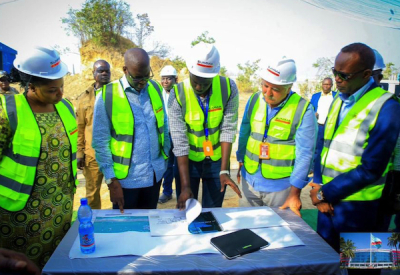
The ground-breaking ceremony was held on June 26 during a site visit by Haut-Katanga governor Jacques Kyabula and provincial transport minister Lorraine Lusamba. The project follows an April 18 launch by President Félix-Antoine Tshisekedi, despite public criticism over a lack of disclosure about contract details and partner selection.
In a May statement, the transport ministry said a memorandum of understanding had been signed with Summa on March 12, citing innovative financing, an accelerated timeline, and the company’s international track record as justification for the choice. However, authorities did not clarify whether a competitive tender was held.
Under the EPC+F (Engineering, Procurement, Construction and Financing) model, Summa will design, build, and pre-finance the project, handing it over to the Congolese state upon completion. The government will then manage the airport and gradually repay the company, though repayment terms have not been published.
The upgrade includes an 8,000 sq m terminal designed to handle up to 1 million passengers per year, parking for four wide-body aircraft, a 5,000-tonne cargo terminal, a maintenance centre, storage hangar, wastewater treatment plant, and upgraded access roads and fire safety systems.
Per the contract’s terms, the works should take 20 months, but Summa says it will do it in 18 months, in line with the government’s push to accelerate major infrastructure projects, according to the transport ministry.
Founded by Mete Bora in 1989, Summa is controlled by Selim and Sinan Bora, who hold, respectively, 42.41 and 41.22% of the company according to the International Finance Corporation (IFC). The firm has delivered projects in nine African countries, including airports in Dakar, Niamey, and Bissau.
Summa has already made headlines in the DRC. The contract to build the Kinshasa arena, signed in July 2022, was withdrawn in favor of Milvest, considered more competitive, according to former Finance Minister Nicolas Kazadi.
This type of contract is preferred by Summa for its African projects. According to the group, it overcomes one of the main challenges encountered on the continent: the imbalance between the execution of works and the disbursement of funds.
This article was initially published in French by Timothée Manoke (intern)
Edited in English by Ola Schad Akinocho
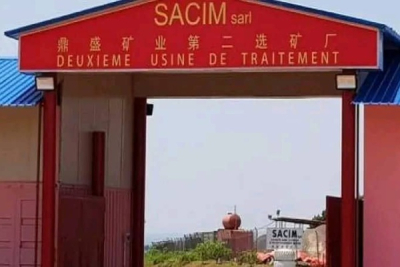
The Anhui-Congo Mining Investment Company (SACIM) stands among three mining firms facing suspension after the Court of Auditors found them delinquent on legally required community contributions. The June audit report faulted the companies for failing to pay 0.3% of their turnover, funds meant to support community projects in mining areas.
SACIM already struggles financially after recent diamond sales restrictions limited its buyers to a few approved partners. Although the restrictions lifted, SACIM’s operations remain paralyzed. Workers, unpaid for thirteen months, staged multiple strikes to protest the dire situation.
At SACIM’s main site in Miabi, Kasaï Oriental, local civil society groups complain that communities have yet to receive any of the mandated contributions since the specialized oversight body was established in 2022. The Court reports SACIM owes nearly $700,000 in unpaid fees intended for local development.
The Court also named OM Metal Resources and the Lubumbashi Tailings Processing Company as defaulters. Together, the three firms owe $2.77 million in unpaid community contributions from 2018 to 2023, despite generating significant revenues.
The Court slammed the Supervisory Committee for failing to sanction these companies despite repeated warnings. It dismissed claims that leniency was needed to protect the business climate. The Court stressed that legal obligations must not obstruct investment, especially since these companies pay other taxes.
The Court urged the Supervisory Committee, via the Minister of Mines, to suspend the companies’ operations under Article 292 of the Mining Code until they clear their debts in full.
This article was initially published in French by Ronsard Luabeya (intern)
Edited in English by Ange Jason Quenum
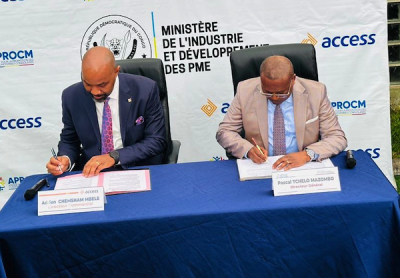
Access Bank RDC, the Congolese subsidiary of Nigeria’s Access Bank Group, is stepping up its support for small and medium-sized businesses (SMEs) with a new financing program. The bank plans to inject $25 million into SME lending in the Democratic Republic of Congo during the second half of 2025.
The plan, outlined in the bank’s Pillar 3 report published on May 5, 2025, took a key step forward on June 28, when Access Bank signed a memorandum of understanding with the Agency for the Promotion of the Congolese Middle Class (Aprocm).
To limit risk, Access Bank will rely on Aprocm’s database, which contains detailed information on registered SMEs. The goal is to identify the most reliable businesses and tailor offers ranging from loans to cash management and training programs. Aprocm will support SMEs with technical assistance and help raise awareness about the financing opportunities available.
Aprocm, established in 2021, works to develop an entrepreneurial middle class in the DRC. It manages the platform created under the Support Project for the Development of Micro, Small, and Medium Enterprises (PADMPME), which connects entrepreneurs with specialized service providers.
Access Bank aims to expand its footprint in the Congolese banking sector. In 2024, its total assets stood at $409.8 million, falling short of its initial target of $524 million. The bank now targets $750 million in assets by 2025, representing a 7.6% increase over its 2024 projections.
The Pillar 3 report did not specify how much the SME segment is expected to contribute to this growth. However, it shows that outstanding SME loans stood at 43.4 billion Congolese francs in 2024, equivalent to $15.4 million based on the average annual exchange rate.
• Wheat flour cost jumps from 120,000 to 180,000 Congolese francs since late June.
• Kinshasa supply disruptions trigger cascading shortages in Maï-Ndombe province.
• Bakeries scale back or shut down, deepening food insecurity.
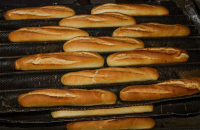
Bread has become increasingly scarce in Inongo, the capital of Maï-Ndombe province, as wheat flour prices have surged 50% since late June, local traders said on Tuesday.
A 50kg sack of flour now costs 180,000 Congolese francs ($63), up from 120,000 francs, due to supply shortages in Kinshasa, the region’s main distribution hub. “We are experiencing the domino effect of the scarcity in Kinshasa. Our warehouses have been empty for days,” said Rodrigues Mbolia, manager of Super Mima depot, according to the Congolese Press Agency.
Even before the latest spike, Inongo’s markets were under strain. Since April, staples such as cassava and fish have been in short supply amid disputes between city hall and vendors accused of speculative pricing. Authorities imposed price caps that were later relaxed—up to 50% margins to account for logistics—but the measures disrupted distribution networks.
Some producers were instructed to sell directly at markets, bypassing intermediaries and fueling tensions along the supply chain.
Bread, a staple food, has now become hard to find. Many bakeries have cut production or closed temporarily, citing lack of flour and poor profitability. The situation has worsened food insecurity in a city already grappling with inflation and falling purchasing power.
Local authorities have urged residents to remain patient while awaiting new deliveries, but no timeline or logistics plan has been announced, leaving uncertainty over when supplies will stabilise.
This article was initially published in French by Boaz Kabeya (intern)
Edited in English by Ola Schad Akinocho
IXM, the metals trading unit of China Molybdenum (CMOC), declared force majeure on its cobalt supply contracts on June 30. This decision followed the Democratic Republic of Congo’s (DRC) extension by three months of the cobalt export ban, which was initially imposed on February 22, 2025.
IXM explained that the extended export ban makes it both legally and practically impossible for its suppliers—including Tenke Fungurume Mining and CMOC Kisanfu Mining—to export cobalt-based products from the DRC. This situation directly affects IXM’s ability to fulfill its contractual obligations. The company emphasized that despite the increased volatility in the global cobalt supply chain, it remains committed to managing this disruption responsibly while respecting all contractual and regulatory frameworks.
According to S&P Global Ratings, a European market participant noted that the suspension was inevitable and expressed surprise that it had taken this long to occur. Earlier in March, Telf AG, which markets cobalt for Eurasian Resources Group (ERG), had already declared force majeure to its clients. Glencore, another major player active in the DRC, publicly supported the extension of the export embargo.
IXM’s announcement is likely to unsettle markets amid growing uncertainty about global cobalt supplies. The suspension of exports particularly impacts Chinese refiners, who depend heavily on cobalt hydroxide imports from the DRC.
Behind this export ban, the Congolese government seeks to capture more value from cobalt, a strategic mineral currently sold in raw form on global markets. The country’s mining code imposes a special 15% royalty on cobalt due to its strategic importance. Moreover, the government may impose a superprofit tax if the selling price exceeds the projections made in companies’ feasibility studies.
A Risky Strategy
The public Enterprise Générale du Cobalt (EGC) now manages a significant portion of artisanal cobalt mining. This state entity aims to improve revenue collection from a sub-sector that has long operated informally.
Cobalt prices stood at $33,335 per ton on June 30, 2025, according to Trading Economics. This price represents a 61.7% increase since the initial export suspension was announced. However, it remains well below previous peaks of $79,191 in April 2022 and $95,856 in March 2018.
Market observers warn that the DRC’s hardline approach could discourage mining companies from investing or continuing operations in the country. On a global scale, the export ban could accelerate the development of alternative cobalt projects in countries such as Indonesia, Australia, and Canada.
In 2024, the DRC accounted for 73.6% of the world’s cobalt supply. However, S&P Global Market Intelligence projects that this share could decline to 57% by 2035 due to the gradual depletion of ore reserves and Indonesia’s expanding refining capacity using high-pressure acid leaching (HPAL) technology.
Facing these uncertainties, manufacturers of batteries and electric vehicles—who rely heavily on Congolese cobalt—are accelerating their diversification efforts. These efforts include securing long-term supply contracts with other countries, investing in battery recycling technologies, and developing cobalt-free energy storage solutions. Producers of consumer electronics are pursuing similar strategies.
Georges Auréole Bamba
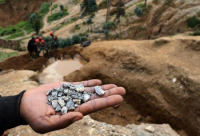
The Executive Board of the International Monetary Fund (IMF) is set to meet today, July 2, 2025, to discuss the first review of the Democratic Republic of Congo's (DRC) three-year economic program. The program is supported by the IMF's Extended Credit Facility (ECF). Sources close to the matter expect the Board to issue a favorable opinion.
The DRC has already met the first key requirement for this review. "The IMF mission and the DRC authorities have reached a staff-level agreement," confirmed Calixte Ahokpossi, the IMF's mission chief for the DRC, following his visit to Kinshasa between April 30 and May 13.
Upon the Board's approval, the DRC expects to receive a $266.7 million disbursement, the second installment under the $1.729 billion program. The first payment, totaling $266.14 million, was approved in January 2025 when the program launched.
Congolese officials are keenly awaiting these funds. The financing has already been incorporated into the 2025 budget as part of a revised finance bill, which Parliament approved in May. The funds are expected to help lessen the impact of the ongoing security crisis in the country's eastern areas. This crisis led to a 1.7% cut in the original budget, now set at $17.2 billion.
Despite facing a challenging environment, the IMF observed that Congolese authorities have continued to implement the agreed reforms. Encouraging signs for regional stability include a peace agreement between the DRC and Rwanda, as well as ongoing mediation with M23 rebels, facilitated by Qatar.
The ECF-supported program is designed to bolster macroeconomic stability, enhance public financial governance, and fund a portion of the budget deficit. The IMF is also closely tracking the management of state-owned enterprises and public debt trends. The program's framework includes periodic reviews tied to the nation's economic performance and progress on structural reforms.
This current initiative follows a prior assistance cycle that ran from 2021 to 2024. That cycle resulted in several disbursements linked to measures promoting budget transparency, disclosure of mining contracts, and reforms of fuel subsidies.
Written in French by Georges Auréole Bamba,
Translated and Adapted into English by Mouka Mezonlin
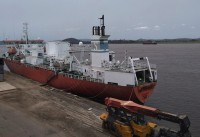
- The Minister of Fisheries and Livestock, Jean-Pierre Tshimanga Buana, has announced the imminent arrival of eight new fishing ships constructed by Pyrlant Shipyard.
- Although the National Fisheries and Aquaculture Office (ONPA) is slated to manage these ships, it still lacks an operating budget and physical headquarters.
Fisheries and Livestock Minister Jean-Pierre Tshimanga Buana, announced during the 27th June 2025 council of ministers that eight new fishing boats are soon to arrive. These include three trawlers for marine fishing on the Atlantic coast, and five vessels adapted for river waters.
The vessels, which left the Damietta shipyard in Egypt on June 5, 2025, were built by Pyrlant Shipyard, the technical partner of Yetu Industries. Yetu had signed a contract in 2023 with the Congolese government to manufacture and deliver 15 industrial fishing boats. The arrival date of the vessels in the Democratic Republic of Congo (DRC) has not yet been communicated. According to the minutes of the council of ministers, they will dock at Boma port, in the Kongo Central Province, where they will remain until they are commissioned.
The minutes of the council of ministers dated 27th December 2024 stated that these boats would be managed by the National Fisheries and Aquaculture Office (ONPA). "To strengthen the efficiency the Government urgently needs, ensure coherence and thus avoid action overlap, the President of the Republic has invited the Minister of Fisheries and Livestock to consider taking concrete measures to support the ONPA in managing the fishing vessels ordered by the Government and whose delivery is imminent," the document reads.
However, despite being established on June 6, 2022, to increase national fisheries and aquaculture production, the ONPA still does not have an operating budget or office space. On June 24, during the national fish day, its chairwoman of the board, Henriette Wamu, once again expressed regret over this circumstance.
Despite an estimated fisheries potential of over 700,000 tons per year, the DRC exploits its resources sparingly. The lack of infrastructure, an appropriate fleet, and the prevalence of unsustainable, often unregulated fishing practices are to blame, according to the FAO. As a result, the country remains heavily dependent on fish imports, estimated at around 200,000 tons per year.
This article was initially published in French by Ronsard Luabeya (intern)
Edited in English by Ola Schad Akinocho
More...

Operations at the Port of Matadi are slowly improving, according to a June 2025 report by Top Congo FM radio. This revival follows rehabilitation efforts launched in 2024 by the National Transport Office (Onatra), aimed at modernizing the long-neglected state-owned enterprise, which had been hindered by outdated infrastructure for years.
The upgrades target quays 0, 1, and 2, and include building a new container yard. Onatra's Director General, Martin Lukusa, stated the project is mostly funded by internal resources. However, he did not provide details on the cost or the contractor performing the work.
Quays 1 and 2 are now operational. In January, Onatra acquired three new mobile cranes, allowing two vessels to be handled simultaneously. The current handling capacity is estimated at 1,500 TEUs, according to Olivier Tesi, Deputy Director of the container terminal. He noted a recent instance where a Maersk vessel was processed in 15 hours, though the specific volume handled was not disclosed.
Two more gantry cranes are expected by the end of July, which should further increase the terminal's capacity. Onatra ultimately aims to handle between 5,000 and 6,000 TEUs.
Due to its deteriorating facilities, Onatra previously transferred some assets to private partners through "win-win" agreements. One such partnership with the Philippine-based International Container Terminal Services Inc. (ICTSI) resulted in the creation of the Matadi Gateway Terminal (MGT), where Onatra holds a 10% stake. In November 2024, Matadi Corridor Container Terminals (MCTC) was granted a concession to modernize, equip, and operate another section of the terminal.
Written in French by Timothée Manoke (Intern),
Translated and adapted into English by Mouka Mezonlin
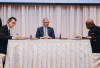
Asia Mineral, a Japanese mining company, has moved to expand its footprint in the Democratic Republic of Congo. On June 28, 2025, it signed a memorandum of understanding (MoU) with Congolese firm Kerith Resources to form a joint venture named Kivuvu Kongo Mines. The new company will mine and process manganese in Kongo Central province.
The deal was signed during the DRC-Japan Economic Forum in Tokyo under the theme “Investing in the DRC.” Prime Minister Judith Suminwa Tuluka led the Congolese delegation, joined by several government officials.
According to Actualité.cd, Felly Samuna, president of the Kongo Central Chamber of Commerce and Industry, confirmed the joint venture will be officially established in the province within two weeks. Asia Mineral will hold 60% of the venture, and Kerith Resources, a Congolese partner with limited public profile, will hold the remaining 40%.
Uncertain Reserves, Clear Intentions
Kivuvu Kongo Mines plans to tap into manganese reserves in Kongo Central. However, officials have not confirmed the site’s full potential. Asia Mineral began the exploration phase in Luozi territory in May.
At a Tokyo press conference, Foreign Trade Minister Julien Paluku said the project’s initial investment stands at $50 million. He said the company aims to produce 2 million tonnes of manganese annually.
The project could generate 2,500 direct jobs and stimulate local industries, including logistics, industrial subcontracting, and services.
For the Congolese government, the venture supports its broader strategy to diversify the mining sector. Officials aim to attract more partners, explore new minerals, expand mining areas, and promote local processing to increase the value of extracted resources.
This article was initially published in French by Ronsard Luabeya (intern)
Edited in English by Ange Jason Quenum
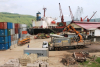
The provincial customs office of Kongo Central has announced upcoming public auctions for goods left unclaimed at its facilities, following the deadlines set by national regulations.
According to a June 20 statement, the auctions concern items recorded in customs storage but not retrieved within the legal two-month period, as stated in Article 288 of the Customs Code.
The customs authority, known as DGDA, identified 174 importers whose goods are affected. They have been asked to settle their cases at least 48 hours before the auctions begin. Failure to do so will result in their merchandise being sold publicly.
The auctions, scheduled for July, will include a wide range of products such as vehicles, metal sheets, LED lamps, primary form polypropylene, bridge components, footwear, and paint products. The DGDA has not yet provided details on participation procedures.
The process will follow Articles 283 to 289 of the amended Customs Code and will take place in three phases. The first phase is set for July 7 to 12 at the Matadi-Beach office, the second from July 15 to 21 at the AIDEL/TICOM office, and the final phase from July 23 to 28 at the MGT office.
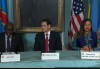
Congolese Foreign Minister Thérèse Kayikwamba Wagner and her Rwandan counterpart Olivier Nduhungirehe signed a peace agreement on June 27, 2025, in Washington. The deal aims to end the deadly conflict in eastern Democratic Republic of Congo. The ceremony took place at the U.S. Department of State, with U.S. Secretary of State Marco Rubio present.
Both Kinshasa and Kigali are hailing the agreement as "historic," describing it as a "major step toward lasting peace" and a "decisive advance toward ending the conflict." U.S. Secretary of State Marco Rubio called it "an important moment, after thirty years of war," though he cautioned that "much remains to be done." The real challenge now lies in effectively implementing the agreement to restore peace in the Great Lakes region.
“The DRC is committed to fully implementing this agreement and building a prosperous future for its citizens,” Thérèse Kayikwamba Wagner said. Her Rwandan counterpart reaffirmed Rwanda’s commitment to honor the terms of the deal and work toward sustainable peace.
The agreement builds on the Declaration of Principles signed on April 25, 2025. It reiterates key tenets: respect for sovereignty, non-interference, an end to support for armed groups, joint security coordination, the return of refugees, support for MONUSCO, and the promotion of regional economic integration.
This article was written in French by PM,
Edited in English by Mouka Mezonlin