






MINING (253)
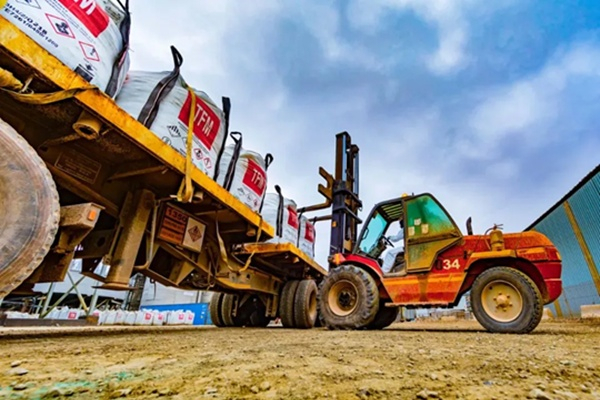
China Molybdenum Company (CMOC) produced 30,414 tonnes of cobalt in the Democratic Republic of Congo (DRC) in Q1 2025. Year-on-year, the Chinese group’s output grew 20%, according to a report, dated April 8, relayed by Reuters.
Despite the Congolese government’s recent suspension of cobalt exports, CMOC has maintained its production levels and forecasts for 2025, expecting between 100,000 and 120,000 tonnes of cobalt. CMOC did not justify its decision.
However, the move reflects the strategic nature of cobalt as a by-product of copper mining at CMOC’s Tenke Fungurume and Kisanfu mines. Interrupting cobalt production would affect copper output, which remains profitable due to relatively stable prices. In Q1 2025, CMOC’s copper production increased by 15.7%.
Launched in February, the suspension is in place for four months, which means CMOC could resume exports later in the year. Since the ban, cobalt prices on the London Metal Exchange have risen from around $21,000 to $33,000 per tonne, a 57% increase, supporting the government's strategy to boost prices and earn more from the cobalt mining.
" This level, the highest since May 2023, validates the approach adopted by the government and makes it possible to envisage, in the short term, a significant recovery in contributions to state revenues from the exploitation of this resource," the Congolese government stated at the end of the Council of Ministers meeting on April 4.
However, there are no guarantees that CMOC will fully benefit from this price upturn, as the ban could be extended. Moreover, when exports resume, a potential influx of cobalt could pressure prices downward. In response, the DRC is considering export quotas to maintain market equilibrium, though specific details have not been disclosed.
This article was initially published in French by Emiliano Tossou (Ecofin Agency)
Edited in English by Ola Schad Akinocho
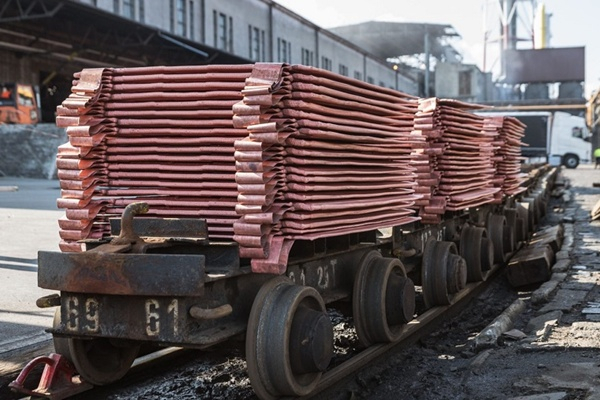
The Kamoa-Kakula copper mine in the Democratic Republic of Congo (DRC) produced 133,120 tonnes of copper concentrate in Q1 2025, from 86,117 tonnes in the same quarter in 2024, thus 58% up. On April 7, Canadian operator Ivanhoe Mines released the figures.
This growth was fueled by strong performance across the mine's three concentrators, which processed a record 3.72 million tonnes of ore in the quarter. The Phase 3 concentrator was particularly notable, milling 1.51 million tonnes of ore alone, while the mine achieved a daily record of 51,528 tonnes by the end of March.
The robust output aligns with Ivanhoe's 2025 production targets for Kamoa-Kakula, which project between 520,000 and 580,000 tonnes of copper concentrate for the year, up from the 437,061 tonnes delivered in 2024. Ivanhoe also expects ore grades at the Phase 3 concentrator to improve throughout the year, driving continued strong results.
Ownership of the Kamoa-Kakula mine is split among the Congolese state, which holds a 20% stake, Ivanhoe Mines and Zijin Mining, each holding 39.6%, and Crystal River Global Limited, with a 0.8% interest. The mine's operational achievements underline its growing role as a significant contributor to the DRC’s copper production and its strategic importance in the global copper market.
This article was initially published in French by Aurel Sèdjro Houenou (Ecofin Agency)
Edited in English by Ola Schad Akinocho
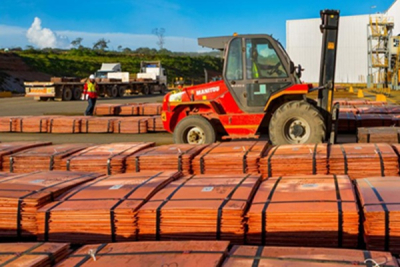
Tenke Fungurume Mining (TFM) and Kisanfu Mining (KFM), two subsidiaries of Chinese group China Molybdenum Corporation Limited (CMOC) in the Democratic Republic of Congo (DRC), reported impressive sales of 50.6 billion yuan renminbi ($7.05 billion) in 2024, up 80.71% compared to 2023. The figure was almost 40% of the DRC's national budget 2024.
Over the year reviewed, CMOC sold 689,521 tonnes of copper, generating $5.82 billion, and 108,892 tonnes of cobalt, contributing $1.22 billion. The DRC accounted for 77.5% of mineral output sold directly by the Chinese group; it was the group's most profitable jurisdiction in terms of gross margin (47.1%), despite rising operating costs.
“During the first half of 2024, three production lines at TFM's mixed ore project achieved their production targets and standards. This brought TFM's production lines to five, with an annual copper capacity of 450,000 tonnes. Combined with KFM's annual capacity of 150,000 tonnes, the group operated six production lines in the DRC, exceeding 600,000 tonnes per year,” CMOC officials explained.
This strong performance comes amid fluctuating market conditions. While copper prices held steady in 2024, cobalt prices fell 26.57% over the year, from over $28,000 per tonne in January to $24,000 in December.
Regulatory Challenges
Last February, Congolese authorities temporarily suspended cobalt exports for four months to stabilize prices on an oversupplied market.
However, CMOC has kept producing and stockpiling. In Q1 2025, the group produced 30,414 tonnes of cobalt, up 20.7% year-over-year, and maintained its annual forecast of 100,000 to 120,000 tonnes. Since the suspension, cobalt prices have rebounded, rising 57%, reinforcing CMOC's strategy.
The DRC remains a critical player in the global cobalt supply chain, with TFM and KFM accounting for over 70% of global cobalt production. In 2024, the two subsidiaries contributed to 60% of the DRC’s cobalt exports and 45% of copper exports, generating substantial state revenues from mining royalties and taxes.
Looking ahead, CMOC’s prospects in the DRC remain strong, but challenges persist. The group faces regulatory hurdles, geopolitical tensions between China and the U.S., evolving demand for battery metals, and calls for greater supply chain transparency. Its strategy of diversification, vertical integration, and investment in sustainable infrastructure will be crucial for maintaining its growth trajectory while addressing environmental and social concerns associated with mining in Central Africa.
It is worth noting that CMOC, via its Swiss subsidiary IXM, which specializes in raw materials trading, also markets resources purchased from other producers.
This article was initially published in French by Georges Auréole Bamba
Edited in English by Ola Schad Akinocho
On April 2, 2025, China Molybdenum Co. Ltd (CMOC) issued a tender call for electrical work in the localities of Kisanfu Gare and Koni, Lualaba province, Democratic Republic of Congo (DRC). The project involves constructing a 2.5 km 11 kV medium-voltage line, creating low-voltage networks, and installing a public lighting system.
Interested companies must submit applications by April 7, including legal and financial compliance documentation and references for similar projects.
This initiative is part of the development of the Kisanfu mining project, which CMOC acquired in December 2020 for $550 million from Freeport-McMoRan. The Kisanfu deposit is notable for its significant copper and cobalt resources, which are crucial for electric vehicle battery production.
CMOC is a major player in subcontracting in the DRC. In 2024, it awarded over $985 million in contracts to local companies through its Tenke Fungurume and Kisanfu mines, accounting for nearly 50% of the total volume reported by the Autorité de régulation de la sous-traitance dans le secteur privé (ARSP).
Boaz Kabeya (intern)
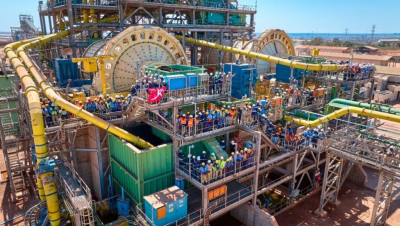
Ivanhoe Mines is preparing for a significant increase in power requirements at the Kamoa-Kakula mine complex as it readies to commission the facility’s smelter in May 2025. By 2026, when all phases and the smelter are fully operational, electricity demand is expected to rise to approximately 240 MW, up from 130 to 140 MW in March 2025.
In a press release dated April 7, Ivanhoe has outlined its plans to meet this growing demand and transition the complex to green energy by 2026.
Last month, 100 MW came from hydroelectric sources. Half of the input came from Zambia or Mozambique, and the other half was produced on-site, by diesel generators. Following a recent agreement, hydroelectric imports have increased from 50 MW to 70 MW, with further expansion to 100 MW expected soon.
The commissioning of Inga II turbine 5 in the third quarter of 2025 will add another 50 MW of hydroelectric power, potentially bringing the total hydropower supply to 200 MW if imports are maintained at 100 MW. Additionally, Ivanhoe plans to launch a solar project in August 2025, which will provide a constant 30 MW of power through a 222 MWp photovoltaic solar power plant coupled with a battery storage system. The project falls under a recent agreement between Kamoa Copper, which owns the Kamoa-Kakula complex, and CrossBoundary Energy, a clean energy developer.
“This enhanced power capacity has bolstered confidence in finalizing the commissioning of the smelting furnace,” reads the April 7 release. According to this source, the smelter should produce its first 99.7% purity copper anodes by July 2025. Ivanhoe projects reaching around 80% of the smelter's capacity by year-end, with power consumption rising from 45 MW at start-up to 70 MW at full capacity.
By 2026, Ivanhoe aims to exceed annual copper production of 600,000 tonnes with the completion of Project 95, which seeks to optimize copper concentrate recovery to 95%. This initiative could add 30,000 to 40,000 tonnes of concentrate annually, following projected production of between 520,000 and 580,000 tonnes in 2025. After reaching 437,061 tonnes in 2024, Ivanhoe’s strategic investments in renewable energy and operational efficiency are set to drive significant growth in copper output.
This article was initially published in French by Pierre Mukoko
Edited in English by Ola Schad Akinocho
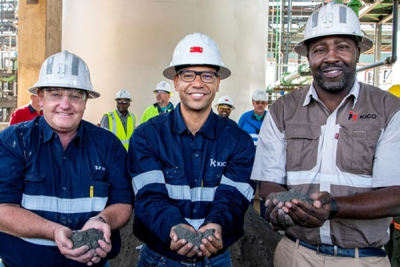
The Kipushi mine in the Democratic Republic of Congo (DRC) produced 42,736 tonnes of zinc concentrate in the first quarter of 2025. Ivanhoe Mines, the asset’s Canadian owner, released the figure in its quarterly report dated April 7. The document indicates that Kipushi produced 18,946 and 32,490 tonnes in Q3 and Q4 of 2024, respectively.
Ivanhoe attributes the growth to strong operational momentum at the mine’s concentrator, which achieved an average recovery rate of 88%. During the past quarter, the facility milled a record 151,403 tonnes of ore with an average grade of 53% zinc in the concentrate produced.
Ivanhoe expects the mine to deliver between 180,000 and 240,000 tonnes of zinc concentrate this year, which is significantly higher than the 50,307 tonnes recorded in 2024. However, at the current pace, projected annual production would reach only 170,944 tonnes, falling short of the lower end of the target range. The second quarter will be critical in determining whether Ivanhoe can meet its annual goals.
Operational challenges in 2024 had already forced Ivanhoe to revise its forecasts downward from an initial estimate of 100,000–140,000 tonnes to just 50,000–70,000 tonnes. While Kipushi’s ramp-up is promising, sustained progress will be necessary to achieve its ambitious production targets for 2025.
The Kipushi mine came online last June.
This article was initially published in French by Aurel Sèdjro Houenou
Edited in English by Ola Schad Akinocho
On April 2, 2025, Ivanhoe announced it had secured exploration licenses covering 7,757 square kilometers in Zambia’s North West Province.
The newly acquired Zambian concession lies 230 kilometers northeast of Ivanhoe’s Western Forelands project in the DRC. The company emphasizes geological similarities between this area and copper-rich discoveries in the DRC, particularly at Kamoa-Kakula. Ivanhoe is betting on the continuity of the Central African Copperbelt, which spans both nations.
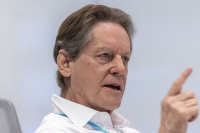
“Our entrance into Zambia marks an exciting new chapter in Ivanhoe Mines’ commitment to expanding our exploration footprint and testing the extent of the Central African Copperbelt…which is already the world’s largest and highest-grade sedimentary Copperbelt,” said Robert Friedland, Ivanhoe’s Executive Chairman.
The key question is whether Ivanhoe can replicate its DRC success in Zambia. At Kamoa-Kakula, Ivanhoe boasts an annual production capacity of 600,000 tonnes of copper, with plans to exceed 800,000 tonnes over time. Even if Zambia does not reach these figures, success there would diversify Ivanhoe’s copper production, which currently relies entirely on the DRC.
Ivanhoe Mines is poised to make significant progress on its Zambian concession in the coming months, with key preparatory steps underway. During the second quarter of 2025, the company plans to hire environmental consultants to draft an Environmental Management Plan (EMP), which will be submitted for approval to the Zambian Environmental Management Agency (ZEMA).
In parallel, Ivanhoe is analyzing aeronautical geophysical data from the concession to design a feed program using the tariff and Air Core drilling methods. This process will enable its team of geologists to conduct detailed mapping of the expansive licensed area, identifying initial targets for future diamond drilling. The results of these operations will provide critical insights into the concession’s resource potential, shaping Ivanhoe’s exploration strategy and investment decisions.
This article was initially published in French by Emiliano Tossou
Edited in English by Ange Jason Quenum
Since returning to power last January, President Donald Trump has prioritized boosting domestic supplies of critical minerals, such as copper, essential for energy transition technologies. In this context, the US support for developing a battery production value chain in the Democratic Republic of Congo (DRC), as outlined in a Memorandum of Understanding (MoU) signed in December 2022, seems uncertain.
This strategic shift involves leveraging executive powers to accelerate domestic extraction and processing of raw materials, potentially at the expense of supporting downstream segments like battery manufacturing abroad.
The Trump administration has suspended funding from the Inflation Reduction Act (IRA) intended to support global battery value chains, opting to reassess their allocation in line with new policy priorities.
The December 2022 MoU had envisioned U.S. support for promoting the DRC's electric vehicle battery development initiative to American investors. This included potential business development and technical assistance to facilitate U.S. private sector participation in such projects. However, with the current emphasis on domestic resource development, the realization of these intentions seems increasingly uncertain.
Meanwhile, last week, the DRC has launched the Musompo Special Economic Zone (SEZ) in cobalt-rich Lualaba province. The SEZ will produce battery precursors, batteries, and potentially assemble electric vehicles from local raw materials. The project seeks to mobilize nearly $2 billion in private investment.
In 2023, former Minister of Industry Julien Paluku estimated that $30 billion would be required to establish the first integrated manufacturing plant for battery precursors, batteries, and electric vehicles. He projected that this initiative could enable the DRC to capture nearly $7 trillion from the global value chain by 2035-2040.
This article was initially published in French by Emiliano Tossou (Ecofin Agency)
Edited in English by Ola Schad Akinocho
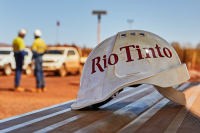
Rio Tinto, the Australian mining behemoth, is setting its sights on Africa's lithium reserves as it seeks to bolster its position in the global supply chain for this critical battery metal. Citing sources close to the matter, Bloomberg reported on March 28, 2025, that the company is in preliminary talks with the Democratic Republic of Congo (DRC) regarding the potential development of the southern portion of the Manono lithium deposit.
This move comes on the heels of Rio Tinto's recent $6.7 billion acquisition of Arcadium Lithium, which significantly expanded its lithium portfolio across Argentina, the United States, and Asia.
The company is also advancing its lithium projects, including the Rincon development in Argentina and in Jadar, Serbia.
The Manono deposit, considered one of the world's largest untapped lithium resources, boasts estimated mineral resources of at least 400 million tonnes. Rio Tinto's interest in this African asset marks a strategic pivot, following its 2024 partnership with Rwanda to explore strategic mineral deposits, including lithium.
Rio Tinto is not the only giant eyeing Manono's riches. KoBold Metals, a California-based firm backed by tech luminaries Bill Gates and Jeff Bezos, recently proposed a development plan for the southern section of the deposit.
These overtures come amid ongoing legal disputes involving AVZ Minerals, the current permit holder for the southern portion, and state-owned Cominière over the alleged illegal partitioning of the Manono mining permit.
The northern section of Manono is already under development by Manono Lithium SAS, a joint venture between Cominière and China's Zijin Mining Group.
Rio Tinto's renewed focus on lithium aligns with long-term market projections. Despite recent price declines due to temporary oversupply, analysts anticipate a market reversal driven by the global energy transition. The International Energy Agency (IEA) predicts a lithium deficit exceeding 150,000 tonnes by 2030, underscoring the strategic importance of securing future supply sources.
This article was initially published in French by Aurel Sèdjro Houenou (Ecofin Agency)
Edited in English by Ola Schad Akinocho

DRC Gold Trading SA, the only company allowed to export artisanal gold in the Democratic Republic of Congo (DRC), recently opened a new office in Maniema province. On the opening day, March 21, the company’s head office manager, Amisi Mudjanahery, reassured mining cooperatives, traders, and licensed buyers of the firm’s capacity to purchase all artisanal gold in the region. Mudjanahery emphasized that this capability is backed by a partnership with Rawbank, the DRC’s leading financial institution.
“The company is there to collect all gold from artisanal and small-scale mining. This gold must be traced. Together with Rawbank, DRC Gold Trading SA would like to reassure all its suppliers that it will buy all the gold supplied to it in cash,” he stated.
Mudjanahery did not elaborate on the specifics of the partnership with Rawbank or how the bank intends to help the state-owned company fulfill its mandate.
In 2024, DRC Gold Trading aimed to export 12 tonnes of gold but managed only 1.75 tonnes. The shortfall was attributed to multiple factors, including operational halts during part of the year and uncompetitive prices offered by the company compared to those on the black market. Additionally, banking regulations restricting daily cash transactions have further complicated its operations.
Despite these challenges, optimism remains high among local stakeholders. David Kikuni, provincial president of the Maniema Gold Traders’ Corporation, expressed confidence that the new buying office would curb the exodus of gold production from the region while strengthening traceability and sector governance.
Maniema’s artisanal gold production has historically been hard to track. According to partial data from the Cellule Technique de Coordination et de Planification Minière (CTCPM), artisanal output in the first quarter of 2024 was just 5.77 kilograms. By comparison, the province produced 9.87 kilograms in the first half of 2022, accounting for 10.18% of national production that semester. In its annual report covering 2024, the CTCPM does not mention Maniema.
This article was initially written in French by Ronsard Luabeya (intern)
Edited in English by Ola Schad Akinocho
More...
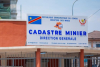
Since January 1, 2025, individuals or entities found guilty of obstructing transparency and traceability in the Democratic Republic of Congo’s (DRC) mining sector now face a staggering $4.3 million fine. Outlined in Decision No. CAMI/DG/003/2024, the penalty was issued by the Directorate General of the Mining Cadastre (CAMI) on December 16, 2024. It is the most severe enforcement measure under the country’s amended Mining Code. Despite its significance, the decision has received little public attention.
The adjustment stems from Article 375 of the 2018 Mining Code. The code mandates annual revisions of fines in foreign currency. “To maintain their value, these adjustments require input from the Central Bank of Congo and approval by CAMI’s leadership”. Since the revised Mining Code came into effect in 2018, fines for violations have been increased at least four times. The latest hike is particularly striking, multiplying the previous threshold of $429,122 by ten. Earlier fines had already reached $1.23 million in 2021 and $1.07 million in 2022.
The new $4.3 million penalty is part of a broader effort to enforce stricter compliance in the mining sector, which accounts for over 95% of the DRC’s export revenues. While this fine targets violations related to transparency and traceability key provisions aimed at curbing smuggling and illicit trade penalties for at least a dozen other mining offenses have also been doubled, quadrupled, or increased tenfold since the start of 2025.
The measures coincide with heightened government efforts to combat resource plundering by M23 rebels, who recently invaded the DRC, with Rwanda’s help. The rebels currently occupy strategic areas, including Rubaya’s mineral-rich mines and cities like Goma and Bukavu.
Despite these challenges, there are signs of determination from the mining administration to strengthen oversight elsewhere in the country. The recent inauguration of a Mining Registry building in Katanga another key mining region signals an effort to bring regulatory authorities closer to industry players and ensure compliance with the law.
Updated list of fines for violations of mining regulations in the DRC
(Decision CAMI/DG/003/2024 - in force since January 1, 2025)
- Obstruction of transparency and traceability in the mining industry: USD 4,291,222.57 (previously USD 429,122.24)
- Fraud and looting of natural mineral resources: USD 2,145,611.26 (versus USD 1,072,805.65)
- Illicit activities:USD 1,072,805.65 (vs. USD 42,912.25)
- Illicit purchase and sale of mineral substances: USD 128,736.67 (versus USD 42,912.25)
- Theft and concealment of mineral substances: USD 85,824.43 (versus USD 21,456.11)
- Embezzlement of mineral substances: 85 824.43 USD (versus 21 456.11 USD)
- Illicit possession of mineral substances: USD 85,824.43 (compared with USD 8,582.43)
- Illicit transport of mineral substances: USD 85,824.43 (versus USD 8,582.43)
- Facilitation of detour of mineral substances: USD 42,912.25 (vs. USD 21,456.11)
- Violations of human rights: USD 42,912.25 (new offence)
- Violation of health and safety regulations: USD 42,912.25 (versus USD 21,456.11)
- Destruction, degradation or fraudulent/malicious damage: USD 42,912.25 (versus USD 21,456.11)
- Obstructing the activities of the Mining Administration: USD 42,912.25 (versus USD 8,582.43)
- Infringement of ministerial or provincial governor decrees: USD 42,912.25 (compared with USD 4,291.24)
- Insults or violence towards Mining Administration officials: 21,456.11 USD (compared with 4,291.24 USD)
- Refusal to communicate a change of address: 21,456.11 USD (new offence)
- Corruption of public officials: 4,291.24 USD (new offence)
This article was initially published in French by Georges Auréole Bamba
Edited in English by Ola Schad Akinocho

KoBold Metals seeks to acquire part of the Manono lithium project in the Democratic Republic of Congo (DRC). According to multiple sources, in January 2025, KoBold sent a proposal to President Félix Tshisekedi’s chief of staff. The company, which uses artificial intelligence for mining exploration, is financed by Bezos and Gates.
Since 2023, AVZ has been challenging the DRC’s decision to revoke its rights to Manono and divide the permit. The government awarded part of the deposit to China's Zijin Mining. Recently, the International Chamber of Commerce (ICC) ordered Cominière to pay €39.1 million in penalties for failing to comply with injunctions but did not resolve ownership disputes.
KoBold has reportedly proposed a compromise: AVZ would receive compensation for dropping its claims, Zijin would retain control of the northern section of Manono, and KoBold would develop the southern portion. The U.S. company also suggested that minority shares be held directly by the Congolese state rather than Cominière.
None of the involved parties AVZ, Zijin Mining, or Cominière has officially commented on KoBold’s offer. Meanwhile, Suzhou CATH Energy Technologies, AVZ's Chinese partner, has provided a $20 million credit facility to support AVZ in its legal fight in January 2025.
On March 14, AVZ confirmed efforts to secure U.S. support for developing Manono but declined to disclose details about discussions or potential partners.
KoBold’s move reflects broader geopolitical stakes. Reports suggest that
Washington and Kinshasa are discussing a minerals-for-military-support deal. The U.S. aims to secure access to critical minerals like lithium while assisting the DRC in fighting rebel forces in Kivu.
KoBold is no stranger to Africa’s mining sector. The company uses artificial intelligence to search for metals that are critical to the energy transition. In 2022, it gained attention by investing in a Zambian copper deposit. CEO Kurt House has called the DRC “the best place in the world” for sourcing materials essential to energy transition technologies.
Emiliano Tossou

On March 17, 2025, the European Union unveiled new sanctions against some Rwandan officials. The EU accused the officials of being involved in the ongoing war in the Democratic Republic of Congo (DRC) and the illicit exploitation of Congolese mineral resources. The sanctions effectively target the Gasabo Gold Refinery in Kigali and Francis Kamanzi, head of Rwanda's mining regulator.
Mining has become a pillar of the Rwandan economy in recent years. In 2023, the sector contributed nearly 70% of Rwanda’s total exports and 3% of GDP, earning the country $1.1 billion; gold alone contributed $883 million.
With a mineral potential valued at $150 billion, Rwanda attracts major foreign investors. For example, in July 2024, Rwanda announced it had partnered with Rio Tinto, the world's second-largest mining group by market capitalization. This was a deal to explore and exploit 3T (tin, tantalum, and tungsten) and lithium deposits. The same year, in February, even the EU had signed a strategic minerals partnership with Kigali.
Plundering Accusations
Now, however, several independent reports and the Congolese government allege that most of the minerals exported by Rwanda are smuggled from the DRC. The DRC accuses Rwanda of supporting the rebels that recently invaded its eastern regions, and asks Kigali’s international partners to stop cooperating with President Kagame’s country.
"The transit of gold through Rwanda's only gold refinery, Gasabo Gold Refinery, contributes to the illicit export through Rwanda of illegally mined gold. Gasabo Gold Refinery has therefore exploited armed conflict, instability or insecurity in the DRC, in particular through the illicit exploitation or trade of natural resources," reads an official note signed by Kaja Kallas, Vice-President of the European Commission. The document added that Francis Kamanzi, head of Rwanda's mining regulator, was taking advantage of the conflict and instability in the DRC, through illegal trade and mining.
The Congolese government welcomed the EU sanctions. “These sanctions are the first step in the fight against Rwanda's plundering of the DRC's mineral wealth,” the Congolese Ministry of Communication wrote in a statement dated March 17, 2025.
Despite these developments, it remains unclear how the sanctions will impact Rwanda’s mining sector or its attractiveness to investors in 2025. Not all refineries in Rwanda face sanctions and global traceability mechanisms have so far failed to prevent minerals looted by rebels in the DRC from entering international supply chains.
This article was initially published in French by Emiliano Tossou
Edited in English by Ola Schad Akinocho

In a March 19, 2025, interview with Fox News, Congolese President Félix Tshisekedi confirmed his government’s willingness to negotiate a security partnership with the United States in exchange for access to critical minerals.
"We are looking for partnerships and have established some with several countries. We believe that the United States, given its role and influence in the world, is an important partner for us. We are happy to see that with the Trump administration, things are moving forward at a faster pace on both sides," Tshisekedi told the network, which is reportedly close to President Trump.
The Congolese leader did not talk about potential arms shipments or the deployment of U.S. military personnel in the Democratic Republic of Congo (DRC). However, some lobbyists representing Senator Pierre Kanda Kalambayi—Chairman of the Senate's Defense, Security and Border Protection Committee—previously addressed this request to the U.S. Secretary of State Marc Rubio.
President Tshisekedi highlighted the opportunity for sustainable U.S. investment in critical mineral extraction and processing, which he said could create jobs and foster long-term stability.
Asked about how he would guarantee the safety of American investors in his country, Tshisekedi mentioned plans to strengthen the Congolese army’s defense capabilities and expressed hope that U.S.-imposed sanctions and pressure on armed groups could help stabilize conflict zones.
Trump Sends Special Envoy to Kinshasa
A few days before President Tshisikedi’s appearance on Fox, the U.S. had sent a Special Envoy, Ronny Jackson, to the Democratic Republic of Congo (DRC). Jackson, a member of Congress, met with Tshisekedi on March 16.
Jackson came amid escalating tensions in eastern DRC, where M23 rebels, allegedly backed by Rwanda, have seized control of key cities including Goma and Bukavu.
“The DRC’s sovereignty and territorial integrity must be respected by all. We are going to work so that all obstacles on the path to peace are removed, so that peace returns to the DRC ", Jackson said during the meeting, according to DRC Presidency. "Our goal is to ensure that American companies can come, invest, and work in the DRC. And to do that, we need to make sure there's a peacefulenvironment," he added, according to the same source.
Several actors are getting involved in the talks to end the conflict in eastern DRC. Qatar, one of them, facilitated a meeting between Presidents Tshisekedi and Kagame of Rwanda on March 17.
The recent developments unfold against a backdrop of intensifying U.S.-China rivalry, with Beijing controlling nearly 80% of DRC's mines. Washington views China as an economic and geostrategic competitor in the mineral-rich African nation.
Amidst the world’s technological development and geopolitical tensions, the DRC's critical mineral resources, valued at an estimated $24 trillion by the World Bank, have attracted global attention. The country has signed preliminary agreements with various entities, including the European Union, Saudi Arabia, and Japan, potentially complicating U.S. interests in the region.
After visiting the DRC, Ronny Jackson also went to the neighboring Congo-Brazzaville where he met with President Denis Sassou Nguesso. According to the Chinese official press, Nguesso asked Jackson to mediate in the US-China trade rivalry.
This article was initially published in French by Georges Auréole Bamba
Edited in English by Ola Schad Akinocho