






DIGITAL (74)

Singapore-based Embed Financial Group Holdings (EFGH) said on Nov. 20 it signed a master services agreement with the Water Distribution Authority (REGIDESO SA) to accelerate the utility’s digital transformation, including modernizing how it collects payments from households and businesses.
According to the statement, REGIDESO and EFGH will jointly develop secure digital channels for bill payments, security features and new financial tools designed to simplify and speed up payments and make them more accessible. The initiative aims to improve payment tracking, enhance transparency, strengthen investor confidence and help REGIDESO raise capital to finance its modernization.
REGIDESO already offers digital payment services. Information on its website shows that customers can pay bills through a mobile app available on the App Store and Google Play or via its website. These services currently cover 11 of the DRC’s 26 provinces. For customers without internet access, a USSD code is also available.
EFGH describes itself as a specialist in digital payments, financial platforms and digital ecosystems. The company said it operates in several African markets, including Ghana, where on Oct. 29 it announced a joint venture with the District Assemblies Common Fund (DACF). That partnership aims to build a “Finternet,” a digital financial infrastructure designed to connect governments, residents and businesses. According to EFGH, this Finternet will link payments, credit and insurance the way the internet links information, helping Ghanaian districts manage funds and public services more effectively while creating new revenue streams.
Timothée Manoke

Visa has reiterated its intention to partner with the Democratic Republic of Congo's central bank (BCC) to modernize the country's financial system. In a letter dated November 20, 2025, Visa's Senior Vice President for Central and West Africa, Aminata Kane, informed BCC Governor André Wameso of the commitment on behalf of Visa President Oliver Jenkyn.
According to a note from the BCC, the cooperation will focus on three areas. The first is the creation of the BCC's Financial Innovation Center, intended to position the DRC as a francophone technological and regulatory hub for digital payments, market financial infrastructure, and fintech solutions.
The second area involves strengthening financial inclusion through programs targeting universities and the public administration to accelerate the adoption of modern, secure payment methods. Finally, Visa plans to support investment in Congolese fintechs, particularly those developing digital solutions for financial inclusion.
The two institutions have agreed to set up joint technical teams to finalize an operational roadmap in the coming days. The move follows discussions held on the sidelines of the IMF and World Bank Annual Meetings in October.
The mobile payments market in the DRC is experiencing steady growth. According to the GSMA, the value of transactions is expected to reach $3.85 billion in 2025, representing a compound annual growth rate of about 19%.
In September, Visa launched VisaPay, an application that allows consumers to make digital payments easily. At the same time, Visa partnered with Onafriq, a pan-African digital payment network, to connect VisaPay with the country's leading mobile money wallets, including M-Pesa, Airtel Money, and Orange Money. This interoperability allows users to fund a Visa account directly from a mobile money platform.
Ronsard Luabeya

- Digital economy minister visited Huawei’s training center in Hangzhou
- Talks focused on creating a Congolese AI academy under the 2026–2030 plan
- Huawei is considered a technical partner due to its global ICT training expertise
Digital Economy Minister Augustin Kibassa Maliba carried out a working visit on November 10, 2025, to Huawei’s training center in Hangzhou, in the People’s Republic of China, according to a statement from the ministry’s press office.
The mission focused on cooperation between the Democratic Republic of Congo (DRC) and Huawei in artificial intelligence (AI) training, as part of the National Digital Plan 2026–2030 and the country’s first National Artificial Intelligence Strategy.
Discussions centered on the creation of a Congolese artificial intelligence academy, a government project designed to train specialists, support applied research, and develop solutions tailored to local needs, especially in agriculture, health, and mining.
According to the official communication, Huawei was approached as a technical partner for the project due to its global experience in information and communication technology training, including through the Huawei ICT Competition, an international event that brought together more than 210,000 students and instructors in its latest edition.
This development follows the memorandum of understanding signed on May 23, 2025, between the DRC and Huawei on the “smart village” pilot project, aimed at improving Internet access, connecting local public services, and training young people in digital skills.

-
The Democratic Republic of Congo (DRC) Minister of Digital Economy, Augustin Kibassa Maliba, met with Alibaba Group and Isoftstone Corporate officials in China.
-
The discussions focused on adapting the Chinese e-commerce model for implementation in the DRC.
-
The parties agreed to create a joint working group to formulate concrete proposals for e-commerce development.
The Democratic Republic of Congo (DRC) Minister of Digital Economy, Augustin Kibassa Maliba, met with executives from Alibaba Group and Isoftstone Corporate, two major players in the digital sector. The meeting occurred on the sidelines of the Sino-African Forum on Economic, Trade, and Cultural Cooperation, held on November 7, 2025, in Jinhua, China.
The Ministry of Digital Economy reported the exchanges focused on the Chinese e-commerce model and its potential adaptation in the DRC. Participants addressed several key subjects, including regulation, technology, and establishing an effective digital ecosystem.
Consequently, the parties agreed to establish a joint working group. This group holds the mandate of deepening the reflection and formulating concrete proposals for e-commerce development in the DRC. The Ministry specified technical meetings will occur in the coming days. These meetings aim to finalize a strategic report for Minister Kibassa. This document will serve as the foundation for implementing a simplified and accessible national e-commerce model, particularly benefiting young Congolese entrepreneurs.
Alibaba Group, which Jack Ma founded in 1999, reaffirmed its interest in the African market. The Chinese giant considers the DRC a strategic hub for expanding its activities across the continent. Alibaba operates across online commerce, cloud computing, digital finance, logistics, and entertainment. The company utilizes platforms such as Alibaba.com, Taobao, Tmall, AliExpress, and Alipay, forming an integrated ecosystem connecting merchants, consumers, and service providers.
Founded in 2001, Isoftstone Group specializes in information technologies and digital transformation. The company provides solutions in artificial intelligence, cloud computing, big data, and smart cities. Isoftstone targets governments and companies operating in the telecommunications, energy, transport, finance, and health sectors.
This article was initially published in French by Ronsard Luabeya
Adapted in English by Ange Jason Quenum

Telecom operators Africell and Vodacom, active in the Democratic Republic of Congo (DR Congo), are exploring potential partnerships with Starlink, the global satellite Internet provider, to expand their network coverage nationwide.
Africell DR Congo CEO Kory Webster confirmed to U.S. media outlet Semafor that the company is holding “active discussions” with Starlink on an operational partnership. A Vodacom executive, also quoted by the outlet, said the operator is considering a similar satellite collaboration to strengthen coverage in rural and hard-to-reach areas. No further details have been disclosed.
In May 2025, Airtel Africa signed a partnership with SpaceX, making it the first operator in DR Congo to collaborate with Starlink. Vodacom and Africell’s current moves appear to be a response to this competitive advantage.
Experts say Starlink’s network could be used to connect base transceiver stations (BTS) in remote areas to telecom operators’ core networks, where voice and data traffic are managed. The solution is seen as a lower-cost alternative to the VSAT technology currently in use and could help operators expand coverage while improving commercial and financial performance.
The Airtel–SpaceX partnership therefore gives Airtel Congo a strategic edge in the race for an estimated 15 million new mobile Internet subscribers expected in DR Congo between 2025 and 2030, according to GSMA projections.
Data from the Congolese postal and telecom regulator (ARPTC) show that by the end of 2024, the country had 32.94 million active mobile Internet subscriptions (90-day basis). Airtel had 9.66 million users, representing 29.33% of the market, behind Vodacom (37.78%) and Orange (29.97%), but ahead of Africell (2.92%). However, in terms of Internet revenue, Airtel led with $365.5 million (37.7% market share), followed by Orange (31.5%), Vodacom (27%), and Africell (3.8%).
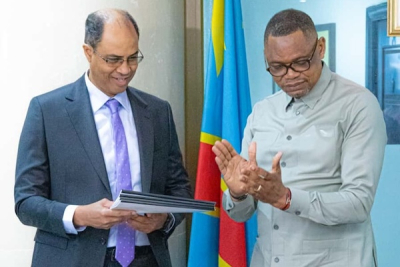
The Democratic Republic of Congo (DRC) signed an agreement on Oct. 20 with Mauritius-based investment firm United Investment LMT (UIL) to strengthen its national digital infrastructure, Congolese media reported. The partnership, first agreed in 2023, is estimated to be worth about $150 million.
The project covers feasibility studies, the rollout of 60,000-80,000 kilometers of fiber-optic cable nationwide, the installation of a new 192-terabit-per-second submarine cable, and the construction of three data centers, according to Scoop RDC. It will also include the establishment of a national telecom operator providing both fixed and wireless services. No implementation timeline was provided.
“The DRC needs at least 40,000 to 50,000 kilometers of fiber to achieve full connectivity. Internet access remains below 30%,” said José Mpanda Kabangu, Minister of Posts and Telecommunications, during the signing of supplementary documents with UIL. “The President wants all 145 territories of the country to be connected. I wish this project every success and will give it my full support.”
Expanding digital infrastructure and connectivity is one of four key goals of the 2026–2030 National Digital Plan (PNN2), which seeks to position the DRC as a regional digital hub. To support the strategy, the government plans to invest $1 billion over five years, alongside $500 million in external funding from international partners.
The country is also pursuing other public-private partnerships. Nigeria’s Fidelity Bank has expressed interest in financing a national telecom satellite project to improve connectivity.
The DRC scored 31/100 on the ITU’s 2024 ICT Development Index, ranking 41st out of 47 African countries. According to GSMA, about 32% of the population still lacked mobile internet coverage in 2024. The organization also noted that the DRC had around 9,631 kilometers of fiber installed, with another 29,000 kilometers planned by public and private operators. The country is connected to the WACS and 2Africa submarine cables, according to Submarine Cable Map.
Isaac K. Kassouwi, Ecofin Agency
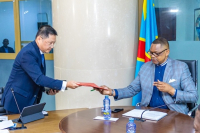
Esengo Towers, a joint venture between Orange RDC and Vodacom Congo, plans to invest $179 million over four years to deploy 1,000 telecom towers across the Democratic Republic of Congo (DRC) to expand mobile coverage.
Esengo Towers CEO Jean-Philippe Léonard announced the plan on Oct. 22, 2025, after meeting with Minister of Posts and Telecommunications José Mpanda Kabangu.
The company, founded in January 2025 and equally owned by the two mobile operators, aims to expand rural connectivity by building solar-powered base stations equipped with 2G and 4G technology. It also targets the construction of 2,000 towers within six years.
The project has faced delays. The first station was expected to be operational by end-2025, but the firm still lacks an operating license. Léonard said obtaining the license is crucial before choosing suppliers and finalizing financing, and he now expects construction to begin in 2026.
He asked the minister to help secure authorization from the Regulatory Authority of Posts and Telecommunications (ARPTC). In a ministry statement, Kabangu expressed government support and noted that the DRC needs about 300,000 towers for full coverage, compared with 5,105 currently.
“The 2,000 towers planned by Esengo Towers, though not enough to meet national needs, represent a major contribution, especially for rural areas,” Kabangu said.
Orange RDC and Vodacom Congo will share the infrastructure as anchor tenants for 20 years and open it to other operators to share costs and broaden coverage, targeting 19 million new users and promoting digital inclusion and mobile financial access.
Ronsard Luabeya
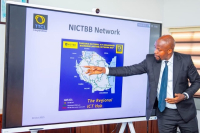
Tanzania’s plan to extend its National ICT Broadband Backbone (NICTBB) to the Democratic Republic of Congo (DRC) was discussed on Oct. 20, 2025, during a meeting at Tanzania Telecommunications Corporation (TTCL) headquarters in Dar es Salaam.
The project will lay a submarine fiber-optic cable across Lake Tanganyika, linking Kigoma in Tanzania and Kalemie in the DRC over roughly 160-186 kilometers.
The Tanzanian delegation was led by Moremi Marwa, TTCL Director General, and Leo Magomba, ICT Infrastructure Director at the Ministry of Communication and Information Technology. The Congolese side was headed by Prosper Ghislain Mpeye, Director General of the Société Congolaise de Fibre Optique (SOCOF).
Few details were disclosed, as the talks are covered by a confidentiality agreement signed in February 2023. The two sides are completing final preparations before construction begins in early 2026, pending environmental approval. Full commissioning is expected by late 2027.
The $15-20 million project is structured as a public-private partnership involving Mauritian firm Bandwidth and Cloud Services Group for technical expertise. The governments of both countries will hold quarterly meetings to track progress and manage financial risks.
Part of the AUDA-NEPAD Priority Action Plan (2021-2030), the interconnection is identified as a key link for digital integration in East and Southern Africa. The NICTBB already connects Zambia, Malawi, Kenya, Uganda, Rwanda, and Burundi; adding the DRC would complete an East–West fiber corridor, boosting regional connectivity.
TTCL, the implementing agency, said the project will accelerate the DRC’s digital transformation and spur economic growth. Fiber deployment could cut bandwidth costs by half and benefit sectors from mining to digital finance, education, and healthcare.
The cable will use single-mode G.652D fiber, starting at 100 Gbps, expandable to several terabits. Joint environmental studies with the Société Congolaise des Postes et Télécommunications (SCPT) aim to ensure compliance with international standards, including the Ramsar Convention protecting Lake Tanganyika.

The TALO price-control app is scheduled to begin its rollout in November across several cities in the Democratic Republic of Congo (DRC). The announcement was made on Tuesday, October 7, 2025, by Minister of National Economy Daniel Mukoko Samba during an interview on Kinshasa-based Top Congo FM.
The minister said the first phase will cover seven major cities, with six more to follow by year-end. The goal is to enable real-time tracking of prices for food and other staple consumer goods.
Developed by young Congolese professionals, TALO was unveiled by Minister Mukoko Samba on January 14, 2025. Designed to modernize the economic inspection service, the app helps field agents collect data more efficiently and increases transparency in business practices for consumers.
In Kinshasa, where the application is already in use, TALO has replaced manual price reporting. Agents now record data on their phones at market sites and send it directly to a central database. According to Jocelyne Mayungu Bwanga, head of the Kinshasa-East office at the Ministry of National Economy, the switch to digital data collection has significantly reduced processing times.
The ministry posts monthly reports on its official website summarizing the data. The latest report, for July, showed that weekly price tracking in Kinshasa covered 39 staple consumer products, 183 brands, and 62 types of traders across 16 markets, including Central, Gambela, Zigida, and Liberté.
Price differences of up to 40% were sometimes observed for the same product between different outlets. To identify the underlying causes, the ministry has commissioned a Congolese consulting firm to conduct a study. One preliminary finding points to two main supply routes: goods entering through the Lufu border with Angola tend to be cheaper than those coming via Matadi port.
By expanding TALO to the provinces, the Ministry of National Economy aims to strengthen its nationwide price-monitoring and regulatory capacity. The ultimate goal is to curb market speculation and protect consumers’ purchasing power.
Timothée Manoke
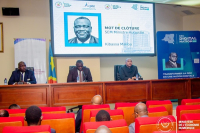
• The Democratic Republic of Congo (DRC) plans to invest $1 billion in public funds and secure an additional $500 million from international partners to implement its new five-year digital strategy.
• The plan aims to transform the DRC into a regional digital hub by 2030, with a focus on AI, connectivity, and digital inclusion.
• The country’s first national artificial intelligence (AI) strategy will include the creation of a Congolese AI academy to train young talent and foster innovation.
The Democratic Republic of Congo (DRC) has launched the drafting process for its National Digital Plan 2026–2030 (PNN2) and its first National Artificial Intelligence Strategy, the Ministry of Digital Economy said on Wednesday.
Minister Augustin Kibassa Maliba announced the initiative, which aims to position the DRC as a regional digital hub by 2030.
“This is about capturing the dividends of digital transformation and positioning our country — rich in critical minerals essential to the digital and energy transitions — as both an investment catalyst and a provider of solutions to global challenges,” Kibassa said.
The new plan will rest on four main pillars: infrastructure and connectivity development, creation of digital public platforms and services, human capital enhancement and digital inclusion, and strengthening of cybersecurity and digital trust.
It will also integrate five cross-cutting axes — digital entrepreneurship, innovation, technological sovereignty, artificial intelligence, and strategic partnerships — to ensure coherence across policy areas.
To support this roadmap, the government plans to invest $1 billion in public funds over five years, complemented by $500 million in external financing already secured from international partners.
As part of the AI strategy, authorities will establish a Congolese Artificial Intelligence Academy to train young professionals, promote applied research, and stimulate local innovation.
This initiative follows the National Digital Plan “Horizon 2025”, launched in 2019, which achieved about 60% of its objectives. The first plan laid the groundwork for the digital economy through improvements in fiber-optic connectivity, regional integration projects such as CAB5, and the introduction of e-government tools like online tax portals and customs modernization via a single window system.
Ongoing projects include the digitization of civil registration and the establishment of a national digital ID system.
With PNN2, Kinshasa seeks to consolidate these achievements and accelerate its digital transformation. A GSMA report presented last month estimated that digital technologies could contribute 9.8 trillion Congolese francs (about $3.6 billion) to the economy by 2029, provided that fiscal and regulatory reforms advance.
The same report suggested that digital adoption could unlock 8.6 trillion FC in additional economic value across mining, agriculture, and public services.
Through this new strategy, the DRC aims to strengthen its technology ecosystem, create thousands of skilled jobs, and attract more investment in high-growth digital sectors.
This article was initially published in French by Samira Njoya, Agence Ecofin
Adapted in English by Ange Jason Quenum
More...

• GSMA estimates telecom reforms could generate 9,800 billion Congolese francs ($3.7 billion) in GDP by 2029.
• Mobile operators in DRC face a tax burden of 91% of profits, among the heaviest compared to mining (71%) and banking (34%).
• The sector could connect 9.7 million new mobile internet users and unlock $3.2 billion in value across mining, agriculture, and public services.
The first Digital Africa Summit in Kinshasa on Sept. 18 became a platform for mobile operators to advocate tax and regulatory reforms in the Democratic Republic of Congo (DRC). The push relied on a report by the GSMA, the global mobile industry association, titled “Driving Economic Growth through Digital Transformation in the DRC.”
Angela Wamelo, GSMA’s Africa director, said the reforms could add 9,800 billion Congolese francs ($3.7 billion) to GDP and connect 9.7 million additional mobile internet users by 2029. The report projected that mobile adoption could release more than 8,600 billion Congolese francs ($3.2 billion) in value across mining, agriculture, and public services.
“The Democratic Republic of Congo has the opportunity to leapfrog into a digital-driven economy,” Wamelo said. “But to realize this potential, reforms in taxation, spectrum management, and energy infrastructure must be a priority. We aim to regulate this sector in DRC to make it more transparent and attract investors,” she added.
A separate GSMA report from June, “Mobile Sector Taxation: Comparative Tax Burden in DRC,” highlighted the heavy fiscal environment operators face. It said mobile operators pay on average 91% of their profits in taxes, compared with 71% for mining companies and 34% for retail banks. The report blamed multiple sector-specific levies, often calculated on revenues, for deterring investment and limiting service expansion.
The GSMA urged simplification and harmonization of taxes. It recommended modernizing fiscal frameworks through rationalization of sectoral taxes to lower consumer prices and encourage investment. It also called for a collaborative national framework, coordination of energy and digital policies, expanded spectrum access, license reform, skills development through public-private partnerships, and integration of mobile platforms into education, health, and government services.
The government, facing major financing needs, has argued that telecom operators must pay their “fair share” of taxes. Some officials questioned the fiscal contribution of multinational operators, noting that some had not declared taxable profits in nearly two decades, raising suspicions of tax avoidance.
Despite these concerns, Digital Economy Minister Augustin Kibassa Maliba welcomed the GSMA report. He described it as a “clear diagnostic” of the sector’s progress and challenges. “We have the responsibility to transform the recommendations of this report into concrete actions, because it is through them that we will build a true digital economy,” he said.
According to GSMA, the mobile sector contributed an estimated $63–64 billion to DRC’s GDP in 2022 and $66 billion in 2023.
This article was initially published in French by Ronsard Luabeya
Adapted in English by Ange Jason Quenum
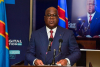
• President Félix Tshisekedi pledged $1 billion in public spending from 2026–2030 to implement the new national digital plan.
• The program will focus on infrastructure, e-government, cybersecurity, and digital skills training, with emphasis on women and youth.
• DRC signed an MoU with Cisco and Cybastion to train 250,000 young people in cybersecurity, data science, and programming.
Democratic Republic of Congo (DRC) President Félix Tshisekedi announced a $1 billion public investment to support the country’s next five-year digital development plan. The pledge, made Sept. 26 during the “DRC Digital Nation 2030” event at the UN General Assembly in New York, represents an annual commitment of $250 million from 2026 to 2030.
Tshisekedi said the initiative aims to position Congo as a technology hub at the heart of Africa.
According to the Ministry of Digital Affairs, the program will center on four pillars: expanding digital infrastructure such as connectivity and data hosting, developing e-government services, strengthening cybersecurity governance, and building digital skills. Training programs will prioritize women and young people.
Dominique Migisha, head of the Digital Development Agency, said unfinished projects from the current plan—achieved at roughly 60% due to funding gaps—will be incorporated into the new program.
Tshisekedi stressed that digital development depends on political stability and implementation of peace accords with Rwanda and the M23 rebels. Security improvements are also vital to attract private investors.
On the sidelines of the forum, Digital Minister Kibassa Maliba held talks with U.S.-based Unity Development Fund, which expressed interest in investing in infrastructure, innovation, and youth entrepreneurship.
Congo also signed a memorandum of understanding with Cisco and Cybastion to train 250,000 young people over five years in fields such as cybersecurity, data science, programming, operating systems, technical English, digital transformation, and entrepreneurship.
This article was initially published in French by PM & Ecofin Agency
Adapted in English by Ange Jason Quenum

Highlights:
• Fintech Paymetrust approved by Congo’s central bank as aggregator on July 4.
• Platform offers real-time supervision of financial flows, enhancing compliance.
• Already active in 14 African countries with over 10 million transactions in 2023.
Fintech company Paymetrust announced it had received, since July 4, 2025, approval from the Banque Centrale du Congo (BCC) to operate as an aggregator in the Democratic Republic of Congo (DRC). This allows the startup to legally provide its services in the country.
“This approval reflects our commitment to contributing to the development of the Congolese digital ecosystem. We want to offer reliable solutions that accelerate the digitization of payments while complying with the strict standards of the Central Bank,” said CEO Moussa Haïdra.
The company’s technology platform enables regulators and stakeholders to monitor financial flows in real time, strengthening traceability, transparency, compliance, and transaction security. In line with BCC requirements, Paymetrust will also connect to the national electronic money switch to ensure interoperability.
Its unified API allows seamless integration between ecosystem players, a major challenge in Congo’s fragmented payments market. Paymetrust already operates in 14 African countries, including Senegal, Cameroon, Côte d’Ivoire, and Tanzania, and processed more than 10 million transactions worth $5 million in 2023.
The platform supports over 65 payment methods — from mobile money to bank cards and e-wallets — and offers an intuitive dashboard for merchants and users. Payments can be made in five currencies: XAF, XOF, GNF, TZS, and USD.
Ronsard Luabeya

Highlights
• Singapore firm secures funds via PIPE transaction led by Chaince Securities.
• Proceeds to support launch of DRCPass, Congo’s national e-ID platform.
• System aims to curb SIM fraud, streamline e-services, boost financial inclusion.
Trident Digital Tech Holdings Ltd said on Sept. 16 it had raised $2.6 million to fund the launch of the Democratic Republic of Congo’s digital ID system. The Singapore-based company said the proceeds, net of costs, will go to the expansion and commercialization of DRCPass.
The system, developed under a public-private partnership with Kinshasa, will make Trident the DRC’s exclusive provider of electronic ID services (e-KYC) which uses Web3-based technologies. The system will enable biometric SIM authentication, and single sign-on access to public services.
The financing was arranged through a Private Investment in Public Equity (PIPE) deal led by Chaince Securities, a unit of Mercurity Fintech Holding. Trident issued Class B shares with reduced voting rights to undisclosed institutional investors. A resale registration statement will be filed with the US SEC.
Authorities say the platform is expected to cut fraud linked to fake SIM cards, expand e-government services, improve access to credit, and serve as a secure complement to physical ID. Before the official launch, DRCPass must clear audits, pilot tests, and a nationwide awareness campaign.