





The Democratic Republic of Congo's central bank has moved to add gold to its official reserves, signing an agreement on Feb. 20 with DRC Gold Trading, the state-owned company responsible for collecting and exporting artisanal gold.
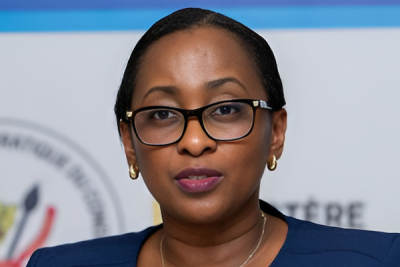
Under the deal, the Central Bank of the Congo (BCC) will serve as the primary buyer of gold produced by the country's artisanal miners through DRC Gold Trading, Governor André Wameso said at the signing ceremony.
The project is designed to “correct a major historical anomaly”: the fact that a leading gold producer holds no physical gold in its vaults. For the BCC, the initiative also aims to reinforce the stability of the Congolese franc and strengthen the country's financial sovereignty, against a backdrop of rising gold prices and a broader push to diversify reserve assets.
The move is consistent with the priorities Wameso has pursued since his appointment as central bank governor in July 2025: reducing the country's structural dependence on the dollar and restoring confidence in the Congolese franc. Since September 2025, the national currency has appreciated 19%.
The financial terms of the BCC-DRC Gold Trading partnership, including the payment currency, purchase price, volumes, timeline, delivery arrangements, storage, auditing and transparency mechanisms, have not been publicly disclosed. Those details are critical to assessing Wameso’s strategy.
Challenges
The BCC said that holding monetary gold will protect its reserves against inflation and geopolitical shocks. Described as a safe-haven asset with no counterparty risk, gold would help reduce the reserves’ exposure to fiat currency depreciation and bolster confidence in the national currency. The extent of that effect will depend, in part, on gold’s eventual share of total reserves.
According to several monetarists, the project’s impact on franc stability will also hinge on the purchasing framework, particularly the payment currency. If gold is purchased in Congolese francs, the operation could support use of the national currency, but it would strengthen the franc only if the BCC prevents those purchases from generating uncontrolled monetary expansion. If the liquidity injected into the economy is not subsequently absorbed or offset, the operation could stoke inflation and increase demand for dollars. Conversely, if gold is purchased in dollars, the arrangement could enhance the appeal of the official channel in a heavily dollarized sector, but it could also strain foreign currency liquidity if payments draw down foreign exchange reserves.
Wameso must also contend with competition from informal supply networks. To draw gold away from those channels, the official buyer must offer sufficiently attractive pricing and payment terms while guarding against the re-labeling of smuggled gold. For several players in the sector, payments in Congolese francs are widely seen as a drawback.
In 2025, the DRC channeled 2.3 metric tons of artisanal gold through official channels, according to official statistics described as preliminary and incomplete. For 2026, DRC Gold Trading is targeting 15 to 18 metric tons of artisanal gold per year and more than $2 billion in export revenues. To establish itself as the primary buyer, the BCC must also address a liquidity challenge: balancing foreign exchange interventions, which involve selling dollars, buying francs and meeting priority public import needs, with gold purchases.
Pierre Mukoko & Ronsard Luabeya