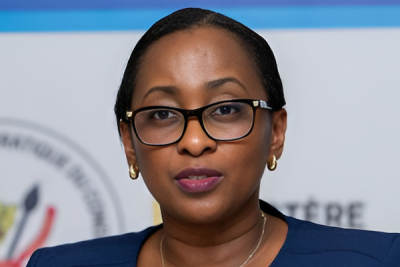






The Democratic Republic of Congo’s government and the World Bank on Monday approved a consolidated action plan following a review of the country’s portfolio performance, setting out an implementation schedule with regular monitoring milestones. Vice Finance Minister Gracia Yamba Kazadi presided over the ceremony.
The plan aims to improve execution of World Bank-financed projects in the DRC and raise the disbursement rate to at least 30% by 2026. According to Albert Zeufack, the World Bank’s director of operations in the DRC, the country has not reached a 25% disbursement rate in the past five years. In 2025, the rate stood at 22% for projects under implementation.
The plan, developed after a technical session on Nov. 12, 2025, with government and World Bank experts, covers 22 projects totaling $1.4 billion. Infrastructure and education account for more than one-third of the financing, including $250 million for infrastructure and $300 million for education, notably skills development.
Zeufack said the rapid expansion of the World Bank’s portfolio in the DRC, from about $3 billion in 2020 to more than $8 billion today, continues to face structural and operational bottlenecks in implementation. Key challenges include growing project complexity, delays in procurement and no-objection procedures, limited capacity within project management units, and insecurity in the east of the country. He also cited underperformance by some United Nations agencies responsible for implementing activities and called for stronger accountability mechanisms.
These constraints limit the country’s absorption capacity and disbursement levels despite significant development needs, Zeufack said. To address this, Yamba Kazadi called for strengthening project teams through training and the recruitment of young graduates, as well as improving early-stage preparation to allow tenders to be launched once projects take effect.
She also urged more systematic government involvement in validating co-financing agreements, the organization of accountability workshops to clarify stakeholder roles, the integration of security risk analysis at the design stage, and the use of contract structures that prioritize results-based approaches in partnerships with U.N. agencies.
Ronsard Luabeya