




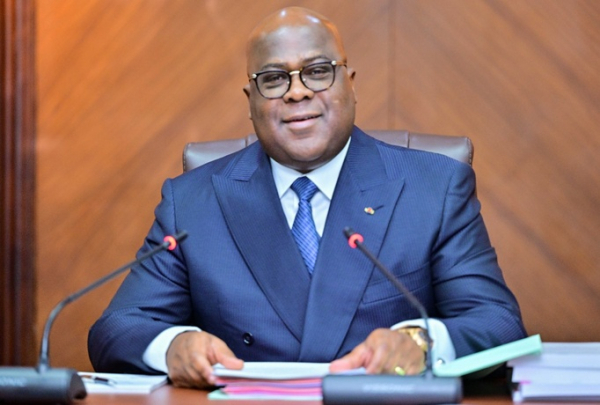
Following a $1.25 billion Eurobond issuance, President Felix Tshisekedi has made clear that the operation’s success will hinge on strict fund management and the swift delivery of projects.
At an extraordinary Council of Ministers meeting on April 15, he said investors were not just buying debt but backing a commitment to disciplined and responsible governance. The bond, oversubscribed more than four times, signals strong investor confidence that must now be matched by results.
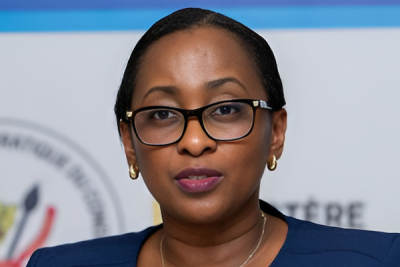
To ensure proper use of the funds, Tshisekedi called for a strict oversight framework. He tasked Prime Minister Judith Suminwa with setting up an inter-institutional commission to supervise investment execution, bringing together the ministries of Planning and Finance, relevant agencies and the presidency.
He also stressed the need for full traceability of funds. Finance Minister Doudou Fwamba was instructed to put in place a clear and enforceable tracking system, alongside the mobilization of oversight bodies. The General Inspectorate of Finance (IGF) will carry out annual compliance audits, while the Court of Auditors will report to Parliament on how the funds are used.
The government is also required to publish quarterly reports detailing project progress, funds allocated and any discrepancies.
Speaking at a press conference in Kinshasa on April 13, the finance minister said the United Nations Development Program (UNDP) could act as an independent observer to monitor the use of funds. He also pledged to inform the public about how the $1.25 billion is spent and to invite investors within a year to review progress on funded projects.
Project portfolio
Tshisekedi set out a guiding principle: debt is sustainable only if it generates economic value. Funds will therefore be directed toward large-scale, bankable projects with clear returns.
According to Fwamba, only projects at an advanced stage, including those with completed feasibility studies, were selected, in a bid to avoid inefficient spending given borrowing costs of around 9%.
Seven projects have been retained under the 2024–2028 National Strategic Development Plan.
The first group focuses on transport. It includes the construction of a 49,000-square-metre terminal at N’djili airport, with capacity for 5 million passengers a year. It also covers the rehabilitation of 750 km of road between Kisangani and Beni, a key route in the northeast. In Kinshasa, plans include 300 km of urban roads and a 31-km bypass with interchanges and bridges to ease congestion.
The second group targets energy. It includes a 330 kV transmission line linking Zambia to the Congolese copper belt, as well as the Katende hydropower plant, which will be accompanied by distribution networks in Kasaï-Central. Authorities see these projects as key to boosting electricity supply while generating revenue.
The third group focuses on human capital, with plans to build vocational training centers in Kinshasa, Kisangani, Mbuji-Mayi and Lubumbashi, aimed at better matching skills to labor market needs.
Pierre Mukoko & Boaz Kabeya