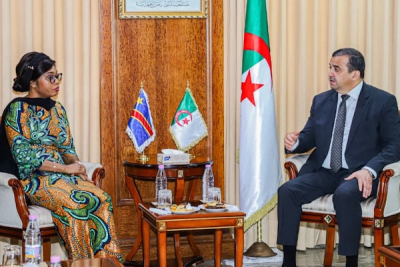






Since 2008, the African Legal Support Facility (ALSF), an institution affiliated with the African Development Bank (AfDB), has helped African governments negotiate complex transactions and protect their interests in high-stakes legal matters. Based on this experience, ALSF Chief Operations Officer Maude Vallée highlights recurring weaknesses in mining contracts, the need to build lasting expertise within African governments, and ways to address increasingly sophisticated tax avoidance schemes. She spoke with us in Brazzaville during the AfDB Annual Meetings, held from May 25 to 29, 2026.
Bankable: Many disputes and government revenue losses in the mining sector stem from poorly drafted contractual provisions, such as tax, production-sharing, stabilization, and renegotiation clauses. What are the most recurring weaknesses the ALSF identifies when reviewing mining contracts?
Maude Vallée: Contract drafting is ultimately shaped by the relationship between the state, the mining company, and the project developer. Yet many of the weaknesses that later emerge in contracts originate much earlier, particularly during technical studies and financial modeling, which are not always conducted with sufficient time, resources, or rigor.
Within the contracts themselves, certain provisions are often drafted too broadly and lack sufficient precision. Local content clauses are a good example, as are provisions governing the infrastructure needed to support mining operations. Mining projects require far more than extraction alone; they depend on a broader ecosystem of supporting infrastructure that must be planned, financed, and integrated into the project from the outset.
Another issue that states often underestimate is the importance of negotiating robust shareholder agreements. States are frequently shareholders in mining projects and therefore need mechanisms that allow them to raise strategic concerns and influence technical decisions with financial implications
Stabilization clauses have also been the subject of considerable debate. For many years, they were drafted too broadly and for excessively long durations, creating a risk of effectively freezing the contractual relationship. Today, the trend is toward narrower, more targeted stabilization clauses with shorter durations. These provisions are increasingly focused on issues that are critical to investors, such as taxation or exchange-rate regimes, while remaining much more limited in other areas. At the same time, certain matters that are fundamental to the state — including environmental standards, labor protections, and human rights obligations — are matters of public policy and cannot be contractually insulated from future legislative or regulatory change.
Another issue that states often underestimate is the importance of negotiating robust shareholder agreements. States are frequently shareholders in mining projects and therefore need mechanisms that allow them to raise strategic concerns and influence technical decisions with financial implications. Shareholder agreements can also establish the framework governing the distribution of dividends and other financial benefits to the state. It is a critical instrument that should never be overlooked.
Another point that is often overlooked is what happens after signature. Many people assume that once a contract has been signed, the work is done. In reality, that is when implementation begins. Both public and private partners have obligations to fulfill, and responsibilities must be clearly defined
At the ALSF, we support states throughout the project cycle. Upstream, this includes reviewing technical studies and advising on mining title award processes. We then assist during project structuring and negotiations, covering not only mining agreements themselves but also shareholder agreements and the full range of related project documents and conventions. Our objective is to help governments secure arrangements that are both bankable for investors and aligned with the country's long-term development interests.
Bankable: Contract governance does not end when an agreement is signed. How does the ALSF ensure that the expertise developed during a transaction remains within government institutions, rather than leaving with external advisers once the deal is done?
MV: That concern is at the heart of the ALSF's mission. Our objective is not simply to help governments close a transaction, but to ensure that the knowledge and expertise developed during that process remain within public institutions long after the deal is signed.
We pursue that goal in several ways. We support governments during project structuring and negotiations, but we can also become involved much earlier by reviewing technical studies and other key project documents. We also help governments identify and manage risks before agreements are signed. Too often, there is a tendency to view the signature as the finish line, when in reality it is only the beginning. The key question is whether all of the project's risks and long-term implications have been properly understood and anticipated.
Capacity building is central to our approach. It is not limited to classroom training or workshops. The real objective is skills transfer throughout the life of the transaction. The legal, technical, and financial experts supporting governments work alongside negotiating teams, ensuring they understand the issues, trade-offs, and implications of the decisions being made. By the end of the process, the government team is not only equipped to manage the project but is also better prepared for future negotiations.
One final point on production-sharing contracts: it is essential that states precisely define recoverable costs, as well as the monitoring and oversight mechanisms, because this model is fundamentally different from the concessions they are more accustomed to.
Another point that is often overlooked is what happens after signature. Many people assume that once a contract has been signed, the work is done. In reality, that is when implementation begins. Both public and private partners have obligations to fulfill, and responsibilities must be clearly defined. The ALSF therefore develops contract management tools to help governments oversee these long-term relationships effectively.
We also invest heavily in knowledge resources. One example is the Africa Mining Legislation Atlas (AMLA), as well as a similar platform for the petroleum sector. These databases allow governments to compare legislation and contractual provisions across jurisdictions, which can be extremely valuable during negotiations. In 2025, we also published a handbook on production-sharing contracts in the mining sector. While such arrangements have long existed in the petroleum industry, they cannot simply be replicated in mining, where projects and commodities vary considerably. The guide was designed to help governments navigate those differences and is available free of charge on our website.
Finally, we make a point of keeping government negotiating teams fully engaged throughout the process. The external experts do not negotiate on the state's behalf. Instead, they work alongside government officials, explaining issues in real time and helping them assess the implications of different options. Over time, this helps build the institutional knowledge and practical judgment that governments need for future transactions.
Bankable: As oil and gas projects become more complex, governments are increasingly confronted with sophisticated tax-planning strategies, including offshore holding structures and transfer-pricing practices. Is this a growing concern, and what tools does the ALSF have to help states protect their revenues?
MV: You are absolutely right. That sophistication is increasingly visible — and not only in mining or petroleum: it runs through every type of transaction the ALSF works on — infrastructure, PPPs, sovereign finance, energy. Across the board.
We adapt accordingly, because we serve African governments and our objective is to protect their interests. In this kind of transaction, we seek to incorporate practical solutions to counter mechanisms that would erode the tax base, so that states capture a greater share of revenues.
Ultimately, clarity is one of the best safeguards against future disputes. The more precisely rights and obligations are defined, the less room there is for conflicting interpretations later on.
Production-sharing contracts are, again, an important area: we help states think through the feasibility of that type of contractual arrangement. We also provide broad support in reviewing legal and institutional frameworks, so that reforms incorporate solutions suited to this level of sophistication and address issues of illicit financial flows and base erosion. Those frameworks then need to translate clearly into contractual documentation.
One final point on production-sharing contracts: it is essential that states precisely define recoverable costs, as well as the monitoring and oversight mechanisms, because this model is fundamentally different from the concessions they are more accustomed to.
Bankable: The DRC is at the center of intense competition among major powers seeking to secure supplies of strategic minerals. What should Kinshasa do to better capitalize on that interest while safeguarding its economic and legal interests?
MV: This is not a challenge unique to the DRC. It is one that many resource-rich countries across Africa face, and it ultimately comes down to the question of value addition and industrial development.
Africa possesses many of the strategic minerals that are increasingly sought after around the world. The issue is not only how those minerals fit into global supply chains, but also how they can support the development of domestic and regional value chains within Africa itself.
The first step for governments is to identify their own development priorities and determine which minerals are most important to achieving them. The ALSF works with institutions such as the African Development Bank and the African Union to help countries assess these opportunities and develop appropriate strategies.
The first step for governments is to identify their own development priorities and determine which minerals are most important to achieving them.
The larger challenge is to move beyond the export of raw materials and capture more value domestically. That means developing local processing capacity, supporting downstream industries, and building stronger value chains within African economies. Doing so can create jobs, stimulate industrialization, and broaden the tax base. When value is created and taxed at multiple stages of the production chain, the economic benefits are far greater- provided, of course, that governments also have the tools to combat tax avoidance and illicit financial flows.
Bankable: Another practical example concerns mine rehabilitation funds. Several CEMAC countries have struggled to ensure that extractive companies hold these funds domestically rather than offshore. What lessons should governments draw from this experience, and what advice would you offer?
MV: This is a complex issue. The existence of a regional framework such as CEMAC is already an important step because it helps promote a degree of harmonization across member states. We are currently supporting the implementation of the CEMAC directive on public-private partnerships in several member countries, and that work highlights just how important it is for governments to move forward within a common framework.
More broadly, this is not a challenge unique to Central Africa. Similar discussions are taking place across West Africa and other resource-rich regions. The issue is often recognized at the policy level, but those policy objectives are not always reflected clearly in legislation, regulations, and contractual arrangements.
That is frequently where problems emerge. When legal frameworks are vague or incomplete, different parties can interpret the same provisions in different ways, creating uncertainty and increasing the risk of disputes.
For that reason, these issues need to be addressed with much greater precision. The underlying principles are often included in mining codes, but they are not always fully developed in implementing regulations or reflected adequately in contractual documentation. The ALSF can help governments strengthen those frameworks and then support them throughout the structuring, negotiation, and drafting process to ensure that contractual provisions are clear, enforceable, and aligned with the state's objectives.
Ultimately, clarity is one of the best safeguards against future disputes. The more precisely rights and obligations are defined, the less room there is for conflicting interpretations later on.
Interview by Aboudi Ottou