




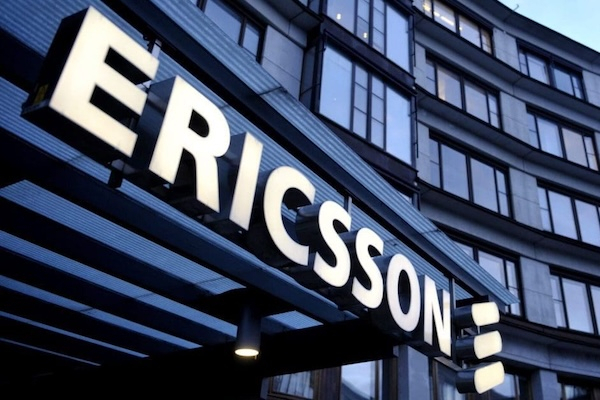
Swedish telecom equipment maker Ericsson has closed its office in Kinshasa, ending more than 25 years of operations in the DRC. The decision, dated Nov. 5, 2025, was signed by the company’s representative, lawyer Kevin Wamu, who said the closure follows the end of Ericsson’s activities in the country.
The law firm MBM-Conseil SCA has been appointed to manage the legal steps required for the withdrawal from the DRC. Several lawyers from the firm have been authorized to act on Ericsson’s behalf throughout the process.
Ericsson entered the telecommunications market of the Democratic Republic of Congo in 2000 with an initial contract valued at about 50 million dollars to deploy Celtel’s GSM 900 network, now operated by Airtel. In the years that followed, the company delivered multiple 2G, 3G and 4G network upgrades for Airtel and Vodacom in the DRC.
The shutdown of the Kinshasa office is part of Ericsson’s global restructuring. Since 2022, the company has scaled back its direct presence across several African markets, outsourcing some activities and focusing on higher-margin segments such as 5G, cloud services and critical infrastructure. Industry reports published between 2023 and 2025 noted several rounds of job cuts and the closure of units considered non-strategic.
The withdrawal from the DRC also reflects a shift in the country’s telecom equipment market, where Chinese suppliers Huawei and ZTE now dominate, while the government advances its unified licensing reform and Starlink continues to expand its services within the DRC.
Mobile operators in the Democratic Republic of Congo have historically relied on Ericsson for part of their 2G, 3G and 4G infrastructure. Although the company is closing its office in Kinshasa, it is expected to continue providing regional support for equipment already in place in the DRC.
Ronsard Luabeya