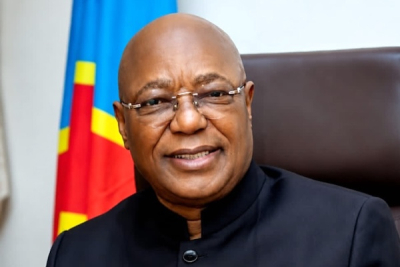





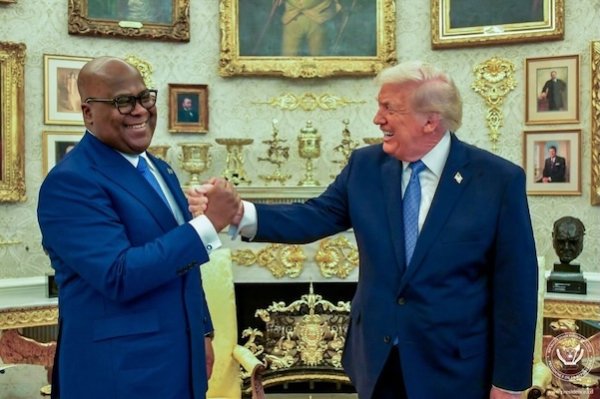
The Democratic Republic of Congo became a "strategic partner" of the United States on Dec. 4, 2025. A formal agreement was signed between the DRC’s Vice Prime Minister and Minister of National Economy Daniel Mukoko Samba and U.S. Secretary of State Marco Rubio. The new status places the DRC within a privileged cooperation framework with Washington. It includes commitments of security support, large-scale investment and accelerated industrialization, but also imposes legal and tax obligations on the DRC under strict deadlines. In return, the United States gains structured and priority access to Congolese critical minerals essential to U.S. industry and the energy transition, while laying the groundwork to reduce China’s influence in the sector.
Priority access to strategic deposits for the United States
The agreement grants U.S. companies a right of first offer on deposits of critical minerals, gold and designated exploration zones grouped under the Strategic Asset Reserve (RAS). This mechanism guarantees priority access to exploration, development or production permits. If no U.S. offer is accepted within nine months, projects may be opened to allies such as the European Union or Qatar, or even to the DRC itself, but never to countries Washington considers strategic rivals. China currently controls around 80 percent of producing mining assets in the DRC.
The list of assets included in the RAS has not yet been made public. According to information obtained, the United States is particularly interested in the Rubaya mine, currently controlled by the M23 armed group, and the Manono deposit, where U.S. firm KoBold Metals already holds four exploration permits. The DRC must transmit the initial RAS list by Jan. 2, 2026. The perimeter may later be expanded in consultation with, or at the request of, the United States, gradually increasing the number of assets that China will not be allowed to access.
Fiscal incentives
A portion of production from RAS assets must be allocated to the U.S. market. Any project proposal must demonstrate a clear contribution to U.S. supply chains, including commitments to channel part of its output to the United States. To guarantee a stable supply, particularly of cobalt, the agreement also provides for the creation of a strategic mineral reserve within the DRC.
Companies with U.S. ownership will benefit from an exceptional fiscal regime that includes a ten-year tax-stability guarantee, mandatory VAT refunds within 90 days and an automatic VAT credit offset system. The DRC must also establish a one-stop shop and a dedicated tax authority for U.S. investors. Additional incentives may be granted to projects classified as strategic, making the fiscal environment highly attractive to American interests.
Washington also gains a direct role in governance. The agreement establishes an intergovernmental dialogue, a U.S.-DRC economic forum and a ten-member Joint Steering Committee (CPC) responsible for supervising projects, validating eligibility criteria and reviewing any decision that could affect U.S. interests, including export quotas or embargoes.
The CPC will meet twice a year, with a first session scheduled no later than 90 days after the agreement enters into force. The economic forum will be held every two years, alternating between Washington and Kinshasa unless otherwise decided. The date of the inaugural session must be set within one year.
The DRC under the American security umbrella
In exchange, the DRC receives official designation as a U.S. strategic partner. This status is reserved for a limited number of countries considered essential to U.S. interests, such as Japan, South Korea and Israel. Analysts say it is likely to strengthen the DRC’s diplomatic weight regionally and internationally.
The agreement also commits Washington to security and defence cooperation aimed at reinforcing peace, stability and state authority. A memorandum of understanding on these matters was signed the same day by DRC Foreign Minister Thérèse Kayikwamba Wagner and Secretary Rubio. The document has not been released, leaving few indications about cooperation on territorial integrity, protection of critical infrastructure and efforts to curb mineral trafficking that finances armed groups.
The agreement also provides targeted support to stabilise mining and conflict zones through investment in energy, infrastructure and logistics, stronger customs and tax capacity, improved mineral traceability and assistance for judicial and anti-corruption reforms designed to restore state authority in mining regions.
Sakania-Lobito corridor and Grand Inga project
Support is already planned to modernise the entire Sakania-Lobito corridor, which is expected to become the main export route to the United States. Quantified targets have been set for state-owned companies. Within five years, 50 percent of copper, 30 percent of cobalt and 90 percent of zinc marketed by these enterprises must transit through this corridor. Both parties also commit to jointly develop the Grand Inga hydroelectric project through a shared governance committee. The project is regarded as central to industrialisation and regional competitiveness.
The agreement also includes support for local mineral processing, including refining and downstream production, as well as a major component on formalising artisanal mining. The United States will support traceability systems, cooperative structuring and financial inclusion for artisanal miners.
Deep reforms required
To consolidate its position as a reliable strategic partner, the DRC must implement policies that strengthen governance, transparency and the rule of law. The agreement requires reform of the fiscal framework within twelve months, including tax stabilisation, VAT refunds within 90 days, a one-stop shop and a centralised tax authority responsible for all interactions with mining investors. In the mining sector, the DRC must also reinforce regulation, improve the transparency of state-owned companies, strengthen customs capacity and combat mineral trafficking.
The agreement enters into force upon signature. It will be reviewed every three years and can only be terminated with five years' notice.
Pierre Mukoko