




The Democratic Republic of Congo has revoked mining permits covering more than 12,000 square kilometers that were held by two companies, as part of an ongoing effort to clean up the country's mining registry.
According to a statement from the Mining Cadastre, known by its French acronym CAMI, relayed on May 14, 2026, by Agence congolaise de presse, the permits held by Acacia and Kwango Mines were revoked for failure to pay annual surface fees, in accordance with the Mining Code and related regulations.
The two companies jointly held 90 mining titles covering 15,029 permit blocks across the provinces of Kwango, Kwilu, Mai-Ndombe, Kongo Central and Kasai. The total area affected reaches 12,767.5 square kilometers, larger than Kinshasa.
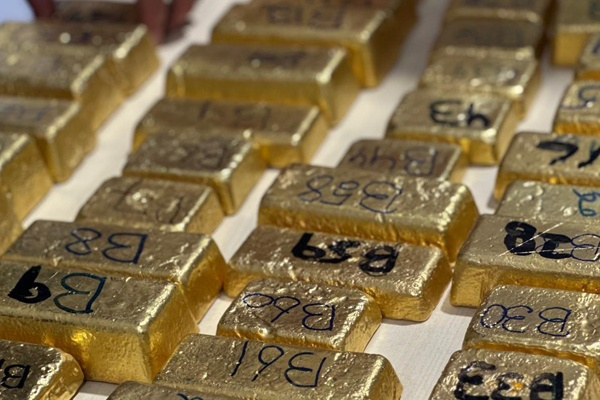
In detail, Kwango Mines held 47 titles covering 5,282.5 sq km, while Acacia held 43 titles spanning 7,485 sq km. The permits cover minerals including gold, diamonds and bauxite.
Together, the concessions form a broad mining corridor stretching from Kongo Central to Kasai, crossing several territories in Kwango province, including Kahemba, Popokabaka and Kasongo-Lunda.
The move is part of a broader campaign launched in 2023 by CAMI to recover inactive or non-compliant mining permits. The mining administration said it has reclaimed more than 50,000 sq km of mining areas over the past three years through reviews of permit validity, compliance with payment obligations and respect for development deadlines.
The stated objective is to recover permits held by operators deemed inactive or non-compliant and make them available for new mining investment.
Before revoking the permits, CAMI had already launched a warning procedure against the companies concerned. In a statement published on April 16, 2026, the institution said several annual surface fee payments for the 2026 fiscal year had not been recorded by its financial services as of April 10.
CAMI then granted the affected permit holders 45 days to provide proof of payment or face cancellation of their licenses. Kwango Mines was explicitly named among the companies concerned at the time.
The case also carries political sensitivity. Acacia and Kwango Mines have previously been cited in several investigations as companies linked to the family of former President Joseph Kabila.
In 2017, the Congo Research Group published an investigation into the business interests attributed to the Kabila family, citing links between certain mining companies and Jaynet Kabila, the former president's twin sister. Subsequent reporting by Deutsche Welle and other international media also associated Acacia and Kwango Mines with that network of economic interests.
At this stage, however, the documents reviewed do not clearly establish the current ownership structure of either company.
Boaz Kabeya