




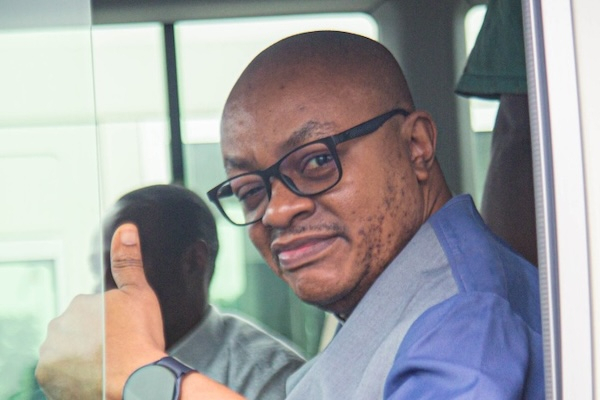
Trans-Academia, the Democratic Republic of Congo's state-owned student transport company, is facing severe financial difficulties just three years after its launch, with its chief executive presenting a broad recovery plan to parliament last week.
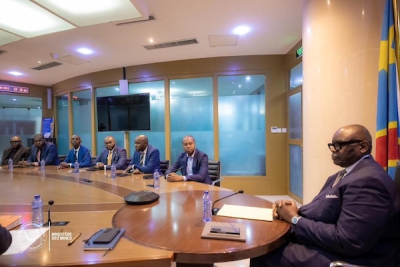
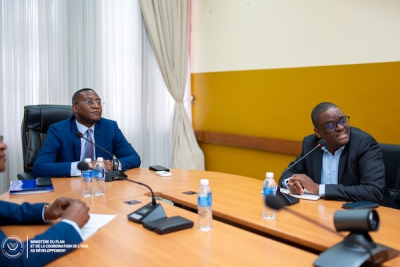
Georges Ongelo, the company's chief executive, appeared before the National Assembly on May 13, 2026, to defend a restructuring program aimed at preserving what he described as the company's public service role.
Ongelo outlined a series of challenges facing the company, including cash shortages, salary arrears, unpaid social security contributions and continued dependence on government subsidies. His testimony also revived debate over how the Congolese state finances the public service obligations assigned to state-owned enterprises.
Trans-Academia operates under a subsidized public transport model that Ongelo said is currently incompatible with financial self-sufficiency. The company offers reduced fares for students and pupils while absorbing the high operating costs associated with urban transport services.
Recovery plan
Management presented a strategy structured around three timelines. In the short term, Trans-Academia plans to acquire new equipment, modernize its digital systems and clear a tax debt that management said could be offset against unpaid government subsidies. The plan also includes financing a new fleet of buses, increasing the operating subsidy to 700,000 Congolese francs, implementing the official salary scale and revising the company's budget allocations.
In the medium term, the company is seeking approval from the Central Bank of Congo to deploy a digital payment platform. It also plans to finalize a revised regulatory framework governing its operations, acquire its own logistics depot and gradually extend services to the provinces through a deployment framework already approved by authorities.
Over the longer term, management envisions nationwide operations, diversified revenue streams including dedicated quasi-fiscal levies, and a self-financing model supported by ancillary revenue sources.
Despite the ambition of the roadmap, the immediate pressure remains financial. Ongelo acknowledged that the company is struggling to pay social security contributions and remains several months behind on salaries, including for March and April 2026.
Structural weaknesses
To break the deadlock, Ongelo proposed the creation of an inter-ministerial commission under the authority of the Prime Minister's office. The body would bring together representatives from the presidency and the ministries of transport, finance, lands, public works and national education to coordinate the government's response to the company's difficulties.
The hearing took place amid broader scrutiny of the financial model of Congolese state-owned enterprises. In a recent report, the World Bank estimated that DRC public companies accumulated about $5.3 billion in losses between 2014 and 2023. The institution noted that several state enterprises carry out public service functions without a clearly defined compensation mechanism from the state, leading to persistent structural deficits.
That assessment reflects the situation facing Trans-Academia. Launched in 2023, the company was designed as a student transport initiative built around a digital registration platform and subsidized fares. The project relies on partnerships with several ministries and higher education institutions.
Since its launch, more than 20 buses have operated on three routes in Kinshasa, according to the Congolese Press Agency. The initial rollout plan had been considerably more ambitious, however, with 220 buses expected to be available for deployment and plans to acquire more than 400 additional vehicles over time.
Beyond Trans-Academia's own situation, Ongelo's appearance before parliament highlighted a recurring issue in the DRC: how to sustainably finance state-owned enterprises carrying out public service obligations without leaving them permanently dependent on government subsidies.
Ronsard Luabeya