




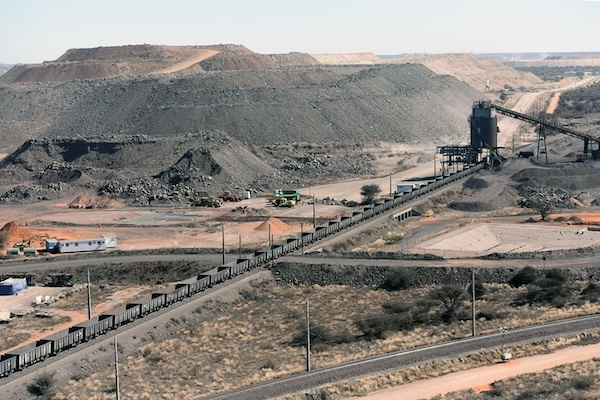
Asia Minerals Limited’s planned manganese project in Luozi, in Kongo Central province, will require more than 300 MW of power. The energy needs were outlined at the Makutano Forum on Nov. 26 by Fely Samuna, managing director of Kerith Resources, the DRC-based partner of the Japanese multinational.
He said the project’s power demand is split between roughly 120 MW for mining operations and nearly 200 MW for local processing, in line with the government’s push to increase value addition and jobs in the region. Samuna said this demand would come onstream in more than three years, noting that exploration will take three years before mine development begins. He questioned whether the DRC can meet these requirements.
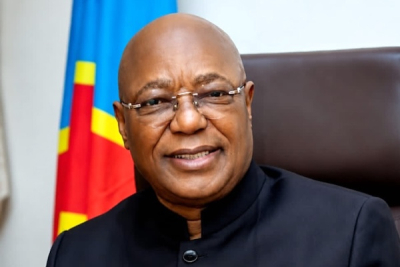
Aime Molendo Sakombi, Minister of Hydraulic Resources and Electricity, said the area has hydropower sites that could supply the project, including the Mpioka site on the Inkisi River. According to Jean-Pierre Mukadi Kalombo, coordinator of the Energy Ministry’s Project Coordination and Management Unit, the Mpioka site has a potential of about 6,000 MW. He said it could also help supply Kinshasa’s grid, including future expansion, and support growing mining demand. Studies of the site will begin next year to give the government the technical data it needs.
Samuna also raised concerns about the DRC’s energy costs. He noted that the Japanese partner already operates the Pertama Ferroalloys smelter in Malaysia, commissioned in 2016, where it relies on a PPA priced at about $0.04 per kWh. He asked whether a lower rate could be considered in the DRC to ensure the competitiveness of local operations and encourage Asia Minerals to process ore domestically.
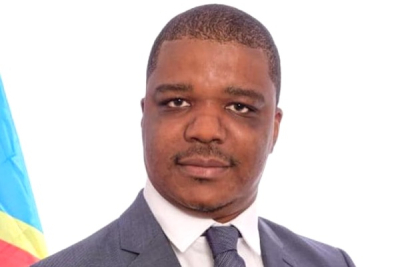
In response, Bob Mabiala Mvumbi, director general of the Agency for the Development and Promotion of the Grand Inga Project (ADPI), said he was ready to discuss a future PPA. “You will set a price and we will talk,” he said, noting that ADPI is working on defining bankable demand for Inga 3, which is estimated at 3,000-11,000 MW.
The pricing issue remains challenging. The DRC’s state utility SNEL, which says its current average tariff of $0.17 per kWh is below cost, is seeking a price increase. Mini-grid operators charge between $0.25 and $0.70 per kWh.
Timothée Manoke