




- Inflation dropped from 11.7% to 2.5% and the franc appreciated 29% against the dollar.
- International reserves reached $7.4 billion, equal to three months of imports.
- The goods balance showed a $9.9 billion surplus in August 2025, driven by mining exports.
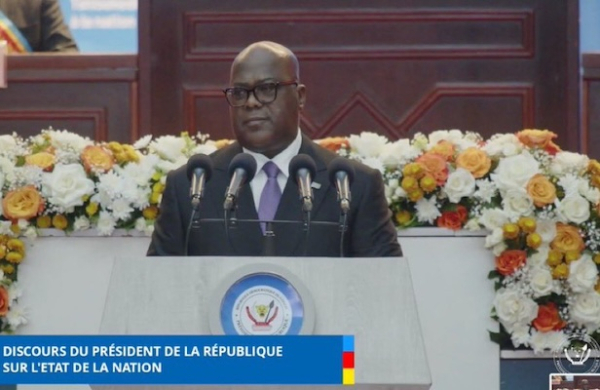
Amid a year defined by escalating conflict in eastern Congo, external shocks, and global geopolitical instability, President Félix Tshisekedi told Parliament on December 8 that the Congolese economy “held firm.” He defended what he described as unprecedented macroeconomic resilience in a hostile environment.
He supported this assertion with several indicators that showed stronger macroeconomic stability in 2025. Inflation provided the most notable signal of improvement. Tshisekedi said inflation fell from 11.7% at the end of 2024 to 2.5% at the end of October 2025, well below the 7% target set by the Central Bank of Congo.
This sharp disinflation coincided with a 29% appreciation of the Congolese franc against the dollar on both the interbank and parallel markets. The franc strengthened from 2,800 per dollar in August to 2,200. The country had not seen such an appreciation in years, especially given that exchange-rate pressure long served as the main driver of inflation.
At the same time, international reserves reached $7.4 billion, equivalent to three months of imports and aligned with IMF standards. These larger buffers provided a critical safety net as global commodity prices fluctuated.
Another key indicator strengthened as well: the balance of goods remained strongly positive, with a surplus of $9.9 billion as of August 2025. Mining exports continued to support external earnings and kept the surplus wide.
Economic growth reached an estimated 5.6% in 2025, above the sub-Saharan average of 3.8%–4.1%. Although the extractive sector remained the main engine, Tshisekedi argued that non-mining sectors also expanded in line with the government’s diversification agenda.
According to the president, these results flowed from the 2024–2028 Action Program, which focuses on household purchasing power, job creation, and competitiveness within a more diversified economy.
To strengthen the social impact of stabilization, the government launched measures to curb living costs. Tshisekedi said these measures produced concrete results. He noted that the pump price of gasoline in Kinshasa fell from 2,990 to 2,440 Congolese francs. In the maize sector in Greater Katanga, he said the price of a 25-kg bag dropped from $50 during the lean season to $13–15.
These developments, he argued, show that macroeconomic stability delivered tangible benefits as the country confronted war and volatility.
This article was initially published in French by Pierre Mukoko
Adapted in English by Ange Jason Quenum