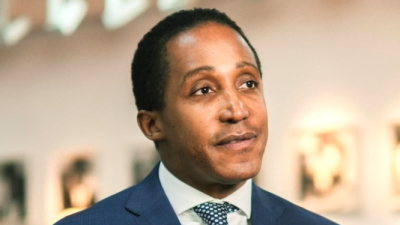





Guy-Robert Lukama, who has chaired the board of Gécamines since February 2023, is advancing an ambitious strategy for the state-owned mining company. He presented the plan at the African Investment Forum in Rabat, Morocco, held from November 26 to 28, where he discussed issues related to critical minerals.
Lukama said the company no longer intends to depend solely on its mineral reserves. His goal is to guide Gécamines through a major strategic shift, moving from simple extraction to chemical processing. He said the group is learning from past missteps and looking at successful models, particularly Morocco’s phosphate industry.
“That is why we are studying other models and examining how they transformed their business, moving from producing phosphates to producing fertilizers. That is the model we want to follow,” he said.
Lukama, who began working with Gécamines in 2018 as an independent consultant, wants to draw lessons from the example of Morocco’s OCP Group to reposition Congo’s cobalt industry. The strategy, which is already being put into practice, aims to produce battery precursor materials instead of exporting cobalt hydroxide.
Projects in the Pipeline
Lukama’s strategy aligns with government priorities. According to Minister of Mines Louis Watum Kabamba, the current extractive model captures less than seven percent of the value in the value chain that runs from the mine to the finished electric vehicle. “This model does not work,” Watum said during a roundtable discussion at the Makutano forum on November 25.
In line with this goal of moving up the value chain, Lukama announced three projects in preparation with a combined capacity of roughly 40,000 tons. He did not provide additional details. The current focus is identifying partners willing to invest in the new transformation approach. Watum noted that Gécamines still holds important assets, including significant mineral reserves and deep knowledge of local geology.
The Democratic Republic of Congo also intends to use Special Economic Zones to attract investors for local mineral processing. These zones provide fiscal, administrative, infrastructure and logistical incentives. A zone dedicated to battery precursor materials, batteries and eventually electric vehicle assembly using local raw materials was launched in March. In late 2024, Morocco, which is already present in the Congolese mining sector through Managem’s Pumpi copper and cobalt mine, was invited to join the project during a meeting organized by the UN Economic Commission for Africa.
Industrial Decline Poses Challenges
Watum said Gécamines is meant to operate as a mining company rather than simply as a holding entity. However, this ambition conflicts with the company’s current industrial condition. According to its 2024 activity report, Gécamines is in decline. It produced no cobalt of its own in either 2023 or 2024 and only 8,065 tons of copper. Its plants are idle, and the company relies heavily on toll processing, private partners and slag retreatment. It does not yet have the infrastructure, technical expertise or workforce needed to run a chemical-processing industry on an international scale.
Lukama acknowledged these constraints. “When we talk about batteries, it is becoming less a matter of mining or metallurgical engineering and more a matter of chemical engineering,” he said.
To address the skills gap, the former banker supports an approach that combines expertise from the Congolese diaspora with that of long-serving local teams. He also emphasized the need to strike the right balance so that employees who remained in the country do not feel left behind compared with returning professionals.
George Auréole Bamba & Pierre Mukoko