




The Democratic Republic of Congo and Angola are working to strengthen the traceability of goods moving between the two countries. A memorandum of understanding on enhanced cargo tracking is being finalized between the DRC's multimodal freight management office, OGEFREM, and Angola's national land transport agency.
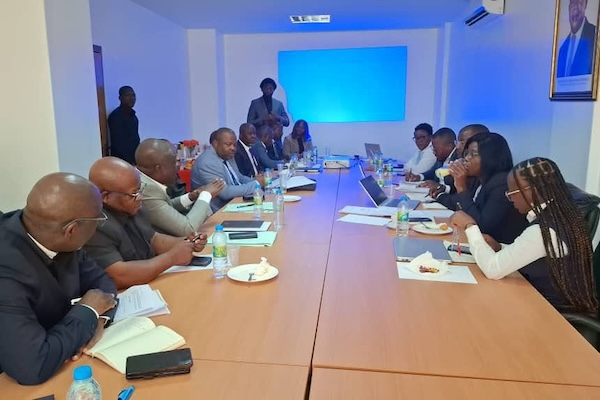
A working session was held on June 8, 2026, in Luanda between experts from OGEFREM, CEPCOR and their Angolan counterparts. The meeting aimed to align draft agreements already prepared and finalize the elements needed to sign a cooperation accord.
According to OGEFREM, the future agreement is designed to improve oversight of freight entering the DRC via Angola. The agency justified the initiative by citing the significant volumes of imports and exports transiting through the corridor linking the two countries.
The two sides examined the technical, operational and regulatory aspects of implementing the future mechanism. Discussions also covered the division of responsibilities, the rollout of the agreement and the consolidation of its final version.
Data Sharing
Among the recommendations put forward at the meeting was the digital sharing of information on transport movements between the two countries. The data would cover vehicle registration, driver identity and the nature of goods transported to the DRC via Angola.
According to OGEFREM, the Angolan side committed to identifying truckers traveling from Angola to the DRC, verifying their documentation and sharing that information with the Congolese authorities.
The two institutions also plan to hold periodic working sessions to standardize the data exchanged. Those meetings are expected to help improve the structuring of technical information, the identification of logistics operators and the classification of vehicles crossing the border in both directions.
The initiative falls within OGEFREM's mandate to expand oversight of import and export flows through its traceability instruments, which include the electronic import information form, the electronic export information form and the regional cargo tracking certificate.
Logistics and Revenue Implications
For OGEFREM, the initiative also carries financial implications. Better tracking of freight moving through the DRC-Angola corridor could improve revenue collection and, more broadly, contribute to Congolese public finances.
The initiative comes as formal trade between the DRC and Angola remains modest relative to the two economies' potential. At the third DRC-Angola Economic Forum held in Kinshasa, formal trade between the two countries was estimated at around $600 million per year, equivalent to roughly 0.3% of their combined GDP.
More effective use of logistics corridors, including the Lobito Corridor, could help stimulate trade. For now, however, the memorandum under preparation is focused on strengthening cargo tracking, information sharing and freight traceability for goods transiting through Angola to the DRC.
The next step will be the formal signing of the agreement, followed by the establishment of an operational framework between the two institutions. Its effectiveness will depend on the quality of data sharing, the interoperability of systems and the capacity of both countries to enforce cargo-tracking requirements on the ground.
Ronsard Luabeya