




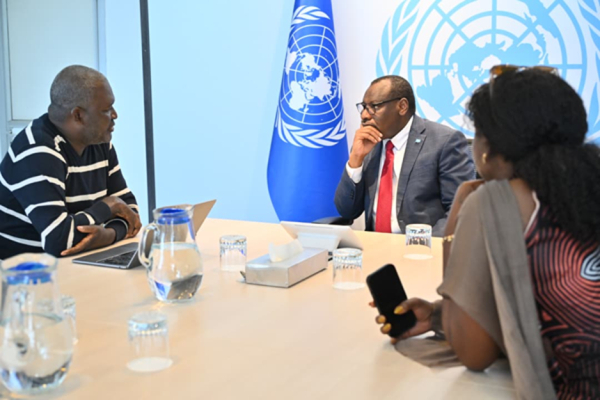
In this exclusive interview with the Ecofin Agency on the sidelines of the inaugural Africa Development Impact Forum (ADIF) in Addis Ababa, Claver Gatete, Executive Secretary of the UN Economic Commission for Africa, argues that Africa is not short of ideas, money or talent to scale up job creation — it is short of the connections between them. He makes the case that the continent's start-ups and SMEs must no longer remain small, but grow to a higher, regional and ultimately global level, through partnerships, regional value chains and a full-cycle ecosystem that turns research into bankable, job-creating industries — from electric-vehicle batteries between the DRC and Zambia to agri-food processing in Southern Africa.
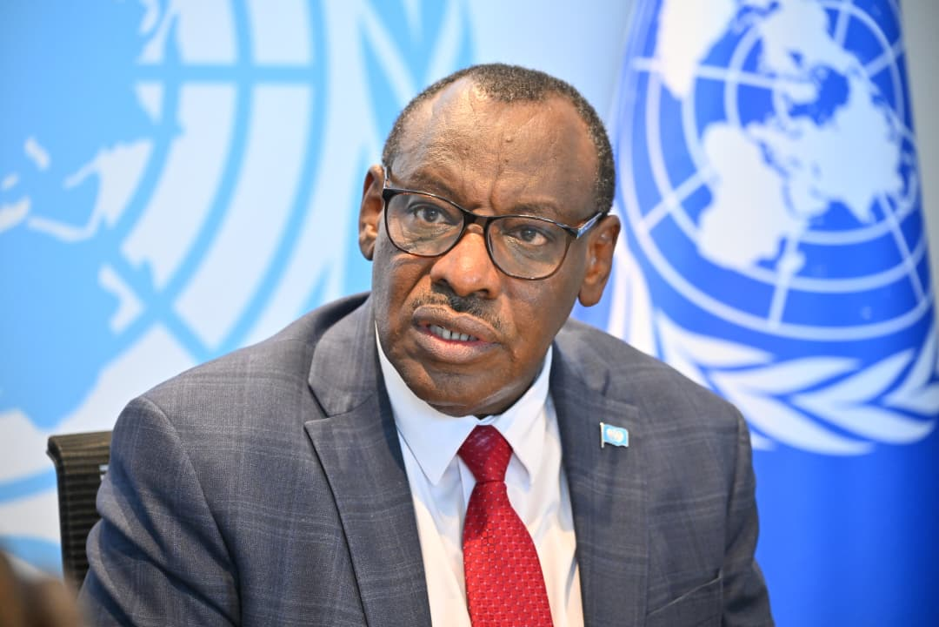 Claver Gatete, Executive Secretary of UNECA
Ecofin Agency: Beyond the United Nations Economic Commission for Africa, which lever would you actually pull to make sure the models and knowledge sharing showcased at the first edition of the Africa Development Impact Forum get replicated, so that other countries or regions take it from here and build on it?
Claver Gatete: The Economic Commission for Africa is one of the five regional commissions established globally by the United Nations to support the African continent. ECA itself was established in 1958, and since then it has worked across the continent — and it does not work alone. It works with all stakeholders: the African Union Commission, as well as all the agencies of the African Union. ECA also contributed to establishing several of those agencies, including the African Continental Free Trade Area (AfCFTA) Secretariat, and others.
In development, you cannot work alone. That is why partnerships are essential — with African Union agencies, with Afreximbank, with other development finance institutions, and with the private sector
In development, you cannot work alone. That is why partnerships are essential — with African Union agencies, with Afreximbank, with other development finance institutions, and with the private sector. Our work goes to the member countries: we support them directly and provide the technical know-how and capacity they need. But we also work with the private sector.
This Africa Development Impact Forum complements what already exists. It is meant to close the loop: you have people with ideas, backed by research, but who cannot get them implemented. Something is missing. Not everything can be done by the private sector alone, nor by ECA alone. But working together — with governments, with financial institutions, with other promoters — we can make sure that any idea someone has can be implemented, and not only implemented but scaled up. You don't just start and remain small forever; it has to be scaled up.
Today, every country is chasing the same thing: jobs. And these jobs don't just come on their own — they are not the privilege of big companies. They can also come from SMEs, which in some countries can be over 90%. And these are started by young people.
That is why we designed this forum. We already convene many things — the Africa Business Forum, the annual meeting of the Ministers of Finance, where we discuss the issues affecting our continent, as well as the Africa Regional Forum on Sustainable Development, which looks at the implementation of Agenda 2063 and the 2030 Agenda for Sustainable Development. Using those forums and that team, we asked ourselves: what do we need to do differently for young people who come up with ideas and need them implemented and scaled? Becoming partners with young people, providing research and the necessary capacity so they come with concrete ideas, then helping them take it forward with other stakeholders for implementation.
Today, every country is chasing the same thing: jobs. And these jobs don't just come on their own — they are not the privilege of big companies. They can also come from SMEs, which in some countries can be over 90%. And these are started by young people.
Ecofin Agency: You argue, in your speech, that most of what needs to be done already exists and we only need to roll it out. Among the existing tools, which one or two do you think are the most underexploited and should be taken up?
Claver Gatete: Let me give an example. We have Afreximbank and development finance institutions such as the African Development Bank, the TDB, and many others. These institutions have money. But you don't just keep money — you have to give it to someone, and make sure they will use it properly so you get a return.
On the other side, there are people with well-thought-out, wonderful projects, but with no link to the financing. And even if they had that link, you still need a conducive environment in the country. These three things — the project, the money, the environment — are not connected. That was the missing link. It's not that there are no ideas, no money, or no conducive environment; you simply have to bring them together so someone can invest.
On the other side, there are people with well-thought-out, wonderful projects, but with no link to the financing. And even if they had that link, you still need a conducive environment in the country
Let me give you an example [from Rwanda, when I was still in government]. We had women with wonderful ideas who could not go to the bank and get credit because they had no guarantee — no land, no collateral. The same problem affected university graduates — very ambitious, full of ideas.
So, the government decided to provide a guarantee, since that was the key bottleneck. It set up a fund — the Business Development Fund — to guarantee bank credit. The government also said: if you are looking for agricultural land, we'll provide it depending on your idea. That guarantee helped many women and young graduates get in and start projects.
But having an idea doesn't mean you know how to develop a product. So, they put a subsidiary fund in place to help develop a proper, implementable project. By accompanying people all the way, we saw SMEs mushroom. And the default rate was far lower than the national average, because beneficiaries were accompanied and trained in their own field. Without the government stepping in, imagine how many of them would ever have gotten resources to start anything.
So the question is: how do we identify these wonderful, well-studied projects that need support? Some are already there — we just don't know them. The knowledge — from think tanks, universities, ourselves, and others — is available. What's needed is to close the whole cycle and deal with the entire ecosystem rather than doing it halfway.
When I went to the United Arab Emirates for the Annual Investment Meeting, I found over 200,000 participants saying: "we have the money, we need to know what to invest in, and where." You see — these things are not brought together. You have half the information, I have half the information, and the ideas are there. The point is: how do you make the whole ecosystem work together? It starts with these ideas — people present them, others judge them, they get improved, you see what's missing, and then you scale it up to close the loop.
Ecofin Agency: You stress working across stakeholders rather than in silos. Yet the AfDB, in its latest report on manufacturing, said the capacity of special economic zones is not matching expectations. Faced with that concrete need, how does the ADIF initiative add value?
Claver Gatete: In Africa, what you need most is industries, because you have to add value to every product you produce — minerals, agriculture, anything. We've been exporting raw materials, unfinished products. By establishing one market for the whole continent, the idea is to trade among ourselves and with the outside world in finished products. But finished products require higher value, and you add value in an industry.
The point is: how do you make the whole ecosystem work together? It starts with these ideas — people present them, others judge them, they get improved, you see what's missing, and then you scale it up to close the loop.
At the same time, you can't have myriads of industries scattered everywhere, because each one needs infrastructure. That's why you create the special economic zone: you put the industries in one place and provide roads, energy, internet, housing for the workers, everything. You can't do that with scattered industries. Once you group them, you can more easily provide incentives and manage risk, with the help of institutions that already exist — Afreximbank, the AFC, the World Bank. The know-how is already there.
We're saying: let's do this not only at country level but also at the regional level. That's why we see regional value chains. If you have a mine here, you create industries nearby and the whole ecosystem — fulfilling environmental-assessment requirements, transport, processing — so you can add value to the final product, meeting the international standards needed to export. That means more jobs that stay in Africa, and value multiplied many times per product, which stays on the continent.
Today, most inputs are imported. 80% of those inputs come from outside even though we have them here. Initially we exported those inputs because we had no industries; now that we have industries, we can use them ourselves. That's how you create jobs and wealth, and the capacity to do this yourself — or to make any investor operate under your own control.
Ecofin Agency: One of the best examples of this is surely what you're doing between the DRC and Zambia. What are you saying with that project?
Claver Gatete: These countries have very important materials — copper and others — that can make batteries for electric vehicles. Why just dig the mine and export it raw? It can produce so much more in terms of jobs and resources. Zambia has provided land, the DRC has provided land: we want a common place where Zambia brings its part, the DRC brings its part, and we create industries that can produce batteries for any auto industry, up to the final product.
Where are those auto industries? In South Africa, and in Morocco, which has already started. The idea: first satisfy this market, then export — but as a final product, never raw. We started working with Bloomberg, then with Afreximbank and others, to package the whole chain: which investors, who can do what, so everything is produced on site.
We're doing the same with a study now starting on agri-food processing between Zambia and Zimbabwe, for Southern Africa — so the whole region can produce processed agricultural products to supply the rest of the continent.
If we did this for as many products as possible — for example also with Botswana, Namibia and South Africa as one market — any investor would have to operate under these countries' conditions, so they keep control and create employment. You also gain experience: no need to send raw materials to Europe for processing when you can do it at home.
This requires a lot of energy, which you have to develop in parallel: solar, wind (very present in Southern Africa), hydro, geothermal, and now nuclear energy. Lacking industries, countries like Morocco targeted Europe — for example 10.5 GW of solar and wind sent to the UK via undersea cable, or Egypt to Greece and the rest of Europe. Now we have to think energy and industries together, and make sure those industries are anchored in special economic zones and industrial parks.
Most investors coming into African markets are not interested in projects worth less than a billion dollars. They are looking for scale — that's where the returns are. Regional value chains help create that scale by bringing together activities across countries and turning them into large, attractive investment opportunities.
The regional scale is also more practical. Most investors coming into African markets are not interested in projects worth less than a billion dollars. They are looking for scale — that's where the returns are. Regional value chains help create that scale by bringing together activities across countries and turning them into large, attractive investment opportunities.
Ecofin Agency: On quantitative targets: how do you see the ADIF contributing to job creation, industries and development — and all the related dynamics — and over what time frame will we see the first tangible results, beyond Agenda 2063?
Claver Gatete: It's probably too early — this is just the beginning, a first experiment we are testing. But let me use an example. Copper in Zambia has long been exploited in raw form. Yet when you produce copper, other materials come with it, and there is an artisanal sector — men and women using it to make other things. But they have no money, low capacity, no instruments, no materials, no support.
Suppose we say: this copper, even when processed, partly goes for export; some can be used on the continent. But for what remains, can you come up with an innovation? If you bring a proposal, how do we accompany you to get it implemented? What do you need? You then go through the whole system. If you need money, here's where to get it, including existing climate funds, provided you do it in a sustainable way. If you need capacity building, there are funds available to help you do it properly and meet environmental requirements. If you need a market, there is support to help you find one and establish yourself. Then the question becomes: how do you partner with others to build the whole thing?
That's what ADIF brings: a focus on the practical details of what is actually needed. You can say everything is wonderful and still not make money, or fail to get a project off the ground. Once we've trained people in Zambia to carry this forward and engage with the market, we can train others across East, West, North and Central Africa. That's how you build scale. But scale also means thinking beyond local markets: how do you take production to the next level, compete globally and export? It then becomes a new export sector in its own right.
But you need to start somewhere. ADIF is only just beginning; you can't expect to get to the end when you're at the start of the journey. And with any new initiative, you never get everything right the first time. You adjust as you go, working with people who are doing real business. That's why these matters. The Africa Business Forum focuses on major investments, while ADIF is also looking at opportunities at this scale. And our role is not just to convene people. We are here to support member countries and help the private sector develop business models that allow them to make money.
Interview by Idriss Linge, with Ecofin Agency